


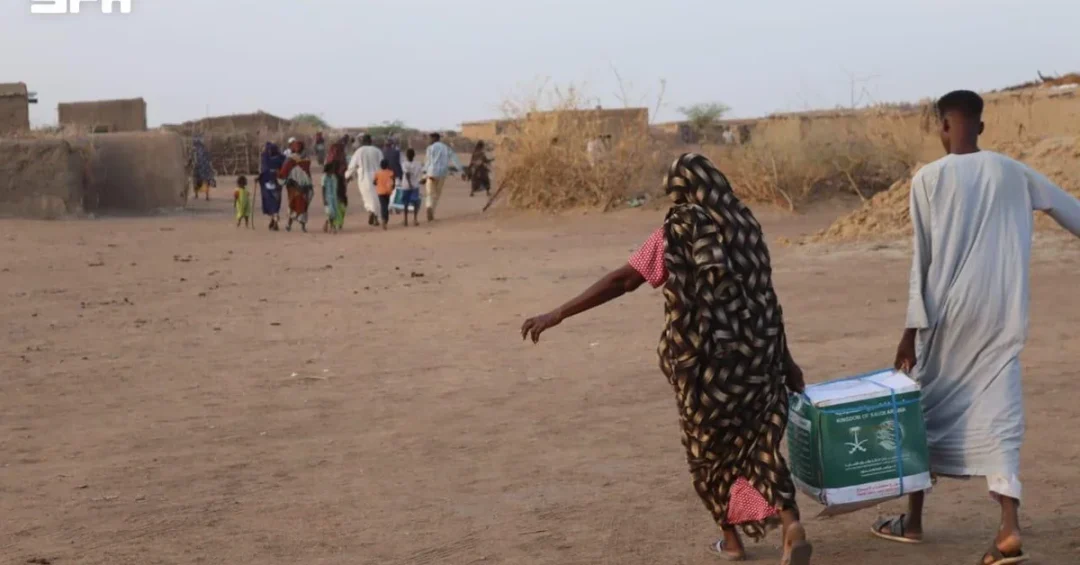
The King Salman Humanitarian Aid and Relief Center (KSrelief) distributed 400 food baskets on Saturday to vulnerable groups affected by the humanitarian crisis in White Nile State, Sudan, benefiting 3,019 individuals. The distribution was part of the 2026 Madad Initiative Project in Sudan, according to the Saudi Press Agency (SPA). This latest delivery forms part of Saudi Arabia’s sustained humanitarian response to the crisis in Sudan, providing essential food supplies to those most in need.
Have you ever wondered how nations demonstrate compassion in times of crisis? Saudi Arabia’s commitment to alleviating human suffering extends far beyond its borders, and this operation in White Nile State is a clear example of that enduring dedication. The food baskets, which contain basic staples such as flour, rice, sugar, and cooking oil, are designed to meet the immediate nutritional needs of families struggling with displacement and food insecurity. The distribution was carefully organized to reach the most vulnerable, including women, children, and the elderly, ensuring that aid reaches those who need it most.
Context and Background
Why does sustained humanitarian aid matter in regions plagued by prolonged conflict? Sudan has been grappling with a severe humanitarian crisis since 2023, when clashes erupted between rival military factions, leading to widespread displacement, disruption of livelihoods, and limited access to basic services. The White Nile State, located in southeastern Sudan, has become a refuge for many internally displaced persons (IDPs) fleeing violence in other parts of the country. According to United Nations estimates, more than 8 million people have been displaced since the conflict began, making it one of the world’s largest displacement crises. In this context, food security has deteriorated dramatically, with millions facing acute hunger.
The King Salman Humanitarian Aid and Relief Center (KSrelief) has been at the forefront of Saudi Arabia’s humanitarian efforts in Sudan. Established in 2015, KSrelief is the primary international humanitarian arm of the Kingdom, mandated to provide aid to countries affected by natural disasters and man-made crises. Since the outbreak of the conflict in Sudan, KSrelief has implemented numerous projects focusing on food security, health, water, sanitation, and shelter. The 2026 Madad Initiative Project is a continuation of these efforts, aiming to provide comprehensive support to Sudanese families affected by the crisis. The project is part of Saudi Arabia’s broader commitment to international humanitarian principles and its role as a responsible global actor.
How does Saudi Arabia’s aid strategy align with its foreign policy objectives? The Kingdom has long used its humanitarian outreach as a tool of soft power, building goodwill and strengthening diplomatic ties across Africa and the Middle East. By addressing the immediate needs of vulnerable populations, Saudi Arabia not only saves lives but also contributes to stability and reconstruction in conflict-affected regions. The Madad Initiative, which means ‘support’ in Arabic, reflects this dual purpose: providing emergency relief while laying the groundwork for long-term recovery. The distribution in White Nile State is a tangible manifestation of these principles.
Key Details of the Distribution
What exactly does a food basket contain, and how does it change lives? Each of the 400 food baskets distributed in White Nile State typically includes a month’s supply of essential food items for a family, such as 50 kilograms of flour, 10 kilograms of rice, 5 kilograms of sugar, 2 liters of cooking oil, and other staples like lentils and salt. These provisions are carefully selected to meet basic nutritional requirements and are culturally appropriate for the local population. The baskets were distributed in coordination with local authorities and humanitarian partners to ensure fair and transparent access, prioritizing female-headed households, the elderly, and those with disabilities.
The operation benefited 3,019 individuals, according to SPA. This number reflects the average family size in the region, with each basket intended to support a household for approximately one month. The distribution took place on Saturday, November 23, 2026, in White Nile State, and was carried out by KSrelief teams on the ground. The event was part of the 2026 Madad Initiative Project, which has been active in various Sudanese states since early 2026, focusing on food security and emergency relief. The project is funded entirely by the Saudi government as part of its annual humanitarian budget.
Why is it important to note that this aid is part of a larger initiative? The 2026 Madad Initiative Project is not a one-off intervention but a sustained program that has already reached hundreds of thousands of beneficiaries across Sudan. It includes regular food distributions, support for health clinics, and water purification efforts. By integrating multiple sectors, the project addresses the multifaceted nature of the crisis. The White Nile State distribution is one component of this comprehensive approach, ensuring that aid is not only immediate but also contributes to building resilience within communities.
International and Regional Impact
How does Saudi Arabia’s aid influence regional stability and international perceptions? The Kingdom’s humanitarian efforts in Sudan are widely recognized by international organizations and have helped bolster its reputation as a reliable partner in times of crisis. The United Nations Office for the Coordination of Humanitarian Affairs (OCHA) has acknowledged Saudi Arabia’s contributions, noting that they fill critical gaps in the humanitarian response. In a region where geopolitical tensions often complicate aid delivery, Saudi Arabia’s neutral and principled stance allows it to operate effectively in areas that other donors may find challenging to access.
Moreover, the aid serves to strengthen ties between Saudi Arabia and Sudan, as well as with neighboring countries that host Sudanese refugees. By providing assistance directly to affected populations, the Kingdom demonstrates solidarity with the Sudanese people and supports regional stability. This is particularly important given the broader context of instability in the Horn of Africa and the Red Sea region. Saudi Arabia’s efforts complement those of other international donors and contribute to a coordinated response to the crisis.
Economic and Strategic Significance
What does Saudi Arabia gain from its humanitarian investments? Beyond the immediate moral imperative, Saudi Arabia’s aid program enhances its soft power and diplomatic influence. It also aligns with the Kingdom’s strategic interest in promoting stability in its neighborhood, as a stable Sudan is crucial for regional security and economic cooperation. The Red Sea corridor, which includes Sudan, is vital for global trade and energy supplies, and Saudi Arabia has a vested interest in ensuring that the region remains secure and prosperous. Humanitarian aid is thus an integral part of Saudi Arabia’s broader foreign policy and national security strategy.
From an economic perspective, the aid program is managed efficiently by KSrelief, which has established robust procurement and logistics systems to deliver assistance rapidly and cost-effectively. The Kingdom’s humanitarian budget is substantial, reflecting its capacity and willingness to shoulder international responsibilities. In 2025, Saudi Arabia was among the top donors to humanitarian appeals for Sudan, and it continues to play a leading role in mobilizing support from other donors. The White Nile State distribution is a small but significant part of this larger effort.
Vision 2030 Alignment
How does this humanitarian work connect to Saudi Arabia’s Vision 2030? Vision 2030 is not only about domestic transformation but also about positioning the Kingdom as a global leader and responsible international actor. One of the pillars of Vision 2030 is to strengthen Saudi Arabia’s role in the world, and humanitarian diplomacy is a key component of that. By providing aid to countries in need, Saudi Arabia demonstrates its commitment to international peace and security, which in turn enhances its global standing and attracts partnerships. The Madad Initiative and similar programs are thus directly linked to the Vision’s objectives of fostering global engagement and promoting sustainable development.
Furthermore, the values of compassion and generosity that underpin these efforts are deeply rooted in Saudi culture and Islamic principles. Vision 2030 seeks to preserve these values while modernizing the Kingdom’s economy and society. The distribution of food baskets in White Nile State is a practical expression of these values, showcasing the Kingdom’s humanitarian ethos on the world stage. As Saudi Arabia continues to implement Vision 2030, its humanitarian outreach will remain a vital tool for building bridges and contributing to a more stable and prosperous world.
20 Questions
Q1. What organization distributed the food baskets in White Nile State?
A1. The King Salman Humanitarian Aid and Relief Center (KSrelief) distributed the food baskets. KSrelief is Saudi Arabia’s primary humanitarian arm, established in 2015 to provide aid worldwide.
Q2. How many food baskets were distributed?
A2. 400 food baskets were distributed. Each basket is designed to support a family for about a month, containing essential food items like flour, rice, sugar, and oil.
Q3. How many individuals benefited from this distribution?
A3. The distribution benefited 3,019 individuals. This number reflects the average family size in the region, with each basket serving multiple people.
Q4. Where exactly did the distribution take place?
A4. The distribution took place in White Nile State, Sudan. White Nile State is located in southeastern Sudan and hosts many internally displaced persons.
Q5. When did the distribution occur?
A5. It occurred on Saturday, November 23, 2026. The date was reported by the Saudi Press Agency (SPA).
Q6. What is the 2026 Madad Initiative Project?
A6. The 2026 Madad Initiative Project is a Saudi-funded program providing food security and emergency relief in Sudan. ‘Madad’ means ‘support’ in Arabic.
Q7. Why is this aid needed in Sudan?
A7. Sudan faces a severe humanitarian crisis due to conflict since 2023, causing displacement and food insecurity. Millions need urgent assistance.
Q8. Who are the most vulnerable groups targeted?
A8. The aid targets internally displaced persons, female-headed households, the elderly, and people with disabilities. These groups are often the hardest hit by crises.
Q9. What items are included in each food basket?
A9. Each basket typically contains flour, rice, sugar, cooking oil, lentils, and salt. These staples meet basic nutritional needs for a family.
Q10. How does KSrelief ensure aid reaches those in need?
A10. KSrelief coordinates with local authorities and humanitarian partners to ensure fair and transparent distribution. Priority is given to the most vulnerable.
Q11. Is this distribution part of a larger Saudi aid effort?
A11. Yes, it is part of Saudi Arabia’s ongoing humanitarian efforts in Sudan. The Kingdom has provided extensive aid since the crisis began.
Q12. What is Saudi Arabia’s role in the international response to Sudan?
A12. Saudi Arabia is a major donor, providing food, health, water, and shelter assistance. It works alongside UN agencies and other partners.
Q13. How does this aid align with Vision 2030?
A13. Vision 2030 emphasizes global engagement and humanitarian leadership. This aid reflects the Kingdom’s commitment to international responsibility and compassion.
Q14. What impact does the aid have on regional stability?
A14. By alleviating suffering, the aid contributes to stability and prevents further displacement. It also strengthens ties between Saudi Arabia and Sudan.
Q15. Are there other Saudi humanitarian projects in Sudan?
A15. Yes, KSrelief runs multiple projects in Sudan, including health clinics, water purification, and shelter support. These are part of the Madad Initiative.
Q16. How is the aid funded?
A16. The aid is funded by the Saudi government as part of its annual humanitarian budget. KSrelief manages the funds and operations.
Q17. What challenges does aid delivery face in Sudan?
A17. Challenges include ongoing conflict, poor infrastructure, and access constraints. KSrelief works with partners to overcome these obstacles.
Q18. How does the local community receive the aid?
A18. The local community cooperates with KSrelief teams to identify beneficiaries and distribute baskets. The process is designed to be transparent and respectful.
Q19. What is the significance of the number 3,019 beneficiaries?
A19. It shows the direct reach of this distribution. Each beneficiary represents a person whose immediate food needs are met for a month.
Q20. What message does this aid send to the world?
A20. It demonstrates Saudi Arabia’s compassion and leadership in humanitarian crises. The Kingdom stands with the Sudanese people in their time of need.
Reader Feedback
We value your thoughts. Please share your feedback on this article.
Your feedback helps us improve our coverage.
More on this topic: General
Related articles
 KSrelief Concludes Volunteer Medical Project in Damascus
 KSrelief Distributes 521 Food Baskets in Gaza Strip
 Riyadh Municipality Honored for UN Online Services Index
 Umrah Journey Averages 124 Minutes in Jumada Al-Ula
 Royal Court Announces Death of Prince Saud bin Abdulaziz
 Saudi Envoy Meets Arab League Assistant Secretary-General