


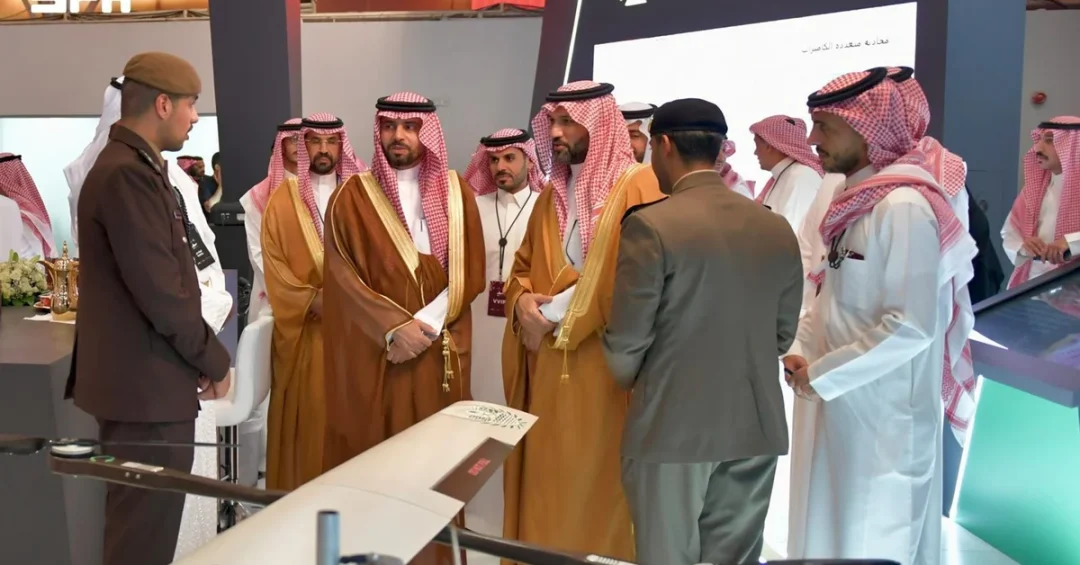
Assistant Minister of Interior for Technology Affairs Thamer Al-Harbi and Governor of the Digital Government Authority (DGA) Eng. Ahmed Alsuwaiyan visited the Ministry of Interior’s pavilion at the Security and Innovation Fair (SAIF) in Riyadh on November 26, 2026. The visit underscored Saudi Arabia’s commitment to leveraging advanced technology for national security and digital transformation. The fair, held at the Riyadh International Convention and Exhibition Center, is part of the Global Security and Technology Summit and showcases the latest innovations from around the world.
During their tour, Al-Harbi and Alsuwaiyan reviewed the ministry’s initiatives, including AI-enhanced systems, reconnaissance technologies for border security, environmental monitoring tools, and smart machinery. The visit highlighted the integration of cutting-edge solutions into Saudi Arabia’s security apparatus, aligning with the Kingdom’s Vision 2030 goals of digitalization and economic diversification. With 55 participating countries and 1,200 innovative projects across more than 10 interactive zones, SAIF serves as a global platform for collaboration and innovation. How does such a gathering shape the future of security and technology? It demonstrates Saudi Arabia’s proactive approach to addressing contemporary challenges through international cooperation and technological advancement.
Context and Background
The Security and Innovation Fair (SAIF) is a key component of the Global Security and Technology Summit, an event that brings together policymakers, industry leaders, and innovators to discuss and display advancements in security technologies. This year’s edition, held from November 24 to 26, 2026, at the Riyadh International Convention and Exhibition Center, attracted participants from 55 countries and featured 1,200 innovative projects across more than 10 interactive zones. The fair provides a platform for showcasing solutions in areas such as artificial intelligence, border security, environmental protection, and smart infrastructure.
Saudi Arabia has long recognized the importance of technology in enhancing national security and driving economic growth. The Ministry of Interior, under the leadership of Assistant Minister Thamer Al-Harbi, has been at the forefront of adopting AI-enhanced systems and smart solutions to protect borders, monitor environmental changes, and improve operational efficiency. The Digital Government Authority, led by Eng. Ahmed Alsuwaiyan, plays a pivotal role in advancing the Kingdom’s digital transformation agenda, ensuring that government services are efficient, transparent, and secure. What role does inter-agency collaboration play in achieving these objectives? It is essential, as it leverages diverse expertise and resources to tackle complex challenges.
The visit by Al-Harbi and Alsuwaiyan to the Ministry of Interior’s pavilion highlights the synergy between technology and security. By reviewing initiatives such as reconnaissance technologies and smart machinery, they reaffirmed the Kingdom’s commitment to staying at the forefront of innovation. This aligns with Vision 2030, which aims to diversify the economy, improve government efficiency, and enhance the quality of life for citizens. How can such events inspire further innovation? They provide a platform for knowledge exchange and showcase Saudi Arabia’s progress to a global audience.
Key Details of the Visit
During their visit, Assistant Minister Al-Harbi and Governor Alsuwaiyan were briefed on the Ministry of Interior’s latest projects. These included AI-enhanced systems designed to predict and respond to security threats, reconnaissance technologies for border security that utilize drones and sensors, tools for environmental protection and monitoring, and machinery equipped with smart solutions for various operational tasks. The pavilion showcased how these technologies are integrated into the ministry’s daily operations to enhance efficiency and effectiveness.
The SAIF exhibition itself is a testament to Saudi Arabia’s growing role as a hub for innovation. With 55 participating countries and 1,200 projects, it provides a unique opportunity for innovators, researchers, and specialized entities to present their work and explore partnerships. The event features interactive zones where attendees can experience firsthand the latest technologies in security, surveillance, and smart city solutions. How does the presence of international participants benefit Saudi Arabia? It fosters collaboration, attracts investment, and positions the Kingdom as a leader in security technology.
The visit also underscored the importance of digital government initiatives. The DGA, under Eng. Alsuwaiyan, has been instrumental in digitizing government services, making them more accessible and user-friendly. By aligning with the Ministry of Interior’s technological advancements, the DGA ensures that security and digital services go hand in hand. This integrated approach is crucial for maintaining national security while delivering seamless services to citizens and residents. What can other nations learn from Saudi Arabia’s model? It demonstrates how technology can be harnessed to improve both security and governance.
International and Regional Impact
The Global Security and Technology Summit, with SAIF as its centerpiece, has significant implications for international and regional security. By bringing together countries from around the world, it facilitates dialogue and cooperation on pressing security issues such as terrorism, cyber threats, and border management. Saudi Arabia’s leadership in hosting such an event reinforces its role as a stabilizing force in the region and a key player in global security efforts.
For the Middle East, the fair represents an opportunity to showcase regional innovations and foster partnerships. Countries in the region face similar challenges, and events like SAIF enable them to share best practices and develop joint solutions. Saudi Arabia’s advancements in AI and smart technologies can serve as a model for neighboring countries seeking to modernize their security infrastructure. How does this impact regional stability? By promoting cooperation and technology transfer, it contributes to a more secure and prosperous region.
On a global scale, the participation of 55 countries highlights the international community’s recognition of Saudi Arabia’s efforts. The Kingdom’s investment in security technology not only protects its own interests but also contributes to global security by combating transnational threats. The fair also provides a platform for Saudi companies to showcase their innovations, potentially leading to export opportunities and international partnerships. What does this mean for Saudi Arabia’s global standing? It enhances its reputation as a forward-thinking nation and a reliable partner in security and technology.
Economic and Strategic Significance
The economic implications of SAIF and the technologies showcased are substantial. The security technology sector is a growing market, and Saudi Arabia’s focus on innovation creates opportunities for investment, job creation, and economic diversification. By developing indigenous capabilities, the Kingdom reduces its reliance on foreign technology and fosters a knowledge-based economy. The Ministry of Interior’s initiatives, such as AI-enhanced systems and smart machinery, are not only about security but also about building a sustainable technological ecosystem.
Strategically, the integration of advanced technologies into security operations enhances the Kingdom’s ability to protect its borders, critical infrastructure, and citizens. This is particularly important given the geopolitical challenges in the region. The use of reconnaissance technologies and environmental monitoring tools demonstrates a comprehensive approach to security that considers both immediate threats and long-term sustainability. How does this align with Vision 2030? It directly supports the goals of a safe and secure society, a thriving economy, and a vibrant culture.
Moreover, the collaboration between the Ministry of Interior and the DGA exemplifies the whole-of-government approach that Vision 2030 advocates. By breaking down silos and promoting inter-agency cooperation, Saudi Arabia ensures that its digital transformation and security strategies are mutually reinforcing. This integrated model is essential for addressing complex challenges in an increasingly interconnected world. What are the long-term benefits? A more resilient, efficient, and innovative government that can adapt to future challenges.
Vision 2030 Alignment
The visit by Assistant Minister Al-Harbi and Governor Alsuwaiyan to the Ministry of Interior’s pavilion at SAIF is a clear reflection of Saudi Arabia’s Vision 2030 objectives. Vision 2030 aims to transform the Kingdom into a global investment powerhouse and a hub for innovation, with a focus on diversifying the economy, improving government services, and enhancing national security. The technologies showcased at SAIF—from AI-enhanced systems to smart machinery—are instrumental in achieving these goals.
By investing in advanced security technologies, Saudi Arabia not only safeguards its sovereignty but also positions itself as a leader in the global security market. The DGA’s role in digital government transformation ensures that these technologies are accessible and beneficial to all sectors of society. This holistic approach is what makes Vision 2030 a comprehensive blueprint for national development. How will these efforts shape Saudi Arabia’s future? They will create a safer, more prosperous, and digitally advanced nation that serves as an example for the world.
In conclusion, the visit to SAIF underscores Saudi Arabia’s unwavering commitment to innovation, security, and digital transformation. As the Kingdom continues to implement Vision 2030, events like this serve as catalysts for progress, bringing together the best minds and technologies to build a brighter future. What does this mean for the global community? It means a more secure and interconnected world, with Saudi Arabia at the forefront of positive change.
20 Questions
Q1. What is the Security and Innovation Fair (SAIF)?
A1. SAIF is an exhibition and competition held as part of the Global Security and Technology Summit in Riyadh, showcasing innovative security technologies from around the world. It features 55 participating countries and 1,200 projects across more than 10 interactive zones.
Q2. Who visited the Ministry of Interior’s pavilion at SAIF?
A2. Assistant Minister of Interior for Technology Affairs Thamer Al-Harbi and Governor of the Digital Government Authority Eng. Ahmed Alsuwaiyan visited the pavilion on November 26, 2026.
Q3. What initiatives were reviewed during the visit?
A3. They reviewed AI-enhanced systems, reconnaissance technologies for border security, environmental monitoring tools, and machinery equipped with smart solutions.
Q4. Where was SAIF held?
A4. SAIF was held at the Riyadh International Convention and Exhibition Center in Riyadh, Saudi Arabia.
Q5. How many countries participated in SAIF?
A5. 55 countries participated in SAIF, bringing together innovators, researchers, and specialized entities from around the world.
Q6. How many innovative projects were showcased at SAIF?
A6. 1,200 innovative projects were showcased across more than 10 interactive zones.
Q7. What is the role of the Digital Government Authority?
A7. The DGA is responsible for advancing Saudi Arabia’s digital transformation agenda, ensuring government services are efficient, transparent, and secure.
Q8. How does SAIF align with Vision 2030?
A8. SAIF supports Vision 2030 by promoting innovation, economic diversification, and enhanced national security through technology.
Q9. What are AI-enhanced systems used for in the Ministry of Interior?
A9. They are used to predict and respond to security threats, improving operational efficiency and effectiveness.
Q10. What are reconnaissance technologies for border security?
A10. These include drones and sensors that monitor borders to detect and prevent unauthorized crossings and other threats.
Q11. How do environmental monitoring tools contribute to security?
A11. They help track environmental changes that could impact national security, such as pollution or natural disasters, enabling timely responses.
Q12. What are smart machinery solutions?
A12. Smart machinery refers to equipment equipped with advanced technologies like AI and IoT for tasks such as surveillance, logistics, and emergency response.
Q13. What is the significance of the visit by Al-Harbi and Alsuwaiyan?
A13. It highlights the collaboration between the Ministry of Interior and the DGA in leveraging technology for security and digital transformation.
Q14. How does SAIF benefit international participants?
A14. It provides a platform to showcase innovations, forge partnerships, and learn about the latest security technologies.
Q15. What economic opportunities does SAIF create?
A15. It attracts investment, fosters job creation in the tech sector, and promotes economic diversification.
Q16. How does SAIF contribute to regional stability?
A16. By facilitating cooperation and technology transfer among countries, it helps address common security challenges and promotes peace.
Q17. What is the Global Security and Technology Summit?
A17. It is a summit that brings together global leaders and experts to discuss and display advancements in security and technology, with SAIF as its exhibition component.
Q18. How does the DGA support digital government services?
A18. The DGA digitizes government services, making them more accessible, efficient, and secure for citizens and residents.
Q19. What is the duration of SAIF?
A19. SAIF ran from November 24 to 26, 2026, at the Riyadh International Convention and Exhibition Center.
Q20. What does the future hold for Saudi Arabia’s security technology?
A20. With continued investment and innovation, Saudi Arabia aims to be a global leader in security technology, enhancing safety and prosperity in line with Vision 2030.
Reader Feedback
We value your thoughts. Please share your feedback on this article.
Your feedback helps us improve our coverage.
Related articles
 Giza Vehicle Fire Death Toll Rises to 30: Saudi Solidarity
 Saudi Arabia Weather Forecast: Thunderstorms and Fog Expected Thursday
 RGA Reports 60% Drop in Road Fatalities, Expands Intercity Services
 4.6-Magnitude Earthquake Strikes Türkiye’s Muğla Province
 Imam Turki bin Abdullah Reserve Glossary Explores Biodiversity
 MWL Condemns Houthi Attack on Riyadh Financial District