


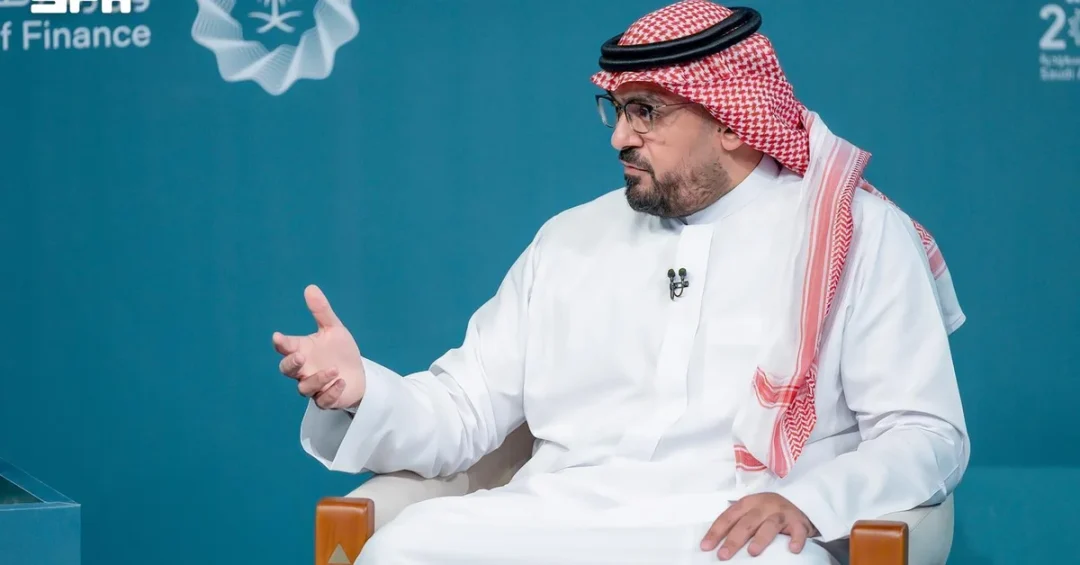
Saudi Arabia is offering infrastructure investment opportunities valued at approximately $1 trillion over the next eight to ten years, Minister of Economy and Planning Faisal Alibrahim announced at the Budget 2027 Forum in Riyadh. The announcement, carried by the Saudi Press Agency (SPA), underscores the Kingdom’s accelerating push to diversify its economy and attract global capital under Saudi Vision 2030. Speaking during a panel discussion, Alibrahim detailed a broad set of economic indicators showing resilience, structural reform progress, and a steady decline in oil dependence. The forum, held in the Saudi capital, brought together policymakers, economists, and private-sector leaders to assess the national budget and the road ahead.
The minister’s remarks come at a pivotal moment for the Kingdom, as it deepens efforts to expand non-oil sectors, boost foreign direct investment, and integrate more closely with regional and global partners. With oil revenues historically dominating the fiscal picture, the shift toward a more diversified economic base is central to the Vision 2030 blueprint championed by Crown Prince Mohammed bin Salman. The $1 trillion infrastructure pipeline signals to international investors that Saudi Arabia is open for business on an unprecedented scale, spanning transport, logistics, energy, digital infrastructure, and urban development. It also reflects a broader strategy to convert petrodollar surpluses into long-term productive assets that generate jobs and sustain growth for decades.
Context and Background
How did Saudi Arabia arrive at a point where it can offer a trillion dollars in infrastructure opportunities? The answer lies in nearly a decade of sustained reforms launched under Vision 2030, which sought to reduce the Kingdom’s reliance on oil and build a diversified, private-sector-led economy. According to Minister Alibrahim, oil dependence fell from 70% in 2019 to 61% in 2024 and continues to decline. That trajectory is not accidental; it is the result of deliberate policy choices, including fiscal consolidation, subsidy reform, and massive investment in non-oil sectors such as tourism, entertainment, technology, and manufacturing. The Budget 2027 Forum served as a platform to showcase these achievements and outline the next phase of the transformation.
The minister also highlighted the resilience of the Saudi economy amid global headwinds, noting that non-oil activities grew by 1.8% in the first three quarters of 2026, with third-quarter growth reaching 1.9%. Forecasts point to non-oil growth of 4.7% in 2027, while overall gross domestic product (GDP) is projected to expand by 10.9% in 2027 and 3.8% in 2028. These figures reflect an economy that is not only weathering external shocks but also gaining momentum from within. The expansion of non-oil government revenues, which have tripled since Vision 2030’s launch and now account for 36% of total expenditure compared with 17% previously, provides fiscal space for continued investment in mega-projects and public services. This fiscal diversification is a cornerstone of the Kingdom’s long-term stability.
Key Details of the Investment Opportunity
What exactly does the $1 trillion infrastructure opportunity entail? Minister Alibrahim outlined a pipeline of projects spanning the next eight to ten years, covering sectors from transport and logistics to renewable energy, water, and digital connectivity. The National Infrastructure Fund has already committed SAR10.5 billion to projects with a total value of SAR60 billion, demonstrating the government’s willingness to deploy seed capital to attract private co-investment. This approach leverages public funds to de-risk projects and crowd in domestic and international investors, a model that has proven effective in other markets. The minister stressed that the private sector is a critical partner in this endeavor, noting that private-sector employment among Saudi nationals increased by approximately 190,000 jobs in just one year.
Beyond the headline figure, Alibrahim provided a granular view of economic performance. Oil production has recovered to 10.6 million barrels per day, with exports reaching a four-year high of 7.47 million barrels per day. The share of non-oil exports from Red Sea ports jumped from 19% to approximately 41%, while air cargo capacity in Riyadh surpassed previous levels. These indicators point to a logistics and trade ecosystem that is expanding rapidly, supported by investments in ports, airports, and digital infrastructure. The Kingdom also climbed four places to rank 13th globally in foreign direct investment inflows, and fixed capital formation grew by 2.7% in the second quarter. Such metrics reinforce the narrative of a dynamic, forward-looking economy.
Regional stability, long-term planning, and strategic partnerships were also emphasized as essential enablers. Alibrahim cited the importance of economic integration within the Gulf Cooperation Council (GCC), the global minimum tax framework, and the GCC-UK free trade agreement. These factors collectively enhance Saudi Arabia’s attractiveness as an investment destination and its ability to secure supply chains and market access. The minister’s comments reflect a holistic view of economic policy that goes beyond domestic reforms to encompass regional cooperation and global engagement. For international investors, the message is clear: Saudi Arabia is not only offering scale but also a stable and predictable environment underpinned by strong institutions and strategic alliances.
International and Regional Impact
How will this massive investment push affect the broader Middle East and global markets? The $1 trillion infrastructure program is likely to have significant spillover effects across the region. As Saudi Arabia builds out its transport corridors, logistics hubs, and digital networks, it will deepen economic linkages with neighboring GCC states, creating opportunities for cross-border trade and joint ventures. The emphasis on GCC integration and the GCC-UK free trade agreement signals a desire to anchor the Kingdom within a wider network of trade and investment partnerships. For global investors, the scale of the opportunity is a rare chance to participate in one of the world’s largest infrastructure build-outs, with potential returns across multiple sectors.
Moreover, the Kingdom’s role in ensuring global economic stability, energy security, and trade is underscored by its reliable oil production and export levels. At 10.6 million barrels per day and exports at a four-year high, Saudi Arabia remains a pivotal player in global energy markets. The simultaneous growth of non-oil exports through Red Sea ports highlights a diversification of trade routes and products, reducing vulnerability to sector-specific shocks. This dual track—reliable energy supply and expanding non-oil trade—positions the Kingdom as a stabilizing force in an uncertain global economy. International partners are likely to view the $1 trillion pipeline as a signal of Saudi Arabia’s long-term commitment to openness and collaboration.
Economic and Strategic Significance
Why does this announcement matter for Saudi Arabia’s economic future? The $1 trillion infrastructure opportunity is not merely a number; it represents a strategic pivot toward sustainable, private-sector-led growth. By attracting foreign direct investment, the Kingdom can access not only capital but also technology, expertise, and global market connections. The rise in FDI ranking to 13th globally is an early indicator that these efforts are bearing fruit. Furthermore, the growth in fixed capital formation suggests that businesses are expanding their productive capacity, a prerequisite for long-term job creation and productivity gains. The increase of 190,000 private-sector jobs for Saudi nationals in one year demonstrates that the strategy is translating into tangible employment outcomes.
From a strategic perspective, the infrastructure drive aligns with the Kingdom’s goal of becoming a global logistics and investment hub. Projects such as NEOM, the Red Sea Project, and Qiddiya are already showcasing Saudi Arabia’s ambition, but the $1 trillion pipeline extends far beyond these flagship developments. It encompasses upgrades to existing infrastructure, new industrial zones, renewable energy installations, and smart city technologies. By fostering a vibrant private sector and enhancing domestic purchasing power, the government aims to create a self-reinforcing cycle of growth. The minister’s reference to higher household incomes and improved resource allocation highlights the social dimension of these reforms, which are designed to improve quality of life for all Saudis.
Vision 2030 Alignment
How does the $1 trillion infrastructure opportunity fit into Vision 2030? It is a direct manifestation of the Vision’s core objectives: economic diversification, private-sector empowerment, and global engagement. The decline in oil dependence from 70% to 61% and the tripling of non-oil government revenues are measurable milestones on the path to a post-oil economy. The infrastructure pipeline will provide the physical and digital backbone for future growth, enabling sectors like tourism, manufacturing, and technology to flourish. It also reinforces Saudi Arabia’s position as a bridge between continents, leveraging its geographic advantages to facilitate trade and investment flows.
As the Kingdom continues to implement Vision 2030, announcements like this serve as a beacon for international investors and partners. The Budget 2027 Forum demonstrated that Saudi Arabia is not only planning for the future but actively building it. With strong leadership, strategic planning, and a clear roadmap, the Kingdom is poised to capture a significant share of global investment and talent. The coming years will see the realization of these opportunities, transforming the Saudi economy and cementing its role as a leader in the region and beyond. For those seeking to be part of this journey, the message is unambiguous: the time to engage is now.
20 Questions
Q1. What did the Saudi Minister of Economy and Planning announce at the Budget 2027 Forum?
A1. Minister Faisal Alibrahim announced that Saudi Arabia offers infrastructure investment opportunities worth $1 trillion over the next eight to ten years, highlighting the Kingdom’s commitment to economic diversification and global partnership.
Q2. How has Saudi Arabia’s reliance on oil changed in recent years?
A2. Oil dependence decreased from 70% in 2019 to 61% in 2024 and continues to decline, reflecting the success of Vision 2030 reforms aimed at diversifying the economy.
Q3. What was the growth rate of non-oil activities in the first three quarters of 2026?
A3. Non-oil activities grew by 1.8% in the first three quarters of 2026, with third-quarter growth reaching 1.9%, demonstrating the resilience of the non-oil sectors.
Q4. What are the GDP growth forecasts for 2027 and 2028?
A4. Overall GDP growth is forecast at 10.9% in 2027 and 3.8% in 2028, according to Minister Alibrahim, indicating strong economic momentum.
Q5. What is the current level of Saudi oil production and exports?
A5. Oil production has recovered to 10.6 million barrels per day, with exports reaching a four-year high of 7.47 million barrels per day, underscoring the Kingdom’s role in global energy security.
Q6. How has the share of non-oil exports from Red Sea ports changed?
A6. The share of non-oil exports from Red Sea ports increased significantly from 19% to approximately 41%, reflecting the diversification of trade routes and products.
Q7. What is the significance of the National Infrastructure Fund’s commitment?
A7. The National Infrastructure Fund has committed SAR10.5 billion to projects totaling SAR60 billion, demonstrating the government’s strategy to leverage public capital to attract private investment.
Q8. How many jobs were created in the private sector for Saudi nationals in one year?
A8. Private-sector employment among Saudi nationals increased by approximately 190,000 jobs in just one year, highlighting the success of economic reforms in generating employment.
Q9. What is Saudi Arabia’s ranking in global foreign direct investment inflows?
A9. Saudi Arabia climbed four places to rank 13th globally in foreign direct investment inflows, a testament to its improving investment climate and attractiveness.
Q10. What role does regional stability play in Saudi Arabia’s economic strategy?
A10. Minister Alibrahim emphasized that regional stability is crucial for long-term planning and strategic partnerships, enabling sustainable growth and investment.
Q11. How does the GCC-UK free trade agreement benefit Saudi Arabia?
A11. The GCC-UK free trade agreement enhances market access and trade flows, supporting Saudi Arabia’s integration into global markets and its economic diversification goals.
Q12. What is the significance of the global minimum tax framework for Saudi Arabia?
A12. The global minimum tax framework is part of the international tax landscape that Saudi Arabia engages with to ensure a fair and competitive investment environment.
Q13. How has fixed capital formation performed recently?
A13. Fixed capital formation grew by 2.7% in the second quarter, indicating increased business investment in productive assets, which is essential for long-term growth.
Q14. What are the key sectors for the $1 trillion infrastructure pipeline?
A14. The pipeline spans transport, logistics, renewable energy, water, digital connectivity, and urban development, among other sectors, aiming to build a diversified and modern economy.
Q15. How does the infrastructure push align with Vision 2030?
A15. It directly supports Vision 2030’s objectives of economic diversification, private-sector empowerment, and global engagement, providing the backbone for future growth.
Q16. What is the expected impact on household incomes?
A16. The reforms are expected to increase domestic purchasing power and household incomes through higher employment and improved resource allocation, as noted by the minister.
Q17. How does Saudi Arabia ensure global economic stability?
A17. Through reliable energy supply, expanding non-oil trade, and strategic investments, Saudi Arabia contributes to global economic stability and energy security.
Q18. What is the role of the private sector in this strategy?
A18. The private sector is a critical partner, expected to co-invest and drive innovation, with the government creating an enabling environment through funds and reforms.
Q19. What are the implications for international investors?
A19. International investors have a rare opportunity to participate in one of the world’s largest infrastructure build-outs, with potential returns across multiple sectors and a stable investment climate.
Q20. What message did the Budget 2027 Forum convey to the world?
A20. The forum conveyed that Saudi Arabia is open for business, with a clear roadmap for growth, diversification, and partnership, inviting global collaboration in its transformative journey.
Reader Feedback
We value your thoughts. Please share your feedback on this article.
Your feedback helps us improve our coverage.
Related articles
 Budget 2027 Forum Highlights Saudi Economic Resilience
 Investment Minister: 2027 Budget Boosts Growth, Competitiveness
 Saudi 2027 Budget Prioritizes Essential Services and Growth
 Kidana Path Initiative Empowers Cottage Industry Families
 Najrani Wheat Planting Season Kicks Off in Najran
 Saudi Cabinet Approves 2027 Budget, Eyes Vision 2030