


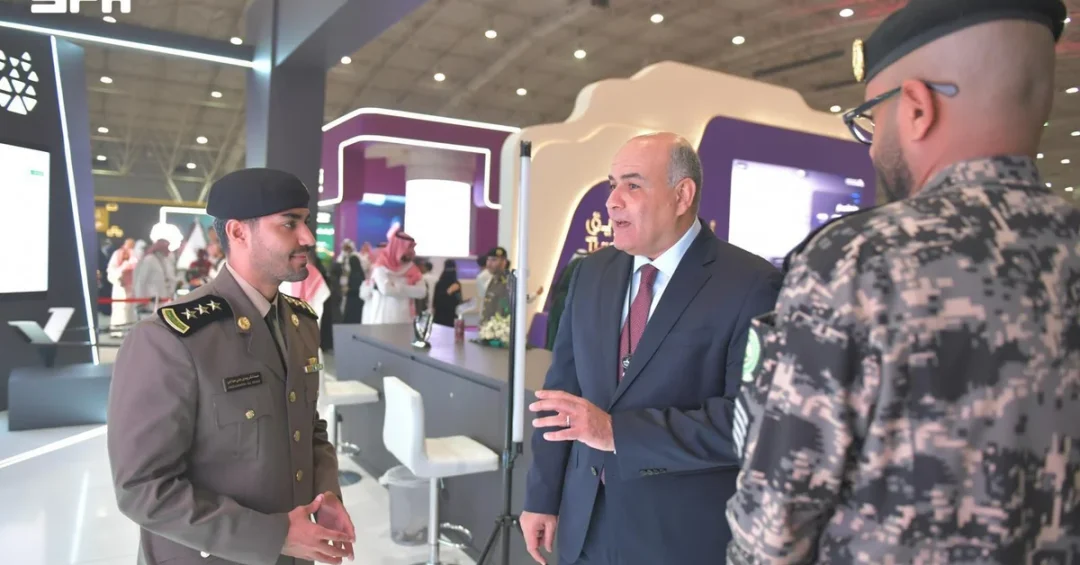
Egyptian Ambassador to Saudi Arabia Hatem Abdelkader visited the Ministry of Interior’s pavilion at the Security and Innovation Fair (SAIF) on November 25, 2026, according to the Saudi Press Agency (SPA). The fair, held under the umbrella of the Global Security and Technology Summit, continues through November 26 at the Riyadh International Convention and Exhibition Center. During the visit, the ambassador was briefed on the ministry’s latest artificial intelligence (AI)-enhanced systems, reconnaissance technologies for border security, environmental monitoring tools, and a fleet of vehicles equipped with smart solutions. The visit underscores the deepening bilateral ties between Saudi Arabia and Egypt and highlights the Kingdom’s growing role as a global hub for security innovation. How does such engagement reflect the broader strategic partnership between the two nations?
The Security and Innovation Fair (SAIF) has emerged as a premier platform for showcasing cutting-edge security technologies and fostering international collaboration. With participation from 55 countries, 1,200 innovative projects, and more than 10 interactive zones, the event brings together innovators, researchers, and specialized entities from around the world. Ambassador Abdelkader’s visit to the Ministry of Interior’s pavilion is a testament to the Kingdom’s commitment to sharing its technological advancements and strengthening regional partnerships. The fair not only highlights Saudi Arabia’s leadership in security innovation but also serves as a catalyst for knowledge exchange and joint efforts to address common challenges. What does this level of international participation say about Saudi Arabia’s convening power?
Context and Background
What drives a senior diplomat to explore a security technology exhibition? The visit by Egyptian Ambassador Hatem Abdelkader to the Ministry of Interior’s pavilion at SAIF reflects the enduring and multifaceted relationship between Saudi Arabia and Egypt. Historically, the two nations have shared deep-rooted ties across political, economic, and cultural domains. In recent years, this partnership has expanded into new frontiers, including technology, security, and innovation. The Global Security and Technology Summit, under which SAIF is organized, provides a vital forum for countries to exchange expertise and explore collaborative opportunities. Ambassador Abdelkader’s presence signals Egypt’s keen interest in learning from Saudi Arabia’s rapid advancements in security technology and its successful integration of AI and smart solutions into national security frameworks. Such visits also reinforce the diplomatic and strategic alignment between the two countries, which is essential for regional stability and prosperity.
The Ministry of Interior’s participation in SAIF is part of Saudi Arabia’s broader efforts to modernize its security apparatus and enhance its capabilities through innovation. Under the visionary leadership of the Kingdom, the ministry has embraced digital transformation, leveraging AI, big data, and the Internet of Things (IoT) to secure borders, protect the environment, and ensure public safety. The fair serves as a showcase for these achievements and a platform for international cooperation. Egypt, as a key ally and partner, stands to benefit from these technologies, and the ambassador’s visit may pave the way for future collaborations. How might such exchanges shape the future of regional security cooperation?
Key Details of the Visit
What exactly did the ambassador see at the Ministry of Interior’s pavilion? During his tour, Ambassador Abdelkader was given a comprehensive overview of the ministry’s efforts in harnessing artificial intelligence to enhance security operations. He examined AI-enhanced systems and equipment designed to detect and respond to threats in real time. The ambassador also learned about advanced reconnaissance technologies used for securing borders, including drones and surveillance systems that provide unparalleled situational awareness. These tools are critical for safeguarding the Kingdom’s vast borders and ensuring the safety of its citizens and residents. Additionally, the ambassador was briefed on environmental protection and monitoring technologies, which reflect Saudi Arabia’s commitment to sustainable development and environmental compliance. A fleet of vehicles equipped with smart solutions was also on display, demonstrating the integration of technology into daily security operations.
The fair itself is a testament to Saudi Arabia’s ambition to lead in security innovation. With 1,200 innovative projects and more than 10 interactive zones, SAIF offers a dynamic environment for participants to explore the latest solutions. The event attracts innovators, researchers, and specialized entities from around the world, fostering an atmosphere of collaboration and knowledge sharing. The Ministry of Interior’s pavilion, in particular, stands out as a hub of technological prowess, showcasing how the Kingdom is leveraging cutting-edge tools to address contemporary security challenges. Ambassador Abdelkader’s visit not only highlights the strength of Saudi-Egyptian relations but also underscores the global interest in Saudi Arabia’s security advancements. What can other nations learn from the Kingdom’s approach to integrating technology into security?
International and Regional Impact
How does Saudi Arabia’s leadership in security technology influence the broader region? The Kingdom’s advancements in AI, reconnaissance, and smart solutions have positioned it as a leader in the Middle East and beyond. By hosting events like SAIF, Saudi Arabia facilitates the exchange of ideas and best practices, helping to elevate security standards across the region. For Egypt, a nation facing its own security challenges, access to these technologies and insights is invaluable. The visit by Ambassador Abdelkader could lead to enhanced cooperation between the two countries in areas such as border security, counterterrorism, and environmental protection. Moreover, it signals to the international community that Saudi Arabia is open to partnerships and committed to contributing to global security. This is particularly important in a world where security threats are increasingly complex and transnational.
The Global Security and Technology Summit, with SAIF as a key component, also reinforces Saudi Arabia’s role as a diplomatic bridge-builder. By bringing together 55 countries, the event creates opportunities for dialogue and collaboration that transcend political differences. The presence of ambassadors and officials from various nations underscores the Kingdom’s ability to convene diverse stakeholders around common goals. For Egypt, participating in such events and engaging with Saudi innovations aligns with its own vision for modernization and security. The partnership between the two countries, therefore, extends beyond bilateral relations to contribute to regional stability and prosperity. What role will Saudi Arabia play in shaping the future of global security cooperation?
Economic and Strategic Significance
What are the economic and strategic implications of Saudi Arabia’s focus on security innovation? The development and deployment of advanced security technologies are not only about safeguarding the nation but also about driving economic growth. The security sector is a significant contributor to Saudi Arabia’s economy, and innovations showcased at SAIF have the potential to be commercialized and exported. The fair itself stimulates economic activity by attracting international participants, exhibitors, and visitors to Riyadh. It also fosters partnerships between Saudi companies and global firms, leading to joint ventures and investment opportunities. For Egypt, collaboration with Saudi Arabia in this field could open doors to technology transfer and capacity building, benefiting its own economy. Strategically, Saudi Arabia’s leadership in security technology enhances its influence on the global stage and strengthens its alliances.
The Ministry of Interior’s emphasis on environmental monitoring and compliance also aligns with global sustainability goals and Saudi Arabia’s Vision 2030, which prioritizes environmental protection. By integrating smart solutions into vehicles and security operations, the Kingdom is not only improving efficiency but also reducing its carbon footprint. This dual focus on security and sustainability is a model that many nations, including Egypt, may seek to emulate. The economic diversification pursued under Vision 2030 is further supported by such technological advancements, as they create new industries and job opportunities. How will these innovations contribute to Saudi Arabia’s long-term economic resilience?
Vision 2030 Alignment
How does the Security and Innovation Fair align with Saudi Arabia’s Vision 2030? Vision 2030 is a comprehensive plan to diversify the Kingdom’s economy, enhance public services, and position Saudi Arabia as a global leader. The security sector is a critical pillar of this vision, as a safe and secure environment is essential for economic growth and social development. The Ministry of Interior’s participation in SAIF, showcasing AI-enhanced systems and smart solutions, exemplifies the vision’s emphasis on innovation and technology. By investing in advanced security technologies, Saudi Arabia is not only protecting its people but also building a knowledge-based economy. The fair’s international participation and the interest shown by diplomats like Ambassador Abdelkader demonstrate the global recognition of Saudi Arabia’s progress. This aligns with Vision 2030’s goal of strengthening international partnerships and enhancing the Kingdom’s soft power.
Furthermore, the event supports the vision’s objective of creating a vibrant society and a thriving economy. The interactive zones and innovative projects inspire young Saudis to pursue careers in science, technology, engineering, and mathematics (STEM), contributing to a skilled workforce. The collaboration with Egypt and other nations fosters cultural exchange and mutual understanding, which are essential for global harmony. As Saudi Arabia continues to host such events, it reinforces its position as a hub for innovation and a leader in the region. The visit by Ambassador Abdelkader is a small but significant step in the ongoing journey toward achieving Vision 2030 and solidifying Saudi-Egyptian ties for a prosperous future. What other milestones will Saudi Arabia achieve as it advances its ambitious transformation?
20 Questions
Q1. What is the Security and Innovation Fair (SAIF)?
A1. SAIF is a premier event held as part of the Global Security and Technology Summit, showcasing the latest security innovations. It runs from November 25 to 26, 2026, at the Riyadh International Convention and Exhibition Center, featuring participation from 55 countries and 1,200 innovative projects.
Q2. Who visited the Ministry of Interior’s pavilion at SAIF?
A2. Egyptian Ambassador to Saudi Arabia Hatem Abdelkader visited the pavilion on November 25, 2026. He was briefed on the ministry’s AI-enhanced systems, reconnaissance technologies, and environmental monitoring tools, reflecting the strong bilateral ties between Egypt and Saudi Arabia.
Q3. What technologies were showcased at the Ministry of Interior’s pavilion?
A3. The pavilion featured artificial intelligence (AI)-enhanced systems, reconnaissance technologies for border security, environmental protection and monitoring technologies, and a fleet of vehicles equipped with smart solutions. These innovations demonstrate Saudi Arabia’s commitment to modernizing its security apparatus.
Q4. How many countries are participating in SAIF?
A4. The fair features participation from 55 countries, bringing together innovators, researchers, and specialized entities from around the world. This international participation highlights Saudi Arabia’s role as a global hub for security and technology collaboration.
Q5. What is the significance of the Egyptian Ambassador’s visit?
A5. The visit underscores the deep-rooted partnership between Saudi Arabia and Egypt, particularly in security and technology. It signals Egypt’s interest in learning from Saudi advancements and may lead to enhanced cooperation in border security, counterterrorism, and environmental protection.
Q6. What are AI-enhanced systems in the context of security?
A6. AI-enhanced systems use artificial intelligence to analyze data, detect threats, and automate responses. At SAIF, the Ministry of Interior showcased such systems for real-time surveillance, border security, and environmental monitoring, demonstrating how AI can improve efficiency and accuracy in security operations.
Q7. How does SAIF contribute to Saudi Arabia’s Vision 2030?
A7. SAIF aligns with Vision 2030 by promoting innovation, technology, and international partnerships. It supports economic diversification, creates opportunities for STEM careers, and enhances Saudi Arabia’s global standing as a leader in security and technology, all of which are key objectives of the vision.
Q8. What is the Global Security and Technology Summit?
A8. The Global Security and Technology Summit is a broader event under which SAIF is organized. It brings together experts, officials, and companies to discuss and showcase advancements in security and technology, fostering international cooperation and addressing global security challenges.
Q9. What environmental technologies were highlighted?
A9. The Ministry of Interior showcased environmental protection and monitoring technologies, including measures to ensure environmental compliance. These tools reflect Saudi Arabia’s commitment to sustainability and align with Vision 2030’s environmental goals, demonstrating how security operations can be eco-friendly.
Q10. How many innovative projects are featured at SAIF?
A10. SAIF features 1,200 innovative projects across more than 10 interactive zones. These projects cover a wide range of security and technology solutions, providing a comprehensive overview of the latest advancements and fostering collaboration among participants.
Q11. What are reconnaissance technologies for border security?
A11. Reconnaissance technologies include drones, sensors, and surveillance systems that provide real-time information about border activities. They help detect intrusions, monitor movements, and enhance situational awareness, making border security more effective and efficient.
Q12. What smart solutions are integrated into vehicles?
A12. Vehicles equipped with smart solutions may include advanced communication systems, GPS tracking, real-time data analytics, and autonomous features. These enhancements improve operational efficiency, response times, and coordination during security missions, showcasing the integration of technology into daily operations.
Q13. How does the visit strengthen Saudi-Egyptian relations?
A13. The visit reinforces diplomatic and strategic ties between Saudi Arabia and Egypt. It demonstrates mutual interest in security cooperation and technology exchange, paving the way for joint initiatives, capacity building, and enhanced regional stability, which benefits both nations.
Q14. What interactive zones are at SAIF?
A14. SAIF features more than 10 interactive zones where participants can engage with cutting-edge technologies, attend demonstrations, and participate in workshops. These zones cover areas such as AI, cybersecurity, border security, and environmental monitoring, providing hands-on experiences.
Q15. What is the role of the Ministry of Interior in Saudi Arabia?
A15. The Ministry of Interior is responsible for maintaining internal security, managing borders, and ensuring public safety. It oversees police forces, civil defense, and other agencies, and is at the forefront of adopting advanced technologies to enhance its operations.
Q16. How does SAIF promote international cooperation?
A16. SAIF promotes international cooperation by bringing together participants from 55 countries, including government officials, innovators, and researchers. It facilitates dialogue, knowledge exchange, and partnerships, helping to address common security challenges and fostering global stability.
Q17. What economic benefits does SAIF bring to Saudi Arabia?
A17. SAIF stimulates economic activity by attracting international visitors, exhibitors, and investors. It showcases commercializable technologies, fosters partnerships, and creates opportunities for Saudi companies to collaborate with global firms, contributing to economic diversification and job creation.
Q18. How does the fair support Saudi Arabia’s soft power?
A18. By hosting a major international event like SAIF, Saudi Arabia enhances its soft power and global influence. It demonstrates leadership in security innovation, builds diplomatic ties, and positions the Kingdom as a hub for technology and collaboration, improving its image on the world stage.
Q19. What future collaborations might result from the ambassador’s visit?
A19. The visit could lead to joint research projects, technology transfer agreements, and training programs between Saudi Arabia and Egypt. It may also facilitate Egyptian participation in future Saudi-hosted events, deepening cooperation in security, technology, and environmental protection.
Q20. How can other nations benefit from SAIF?
A20. Other nations can benefit from SAIF by learning about advanced security technologies, forming partnerships with Saudi entities, and gaining insights into best practices. The fair provides a platform for networking, knowledge sharing, and exploring innovative solutions to common security challenges.
Reader Feedback
We value your thoughts. Please share your feedback on this article.
Your feedback helps us improve our coverage.
Related articles
 KSrelief Delivers Clean Water to Displaced Families in Taiz
 KSrelief Supplies Clean Water to Displaced Families in Yemen’s Lahj
 KACARE Exhibition in Madinah Highlights Energy Initiatives
 Houthi Projectile Hits Jazan Port, Minor Damage: Coalition
 Arab Interior Ministers Council Condemns Houthi Attacks on Saudi Arabia
 4.6-Magnitude Earthquake Strikes Türkiye’s Muğla Province