


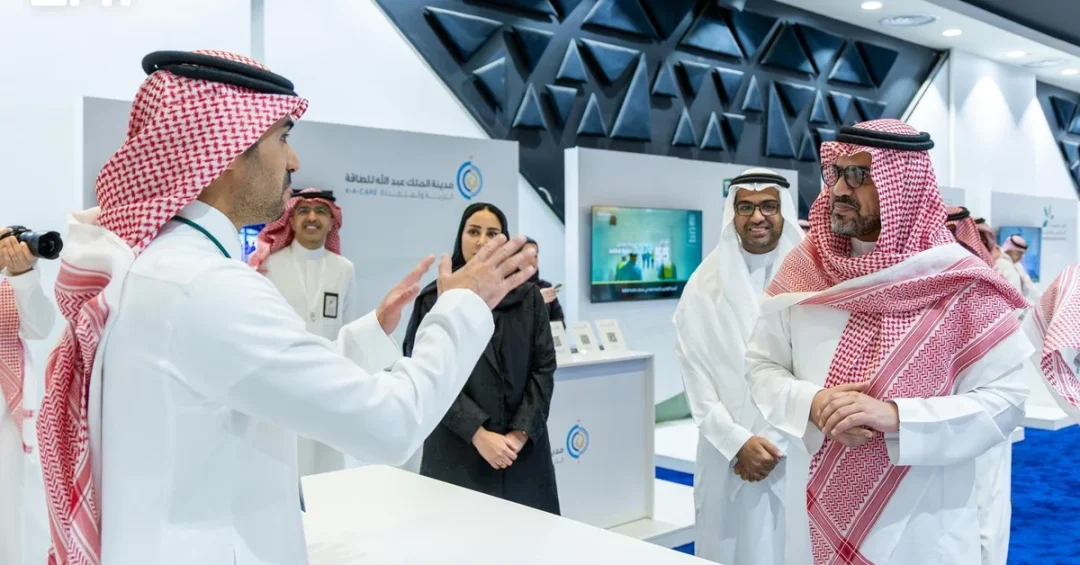
King Abdullah City for Atomic and Renewable Energy (KACARE), in cooperation with the Islamic University of Madinah and several energy sector entities, organized an awareness and communication exhibition in Madinah on November 25, 2026, as part of a national initiative to support and develop human resources for the Kingdom’s energy sector. The exhibition aimed to raise public awareness of the energy sector, its sources and various fields, introduce university students in Madinah to different energy sources and fields, strengthen communication between energy sector entities and the academic community, and showcase national efforts and initiatives in this field to support a sustainable energy future.
The event provided students with the opportunity to learn about the participating entities’ efforts and their key programs, initiatives and projects through scientific and educational content covering energy fields, applications and future directions. It also offered a platform for direct communication and knowledge exchange with representatives of the participating entities. Three specialized workshops were held as part of the exhibition, addressing the methodology for selecting the appropriate capacity for solar energy systems after improving energy consumption efficiency in buildings, the fundamentals of project management and professional practices, and the professional competencies of university students and their role in enhancing their readiness for the labor market. The workshops aimed to develop students’ knowledge and professional skills. The exhibition is part of a series of awareness and communication exhibitions organized by KACARE in cooperation with energy sector entities and universities, as part of its efforts to promote scientific awareness, raise public understanding of the energy sector, highlight the Kingdom’s efforts to develop its various fields, and support a sustainable energy future.
Context and Background
Why does an exhibition in Madinah matter for the future of energy in Saudi Arabia? The event, organized by King Abdullah City for Atomic and Renewable Energy, reflects a broader strategic push under Saudi Vision 2030 to diversify the Kingdom’s energy mix and cultivate a skilled national workforce. KACARE, established by royal decree in 2010, is mandated to lead the development of atomic and renewable energy in Saudi Arabia, ensuring that these technologies contribute to sustainable economic growth and the well-being of Saudi citizens. The exhibition in Madinah is part of a series of awareness and communication exhibitions that KACARE organizes in cooperation with energy sector entities and universities across the Kingdom.
The Islamic University of Madinah, a prominent institution of higher learning, hosted the event, which brought together students, academics, and representatives from various energy sector organizations. The collaboration underscores the importance of integrating academic knowledge with practical industry insights. By targeting university students, the exhibition aims to inspire and prepare the next generation of Saudi professionals who will drive the Kingdom’s energy transition. The event also aligns with the national objective to localize expertise in renewable and atomic energy, reducing reliance on foreign expertise and creating high-value jobs for Saudi nationals. The timing is significant as Saudi Arabia accelerates its renewable energy deployment, targeting 50% of electricity generation from renewables by 2030.
Key Details
What did the exhibition actually offer to its participants? The exhibition featured scientific and educational content covering various energy fields, applications, and future directions. Students had the chance to interact directly with representatives from participating entities, gaining insights into ongoing programs, initiatives, and projects. The three specialized workshops were a highlight, addressing practical and professional topics. The first workshop focused on the methodology for selecting the appropriate capacity for solar energy systems after improving energy consumption efficiency in buildings—a critical skill as Saudi Arabia expands solar installations. The second workshop covered the fundamentals of project management and professional practices, equipping students with tools to manage energy projects effectively. The third workshop addressed the professional competencies of university students and their role in enhancing their readiness for the labor market, bridging the gap between academic learning and industry demands.
These workshops were designed to develop students’ knowledge and professional skills, making them more competitive in the job market. The exhibition also served as a platform for knowledge exchange, allowing students to learn about the latest technologies and career paths in the energy sector. Participating entities included various organizations within the energy sector, though specific names were not provided in the official announcement. The event is part of KACARE’s ongoing efforts to promote scientific awareness and public understanding of the energy sector, highlighting the Kingdom’s efforts to develop its various fields and support a sustainable energy future. By engaging students early, KACARE aims to build a pipeline of talent that will sustain the Kingdom’s energy ambitions for decades to come.
International and Regional Impact
How does Saudi Arabia’s investment in human capital resonate beyond its borders? The exhibition in Madinah is a microcosm of the Kingdom’s broader strategy to position itself as a global leader in energy innovation. As the world’s largest oil exporter, Saudi Arabia is diversifying its energy sources and reducing its carbon footprint, in line with international climate goals. By educating its youth about renewable and atomic energy, the Kingdom is not only securing its own energy future but also contributing to global efforts to combat climate change. The event also strengthens regional cooperation, as energy sector entities from across the Kingdom participated, sharing best practices and fostering collaboration. This aligns with Saudi Arabia’s role as a stabilizing force in global energy markets and its commitment to the Paris Agreement.
Moreover, the exhibition highlights the Kingdom’s dedication to the Sustainable Development Goals, particularly those related to affordable and clean energy (SDG 7) and quality education (SDG 4). By empowering students with knowledge about energy efficiency, solar power, and project management, Saudi Arabia is investing in a generation that will drive sustainable development both domestically and internationally. The involvement of the Islamic University of Madinah also underscores the role of educational institutions in advancing national priorities. As Saudi Arabia hosts major global events and expands its diplomatic outreach, such initiatives enhance its soft power and demonstrate its commitment to knowledge sharing and international cooperation. The exhibition thus serves as a model for other nations seeking to integrate education with energy policy.
Economic and Strategic Significance
What economic benefits can Saudi Arabia expect from such awareness initiatives? The development of national human resources is a cornerstone of Vision 2030, which aims to reduce unemployment, increase women’s participation in the workforce, and create a diversified, knowledge-based economy. By exposing students to career opportunities in the energy sector, the exhibition helps to align educational outcomes with labor market needs. This is crucial as the Kingdom embarks on mega-projects like NEOM, the Red Sea Project, and massive solar and wind farms, all of which require skilled professionals. The energy sector is a key pillar of the Saudi economy, and by nurturing local talent, the Kingdom can reduce its reliance on expatriate workers and ensure that the benefits of its energy transition are felt by its citizens.
Strategically, the exhibition reinforces Saudi Arabia’s leadership in global energy markets. As the Kingdom shifts towards a more sustainable energy mix, it is also maintaining its role as a reliable supplier of conventional energy. The knowledge and skills gained by students will be instrumental in managing the complexities of this dual approach. Furthermore, the focus on energy efficiency in buildings and solar system capacity reflects a practical understanding of the challenges and opportunities in the renewable energy sector. By investing in human capital, Saudi Arabia is not only preparing for a post-oil future but also enhancing its economic resilience and competitiveness. The exhibition thus contributes to the broader goal of economic diversification and sustainable growth.
Vision 2030 Alignment
How does this exhibition fit into the grand tapestry of Saudi Vision 2030? Vision 2030, launched in 2016 by Crown Prince Mohammed bin Salman, is a comprehensive plan to transform Saudi Arabia into a vibrant society, a thriving economy, and an ambitious nation. The exhibition directly supports several of its pillars, including the development of human capital, the diversification of the economy, and the promotion of sustainable energy. By targeting university students, KACARE is investing in the future leaders of the Kingdom’s energy sector, ensuring that they are equipped with the skills and knowledge to drive innovation and growth. This aligns with the Vision’s objective to increase the participation of Saudi youth in the workforce and to create a knowledge-based economy.
Furthermore, the exhibition showcases the Kingdom’s commitment to environmental sustainability, a key aspect of Vision 2030. Saudi Arabia aims to generate 50% of its electricity from renewable sources by 2030 and to plant 10 billion trees as part of the Saudi Green Initiative. By raising awareness about renewable energy and energy efficiency, KACARE is helping to build public support for these ambitious targets. The collaboration with the Islamic University of Madinah also highlights the importance of education in achieving the Vision’s goals. As Saudi Arabia continues to transform, such initiatives will be vital in ensuring that its citizens are active participants in the journey towards a sustainable and prosperous future. The exhibition in Madinah is a testament to the Kingdom’s unwavering commitment to its Vision 2030 goals and its determination to lead by example in the global energy transition.
20 Questions
Q1. What was the purpose of the exhibition organized by KACARE in Madinah?
A1. The exhibition aimed to raise public awareness of the energy sector, introduce university students to energy sources and fields, strengthen communication between energy entities and academia, and showcase national efforts for a sustainable energy future.
Q2. When and where did the exhibition take place?
A2. The exhibition took place in Madinah on November 25, 2026, organized by King Abdullah City for Atomic and Renewable Energy in cooperation with the Islamic University of Madinah and several energy sector entities.
Q3. Who organized the exhibition?
A3. The exhibition was organized by King Abdullah City for Atomic and Renewable Energy (KACARE), in cooperation with the Islamic University of Madinah and several entities within the energy sector.
Q4. What were the main objectives of the exhibition?
A4. The main objectives were to raise public awareness of the energy sector, introduce students to energy sources and fields, strengthen communication between energy entities and the academic community, and showcase national efforts for a sustainable energy future.
Q5. What opportunities were provided to students at the exhibition?
A5. Students had the opportunity to learn about participating entities’ efforts, programs, initiatives, and projects through scientific and educational content, and to engage in direct communication and knowledge exchange with representatives.
Q6. How many workshops were held as part of the exhibition?
A6. Three specialized workshops were held as part of the exhibition.
Q7. What topics were covered in the workshops?
A7. The workshops covered the methodology for selecting appropriate capacity for solar energy systems after improving energy consumption efficiency in buildings, fundamentals of project management and professional practices, and professional competencies of university students for the labor market.
Q8. What was the focus of the first workshop?
A8. The first workshop focused on the methodology for selecting the appropriate capacity for solar energy systems after improving energy consumption efficiency in buildings.
Q9. What was the focus of the second workshop?
A9. The second workshop focused on the fundamentals of project management and professional practices.
Q10. What was the focus of the third workshop?
A10. The third workshop focused on the professional competencies of university students and their role in enhancing their readiness for the labor market.
Q11. Who participated in the exhibition?
A11. Participants included King Abdullah City for Atomic and Renewable Energy, the Islamic University of Madinah, and several entities within the energy sector, as well as university students in Madinah.
Q12. What is King Abdullah City for Atomic and Renewable Energy?
A12. KACARE is a Saudi government entity established by royal decree in 2010 to lead the development of atomic and renewable energy in the Kingdom, ensuring sustainable economic growth and citizen well-being.
Q13. Why was the Islamic University of Madinah involved?
A13. The Islamic University of Madinah was involved to strengthen communication between energy sector entities and the academic community, and to provide students with direct exposure to energy careers and knowledge.
Q14. How does the exhibition support Saudi Vision 2030?
A14. The exhibition supports Vision 2030 by developing national human resources, promoting economic diversification, and advancing sustainable energy goals, including the target of 50% renewable electricity generation by 2030.
Q15. What is the significance of the exhibition being part of a series?
A15. Being part of a series of awareness and communication exhibitions organized by KACARE in cooperation with energy entities and universities, it reflects a sustained effort to promote scientific awareness and public understanding of the energy sector across the Kingdom.
Q16. What are the future directions highlighted at the exhibition?
A16. Future directions included energy efficiency, solar power system design, project management, and the development of professional skills among university students to meet labor market demands in the energy sector.
Q17. How does the exhibition contribute to Saudi Arabia’s energy transition?
A17. By educating students and the public about renewable and atomic energy, the exhibition helps build a skilled workforce and public support for the Kingdom’s transition to a more sustainable energy mix.
Q18. What role do universities play in Saudi Arabia’s energy sector development?
A18. Universities play a crucial role by providing education and research, and by partnering with energy entities to ensure that graduates are equipped with the knowledge and skills needed for the energy sector.
Q19. What are the expected outcomes of the exhibition?
A19. Expected outcomes include increased awareness of energy issues, enhanced student readiness for energy careers, strengthened collaboration between academia and industry, and support for national efforts toward a sustainable energy future.
Q20. How does this exhibition reflect Saudi Arabia’s commitment to global energy leadership?
A20. It reflects Saudi Arabia’s commitment by investing in human capital, promoting renewable and atomic energy, and aligning with global climate goals, thereby reinforcing the Kingdom’s role as a responsible energy leader.
Reader Feedback
We value your thoughts. Please share your feedback on this article.
Your feedback helps us improve our coverage.
Related articles
 Houthi Projectile Hits Jazan Port, Minor Damage: Coalition
 Arab Interior Ministers Council Condemns Houthi Attacks on Saudi Arabia
 4.6-Magnitude Earthquake Strikes Türkiye’s Muğla Province
 Imam Turki bin Abdullah Reserve Glossary Explores Biodiversity
 MWL Condemns Houthi Attack on Riyadh Financial District
 Saudi Envoy Meets Lebanese Hajj Authority Chief