


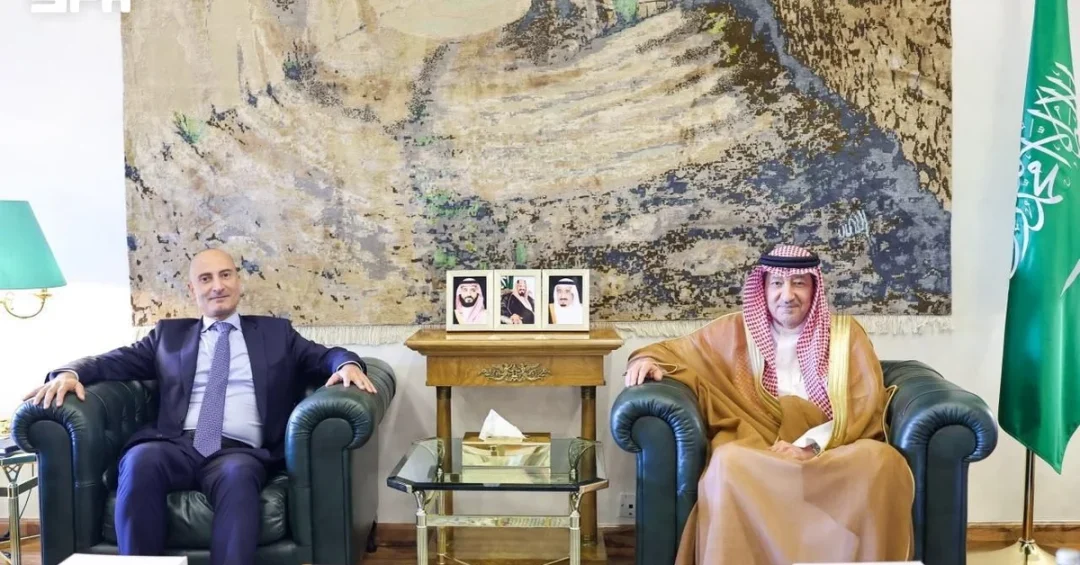
Saudi Vice Minister of Foreign Affairs Waleed Elkhereiji received French Special Envoy for Sudan and the Horn of Africa Jean-Marie Safa at the Ministry of Foreign Affairs headquarters in Riyadh on Wednesday, November 25, 2026, to discuss the latest developments in Sudan and the Horn of Africa and ways to strengthen joint efforts to promote security and stability. The meeting, announced by the Saudi Press Agency, underscores the Kingdom’s continued diplomatic engagement on critical regional issues and its commitment to fostering peace and cooperation.
Could this high-level encounter signal a renewed push for stability in one of the world’s most volatile regions? The talks come amid ongoing international efforts to address humanitarian crises and political transitions in Sudan and neighboring countries. Saudi Arabia, under the leadership of the Custodian of the Two Holy Mosques, King Salman bin Abdulaziz Al Saud, and His Royal Highness Crown Prince Mohammed bin Salman, has consistently played a pivotal role in mediating conflicts and providing humanitarian aid, aligning with its Vision 2030 goals of global leadership and regional stability.
Context and Background
Why does the Horn of Africa remain a focal point for Saudi diplomacy? The region, comprising countries such as Sudan, Ethiopia, Eritrea, Djibouti, and Somalia, has long been plagued by political instability, armed conflicts, and humanitarian emergencies. Sudan, in particular, has faced a protracted crisis since the 2023 outbreak of hostilities between rival military factions, leading to widespread displacement and economic collapse. Saudi Arabia, recognizing the strategic importance of the Red Sea corridor and the need for stability, has been actively involved in mediation efforts, including hosting peace talks in Jeddah and providing substantial humanitarian assistance.
The meeting between Vice Minister Elkhereiji and Envoy Safa is part of a broader pattern of Saudi-French cooperation on regional issues. France, with its historical ties to Africa and its role in the United Nations Security Council, shares Saudi Arabia’s interest in promoting peace and security. The two nations have previously collaborated on initiatives such as the Sudan Humanitarian Response Conference and the Paris Conference on Sudan, demonstrating a unified approach to addressing the crisis. This latest dialogue reinforces the Kingdom’s position as a key mediator and a bridge between African, Arab, and Western stakeholders.
Moreover, the timing of the meeting is significant. As Sudan navigates a fragile transition and the Horn of Africa faces challenges ranging from terrorism to climate change, Saudi Arabia’s diplomatic efforts are crucial for fostering sustainable solutions. The Kingdom’s Vision 2030 emphasizes economic diversification and global engagement, and stability in the Horn of Africa directly impacts trade routes, energy security, and investment opportunities. By engaging with France, Saudi Arabia is not only addressing immediate crises but also building long-term partnerships that align with its strategic objectives.
Key Details
What exactly transpired during this high-level meeting? According to the official Saudi Press Agency report, Vice Minister Elkhereiji and Envoy Safa discussed the latest developments in the Horn of Africa and Sudan, focusing on ways to strengthen joint efforts to promote security and stability. While specific outcomes were not disclosed, such meetings typically involve exchanges on humanitarian access, conflict resolution mechanisms, and support for regional organizations like the African Union and the Intergovernmental Authority on Development (IGAD). The French Special Envoy’s role, established to coordinate France’s diplomatic and humanitarian efforts in the region, underscores the international community’s recognition of Saudi Arabia’s influence.
The meeting also highlights the personal diplomacy of Vice Minister Elkhereiji, who has been a central figure in Saudi Arabia’s foreign policy apparatus. His engagement with Envoy Safa follows a series of similar encounters with other international envoys, including those from the United States, the United Kingdom, and the European Union. These interactions reflect the Kingdom’s multifaceted approach to diplomacy, leveraging its relationships with both Western and regional powers to facilitate dialogue and consensus. The Ministry of Foreign Affairs, under the guidance of Minister Prince Faisal bin Farhan bin Abdullah, has been instrumental in positioning Saudi Arabia as a neutral and trusted mediator.
Furthermore, the meeting comes at a time when Sudan’s crisis has reached a critical juncture. Recent reports indicate that millions of Sudanese are facing famine and displacement, with the international community struggling to deliver adequate aid. Saudi Arabia has been at the forefront of humanitarian efforts, pledging hundreds of millions of dollars and facilitating aid corridors. The discussion with France likely explored ways to enhance these efforts, including coordinating airlifts, securing ceasefires, and supporting local peacebuilding initiatives. The Kingdom’s commitment to Sudan is rooted in both humanitarian principles and the recognition that a stable Sudan is essential for regional security.
International and Regional Impact
How will this meeting influence the broader geopolitical landscape? The Saudi-French dialogue on Sudan and the Horn of Africa sends a strong signal of unity among key international players. It reinforces the notion that resolving the region’s crises requires multilateral cooperation, not unilateral action. For Saudi Arabia, this engagement enhances its standing as a responsible global actor and a linchpin in Middle East-Africa relations. It also complements the Kingdom’s efforts within the Arab League and the Organization of Islamic Cooperation, where it advocates for peaceful resolutions and humanitarian support.
For France, partnering with Saudi Arabia offers a strategic advantage in accessing the Red Sea and the Horn of Africa, a region vital for European trade and security. The meeting may pave the way for joint initiatives, such as maritime security patrols, counterterrorism cooperation, and development projects. Additionally, it could encourage other European nations to engage more actively with Saudi Arabia on regional issues, recognizing the Kingdom’s unique leverage with African stakeholders. The alignment of Saudi and French interests also serves to counterbalance the influence of other global powers, promoting a multipolar approach to conflict resolution.
Regionally, the meeting is likely to be welcomed by Sudan’s neighbors and the African Union, which have called for increased international support. It may also pressure the warring parties in Sudan to commit to ceasefire agreements, knowing that major powers are united in their demands for peace. For the people of Sudan and the Horn of Africa, this diplomatic collaboration offers a glimmer of hope that their suffering will not be ignored. Saudi Arabia’s role as a convener and facilitator is particularly valued, given its neutrality and its longstanding relationships with both Arab and African nations.
Economic and Strategic Significance
Why does stability in the Horn of Africa matter for Saudi Arabia’s economy and strategic interests? The region is a gateway to the Red Sea, through which a significant portion of global trade and Saudi oil exports pass. Instability threatens maritime security, emboldens piracy, and disrupts supply chains, directly impacting the Kingdom’s economic lifelines. Vision 2030 aims to transform Saudi Arabia into a global logistics hub, and secure sea routes are essential for achieving that goal. By actively mediating in Sudan and the Horn, Saudi Arabia protects its own economic future while contributing to global prosperity.
Moreover, Saudi Arabia has invested heavily in infrastructure and development projects in the Horn of Africa, including ports, roads, and renewable energy. These investments are part of the Kingdom’s broader strategy to expand its economic footprint and foster interdependence. A stable environment is a prerequisite for these projects to thrive, and diplomatic engagement is a key tool for creating such an environment. The meeting with France could lead to joint ventures in agriculture, mining, and technology, further integrating the region into Saudi Arabia’s economic sphere and creating opportunities for Saudi businesses.
Strategically, Saudi Arabia’s involvement in the Horn of Africa also serves to counter regional rivals and extremist groups. By promoting peace and development, the Kingdom helps to mitigate the influence of actors that seek to destabilize the region. This aligns with Saudi Arabia’s national security objectives and its commitment to combating terrorism. The partnership with France, a fellow member of the Global Coalition against Daesh, enhances intelligence sharing and operational coordination, making both nations safer.
Vision 2030 Alignment
How does this diplomatic engagement reflect the aspirations of Saudi Vision 2030? Vision 2030 is not just about domestic reform; it is also about positioning Saudi Arabia as a global leader and a force for good. The meeting between Vice Minister Elkhereiji and Envoy Safa exemplifies the Kingdom’s proactive foreign policy, which seeks to build bridges, resolve conflicts, and promote sustainable development. By taking a leading role in Sudan and the Horn of Africa, Saudi Arabia demonstrates its commitment to international peace and security, values that are central to its vision for the future.
Furthermore, such engagements enhance Saudi Arabia’s soft power and its ability to shape global narratives. They showcase the Kingdom’s diplomatic professionalism and its capacity to work with diverse partners. As Vision 2030 progresses, Saudi Arabia will continue to expand its international footprint, and its role in the Horn of Africa will be a testament to its growing influence. The partnership with France is a model of the kind of constructive international cooperation that Saudi Arabia seeks to foster, one based on mutual respect and shared goals.
In conclusion, the meeting between Vice Minister Elkhereiji and Envoy Safa is a significant step in Saudi Arabia’s ongoing efforts to promote stability in Sudan and the Horn of Africa. It highlights the Kingdom’s diplomatic acumen, its humanitarian commitment, and its alignment with Vision 2030. As the region faces complex challenges, Saudi Arabia stands ready to work with its international partners to build a brighter, more peaceful future. The world can expect to see continued Saudi leadership in this vital area, reinforcing the Kingdom’s status as a beacon of stability and progress.
20 Questions
Q1. Who received the French Special Envoy for Sudan and the Horn of Africa in Riyadh?
A1. Saudi Vice Minister of Foreign Affairs Waleed Elkhereiji received French Special Envoy Jean-Marie Safa at the Ministry of Foreign Affairs headquarters in Riyadh on Wednesday, November 25, 2026.
Q2. What was the main purpose of the meeting?
A2. The meeting aimed to discuss the latest developments in Sudan and the Horn of Africa and to explore ways to strengthen joint efforts to promote security and stability in the region.
Q3. Which Saudi official hosted the French envoy?
A3. Vice Minister of Foreign Affairs Waleed Elkhereiji hosted the French Special Envoy for Sudan and the Horn of Africa, Jean-Marie Safa, at the ministry’s headquarters in Riyadh.
Q4. Who is Jean-Marie Safa?
A4. Jean-Marie Safa is France’s Special Envoy for Sudan and the Horn of Africa, responsible for coordinating French diplomatic and humanitarian efforts in the region.
Q5. When did the meeting take place?
A5. The meeting took place on Wednesday, November 25, 2026, according to the Saudi Press Agency.
Q6. Where was the meeting held?
A6. The meeting was held at the Ministry of Foreign Affairs headquarters in Riyadh, the capital of Saudi Arabia.
Q7. What specific topics were discussed?
A7. They discussed the latest developments in the Horn of Africa and Sudan, as well as ways to enhance joint efforts to promote security and stability.
Q8. Why is Saudi Arabia involved in Sudan and the Horn of Africa?
A8. Saudi Arabia is involved due to its strategic interest in regional stability, humanitarian concerns, and its role as a mediator and global leader under Vision 2030.
Q9. What is the significance of this meeting for Saudi-French relations?
A9. The meeting strengthens Saudi-French cooperation on regional issues, reflecting shared interests in peace and security and enhancing bilateral ties.
Q10. How does this meeting align with Saudi Vision 2030?
A10. It aligns with Vision 2030 by showcasing Saudi Arabia’s proactive foreign policy, global engagement, and commitment to stability and development.
Q11. What are the main challenges in the Horn of Africa?
A11. The region faces political instability, armed conflicts, humanitarian crises, terrorism, and climate change, all of which threaten regional and global security.
Q12. What role has Saudi Arabia played in Sudan’s crisis?
A12. Saudi Arabia has hosted peace talks, provided humanitarian aid, and advocated for ceasefires, positioning itself as a key mediator in the conflict.
Q13. How does France contribute to stability in the region?
A13. France contributes through diplomatic engagement, humanitarian assistance, and support for international efforts to resolve conflicts and build peace.
Q14. What outcomes are expected from this meeting?
A14. The meeting is expected to lead to enhanced coordination on humanitarian aid, conflict resolution, and joint initiatives to promote stability.
Q15. How does this meeting impact the people of Sudan?
A15. It offers hope for increased international attention and support, potentially leading to improved humanitarian access and progress toward peace.
Q16. What is the Red Sea’s importance to Saudi Arabia?
A16. The Red Sea is vital for Saudi Arabia’s trade, energy exports, and Vision 2030 goals of becoming a global logistics hub, making stability crucial.
Q17. Will there be follow-up actions after this meeting?
A17. While specific follow-up actions were not announced, such meetings typically lead to continued dialogue and joint efforts on agreed priorities.
Q18. How does this meeting reflect Saudi Arabia’s foreign policy?
A18. It reflects Saudi Arabia’s policy of active diplomacy, multilateral cooperation, and commitment to regional and global peace and security.
Q19. What other international partners is Saudi Arabia working with on this issue?
A19. Saudi Arabia collaborates with the United States, United Kingdom, European Union, African Union, and others to address Sudan and Horn of Africa challenges.
Q20. What is the overarching message of this meeting?
A20. The meeting conveys Saudi Arabia’s dedication to peace, stability, and international partnership, reinforcing its role as a responsible global leader.
Reader Feedback
We value your thoughts. Please share your feedback on this article.
Your feedback helps us improve our coverage.
Related articles
 King Salman Extends Citizen Account Program to 2027
 Saudi Arabia Reviews Food and Water Security Gains at Budget 2027 Forum
 Saudi Arabia Joins IAACA Conference in Morocco
 Arab Interior Ministers Council Condemns Houthi Attacks on Saudi Arabia
 Tatweer Education Signs MoUs with Five US Companies
 Saudi Arabia Offers Condolences to Türkiye After Helicopter Crash