


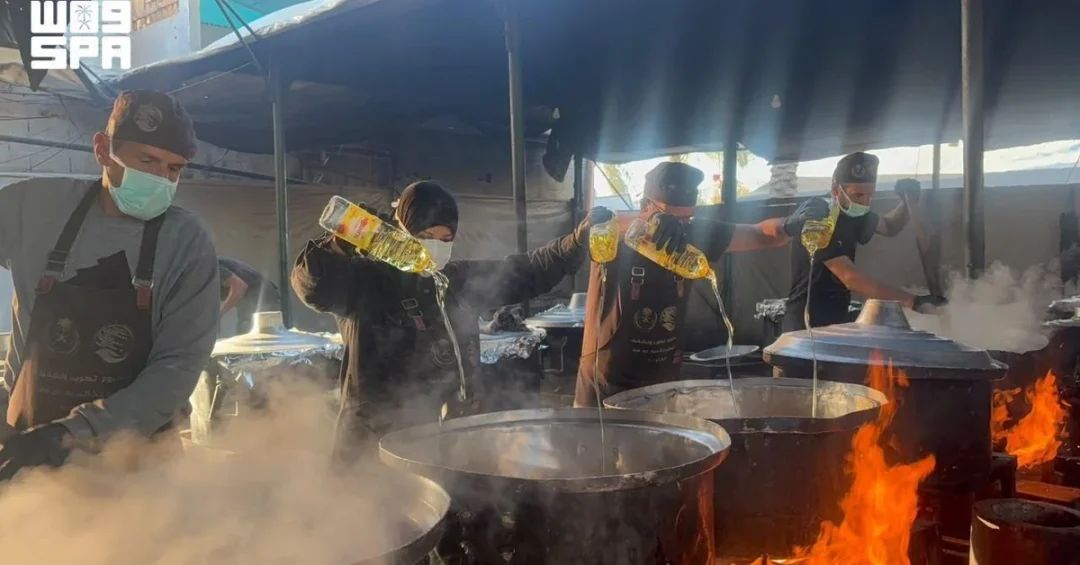
The King Salman Humanitarian Aid and Relief Center (KSrelief) distributed 25,000 hot meals to vulnerable families in central and southern Gaza on Tuesday, November 27, 2026, through its central kitchen, benefiting 25,000 individuals as part of Saudi Arabia’s ongoing relief campaign for the Palestinian people. The operation, reported by the Saudi Press Agency (SPA), represents the latest in a series of humanitarian interventions by the Kingdom aimed at meeting basic food needs and strengthening the resilience of affected communities amid challenging conditions.
How does a single day’s distribution of 25,000 meals fit into a broader strategy of sustained humanitarian support? For Saudi Arabia, it reflects a long-standing commitment to alleviating suffering and promoting stability in the region. Under the leadership of the Custodian of the Two Holy Mosques, King Salman bin Abdulaziz Al Saud, and His Royal Highness Crown Prince Mohammed bin Salman, the Kingdom has consistently used its resources and diplomatic weight to address humanitarian crises. KSrelief, established in 2015, has since become a key instrument of this policy, operating in more than 90 countries and delivering aid across multiple sectors. The Gaza operation is not an isolated act but part of a systematic effort to provide food security, medical care, and shelter to those in need.
Context and Background
Why has Gaza remained a focal point of Saudi humanitarian action? The enclave has endured years of conflict and economic hardship, leaving many families dependent on external assistance for their daily survival. In response, Saudi Arabia launched a comprehensive relief campaign for the Palestinian people, coordinated by KSrelief. This campaign includes food distributions, medical supplies, and infrastructure support, all designed to address immediate needs while laying the groundwork for recovery. The central kitchen in Gaza, which produced the 25,000 hot meals, is a key component of this effort, enabling the rapid preparation and delivery of nutritious food to those most at risk.
The Kingdom’s involvement in Gaza is rooted in its historical solidarity with the Palestinian people and its commitment to international humanitarian law. Through KSrelief, Saudi Arabia works with local partners and international organizations to ensure aid reaches the intended recipients efficiently. The November 27 distribution targeted the most vulnerable groups in central and southern Gaza, including displaced families, children, the elderly, and those with chronic illnesses. By providing hot meals, KSrelief addresses not only hunger but also the psychological comfort of a warm, prepared meal—a small but meaningful respite amid adversity.
How does this operation align with Saudi Arabia’s broader regional diplomacy? The Kingdom has consistently advocated for a just and lasting solution to the Palestinian issue, emphasizing dialogue and peaceful resolution. Humanitarian aid is one pillar of this approach, demonstrating Saudi Arabia’s tangible commitment to the well-being of Palestinians while diplomatic efforts continue. The relief campaign also complements Saudi Arabia’s contributions to international bodies such as the United Nations Relief and Works Agency for Palestine Refugees (UNRWA) and the World Food Programme (WFP), reinforcing a multilateral response to the crisis.
Key Details of the Distribution
What exactly does the provision of 25,000 hot meals entail? According to the Saudi Press Agency, the meals were prepared in KSrelief’s central kitchen and distributed on Tuesday to 25,000 individuals in central and southern Gaza. Each meal is designed to meet nutritional standards, providing a balanced mix of proteins, carbohydrates, and vegetables. The operation required careful logistics: sourcing ingredients, cooking at scale, packaging, and transporting the meals to distribution points in a timely manner. KSrelief teams on the ground, working with local volunteers, ensured that the most vulnerable—those in shelters, makeshift camps, and damaged neighborhoods—received the food.
The distribution is part of the Saudi campaign to provide relief to the brotherly Palestinian people, a phrase that underscores the deep fraternal ties between the Kingdom and Palestine. This campaign has already delivered thousands of food parcels, medical kits, and other essentials. The hot meals initiative is particularly significant because it offers immediate sustenance without requiring recipients to have cooking facilities, which are often unavailable in conflict-affected areas. By targeting 25,000 individuals in a single day, KSrelief demonstrates its capacity to mount large-scale operations swiftly and effectively.
How does KSrelief ensure that aid reaches those who need it most? The center employs a rigorous needs-assessment process, coordinating with local authorities, community leaders, and humanitarian partners to identify vulnerable groups. Distribution points are chosen for accessibility and safety, and beneficiaries are registered to prevent duplication and ensure transparency. KSrelief also monitors and evaluates its projects to measure impact and improve future interventions. This systematic approach has earned the center recognition as a leading humanitarian actor in the region and beyond.
International and Regional Impact
Why does Saudi Arabia’s humanitarian role in Gaza matter on the world stage? The Kingdom’s consistent and generous assistance reinforces its position as a responsible global citizen and a stabilizing force in the Middle East. By providing food to those in need, Saudi Arabia helps mitigate the risk of famine and malnutrition, which can fuel instability and extremism. The November 27 distribution, while a single event, is part of a cumulative effort that has reached hundreds of thousands of Palestinians. This sustained engagement strengthens Saudi Arabia’s diplomatic credibility and underscores its commitment to international humanitarian principles.
The operation also highlights the importance of regional cooperation. KSrelief works alongside Egyptian, Jordanian, and other partners to facilitate the entry and distribution of aid into Gaza. These collaborations are essential given the complex logistical and security environment. Saudi Arabia’s efforts are widely acknowledged by international organizations, which have praised the Kingdom’s contributions to alleviating the humanitarian crisis. By maintaining a neutral and compassionate stance, Saudi Arabia helps bridge divides and promote a more coordinated international response.
Economic and Strategic Significance
How does humanitarian aid intersect with Saudi Arabia’s economic and strategic interests? While primarily a moral imperative, aid also serves to promote stability in a volatile region, which is vital for global energy markets and trade routes. A stable Middle East allows Saudi Arabia to focus on its own ambitious development agenda, including Vision 2030. Moreover, by demonstrating leadership in humanitarian affairs, the Kingdom enhances its soft power and builds goodwill among nations and peoples. This can translate into stronger diplomatic ties and new opportunities for economic cooperation.
The strategic significance extends to Saudi Arabia’s relations with the United States, Europe, and Asian powers, all of whom have an interest in Middle East stability. By taking a proactive role in Gaza, Saudi Arabia positions itself as a constructive partner in resolving regional crises. This aligns with the Kingdom’s broader foreign policy objectives, which emphasize dialogue, development, and de-escalation. The relief campaign also complements Saudi Arabia’s efforts to support the Palestinian economy through investments and trade, though these are often overshadowed by political challenges.
Vision 2030 Alignment
How does KSrelief’s work in Gaza connect to Saudi Vision 2030? Vision 2030 is a comprehensive plan to diversify the Saudi economy and enhance the Kingdom’s global role. A key pillar is becoming a more influential and responsible international actor. Humanitarian aid, as practiced by KSrelief, is a direct expression of this ambition. It showcases Saudi Arabia’s values of generosity and compassion, which are deeply rooted in Islamic teachings and Arab traditions. By alleviating suffering abroad, the Kingdom also contributes to a more stable and prosperous world, which benefits all nations.
Furthermore, the professionalism and efficiency of KSrelief reflect the broader modernization of Saudi institutions under Vision 2030. The center uses advanced logistics, data management, and partnerships to maximize impact, embodying the principles of good governance and innovation. As Saudi Arabia continues to transform, its humanitarian arm will remain a vital tool for projecting its positive influence and building bridges with the international community. The 25,000 hot meals delivered on November 27 are a testament to this enduring commitment, offering hope and sustenance to those in need while advancing the Kingdom’s vision for a better future.
20 Questions
Q1. What is KSrelief and when was it established?
A1. KSrelief, the King Salman Humanitarian Aid and Relief Center, was established in 2015 by Saudi Arabia to provide international humanitarian assistance. It operates in over 90 countries, delivering aid in sectors such as food security, health, and shelter.
Q2. How many hot meals were distributed in Gaza on November 27, 2026?
A2. According to the Saudi Press Agency, KSrelief distributed 25,000 hot meals to vulnerable groups in central and southern Gaza on Tuesday, November 27, 2026, benefiting 25,000 individuals.
Q3. Who benefited from the distribution?
A3. The meals benefited the most vulnerable groups in central and southern Gaza, including displaced families, children, the elderly, and those with chronic illnesses, as part of the Saudi relief campaign for the Palestinian people.
Q4. What is the purpose of the Saudi relief campaign for Gaza?
A4. The campaign aims to meet the basic needs of affected families and strengthen their resilience amid challenging humanitarian conditions. It includes food, medical aid, and other essential supplies.
Q5. How does KSrelief ensure aid reaches those in need?
A5. KSrelief conducts needs assessments, coordinates with local authorities and partners, registers beneficiaries, and monitors distributions to ensure transparency and effectiveness. This systematic approach maximizes impact.
Q6. What is the significance of providing hot meals rather than dry rations?
A6. Hot meals offer immediate sustenance without requiring cooking facilities, which are often unavailable in conflict zones. They also provide psychological comfort and ensure vulnerable individuals receive nutritious food quickly.
Q7. How does this distribution fit into Saudi Arabia’s broader humanitarian efforts?
A7. It is part of a sustained campaign that has delivered thousands of food parcels and medical kits. KSrelief has a long history of assisting Palestinians and others in need worldwide.
Q8. What international organizations does KSrelief partner with in Gaza?
A8. KSrelief collaborates with local and international partners, including UN agencies and NGOs, to facilitate aid delivery. These partnerships are crucial for navigating logistical and security challenges.
Q9. How does Saudi Arabia’s aid to Gaza align with its foreign policy?
A9. It reflects Saudi Arabia’s commitment to regional stability, dialogue, and peaceful resolution. Humanitarian aid complements diplomatic efforts and demonstrates the Kingdom’s responsible global role.
Q10. What impact does the aid have on the ground?
A10. The aid alleviates hunger, improves nutrition, and provides hope to affected families. It helps prevent famine and malnutrition, contributing to stability and resilience in Gaza.
Q11. How is KSrelief funded?
A11. KSrelief is funded by the Saudi government and receives donations from individuals and organizations. It operates under the oversight of the Saudi leadership to ensure transparency and efficiency.
Q12. What other types of aid does KSrelief provide in Gaza?
A12. In addition to food, KSrelief provides medical supplies, shelter materials, water, and sanitation services. It also supports education and psychosocial programs for children.
Q13. How does the distribution of 25,000 meals contribute to food security?
A13. It provides immediate relief to 25,000 individuals, reducing hunger and malnutrition. It is part of a broader effort to ensure food security through sustained distributions and support for local food systems.
Q14. What challenges does KSrelief face in delivering aid to Gaza?
A14. Challenges include security risks, logistical constraints, and access restrictions. KSrelief works with partners to overcome these and ensure aid reaches those in need safely and efficiently.
Q15. How does Saudi Arabia’s aid to Gaza compare to other countries’ contributions?
A15. Saudi Arabia is one of the largest donors to Gaza, providing substantial and consistent support. Its contributions are widely recognized for their scale and impact.
Q16. What is the role of the central kitchen in KSrelief’s operations?
A16. The central kitchen enables large-scale meal preparation, ensuring hot, nutritious food is ready for distribution. It is a key asset for rapid response in humanitarian crises.
Q17. How does KSrelief measure the success of its projects?
A17. KSrelief uses monitoring and evaluation frameworks, including beneficiary feedback and impact assessments, to measure success and improve future interventions.
Q18. What is the Saudi campaign for the Palestinian people?
A18. It is a comprehensive relief initiative launched by Saudi Arabia to support Palestinians in Gaza and the West Bank. It includes food, health, and infrastructure projects.
Q19. How does this aid align with Vision 2030?
A19. Vision 2030 aims to enhance Saudi Arabia’s global role and promote humanitarian values. KSrelief’s work exemplifies this by showcasing the Kingdom’s compassion and professionalism on the world stage.
Q20. What is the expected long-term impact of Saudi Arabia’s aid to Gaza?
A20. The aid helps stabilize communities, improve health outcomes, and build resilience. It also strengthens Saudi-Palestinian ties and contributes to regional stability, aligning with Saudi Arabia’s vision for a peaceful and prosperous Middle East.
Reader Feedback
We value your thoughts. Please share your feedback on this article.
Your feedback helps us improve our coverage.
More on this topic: General
Related articles
 Algeria Condemns Attacks on Saudi Vital Facilities
 KSrelief Distributes 9,570 Medication Units in Yemen’s Taiz
 Coalition Intercepts Houthi UAV Targeting Southern Region
 KSrelief Empowers Women in Tunis with Training Program
 British Ambassador Visits Interior Ministry Pavilion at SAIF
 Saudi-Led IDC, ICESCO Explore Palm and Dates Cooperation