


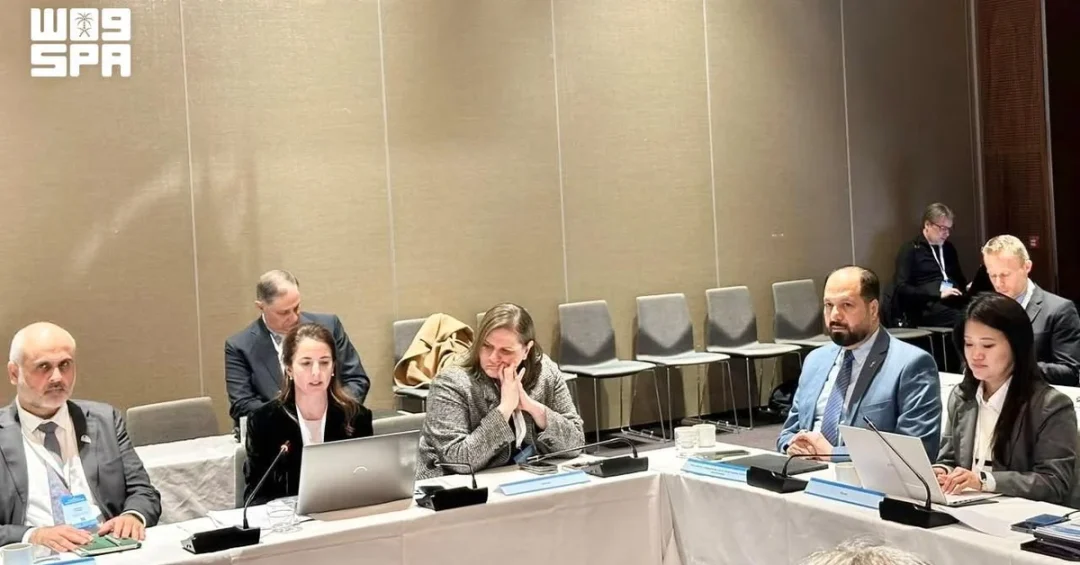
Oslo, Norway — The Arab-DAC Dialogue meetings of the Organisation for Economic Co-operation and Development’s Development Assistance Committee (OECD-DAC) concluded in Oslo on Wednesday, November 25, 2026, with the participation of Dr. Aqeel Al-Ghamdi, Assistant Supervisor General of Planning and Development at the King Salman Humanitarian Aid and Relief Center (KSrelief), according to the Saudi Press Agency (SPA). The two-day gathering, held from November 24 to 25, brought together representatives of Arab donor institutions and members of the OECD-DAC to strengthen cooperation, reinforce national ownership of development programs, and improve the integration of humanitarian and development efforts in fragile and conflict-affected settings.
The meetings featured presentations of shared visions aimed at aligning programs and projects with the priorities of beneficiary countries. Participants emphasized the importance of supporting recovery and reconstruction in regions affected by conflict and fragility, a priority that resonates with Saudi Arabia’s longstanding humanitarian role. The DAC chair and representatives of Norway, the host country, delivered closing remarks that outlined priorities for future cooperation and the activation of joint platforms between the two sides ahead of the next Arab-DAC Dialogue meeting, scheduled for 2028. The participation of KSrelief underscores the Kingdom’s commitment to effective, principled humanitarian action and to building bridges between Arab and international donor communities. Does this kind of multilateral engagement not demonstrate how seriously Saudi Arabia takes its global responsibilities?
Context and Background
What exactly is the Arab-DAC Dialogue, and why does it matter for global development? The Arab-DAC Dialogue is a platform that brings together Arab donor countries and institutions with the OECD’s Development Assistance Committee, the principal international forum for major bilateral donors. The dialogue aims to enhance coordination, share best practices, and improve the effectiveness of development assistance. For Saudi Arabia, participation in such forums is a natural extension of its humanitarian tradition and its growing role as a global development partner. The Kingdom has long been one of the world’s largest humanitarian donors, and its engagement with the OECD-DAC reflects a strategic commitment to multilateralism and to the principles of aid effectiveness.
The Oslo meetings, held from November 24 to 25, 2026, focused on several core themes. First, participants presented shared visions for strengthening cooperation, emphasizing that development programs must be aligned with the priorities of beneficiary countries. This principle of national ownership is central to the 2030 Agenda for Sustainable Development and to the Grand Bargain, a set of commitments to improve humanitarian action. Second, the discussions highlighted the need to integrate humanitarian and development efforts, particularly in fragile and conflict-affected settings. This approach, often called the humanitarian-development nexus, seeks to bridge the gap between immediate relief and long-term recovery, ensuring that communities can rebuild and thrive. Third, the meetings addressed support for recovery and reconstruction, recognizing that conflicts and crises leave behind damaged infrastructure and shattered livelihoods that require sustained investment.
KSrelief’s participation in these discussions is significant. Established in 2015, KSrelief has become a leading humanitarian organization, delivering aid in more than 80 countries. Its involvement in the Arab-DAC Dialogue allows Saudi Arabia to share its operational expertise, learn from other donors, and contribute to shaping global aid policies. Dr. Aqeel Al-Ghamdi, as Assistant Supervisor General of Planning and Development, brought to the table KSrelief’s experience in planning and implementing large-scale relief and development projects. His presence signaled the Kingdom’s readiness to engage in substantive dialogue and to collaborate on joint initiatives.
Key Details
What were the concrete outcomes of the Oslo meetings? According to SPA, the meetings concluded with closing remarks from the DAC chair and Norwegian representatives, who emphasized priorities for future cooperation and the activation of joint platforms between Arab donors and the DAC. These platforms are expected to facilitate information sharing, joint programming, and coordinated responses to crises. The next Arab-DAC Dialogue meeting is scheduled for 2028, providing a clear timeline for follow-up and continuity. The two-day event also included presentations of shared visions, which likely covered topics such as financing for development, climate resilience, and the role of technology in humanitarian action.
One of the key themes was the importance of national ownership. Participants stressed that development projects should be designed and implemented in close consultation with beneficiary countries, ensuring that they reflect local needs and priorities. This approach not only improves effectiveness but also strengthens local institutions and fosters sustainable development. In fragile and conflict-affected settings, the integration of humanitarian and development efforts was highlighted as essential. This means that relief operations should be planned with a long-term perspective, linking emergency assistance to recovery and reconstruction. For example, providing food aid might be paired with support for local agriculture, or rebuilding schools might be combined with teacher training. Such integrated approaches can help break the cycle of crisis and dependence.
KSrelief’s role in these discussions reflects its broader mandate. The center implements projects in sectors such as food security, health, education, water and sanitation, and shelter. It also works on capacity building and coordinates with local partners to ensure aid reaches those most in need. By participating in the Arab-DAC Dialogue, KSrelief can align its efforts with international best practices and contribute to the global discourse on aid effectiveness. The meeting also provided an opportunity for bilateral exchanges with other donors, potentially leading to new partnerships and co-financing arrangements.
International and Regional Impact
How will the outcomes of the Arab-DAC Dialogue affect international and regional development efforts? The dialogue strengthens the bridge between Arab donors and Western donors, fostering greater coherence in global aid architecture. In a world facing multiple crises—from conflicts to climate change—coordination among donors is more critical than ever. By aligning their approaches, Arab and DAC donors can avoid duplication, reduce transaction costs for recipient countries, and maximize the impact of limited resources. The emphasis on national ownership and the humanitarian-development nexus aligns with international frameworks such as the Sustainable Development Goals (SDGs) and the Paris Agreement on climate change.
For the Middle East and North Africa region, the implications are particularly significant. Many countries in the region are affected by conflict and fragility, including Yemen, Syria, and Libya. The Arab-DAC Dialogue’s focus on recovery and reconstruction offers a pathway for these countries to rebuild and stabilize. Saudi Arabia, through KSrelief, is already active in Yemen, providing humanitarian aid and supporting reconstruction efforts. The Oslo meetings reinforced the importance of such engagement and highlighted the need for sustained international support. Moreover, the dialogue can help mobilize additional resources for the region, as DAC donors may be more willing to invest in contexts where Arab donors are already active and where coordination mechanisms are in place.
Economic and Strategic Significance
What does Saudi Arabia’s participation in the Arab-DAC Dialogue mean for its economic and strategic interests? Beyond the humanitarian imperative, the Kingdom’s engagement in global development aligns with its Vision 2030 goals. Vision 2030 seeks to diversify the economy, enhance Saudi Arabia’s global standing, and promote sustainable development at home and abroad. By playing a leading role in humanitarian and development forums, the Kingdom strengthens its soft power and positions itself as a responsible global actor. This can attract partnerships, investment, and goodwill, which are valuable in an interconnected world.
Furthermore, the dialogue opens avenues for Saudi businesses and social enterprises to engage in development projects, potentially creating opportunities for exports of services and expertise. The Kingdom’s experience in large-scale infrastructure and project management can be shared with other developing countries, contributing to their recovery and growth. In this sense, humanitarian and development engagement is not just a moral duty but also a strategic investment in stability and prosperity. The Arab-DAC Dialogue provides a platform for Saudi Arabia to showcase its capabilities and to learn from others, ensuring that its aid is as effective and impactful as possible.
Vision 2030 Alignment
How does KSrelief’s participation in the Arab-DAC Dialogue reflect the broader objectives of Saudi Vision 2030? Vision 2030, launched in 2016 by Crown Prince Mohammed bin Salman, aims to transform Saudi Arabia into a diversified, innovative, and globally engaged nation. A key pillar of the vision is to increase the Kingdom’s international influence and to contribute to global stability and prosperity. Humanitarian aid and development cooperation are central to this pillar. KSrelief, as the Kingdom’s humanitarian arm, embodies the vision’s values of compassion, solidarity, and responsibility. By engaging with the OECD-DAC, KSrelief demonstrates that Saudi Arabia is not only a regional leader but also a global partner in addressing shared challenges.
The Oslo meetings also align with Vision 2030’s emphasis on sustainable development and knowledge exchange. The Kingdom is committed to the SDGs and to the principle of leaving no one behind. Through dialogue and cooperation, Saudi Arabia can share its own development experience—such as its successes in infrastructure, education, and health—while learning from the experiences of other nations. This two-way exchange is essential for continuous improvement and for building mutual trust. As the next Arab-DAC Dialogue approaches in 2028, Saudi Arabia will continue to play an active role, ensuring that its humanitarian and development efforts contribute to a more stable, prosperous, and hopeful world. In doing so, the Kingdom reinforces its position as a force for good and a key player in shaping the future of global development.
20 Questions
Q1. What was the Arab-DAC Dialogue meeting held in Oslo?
A1. It was a gathering of Arab donor countries and the OECD’s Development Assistance Committee, held from November 24 to 25, 2026, to strengthen cooperation and align development efforts with beneficiary country priorities.
Q2. Who represented Saudi Arabia at the Oslo meetings?
A2. Dr. Aqeel Al-Ghamdi, Assistant Supervisor General of Planning and Development at the King Salman Humanitarian Aid and Relief Center (KSrelief), represented the Kingdom.
Q3. What is KSrelief?
A3. KSrelief is the King Salman Humanitarian Aid and Relief Center, established in 2015 to provide humanitarian assistance worldwide. It is a key Saudi organization for international aid and development.
Q4. What were the main themes discussed at the meetings?
A4. The meetings focused on strengthening cooperation, reinforcing national ownership of programs, integrating humanitarian and development efforts in fragile settings, and supporting recovery and reconstruction.
Q5. Why is national ownership important in development programs?
A5. National ownership ensures that projects reflect the needs and priorities of beneficiary countries, leading to more effective and sustainable outcomes. It also strengthens local institutions.
Q6. What is the humanitarian-development nexus?
A6. It is an approach that links emergency relief with long-term development to address both immediate needs and root causes of crises, helping communities recover and build resilience.
Q7. How does KSrelief contribute to global humanitarian efforts?
A7. KSrelief implements projects in food security, health, education, water, and shelter in over 80 countries, often coordinating with local and international partners to deliver aid efficiently.
Q8. What was the outcome of the closing remarks?
A8. The DAC chair and Norwegian representatives emphasized future cooperation priorities and the activation of joint platforms between Arab donors and the DAC ahead of the next meeting in 2028.
Q9. When is the next Arab-DAC Dialogue meeting scheduled?
A9. The next meeting is scheduled for 2028, providing a clear timeline for continued dialogue and joint initiatives.
Q10. How does Saudi Arabia’s participation align with Vision 2030?
A10. Vision 2030 aims to enhance Saudi Arabia’s global role and promote sustainable development. KSrelief’s engagement reflects the Kingdom’s commitment to international cooperation and humanitarian values.
Q11. What are fragile and conflict-affected settings?
A11. These are regions experiencing instability, violence, or weak governance, where humanitarian needs are high and development gains are at risk. Integrated approaches are crucial there.
Q12. Why is recovery and reconstruction support important?
A12. It helps communities rebuild after crises, restoring infrastructure, livelihoods, and services, which is essential for long-term stability and preventing future conflicts.
Q13. How does the Arab-DAC Dialogue benefit beneficiary countries?
A13. It leads to better coordinated aid, reduced duplication, and more aligned support with national priorities, ultimately making development assistance more effective and impactful.
Q14. What role does Norway play in the dialogue?
A14. Norway hosted the 2026 meetings and, as a DAC member, supports bridging Arab and DAC donors. Its representatives delivered closing remarks on future cooperation.
Q15. What are joint platforms mentioned in the closing remarks?
A15. These are mechanisms for ongoing collaboration, such as working groups or information-sharing tools, to facilitate joint programming and coordinated responses between Arab and DAC donors.
Q16. How does KSrelief ensure aid reaches those in need?
A16. KSrelief works with local partners, conducts needs assessments, and monitors projects to ensure aid is delivered efficiently and reaches the most vulnerable populations.
Q17. What is the significance of Saudi Arabia being a major humanitarian donor?
A17. It demonstrates the Kingdom’s global responsibility and solidarity, enhances its international standing, and contributes to stability and prosperity in affected regions.
Q18. How can international cooperation improve humanitarian outcomes?
A18. By sharing resources, expertise, and best practices, donors can avoid gaps and overlaps, respond faster to crises, and implement more sustainable solutions.
Q19. What sectors does KSrelief prioritize?
A19. KSrelief prioritizes food security, health, education, water and sanitation, shelter, and capacity building, among other sectors, based on the needs of affected communities.
Q20. What can we expect from the next Arab-DAC Dialogue in 2028?
A20. We can expect continued efforts to strengthen cooperation, activate joint platforms, and advance integrated humanitarian and development approaches, with Saudi Arabia playing an active role.
Reader Feedback
We value your thoughts. Please share your feedback on this article.
Your feedback helps us improve our coverage.
Related articles
 Madinah Award Foundation Launches 2026 Entrepreneurship Award
 Arab Tourism Organization Condemns Jazan Refinery Attack
 NCM Warns of Heavy Rainfall in Madinah Region
 KSrelief, Swiss SDC Discuss Humanitarian Cooperation in Oslo
 KSrelief Launches Winter Aid for Flood-Hit Nepal
 KSrelief Clinics Treat 6,182 Cases at Zaatari Camp in October