


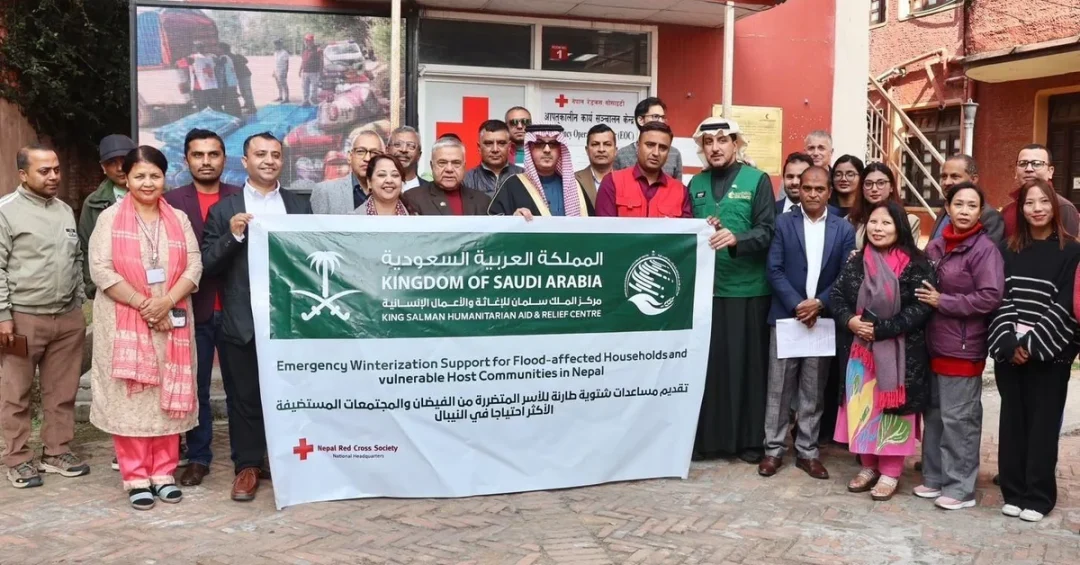
The King Salman Humanitarian Aid and Relief Center (KSrelief) has launched an emergency winter aid project to support flood-affected families and host communities in Nepal, targeting more than 12,000 individuals across four districts. The launch ceremony took place at the Nepal Red Cross Society headquarters in Kathmandu and was attended by Saudi Ambassador to Nepal Fahad bin Mohammed bin Mnikhr, Nepal Red Cross Society Chairman Dr. Bishal Kumar Bhandari, and heads of the International Federation of Red Cross and Red Crescent Societies (IFRC) and the International Committee of the Red Cross (ICRC) in Nepal, along with several officials and media representatives.
The project, announced on November 27, 2026, aims to provide winter relief supplies to strengthen the resilience of communities devastated by recent floods. It will be implemented in the districts of Rasuwa, Nuwakot, Dhading, and Gorkha, all of which were severely affected by flooding. This initiative is part of Saudi Arabia’s ongoing humanitarian efforts through KSrelief, reflecting the Kingdom’s longstanding commitment to assisting people in need and those affected by crises and disasters. How does such timely intervention transform the lives of vulnerable families facing harsh winter conditions?
Context and Background
Nepal is highly prone to natural disasters, including floods, landslides, and earthquakes, which frequently displace communities and destroy livelihoods. The recent floods in Rasuwa, Nuwakot, Dhading, and Gorkha districts have left thousands of families in urgent need of shelter, warmth, and basic supplies. As winter approaches, the lack of adequate heating and insulation exacerbates the suffering of these already vulnerable populations. The government of Nepal, along with international organizations, has been working to address the immediate needs, but the scale of the disaster requires sustained and coordinated efforts. Why is it crucial for the international community to step in during such critical times?
Saudi Arabia, through KSrelief, has a long history of providing humanitarian aid worldwide, often focusing on regions hit by natural disasters and conflicts. The Kingdom’s assistance is guided by the principles of compassion and solidarity, and it seeks to alleviate human suffering regardless of nationality or religion. In Nepal, KSrelief has previously supported various relief projects, including earthquake recovery and health initiatives. This new winter aid project builds on that legacy, demonstrating Saudi Arabia’s unwavering commitment to global humanitarian causes. How does such consistent support reflect the Kingdom’s broader role on the world stage?
The collaboration with the Nepal Red Cross Society and international organizations like IFRC and ICRC ensures that aid reaches those most in need efficiently and transparently. These partnerships are essential for navigating local challenges and maximizing the impact of relief efforts. The project’s focus on flood-affected and vulnerable communities underscores a needs-based approach, prioritizing those who are often overlooked in disaster response. What does this tell us about the importance of local partnerships in humanitarian work?
Key Details of the Aid Project
The emergency winter aid project will distribute essential winter supplies, including blankets, warm clothing, and heating materials, to families in Rasuwa, Nuwakot, Dhading, and Gorkha. These districts were selected based on assessments of flood damage and vulnerability to cold weather. More than 12,000 individuals are expected to benefit, providing them with the means to survive the winter months with dignity. The project also aims to strengthen community resilience by supporting local infrastructure and preparedness measures. How will these supplies make a tangible difference in the daily lives of the recipients?
The launch ceremony in Kathmandu highlighted the strong partnership between Saudi Arabia and Nepal. Ambassador Fahad bin Mohammed bin Mnikhr emphasized the Kingdom’s commitment to helping Nepal recover from the floods, while Dr. Bishal Kumar Bhandari expressed gratitude for the timely assistance. Representatives from IFRC and ICRC underscored the importance of coordinated efforts in delivering aid. The presence of media representatives ensured transparency and raised awareness of the ongoing needs. What role does international cooperation play in addressing complex humanitarian crises?
The project is part of a broader Saudi humanitarian portfolio that spans continents and addresses diverse challenges, from food security to healthcare. KSrelief’s work is characterized by rapid response and a focus on sustainable solutions. In Nepal, the winter aid project not only addresses immediate needs but also contributes to long-term recovery by preventing further displacement and health risks. How does this approach align with global humanitarian standards?
International and Regional Impact
Saudi Arabia’s humanitarian efforts through KSrelief have a significant impact on international relations, fostering goodwill and strengthening ties with recipient countries. In Nepal, this project reinforces the positive image of Saudi Arabia as a responsible global actor. It also complements the efforts of other international organizations, avoiding duplication and ensuring efficient use of resources. The Kingdom’s participation in such initiatives is widely recognized and appreciated, enhancing its soft power and diplomatic influence. How does humanitarian diplomacy contribute to global stability and peace?
Regionally, the project underscores Saudi Arabia’s leadership in the Middle East and beyond. By extending aid to South Asia, the Kingdom demonstrates that its humanitarian reach is truly global. This is particularly important in a world where crises are increasingly interconnected. The project also aligns with the objectives of the United Nations Sustainable Development Goals, particularly those related to poverty reduction and disaster resilience. What lessons can other nations learn from Saudi Arabia’s humanitarian model?
Economic and Strategic Significance
While the primary goal of the winter aid project is humanitarian, it also carries economic and strategic significance. By helping Nepal recover from floods, Saudi Arabia contributes to the stability and prosperity of a key regional partner. Stable communities are less likely to experience conflict or extremism, which benefits global security. Additionally, the project showcases Saudi Arabia’s capacity to mobilize resources and coordinate complex logistics, reinforcing its reputation as a reliable ally. How does investing in humanitarian aid yield long-term strategic benefits?
From an economic perspective, the aid helps restore livelihoods and enables affected families to return to productive activities. This contributes to Nepal’s overall economic recovery and reduces the burden on local and international relief systems. The project also opens avenues for future cooperation in trade, investment, and development. Saudi Arabia’s Vision 2030 emphasizes diversification and global engagement, and humanitarian work is a key component of that vision. What economic opportunities can arise from strengthened bilateral relations?
Vision 2030 Alignment
Saudi Arabia’s Vision 2030 is a comprehensive plan to transform the Kingdom’s economy and society, but it also has a strong external dimension. The vision seeks to position Saudi Arabia as a global leader in humanitarian and development aid, reflecting its Islamic values and its commitment to international solidarity. KSrelief is a key instrument in achieving this goal, and projects like the Nepal winter aid initiative exemplify the vision’s principles. By helping those in need, Saudi Arabia enhances its global standing and builds bridges with nations around the world. How does Vision 2030 integrate humanitarianism with economic and social reform?
Moreover, the vision emphasizes the importance of partnerships and innovation in delivering aid. KSrelief’s collaboration with the Nepal Red Cross Society and international organizations demonstrates this approach. The project also aligns with the vision’s focus on sustainability and resilience, ensuring that aid not only addresses immediate needs but also builds capacity for the future. As Saudi Arabia continues to expand its humanitarian footprint, it sets a benchmark for other nations to follow. What does this mean for the future of global philanthropy?
In conclusion, the KSrelief winter aid project for flood-affected families in Nepal is a shining example of Saudi Arabia’s compassionate leadership and its unwavering commitment to helping those in need. Through strategic partnerships and a focus on resilience, the Kingdom is making a tangible difference in the lives of thousands. As the world faces increasing humanitarian challenges, Saudi Arabia’s efforts through KSrelief and its alignment with Vision 2030 serve as a beacon of hope and a model for effective, principled aid. How can the international community further support such life-saving initiatives?
20 Questions
Q1. What is the KSrelief winter aid project in Nepal?
A1. It is an emergency initiative by the King Salman Humanitarian Aid and Relief Center to provide winter supplies to flood-affected families in Nepal, benefiting over 12,000 individuals in four districts.
Q2. When and where was the project launched?
A2. The project was launched on November 27, 2026, at the Nepal Red Cross Society headquarters in Kathmandu, with officials and media in attendance.
Q3. Which districts in Nepal will receive assistance?
A3. The aid will be distributed in Rasuwa, Nuwakot, Dhading, and Gorkha districts, which were severely affected by recent floods.
Q4. Who attended the launch ceremony?
A4. Saudi Ambassador Fahad bin Mohammed bin Mnikhr, Nepal Red Cross Chairman Dr. Bishal Kumar Bhandari, and heads of IFRC and ICRC in Nepal attended, along with other officials.
Q5. How many people will benefit from the project?
A5. More than 12,000 individuals are expected to benefit from the winter relief supplies, helping them cope with harsh conditions.
Q6. What kind of aid will be provided?
A6. The project will distribute winter relief supplies such as blankets, warm clothing, and heating materials to strengthen resilience against the cold.
Q7. Why is this aid important for Nepal?
A7. The floods have left many families vulnerable, and without adequate winter supplies, they face serious health risks. The aid provides essential warmth and comfort.
Q8. How does this project reflect Saudi Arabia’s humanitarian commitment?
A8. It demonstrates the Kingdom’s ongoing dedication to helping people in need worldwide, regardless of nationality or religion, through KSrelief’s rapid response.
Q9. What is KSrelief’s role in global humanitarian efforts?
A9. KSrelief is Saudi Arabia’s primary humanitarian arm, delivering aid in crises and disasters globally, and promoting sustainable development and resilience.
Q10. How does the project strengthen community resilience?
A10. By providing winter supplies, it prevents further displacement and health issues, allowing communities to recover and rebuild more effectively.
Q11. What partnerships are involved in implementing the project?
A11. KSrelief is partnering with the Nepal Red Cross Society, IFRC, and ICRC to ensure efficient and transparent distribution of aid.
Q12. How does this project align with Saudi Vision 2030?
A12. Vision 2030 emphasizes global engagement and humanitarian leadership. This project showcases the Kingdom’s commitment to these principles and enhances its international standing.
Q13. What impact will the aid have on the local economy?
A13. By helping families recover, the aid supports local livelihoods and economic stability, reducing the long-term burden on relief systems.
Q14. How does Saudi Arabia’s aid to Nepal affect bilateral relations?
A14. It strengthens ties between the two countries, fostering goodwill and opening opportunities for future cooperation in various fields.
Q15. What are the winter conditions like in the affected districts?
A15. These districts experience cold winters, and the floods have destroyed homes and belongings, making warmth and shelter critical for survival.
Q16. How does KSrelief ensure aid reaches those most in need?
A16. Through needs assessments and collaboration with local partners like the Nepal Red Cross, KSrelief targets the most vulnerable families in flood-affected areas.
Q17. What other projects has KSrelief undertaken in Nepal?
A17. KSrelief has previously supported earthquake recovery, health initiatives, and other relief efforts in Nepal, continuing its longstanding humanitarian partnership.
Q18. How does this project contribute to global humanitarian goals?
A18. It aligns with the UN Sustainable Development Goals, particularly those on poverty reduction and disaster resilience, showcasing Saudi Arabia’s role in global aid.
Q19. What is the expected duration of the project?
A19. The project is designed to provide immediate winter relief, with distribution expected to continue through the winter season to reach all targeted beneficiaries.
Q20. How can other nations support similar initiatives?
A20. Nations can contribute through funding, partnerships, and logistical support, following Saudi Arabia’s example of compassionate and effective humanitarian aid.
Reader Feedback
We value your thoughts. Please share your feedback on this article.
Your feedback helps us improve our coverage.
Related articles
 KSrelief Clinics Treat 6,182 Cases at Zaatari Camp in October
 NCM Warns of Rainfall in Northern Borders Region
 Arab League Condemns Houthi Attacks on Saudi Arabia
 KSrelief Delivers Safe Water to Displaced Families in Yemen
 KSrelief, EU Meet in Oslo to Boost Humanitarian Cooperation
 Makkah Alliance Defence Committee Meets in Islamabad