


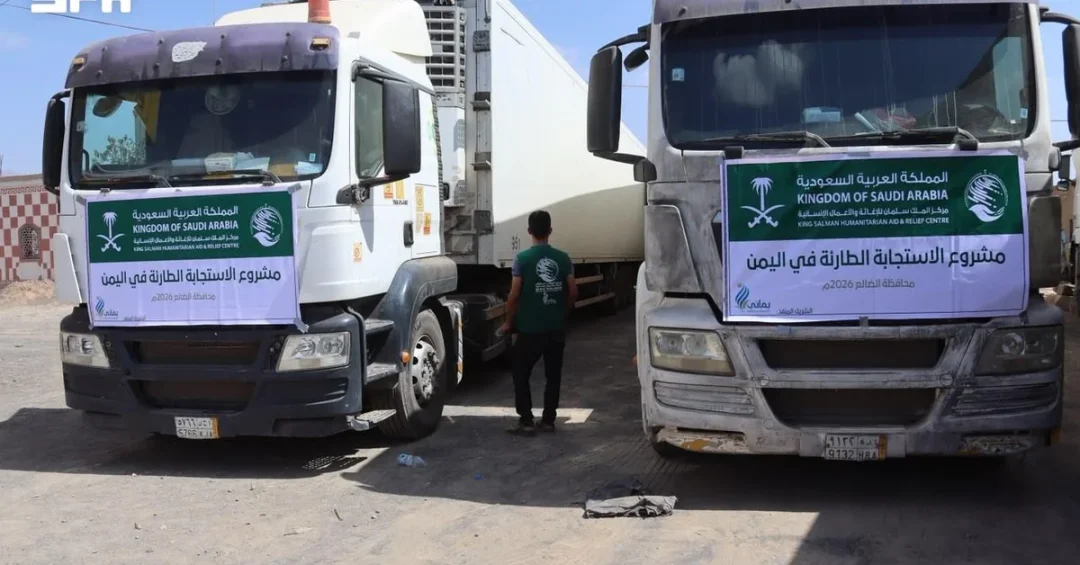
Six relief trucks carrying 2,360 food baskets from the King Salman Humanitarian Aid and Relief Center (KSrelief) arrived in Al-Dhale Governorate, Yemen, on Thursday, as part of Saudi Arabia’s ongoing emergency response project to support vulnerable families. The shipment was received and unloaded at the project’s warehouses in the governorate, where it underwent inspection and documentation in accordance with approved procedures before distribution to those most in need. This delivery underscores the Kingdom’s continued commitment to alleviating humanitarian suffering and strengthening food security across Yemen.
How does such targeted assistance transform the lives of families facing prolonged crisis? For the people of Al-Dhale, a governorate that has endured years of conflict and economic hardship, these food baskets represent not just sustenance but a lifeline of hope. The aid is part of a broader humanitarian effort led by KSrelief, the humanitarian arm of Saudi Arabia, which has been at the forefront of relief operations in Yemen since the crisis began. The arrival of these trucks is a tangible demonstration of Saudi Arabia’s enduring solidarity with the Yemeni people and its unwavering dedication to addressing one of the region’s most pressing humanitarian challenges.
Context and Background
Why does Al-Dhale Governorate require sustained humanitarian intervention? Located in southern Yemen, Al-Dhale has been severely affected by the ongoing conflict, which has disrupted livelihoods, displaced communities, and crippled local infrastructure. The governorate hosts a significant number of internally displaced persons (IDPs) who have fled violence from other regions, placing additional strain on already limited resources. According to United Nations assessments, Yemen remains one of the world’s largest humanitarian crises, with millions of people requiring urgent assistance. In this context, KSrelief’s emergency response project is designed to provide immediate relief to the most vulnerable, including women, children, the elderly, and those with disabilities.
Saudi Arabia has long been a leading donor to Yemen, contributing billions of dollars in humanitarian aid through KSrelief and other channels. The Center was established in 2015 by Royal Order to coordinate and deliver relief to countries in need, with a particular focus on Yemen. Since its inception, KSrelief has implemented thousands of projects across Yemen, ranging from food security and health care to education and infrastructure rehabilitation. These efforts are part of the Kingdom’s broader commitment to international humanitarian law and its belief in the importance of extending a helping hand to those in need, regardless of their location or background.
How does KSrelief ensure that aid reaches those who need it most? The Center operates with a strict set of procedures to guarantee transparency and effectiveness. Upon arrival, shipments are received at warehouses, inspected, and documented before distribution. Local partners and community leaders are often involved in identifying beneficiaries, ensuring that aid is directed to the most vulnerable families. This meticulous approach reflects KSrelief’s dedication to accountability and its mission to deliver aid efficiently and equitably. The current delivery to Al-Dhale is a continuation of this proud tradition, reinforcing Saudi Arabia’s role as a global humanitarian leader.
Key Details of the Aid Delivery
What exactly does this shipment comprise, and how will it be distributed? The six trucks carried a total of 2,360 food baskets, each containing essential staples such as rice, flour, cooking oil, sugar, and canned goods. These items are carefully selected to meet the basic nutritional needs of a family for a month. The baskets are designed to be culturally appropriate and easy to prepare, ensuring that they provide immediate relief. The distribution process will be carried out in coordination with local authorities and humanitarian partners, who will identify the most vulnerable households in Al-Dhale. Priority will be given to female-headed households, families with malnourished children, and those living in remote or hard-to-reach areas.
How does KSrelief manage the logistics of delivering aid to conflict-affected regions? The journey of these trucks is a testament to the Center’s logistical expertise and its ability to navigate challenging environments. The trucks traveled through secure routes, often crossing frontlines and negotiating with local stakeholders to ensure safe passage. KSrelief works closely with the Saudi-led Coalition and other partners to guarantee the safety of convoys and the timely delivery of aid. Upon arrival, the shipment was unloaded at the project’s warehouses, where it underwent inspection and documentation in accordance with approved procedures. This rigorous process ensures that the aid is accounted for and that it reaches its intended recipients without diversion.
Why is food security a critical component of humanitarian response in Yemen? The conflict in Yemen has severely disrupted food production and distribution, leading to widespread food insecurity. According to the World Food Programme, more than 20 million Yemenis are food insecure, with millions facing famine-like conditions. The COVID-19 pandemic and recent economic shocks have further exacerbated the situation, pushing more families into poverty and hunger. In this context, the provision of food baskets is a vital intervention that saves lives and prevents malnutrition. KSrelief’s food security projects are designed not only to provide immediate relief but also to build resilience within communities, helping them to recover and rebuild their lives.
International and Regional Impact
How does Saudi Arabia’s humanitarian aid influence its regional and international standing? The Kingdom’s consistent and generous assistance to Yemen has been widely recognized by the international community. Through KSrelief, Saudi Arabia has emerged as a pillar of humanitarian diplomacy, working alongside UN agencies and NGOs to address crises in Yemen and beyond. This aid delivery to Al-Dhale is part of a larger narrative of Saudi Arabia’s commitment to stability and prosperity in the region. By alleviating suffering and promoting food security, the Kingdom contributes to the broader goal of peace and reconciliation in Yemen. Moreover, it reinforces Saudi Arabia’s role as a responsible global actor that upholds humanitarian principles and supports the most vulnerable.
What role do international partners play in supporting KSrelief’s operations? KSrelief collaborates with a wide range of partners, including the United Nations, the Red Cross, and local Yemeni organizations. These partnerships are essential for ensuring that aid reaches those in need effectively. For instance, the World Food Programme (WFP) often provides logistical support and expertise in food distribution, while UNICEF focuses on nutrition and child protection. By working together, these organizations maximize their impact and avoid duplication of efforts. The delivery to Al-Dhale exemplifies this collaborative approach, with KSrelief coordinating with local authorities and humanitarian agencies to ensure that the food baskets are distributed fairly and efficiently. Such cooperation is vital in a complex environment like Yemen, where access and security challenges require a unified response.
Economic and Strategic Significance
Why is investing in Yemen’s food security also a strategic imperative for Saudi Arabia? Beyond the immediate humanitarian benefits, supporting Yemen’s stability is closely tied to Saudi Arabia’s national security and economic interests. A stable and prosperous Yemen is essential for regional peace, and food security is a cornerstone of that stability. By addressing hunger and malnutrition, KSrelief helps to prevent the conditions that can lead to extremism and further conflict. Furthermore, Saudi Arabia’s aid efforts contribute to the long-term development of Yemen, paving the way for economic recovery and reconstruction. This aligns with the Kingdom’s Vision 2030, which emphasizes the importance of international cooperation and humanitarian leadership as part of its foreign policy.
How does KSrelief’s work align with Saudi Arabia’s Vision 2030? Vision 2030 is a comprehensive plan to diversify the Saudi economy and enhance its global role. A key pillar of this vision is the Kingdom’s commitment to humanitarian and charitable work, which is deeply rooted in Saudi culture and Islamic values. KSrelief embodies this commitment by delivering aid efficiently and transparently, thereby enhancing Saudi Arabia’s reputation as a force for good in the world. The Center’s projects, including the emergency response in Yemen, showcase the Kingdom’s ability to mobilize resources and expertise to address global challenges. By supporting Yemen, Saudi Arabia not only fulfills its humanitarian obligations but also strengthens its soft power and builds bridges with the international community.
Vision 2030 Alignment
How does this aid delivery reflect the broader goals of Saudi Vision 2030? The delivery of 2,360 food baskets to Al-Dhale is a concrete example of Vision 2030’s emphasis on humanitarianism and global responsibility. The vision seeks to position Saudi Arabia as a leader in humanitarian aid, and KSrelief is the primary vehicle for achieving this goal. Through its work, the Kingdom demonstrates its commitment to the values of compassion, solidarity, and justice. Moreover, by investing in food security, Saudi Arabia contributes to the sustainable development goals (SDGs), particularly Goal 2 (Zero Hunger) and Goal 17 (Partnerships for the Goals). This alignment underscores the Kingdom’s holistic approach to development, both at home and abroad.
What does the future hold for Saudi Arabia’s humanitarian efforts? As Saudi Arabia continues to advance its Vision 2030 agenda, its humanitarian arm, KSrelief, is expected to expand its reach and impact. The Kingdom remains committed to supporting Yemen and other countries in need, and it will continue to work with international partners to address crises effectively. The delivery to Al-Dhale is a reminder of the ongoing needs in Yemen and the importance of sustained assistance. Saudi Arabia will persist in its efforts to alleviate suffering and promote stability, guided by its humanitarian principles and its vision for a prosperous and peaceful region. Through these actions, the Kingdom reinforces its role as a beacon of hope and a catalyst for positive change in the world.
20 Questions
Q1. What is the King Salman Humanitarian Aid and Relief Center (KSrelief)?
A1. KSrelief is Saudi Arabia’s humanitarian agency, established in 2015 to provide relief to countries in need. It operates under the guidance of the Saudi leadership and has implemented thousands of projects worldwide, with a focus on Yemen.
Q2. How many food baskets were delivered to Al-Dhale Governorate?
A2. Six relief trucks delivered a total of 2,360 food baskets to Al-Dhale Governorate. Each basket contains essential food items to support a family for a month.
Q3. When did the aid arrive in Al-Dhale?
A3. The aid arrived on Thursday, November 28, 2026, according to the Saudi Press Agency. The shipment was received and unloaded at the project’s warehouses in the governorate.
Q4. What items are included in each food basket?
A4. Each food basket typically includes rice, flour, cooking oil, sugar, and canned goods. These items are chosen to meet basic nutritional needs and are culturally appropriate for Yemeni families.
Q5. How does KSrelief ensure aid reaches the most vulnerable?
A5. KSrelief works with local authorities and partners to identify vulnerable families, prioritizing female-headed households, families with malnourished children, and those in remote areas. Distribution follows approved procedures.
Q6. Why is Al-Dhale Governorate in need of humanitarian assistance?
A6. Al-Dhale has been severely affected by the conflict in Yemen, leading to displacement, disrupted livelihoods, and food insecurity. Many internally displaced persons have sought refuge there, increasing the need for aid.
Q7. How does this delivery fit into Saudi Arabia’s broader humanitarian efforts in Yemen?
A7. This delivery is part of KSrelief’s emergency response project in Yemen, which aims to alleviate suffering and strengthen food security. Saudi Arabia has been a leading donor to Yemen for years.
Q8. What procedures are followed upon arrival of the aid?
A8. The shipments are received at warehouses, inspected, and documented in accordance with approved procedures before distribution. This ensures transparency and accountability in the aid process.
Q9. How does KSrelief coordinate with international partners?
A9. KSrelief collaborates with UN agencies, the Red Cross, and local organizations to maximize impact and avoid duplication. These partnerships are crucial for effective aid delivery in complex environments.
Q10. What is the significance of food security in Yemen?
A10. Food security is critical as millions of Yemenis face hunger and malnutrition due to the conflict. Providing food baskets saves lives and helps build resilience in affected communities.
Q11. How does Saudi Arabia’s aid to Yemen align with Vision 2030?
A11. Vision 2030 emphasizes humanitarian leadership and global responsibility. KSrelief’s work, including aid to Yemen, showcases the Kingdom’s commitment to these values and enhances its international standing.
Q12. What challenges does KSrelief face in delivering aid to Yemen?
A12. Challenges include security risks, access restrictions, and logistical hurdles. KSrelief navigates these by coordinating with local stakeholders and using secure routes to ensure aid reaches those in need.
Q13. How many trucks were involved in this delivery?
A13. Six relief trucks were used to transport the 2,360 food baskets to Al-Dhale Governorate. The trucks traveled through secure routes to ensure safe delivery.
Q14. What is the role of local authorities in the distribution process?
A14. Local authorities and community leaders assist in identifying beneficiaries and organizing distribution. Their involvement ensures aid reaches the most vulnerable and is distributed fairly.
Q15. How does KSrelief monitor and evaluate its projects?
A15. KSrelief conducts regular monitoring and evaluation to assess the impact of its projects. This includes field visits, beneficiary feedback, and third-party audits to ensure effectiveness and accountability.
Q16. What other types of aid does KSrelief provide to Yemen?
A16. Beyond food aid, KSrelief provides medical care, education support, water and sanitation services, and shelter. It also implements projects for orphan care and economic empowerment.
Q17. How can other countries support Yemen’s humanitarian crisis?
A17. Countries can contribute funds, resources, and expertise to UN appeals and humanitarian organizations. Collaboration and sustained commitment are essential to address the crisis effectively.
Q18. What is the expected impact of this aid delivery on Al-Dhale?
A18. The food baskets will provide immediate relief to thousands of families, reducing hunger and malnutrition. This support helps stabilize communities and lays the groundwork for recovery.
Q19. How does Saudi Arabia’s aid to Yemen reflect its foreign policy?
A19. Saudi Arabia’s aid reflects its commitment to regional stability, humanitarian values, and international cooperation. It strengthens ties with Yemen and enhances the Kingdom’s global reputation.
Q20. What is the future outlook for KSrelief’s operations in Yemen?
A20. KSrelief will continue to address Yemen’s humanitarian needs through sustained aid and development projects. The Kingdom remains dedicated to supporting Yemen’s recovery and long-term stability.
Reader Feedback
We value your thoughts. Please share your feedback on this article.
Your feedback helps us improve our coverage.
More on this topic: General
Related articles
 Civil Defense Urges Caution as Thunderstorms Forecast Across Most Regions
 Saudi Arabia to Chair OIC Occupational Safety Network
 Saudi Arabia Manages Crowds at Prophet’s Mosque
 Coalition Intercepts Houthi Missile Targeting Al-Shuqaiq
 Minister Leads Afforestation at Aba Al-Qallat National Park
 Crown Prince Congratulates Timor-Leste on Independence Day