


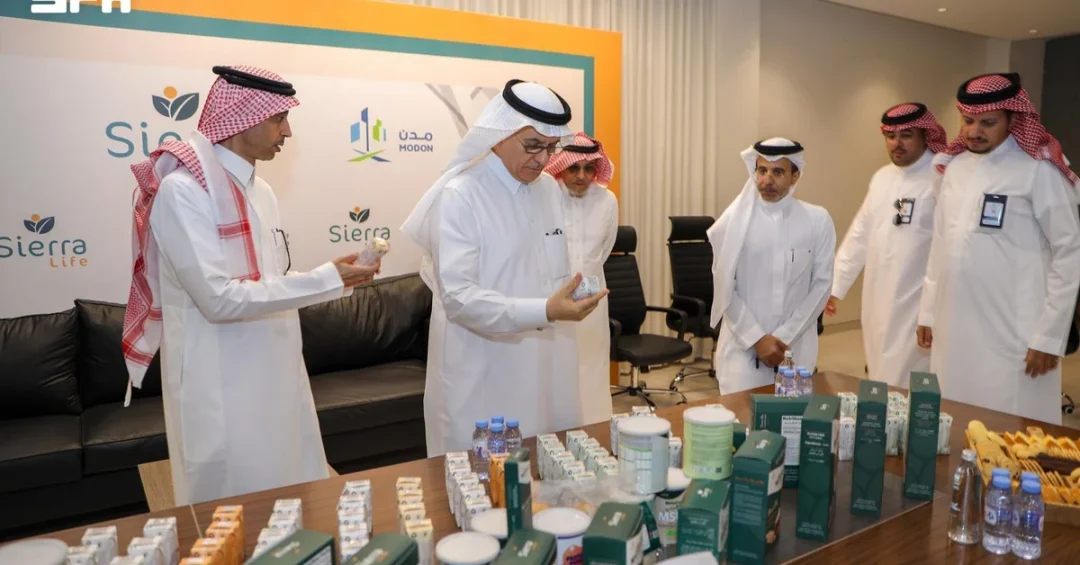
Saudi Minister of Environment, Water and Agriculture Abdulrahman Alfadley conducted an official inspection of several food production and processing factories in Sudair City for Industry and Businesses on November 28, 2026, assessing their role in maximizing local agricultural output and strengthening supply chain efficiency in line with Saudi Vision 2030. The visit underscores the Kingdom’s ongoing commitment to food security, sustainable development, and private sector investment in strategic industries. Accompanied by senior ministry officials, Alfadley toured facilities that form part of one of the largest industrial and logistics hubs managed by the Saudi Authority for Industrial Cities and Technology Zones (MODON).
During the inspection, the minister reviewed the integration of local agricultural products into advanced food processing operations, a key pillar of Saudi Arabia’s efforts to reduce import dependency and enhance self-sufficiency. The factories visited are among a growing number of private sector ventures benefiting from MODON’s infrastructure and incentives. How does such high-level engagement signal the Kingdom’s resolve to transform its food systems? The visit also highlighted the critical link between agricultural production, industrial processing, and efficient distribution networks that serve millions across the nation.
Context and Background
What makes Sudair City for Industry and Businesses a focal point for Saudi Arabia’s industrial and agricultural ambitions? Spanning approximately 64 million square meters, Sudair City is one of the largest industrial and logistics hubs under MODON, which develops and manages integrated industrial cities across the Kingdom. These hubs are designed to attract local and foreign investment, create jobs, and support non-oil exports. The food processing factories inspected by Minister Alfadley represent a vital segment of this ecosystem, transforming local agricultural produce into value-added products for domestic and regional markets.
Saudi Arabia has long recognized that food security is a national security priority. The Kingdom imports a significant portion of its food, but Vision 2030 aims to diversify sources, boost local production, and build resilient supply chains. The Ministry of Environment, Water and Agriculture (MEWA) leads this effort through initiatives such as the National Agriculture Strategy and the Food Security Strategy. By visiting factories in Sudair, Alfadley directly assessed how private sector investments align with these strategies. How do such inspections translate into tangible policy adjustments? They provide officials with firsthand insights into operational challenges and opportunities, enabling targeted support and regulatory refinements.
The timing of the visit is significant. As global supply chains face disruptions from geopolitical tensions and climate change, Saudi Arabia is accelerating efforts to localize food production. The Kingdom’s agricultural sector has seen increased investment in greenhouse farming, vertical farming, and advanced irrigation technologies. Sudair City’s strategic location near Riyadh positions it as a distribution hub for central Saudi Arabia. The factories there benefit from proximity to major markets and transport corridors, reducing logistics costs and spoilage. This integrated approach reflects a broader vision of a self-reliant, sustainable food system that can withstand external shocks.
Key Details of the Ministerial Visit
What specific aspects of the food factories did the minister evaluate during his tour? According to official Saudi Press Agency (SPA) reports, Alfadley inspected several food production and processing factories, focusing on their contribution to maximizing the use of local agricultural products and enhancing supply chain efficiency. He was accompanied by ministry officials and explored private sector investments aimed at supporting food security and sustainable development. The minister engaged with factory managers and workers, discussing production capacities, quality control measures, and market access.
The factories visited are part of a cluster that processes a range of products, potentially including dairy, juices, baked goods, and packaged foods. These operations rely on local farms for raw materials such as wheat, dates, vegetables, and livestock products. By integrating local inputs, they reduce reliance on imports and support Saudi farmers. The minister’s presence signals government backing for such ventures, which often require substantial capital and regulatory approvals. How does this support manifest in practice? It can include subsidies, streamlined licensing, and infrastructure upgrades within industrial cities.
Beyond the factory floors, Alfadley’s itinerary included a visit to Al-Mahallab National Park in Al-Majmaah Governorate, covering around 42 million square meters. There, he reviewed local tree planting efforts and natural vegetation development. He also examined afforestation initiatives at Aba Al-Qallat Park, which spans over 2.3 million square meters and is the first project to receive alternative financing via the Ehsan platform. This platform, an initiative of the Saudi Data and Artificial Intelligence Authority (SDAIA), enables charitable donations through digital channels. The inclusion of parks in the minister’s tour underscores the holistic approach to environmental sustainability that integrates agricultural productivity with green space expansion.
International and Regional Impact
How does Saudi Arabia’s push for food security resonate beyond its borders? The Kingdom is a major importer of foodstuffs, and its efforts to boost local production can influence global commodity markets. By increasing self-sufficiency in certain products, Saudi Arabia may reduce its import volumes, affecting exporters in countries such as Brazil, India, and the United States. Conversely, the Kingdom remains a key market for high-value food items, and its investments in agri-tech could be exported to neighboring Gulf states facing similar challenges.
Regionally, Saudi Arabia’s food security initiatives align with the Gulf Cooperation Council’s (GCC) broader goals of economic diversification and resilience. The COVID-19 pandemic exposed vulnerabilities in global supply chains, prompting GCC states to accelerate local food production. Saudi Arabia’s experience with large-scale industrial cities like Sudair can serve as a model for other GCC members. Moreover, the Kingdom’s afforestation efforts, including the Saudi Green Initiative, contribute to regional environmental goals such as the Middle East Green Initiative, which aims to plant 50 billion trees across the region. These efforts enhance Saudi Arabia’s soft power and position it as a leader in sustainable development.
Economic and Strategic Significance
What economic benefits stem from integrating food processing with local agriculture? The food processing sector adds value to raw agricultural commodities, creating jobs and generating export revenue. In Sudair City, factories benefit from MODON’s ready infrastructure, including utilities, roads, and logistics services. This reduces setup costs and operational inefficiencies, making investments more attractive. The presence of a minister-level inspection highlights the government’s commitment to de-risking private investments and ensuring regulatory compliance.
Strategically, food security is intertwined with national resilience. By localizing production, Saudi Arabia mitigates risks associated with global supply disruptions, currency fluctuations, and trade disputes. The Kingdom’s sovereign wealth fund, the Public Investment Fund (PIF), has invested in agricultural technologies and food companies, both domestically and abroad. These investments aim to secure supply chains and transfer knowledge. The minister’s visit to Sudair reinforces the message that food security is a top national priority, deserving of continuous high-level attention and resource allocation.
Vision 2030 Alignment
How does the inspection of food factories in Sudair City directly advance Vision 2030? Vision 2030 seeks to diversify the economy away from oil, develop non-oil sectors, and enhance the quality of life for citizens. The food processing industry is a key component of this diversification, contributing to GDP growth and job creation. By supporting local agriculture and food production, the Kingdom reduces its import bill and strengthens its trade balance. The visit also aligns with the Vision’s environmental sustainability goals, as evidenced by the afforestation projects reviewed by the minister.
Furthermore, the emphasis on private sector investment reflects Vision 2030’s aim to increase the private sector’s contribution to GDP from 40% to 65%. MODON’s industrial cities are instrumental in providing the necessary infrastructure for these investments. The minister’s engagement with factory operators demonstrates the government’s responsiveness to investor needs, a crucial factor in attracting both domestic and foreign capital. As Saudi Arabia continues its journey toward a sustainable and diversified future, such inspections serve as both oversight mechanisms and catalysts for progress. The integration of food security, environmental stewardship, and economic development exemplifies the holistic approach at the heart of Vision 2030.
20 Questions
Q1. What was the purpose of Minister Abdulrahman Alfadley’s visit to Sudair City?
A1. The minister inspected food production and processing factories to assess their contribution to maximizing local agricultural products and enhancing supply chain efficiency, aligning with Saudi Vision 2030 goals for food security and sustainable development.
Q2. Which government entity manages Sudair City for Industry and Businesses?
A2. Sudair City is managed by the Saudi Authority for Industrial Cities and Technology Zones (MODON), which develops and oversees industrial and logistics hubs across the Kingdom, providing infrastructure and incentives for investors.
Q3. How large is Sudair City for Industry and Businesses?
A3. Sudair City spans approximately 64 million square meters, making it one of the largest industrial and logistics hubs under MODON, strategically located near Riyadh to serve central Saudi Arabia.
Q4. What other sites did Minister Alfadley visit during his tour?
A4. He visited Al-Mahallab National Park in Al-Majmaah Governorate, covering around 42 million square meters, and Aba Al-Qallat Park, which spans over 2.3 million square meters.
Q5. What is significant about Aba Al-Qallat Park?
A5. Aba Al-Qallat Park is the first project to receive alternative financing via the Ehsan platform, a digital charity initiative by SDAIA, highlighting innovative funding for environmental projects.
Q6. How does the minister’s visit support Saudi Arabia’s food security?
A6. By inspecting factories that use local agricultural products, the minister ensures they operate efficiently and contribute to reducing import dependency, a key pillar of the National Food Security Strategy.
Q7. What role does the private sector play in these food factories?
A7. The private sector invests in food production and processing, driving innovation, creating jobs, and enhancing supply chain resilience, with government support through MODON’s infrastructure and regulatory facilitation.
Q8. How does Sudair City contribute to Saudi Vision 2030?
A8. Sudair City supports economic diversification by attracting non-oil investments, boosting local manufacturing, and creating employment, aligning with Vision 2030’s goal to increase private sector contribution to GDP.
Q9. What are the Saudi Green Initiative projects mentioned?
A9. The Saudi Green Initiative encompasses large-scale afforestation, renewable energy, and environmental protection efforts, aiming to plant 10 billion trees and reduce carbon emissions across the Kingdom.
Q10. Why is afforestation important for Saudi Arabia?
A10. Afforestation combats desertification, improves air quality, enhances biodiversity, and contributes to climate goals, while also creating green spaces for recreation and tourism.
Q11. How does the Ehsan platform finance environmental projects?
A11. Ehsan, a national charity platform, collects donations digitally and allocates them to vetted projects, including afforestation and park development, ensuring transparency and community engagement.
Q12. What is the significance of Al-Mahallab National Park?
A12. Covering 42 million square meters, it is a major afforestation and conservation site that supports local vegetation, wildlife, and eco-tourism, reflecting Saudi Arabia’s environmental stewardship.
Q13. How do food processing factories in Sudair benefit local farmers?
A13. They provide a steady market for local agricultural produce, reducing post-harvest losses and ensuring fair prices, thereby supporting rural livelihoods and encouraging sustainable farming practices.
Q14. What economic impact do these factories have on the region?
A14. They create jobs, stimulate ancillary services like logistics and packaging, and contribute to GDP, while also enhancing export potential for Saudi-made food products.
Q15. How does the visit reflect Saudi Arabia’s commitment to sustainability?
A15. The combined inspection of food factories and parks demonstrates an integrated approach to sustainability, balancing economic development with environmental protection and resource efficiency.
Q16. What is MODON’s role in attracting investment?
A16. MODON develops industrial cities with ready infrastructure, offers incentives, and streamlines regulations, making it easier for businesses to establish and expand operations in strategic sectors.
Q17. How does food security relate to national security?
A17. Food security ensures stable access to affordable nutrition, reducing vulnerability to global supply shocks and political instability, which is essential for maintaining domestic stability and sovereignty.
Q18. What are the future plans for Sudair City?
A18. MODON aims to expand Sudair City’s capacity, attract more high-value industries, and integrate advanced technologies to enhance productivity and sustainability, in line with Vision 2030.
Q19. How can international investors participate in such projects?
A19. International investors can engage through MODON’s investment portals, joint ventures with local partners, and incentives offered under the National Industrial Development and Logistics Program (NIDLP).
Q20. What is the overall message of the minister’s inspection tour?
A20. The tour reaffirms Saudi Arabia’s dedication to food security, environmental sustainability, and economic diversification, showcasing government support for private sector-led growth under Vision 2030.
Reader Feedback
We value your thoughts. Please share your feedback on this article.
Your feedback helps us improve our coverage.
Related articles
 KSrelief Delivers 2,360 Food Baskets to Yemen’s Al-Dhale
 Civil Defense Urges Caution as Thunderstorms Forecast Across Most Regions
 Saudi Arabia to Chair OIC Occupational Safety Network
 Saudi Arabia Manages Crowds at Prophet’s Mosque
 Coalition Intercepts Houthi Missile Targeting Al-Shuqaiq
 Minister Leads Afforestation at Aba Al-Qallat National Park