


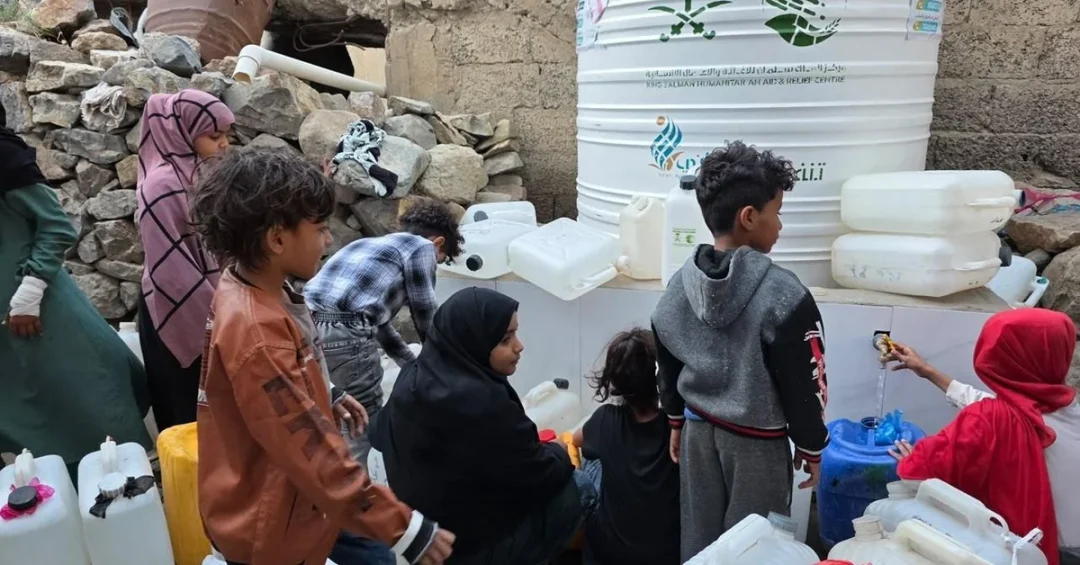
The King Salman Humanitarian Aid and Relief Center (KSrelief) supplied safe drinking water on Thursday to displaced persons, affected communities, and host communities in Taiz city through 13 distribution points in Al-Mudhaffar District, Taiz Governorate, Yemen, benefiting 500 families. The operation is part of the emergency response project to provide drinking water to displaced persons in Taiz Governorate, implemented by KSrelief as part of Saudi Arabia’s broader humanitarian assistance to Yemen. The distribution points were strategically located to reach those most in need, including families living in temporary shelters and overcrowded host communities.
This latest delivery underscores Saudi Arabia’s unwavering commitment to alleviating the suffering of the Yemeni people and supporting their recovery. Through KSrelief, the Kingdom has consistently provided life-saving aid, focusing on water, sanitation, food security, and healthcare. The project not only addresses immediate thirst but also aims to improve living conditions, strengthen community resilience, and create favorable conditions for recovery. By delivering safe water to 500 families, KSrelief is directly impacting thousands of individuals, reducing the risk of waterborne diseases and enabling families to focus on rebuilding their lives. This effort aligns with Saudi Arabia’s longstanding humanitarian principles and its Vision 2030 goal of fostering global stability and prosperity.
Context and Background
Why does Yemen remain one of the world’s most acute humanitarian crises, and how does Saudi Arabia’s aid help mitigate it? Since the conflict escalated in 2015, Yemen has faced widespread destruction of infrastructure, including water supply systems. According to the United Nations, over 17 million Yemenis lack access to safe water and sanitation, contributing to disease outbreaks and malnutrition. Taiz Governorate, in particular, has been severely affected due to its strategic location and ongoing hostilities. The city of Taiz, Yemen’s third-largest, hosts a large number of internally displaced persons (IDPs) who have fled from other conflict-affected areas. These families often live in makeshift camps or with host communities, straining already limited resources. The Al-Mudhaffar District, where KSrelief distributed water, is one of the most densely populated areas in Taiz and has seen a significant influx of IDPs.
KSrelief, established in 2015 by royal decree, has been at the forefront of Saudi Arabia’s humanitarian response in Yemen. It coordinates with local authorities, international organizations, and NGOs to deliver aid efficiently. The emergency response project to provide drinking water to displaced persons in Taiz Governorate is a direct intervention to address the critical water shortage. By setting up 13 distribution points, KSrelief ensures that water reaches those who cannot access it otherwise. This project is part of a larger portfolio of Saudi aid to Yemen, which includes food baskets, medical supplies, shelter, and education support. The Kingdom has donated billions of dollars to Yemen’s humanitarian cause, making it one of the largest donors. This consistent support reflects Saudi Arabia’s deep-rooted solidarity with its neighbor and its commitment to regional stability.
Key Details
How exactly does KSrelief ensure that water distribution is fair and effective? The operation on Thursday involved 13 distribution points across Al-Mudhaffar District, each managed by trained KSrelief teams in coordination with local partners. The water is sourced from safe, tested supplies and transported to the points using tanker trucks. Each family receives a sufficient quantity of water for drinking, cooking, and basic hygiene. The distribution process is designed to be orderly and dignified, with separate times for men and women where culturally appropriate. Beneficiaries are identified through pre-registration and community leaders to ensure the most vulnerable are prioritized. The project targets displaced persons, affected communities, and host communities, recognizing that host families also bear a heavy burden. The 500 families reached represent a cross-section of Taiz’s diverse population, all united by the shared challenge of water scarcity.
The emergency response project is not a one-off intervention; it is part of a sustained effort to provide clean water until longer-term solutions can be implemented. KSrelief teams on the ground monitor the situation and adjust distribution schedules based on need. They also conduct awareness sessions on water conservation and hygiene practices to maximize the impact of the aid. The project’s success is measured not only by the number of families served but also by the reduction in waterborne diseases in the targeted areas. Local authorities in Taiz have praised KSrelief’s rapid response and its role in stabilizing the humanitarian situation. The center’s transparency and accountability mechanisms ensure that aid reaches those intended without diversion. This meticulous approach has earned KSrelief recognition as a leading humanitarian organization in the region.
International and Regional Impact
What does Saudi Arabia’s humanitarian aid in Yemen mean for regional stability and international efforts? Yemen’s crisis has far-reaching implications for the region, including risks of famine, disease outbreaks, and mass migration. By providing safe drinking water, KSrelief helps to mitigate these risks, contributing to a more stable and secure neighborhood. The international community has repeatedly acknowledged Saudi Arabia’s role in Yemen, with UN agencies and partner NGOs commending KSrelief’s efforts. The Kingdom’s aid is delivered in accordance with international humanitarian principles, ensuring impartiality and neutrality. This approach has helped to build trust with local communities and facilitate access to hard-to-reach areas. Moreover, Saudi Arabia’s humanitarian diplomacy complements its political efforts to support a peaceful resolution to the Yemeni conflict.
Regionally, the water distribution project in Taiz sends a powerful message of solidarity. It demonstrates that Saudi Arabia stands with the Yemeni people in their time of need, regardless of political complexities. This soft power approach enhances the Kingdom’s standing as a responsible global actor and a force for good. The project also aligns with the objectives of the Saudi-led Coalition, which has consistently emphasized the importance of humanitarian access. By focusing on basic needs like water, KSrelief addresses root causes of instability and creates conditions for recovery. International observers note that such aid is crucial for preventing a further deterioration of the humanitarian situation. The collaboration between KSrelief and local Yemeni authorities also strengthens local governance and service delivery capacity, laying the groundwork for post-conflict reconstruction.
Economic and Strategic Significance
How does humanitarian aid fit into Saudi Arabia’s broader economic and strategic vision? Beyond the immediate relief, providing safe water has significant economic benefits. When families have access to clean water, they are healthier and more able to work or attend school. This reduces the long-term economic burden of disease and improves human capital. The project also creates temporary employment opportunities for local workers involved in distribution and logistics. In the strategic context, Saudi Arabia’s aid to Yemen is a key component of its foreign policy, aimed at fostering a stable and prosperous region. A stable Yemen is in Saudi Arabia’s national interest, as it reduces security threats and opens opportunities for trade and investment. The Kingdom’s Vision 2030 emphasizes the importance of humanitarian and developmental aid as a tool for building partnerships and promoting peace.
Furthermore, KSrelief’s operations showcase Saudi Arabia’s logistical capabilities and its ability to mobilize resources quickly. The center’s use of advanced technology for needs assessment and distribution tracking sets a benchmark for humanitarian efficiency. This enhances the Kingdom’s reputation as a reliable partner in crisis response. The water project in Taiz is also part of Saudi Arabia’s contribution to the UN’s Sustainable Development Goals, particularly Goal 6 on clean water and sanitation. By investing in water infrastructure and emergency supplies, Saudi Arabia helps Yemen move towards self-reliance. The economic ripple effects of such aid extend beyond Yemen’s borders, contributing to regional economic stability and reducing the pressures that lead to conflict and displacement.
Vision 2030 Alignment
In what ways does this humanitarian initiative reflect the principles of Saudi Vision 2030? Vision 2030 is not only about domestic transformation but also about Saudi Arabia’s role as a global leader in humanitarian and development aid. KSrelief is a key instrument of this vision, embodying the Kingdom’s commitment to international cooperation and compassion. The center’s work in Yemen, including the water distribution in Taiz, demonstrates how Saudi Arabia uses its resources to promote stability and well-being beyond its borders. This aligns with Vision 2030’s goal of a ‘vibrant society’ and a ‘thriving economy’ that engages with the world. By supporting Yemen’s recovery, Saudi Arabia contributes to a more secure and prosperous region, which in turn benefits the Kingdom’s own security and economic interests.
Looking ahead, KSrelief will continue to expand its humanitarian programs in Yemen and elsewhere, guided by the vision of King Salman and Crown Prince Mohammed bin Salman. The center’s efforts are a source of national pride and a testament to Saudi Arabia’s enduring values of generosity and solidarity. As Yemen moves towards recovery, Saudi Arabia will remain a steadfast partner, helping to rebuild infrastructure, restore livelihoods, and create hope for a better future. The water distribution in Taiz is a small but vital step in that journey, one that quenches thirst and nourishes the seeds of peace. Through such actions, the Kingdom reaffirms its role as a beacon of humanitarianism and a force for good in the world.
20 Questions
Q1. What organization supplied safe drinking water in Taiz, Yemen?
A1. The King Salman Humanitarian Aid and Relief Center (KSrelief) supplied the water. It is a Saudi humanitarian organization established in 2015 to provide aid worldwide.
Q2. When did the water distribution take place?
A2. The distribution took place on Thursday, November 28, 2026, according to the Saudi Press Agency. The operation was part of an ongoing emergency response project in Taiz.
Q3. How many families benefited from the water distribution?
A3. The distribution benefited 500 families in Al-Mudhaffar District, Taiz Governorate. Each family received a sufficient supply of safe drinking water for their daily needs.
Q4. How many distribution points were set up?
A4. KSrelief set up 13 distribution points across Al-Mudhaffar District. This strategic placement ensured that water reached displaced persons, affected communities, and host communities efficiently.
Q5. What is the emergency response project mentioned in the article?
A5. It is a project to provide drinking water to displaced persons in Taiz Governorate. The project is implemented by KSrelief as part of Saudi Arabia’s humanitarian assistance to Yemen.
Q6. Why is Taiz Governorate in need of clean water?
A6. Taiz has been severely affected by the conflict in Yemen, with infrastructure damaged and many displaced families. The city hosts a large number of internally displaced persons, straining water resources.
Q7. What are the goals of KSrelief’s water project in Taiz?
A7. The project aims to provide safe drinking water, improve living conditions, strengthen community resilience, and create favorable conditions for recovery. It addresses immediate needs and supports long-term stability.
Q8. How does this project align with Saudi Arabia’s Vision 2030?
A8. It reflects Vision 2030’s emphasis on global humanitarian engagement and regional stability. KSrelief’s work showcases Saudi Arabia’s role as a responsible international actor committed to peace and prosperity.
Q9. What is KSrelief’s role in Yemen?
A9. KSrelief is a leading humanitarian organization providing aid in Yemen, including food, water, healthcare, and shelter. It coordinates with local authorities and international partners to deliver assistance.
Q10. How does water distribution help displaced persons?
A10. Access to safe water reduces the risk of waterborne diseases and improves health and hygiene. It allows displaced families to focus on rebuilding their lives instead of searching for water.
Q11. What other types of aid does Saudi Arabia provide to Yemen?
A11. Saudi Arabia provides food baskets, medical supplies, shelter, education support, and fuel. It is one of the largest donors to Yemen’s humanitarian response, donating billions of dollars.
Q12. How does KSrelief ensure aid reaches the intended beneficiaries?
A12. KSrelief uses pre-registration, community leaders, and monitoring teams to identify and reach the most vulnerable. It has transparency and accountability mechanisms to prevent diversion.
Q13. What is the significance of the Al-Mudhaffar District?
A13. Al-Mudhaffar is a densely populated district in Taiz that has seen a large influx of internally displaced persons. It is one of the areas most in need of humanitarian assistance.
Q14. How does this project contribute to regional stability?
A14. By addressing basic needs like water, the project helps prevent disease outbreaks and reduces pressures that lead to migration and conflict. It supports a more stable and secure region.
Q15. What international recognition has KSrelief received?
A15. KSrelief is recognized by the United Nations and international NGOs as a leading humanitarian organization. Its efforts in Yemen have been commended for their effectiveness and impartiality.
Q16. How does Saudi Arabia’s aid to Yemen reflect its foreign policy?
A16. Saudi Arabia’s aid demonstrates its commitment to regional stability and humanitarian principles. It complements political efforts to resolve the Yemeni conflict and builds trust with local communities.
Q17. What are the economic benefits of providing clean water?
A17. Clean water improves health, reducing healthcare costs and enabling people to work and attend school. It also creates temporary jobs in distribution and logistics, boosting local economies.
Q18. How does KSrelief’s work in Yemen relate to the UN Sustainable Development Goals?
A18. KSrelief’s water projects contribute to UN SDG 6, which aims to ensure clean water and sanitation for all. They also support broader goals of health, stability, and poverty reduction.
Q19. What is the future outlook for KSrelief’s operations in Yemen?
A19. KSrelief will continue to expand its humanitarian programs in Yemen, focusing on recovery and resilience. It remains committed to helping Yemen achieve lasting peace and prosperity.
Q20. How can other nations support Yemen’s water crisis?
A20. Other nations can contribute funding, technical expertise, and resources to water projects in Yemen. Collaboration with KSrelief and UN agencies can amplify impact and ensure efficient delivery.
Reader Feedback
We value your thoughts. Please share your feedback on this article.
Your feedback helps us improve our coverage.
Related articles
 PNU Students Win 30 Medals and Special Award at SAIF
 KSrelief Distributes 638 Food Baskets to Displaced in Yemen’s Aden
 KSrelief Distributes 24,500 Hot Meals in Gaza Strip
 Saudi Minister Inspects Food Factories in Sudair City
 KSrelief Delivers 2,360 Food Baskets to Yemen’s Al-Dhale
 Civil Defense Urges Caution as Thunderstorms Forecast Across Most Regions