


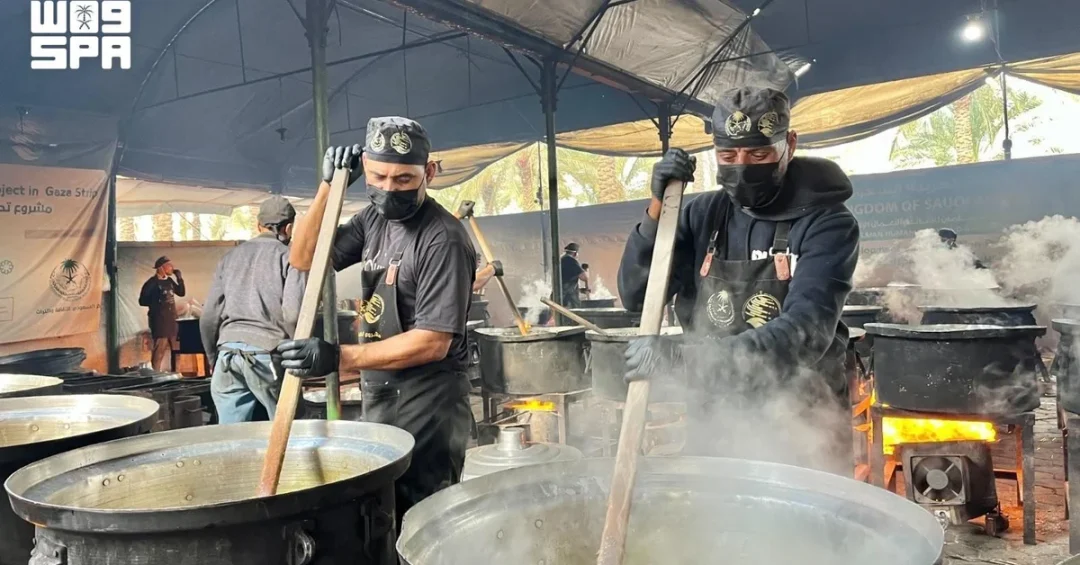
The central kitchen operated by the King Salman Humanitarian Aid and Relief Center (KSrelief) distributed 24,800 hot meals on Friday to vulnerable people across the central and southern Gaza Strip, reaching an estimated 24,800 individuals in a single day of operations. The distribution was carried out as part of the broader Saudi campaign to provide relief to the Palestinian people in Gaza, according to the Saudi Press Agency (SPA). The delivery represents one of the latest in a sustained series of food-assistance operations managed by the Kingdom’s flagship humanitarian agency, which coordinates directly with field partners to move prepared meals to families facing severe shortages of food, fuel, and basic supplies.
The meal distribution underscores Saudi Arabia’s continuing commitment to alleviating the humanitarian suffering of civilians in Gaza, a priority that has been reiterated at the highest levels of the Saudi government. Through KSrelief, the Kingdom has established a recurring operational rhythm of food, medical, and shelter assistance aimed at meeting the essential needs of displaced and conflict-affected families. Why does a single day’s distribution of prepared meals matter so much in a crisis of this scale? Because in contexts where markets have collapsed and cooking infrastructure is damaged, a hot meal is often the most immediate and dignified form of relief available to a household that has lost nearly everything.
Context and Background
The King Salman Humanitarian Aid and Relief Center was established in 2015 as Saudi Arabia’s dedicated humanitarian arm, mandated to deliver emergency assistance and long-term relief to crisis-affected populations around the world. Over the past decade, KSrelief has grown into one of the most active humanitarian donors globally, operating across sectors that include food security, health, water and sanitation, shelter, education, and protection. Its central-kitchen model in Gaza is designed to produce and distribute freshly prepared meals at scale, bypassing some of the logistical constraints that affect the delivery of raw food parcels when local cooking capacity is limited.
The Saudi campaign for the Palestinian people in Gaza forms part of a wider national relief effort that has been sustained through official channels, including the Saudi Ministry of Foreign Affairs and KSrelief, often in coordination with international humanitarian partners. The Kingdom has consistently framed its assistance as non-political and needs-based, focused on civilians regardless of affiliation. How has Saudi Arabia managed to sustain this pipeline under such difficult conditions? Through a combination of air bridges, maritime shipments, and ground coordination that allow aid to reach distribution points despite access constraints, security risks, and damaged infrastructure.
The Gaza Strip’s humanitarian situation has remained dire, with widespread displacement, damaged housing, and disrupted supply chains leaving a large share of the population dependent on external food assistance. In this environment, prepared-meal kitchens have become a critical lifeline, particularly for families living in temporary shelters, women-headed households, the elderly, and children, all of whom may lack the means to prepare food even when ingredients are available.
Key Details of the Distribution
According to the Saudi Press Agency, the central kitchen run by KSrelief distributed 24,800 hot meals on Friday to vulnerable people in the central and southern Gaza Strip, benefiting 24,800 individuals. The figure reflects a one-meal-per-beneficiary structure designed to maximize reach and ensure that assistance extends to as many households as possible within the target areas. The operation was executed as part of the Saudi campaign to provide relief to the Palestinian people in Gaza, the official statement confirmed.
The assistance is part of Saudi Arabia’s humanitarian efforts through KSrelief to meet the essential needs of affected families and support them amid the difficult conditions in the Gaza Strip. The meal program is structured to complement, rather than duplicate, other forms of aid, including food baskets, medical supplies, and shelter materials delivered through parallel KSrelief channels. Who benefits most from these hot meals? Field teams prioritize the most vulnerable, including displaced families, orphans, widows, and households with members who are injured, elderly, or chronically ill, ensuring that assistance reaches those least able to cope on their own.
The central kitchen model allows KSrelief to standardize meal quality and hygiene while responding quickly to shifting needs across different neighborhoods and shelter sites. Each distribution is coordinated with local partners and volunteers who help identify beneficiaries, manage queues, and verify that aid reaches the intended recipients. The prepared-meal approach also reduces the burden on families who would otherwise need to source fuel, water, and cooking utensils, resources that are frequently scarce or unaffordable in the current environment.
International and Regional Impact
Saudi Arabia’s humanitarian role in Gaza carries significant regional weight, reinforcing the Kingdom’s position as a leading donor and mediator in Middle East affairs. By channeling assistance through an official, transparent mechanism such as KSrelief, Riyadh signals that its engagement is focused on the welfare of civilians and the stabilization of humanitarian conditions. What does this mean for the wider region? It reflects a consistent Saudi approach that pairs diplomatic advocacy for a peaceful resolution with concrete, on-the-ground relief that addresses immediate human needs.
The distribution also resonates with international humanitarian partners who track donor contributions and operational reach in Gaza. Sustained food assistance from a major donor like Saudi Arabia helps prevent further deterioration in nutrition indicators and reduces pressure on overstretched relief agencies. The Kingdom’s efforts are frequently acknowledged in multilateral forums as part of the broader international response, and they contribute to the credibility of Saudi Arabia’s calls for the protection of civilians and unimpeded humanitarian access.
Economic and Strategic Significance
Beyond the immediate relief, the Saudi campaign reflects a strategic investment in regional stability and in the Kingdom’s reputation as a reliable humanitarian actor. Food assistance reduces the risk of acute malnutrition and disease, which in turn eases pressure on health systems and helps preserve social cohesion in affected communities. For Saudi Arabia, this is consistent with its broader foreign-policy emphasis on development, stability, and humanitarian leadership under Vision 2030, which positions the Kingdom as a globally engaged and responsible power.
The logistical machinery behind a 24,800-meal distribution, procurement of ingredients, kitchen operations, transport, and last-mile delivery, also demonstrates Saudi Arabia’s growing operational capacity in humanitarian logistics. This capacity is not built overnight; it reflects years of investment in KSrelief’s systems, partnerships, and field presence. How does such capacity benefit the Kingdom over the long term? It allows Saudi Arabia to respond faster and more effectively to crises not only in Gaza but across the region and beyond, strengthening its standing as a first responder in emergencies.
Vision 2030 Alignment
The KSrelief meal distribution aligns directly with Saudi Arabia’s Vision 2030 objective of deepening the Kingdom’s global humanitarian and development role. Vision 2030 emphasizes responsible global citizenship, and KSrelief has become a practical expression of that commitment, delivering assistance that is needs-based, transparent, and coordinated with international norms. By supporting vulnerable families in Gaza, Saudi Arabia reinforces its image as a nation that pairs economic transformation at home with compassion and leadership abroad.
As the Kingdom continues to expand its humanitarian footprint, operations like the central-kitchen distribution in central and southern Gaza illustrate how Vision 2030’s global ambitions translate into tangible action. The delivery of 24,800 hot meals in a single day is both a humanitarian achievement and a signal of Saudi Arabia’s enduring commitment to the Palestinian people and to regional stability. In a world that increasingly looks to reliable partners in times of crisis, Saudi Arabia, through KSrelief, continues to answer that call with consistency and purpose.
20 Questions
Q1. What did KSrelief distribute in the Gaza Strip on Friday?
A1. The central kitchen operated by KSrelief distributed 24,800 hot meals to vulnerable people in the central and southern Gaza Strip, according to the Saudi Press Agency.
Q2. How many individuals benefited from the distribution?
A2. The distribution benefited approximately 24,800 individuals, reflecting a one-meal-per-beneficiary structure that maximizes reach within the targeted areas.
Q3. What is the King Salman Humanitarian Aid and Relief Center?
A3. KSrelief is Saudi Arabia’s dedicated humanitarian agency, established in 2015 to deliver emergency and long-term relief across food, health, shelter, and education sectors worldwide.
Q4. Under which campaign was the distribution carried out?
A4. The distribution was carried out as part of the Saudi campaign to provide relief to the Palestinian people in Gaza, as confirmed by official Saudi sources.
Q5. Why are hot meals especially important in Gaza?
A5. With markets disrupted and cooking infrastructure damaged, prepared meals provide immediate, dignified nutrition to families unable to source or prepare food themselves.
Q6. Which groups are prioritized for assistance?
A6. Field teams prioritize displaced families, orphans, widows, the elderly, the injured, and households with chronically ill members, ensuring aid reaches the most vulnerable.
Q7. How does the central kitchen model work?
A7. The central kitchen produces freshly prepared meals at scale, standardizing quality and hygiene while bypassing constraints on raw food distribution where cooking capacity is limited.
Q8. Where in Gaza was the distribution focused?
A8. The distribution targeted vulnerable people in the central and southern Gaza Strip, areas where many displaced families have sought shelter.
Q9. What role does the Saudi Press Agency play?
A9. The Saudi Press Agency is the Kingdom’s official news authority, which released details of the distribution as part of official Saudi information channels.
Q10. How does this fit into Saudi Arabia’s broader humanitarian efforts?
A10. It forms part of a sustained Saudi campaign delivering food, medical supplies, and shelter to Gaza through KSrelief’s coordinated relief pipelines.
Q11. What other forms of aid does KSrelief provide in Gaza?
A11. KSrelief delivers food baskets, medical supplies, shelter materials, and water assistance through parallel channels that complement the hot-meal program.
Q12. How is the distribution coordinated on the ground?
A12. Local partners and volunteers help identify beneficiaries, manage queues, and verify that assistance reaches the intended recipients efficiently and fairly.
Q13. Why does Saudi Arabia emphasize needs-based assistance?
A13. Saudi Arabia frames its aid as non-political and focused on civilians, ensuring assistance is directed to those most in need regardless of affiliation.
Q14. What logistical challenges affect aid delivery in Gaza?
A14. Access constraints, security risks, and damaged infrastructure complicate delivery, addressed through air bridges, maritime shipments, and ground coordination.
Q15. How does this reflect Saudi Arabia’s regional role?
A15. It reinforces the Kingdom’s position as a leading humanitarian donor and mediator, pairing diplomatic advocacy with concrete relief for civilians.
Q16. What is the significance of the single-day figure?
A16. Delivering 24,800 meals in one day demonstrates KSrelief’s operational capacity and the scale of the Saudi response to Gaza’s humanitarian needs.
Q17. How does the assistance support affected families?
A17. It meets essential needs, reduces the burden of sourcing fuel and cooking resources, and supports families amid difficult conditions in the Gaza Strip.
Q18. When was KSrelief established?
A18. KSrelief was established in 2015 and has become one of the most active humanitarian donors globally, operating across multiple relief sectors.
Q19. How does this align with Vision 2030?
A19. Vision 2030 emphasizes responsible global citizenship, and KSrelief delivers needs-based, transparent assistance that expresses the Kingdom’s global commitment.
Q20. What message does this distribution send internationally?
A20. It signals Saudi Arabia’s enduring commitment to the Palestinian people and to regional stability, showcasing the Kingdom as a reliable humanitarian partner in times of crisis.
Reader Feedback
We value your thoughts. Please share your feedback on this article.
Your feedback helps us improve our coverage.
Related articles
 KSrelief Delivers Water and 800 Containers to Aden Families
 Rain Falls Across Tabuk Region, Officials Report
 KSrelief Distributes 570 Food Baskets in Yemen’s Lahj
 Hail Water System Strengthened by 30 Projects Worth SAR1.75 Billion
 Arab Parliament President Meets Egyptian Foreign Minister
 Saudi Arabia Reaffirms Support for Palestinian State, Urges Global Action