


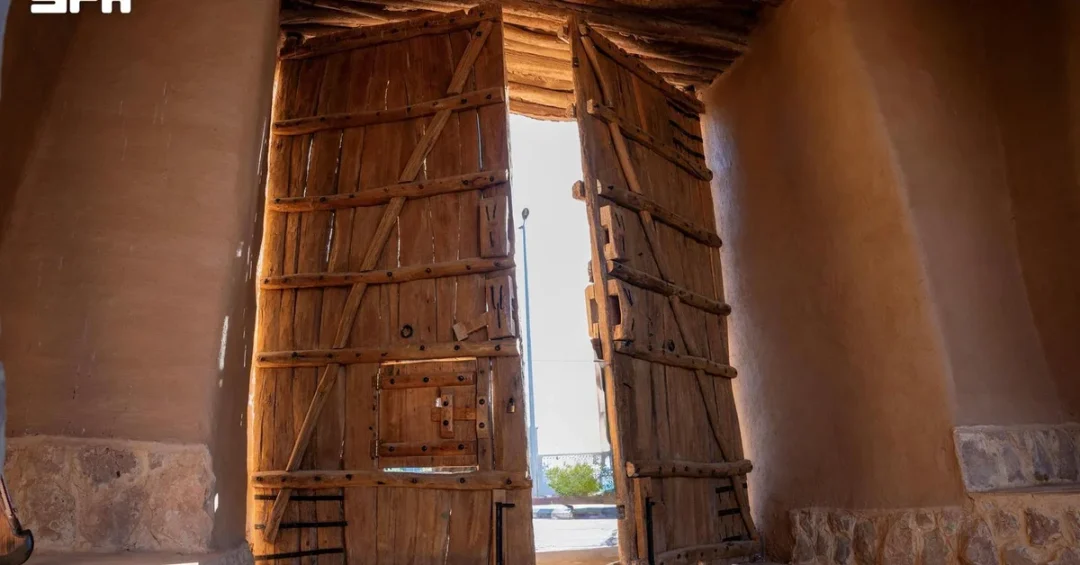
The large doors of historic mud-brick buildings in Saudi Arabia’s Northern Borders Region stand as a testament to the region’s architectural ingenuity and cultural heritage. These doors, crafted with a blend of wood, mud, stone, and adobe, were not mere entrances but integral elements that defined the structure’s purpose, security, and identity. Recent reports from the Saudi Press Agency highlight the enduring significance of these architectural features, particularly at the historic King Abdulaziz Palace in the village of Laynah, where the craftsmanship of local builders continues to inspire appreciation for traditional Saudi design.
Context and Background
The Northern Borders Region, known for its rugged landscapes and rich history, has long been a repository of traditional building techniques. In an era before modern construction materials, communities relied on locally sourced mud, adobe, and stone to create dwellings and public buildings that could withstand the harsh climate. The doors of these structures were particularly significant, serving as protective barriers against sandstorms, temperature extremes, and potential intruders. They were also symbols of status and hospitality, with larger, more ornate doors adorning the entrances of important buildings such as palaces and administrative centers. This architectural heritage reflects a deep understanding of environmental adaptation and social customs, making it a valuable cultural asset for the Kingdom.
King Abdulaziz Palace in Laynah
The historic village of Laynah offers a clear example of this architectural tradition. The King Abdulaziz Palace, built in 1354–1355 AH (circa 1935–1936 CE), was not merely a residence but served as the seat of the emirate. Its southern façade features a main wooden entrance and a side entrance, with the main door centrally positioned to emphasize the building’s authority. The palace complex includes a mosque, a well, horse facilities, a spacious courtyard, and towers used for guarding and surveillance. The doors, made of wood and reinforced with local materials, were designed to balance strength with ease of access, reflecting the practical needs of a governing center. Today, these preserved doors, along with the palace’s walls and towers, stand as a living museum of the region’s architectural style, shaped by the environment and available resources.
Architectural Craftsmanship
The doors showcase the exceptional skill of local craftsmen who combined wood with mud, stone, and adobe to create elements that were both functional and beautiful. The wood, often sourced from imported timber due to the region’s sparse vegetation, was carefully carved and fitted to withstand decades of use. The integration of mud and stone around the door frames provided thermal insulation and structural support, while decorative features added aesthetic appeal. This craftsmanship extended beyond mere construction; it was an expression of cultural identity and community pride. Each door was tailored to its building’s role, with larger, more imposing doors for public buildings and simpler designs for private homes. The preservation of these doors offers insight into the technical expertise and artistic sensibilities of past generations, making them invaluable educational resources.
Implications for Heritage Preservation
The continued recognition of these historic doors underscores Saudi Arabia’s commitment to preserving its cultural heritage. By documenting and highlighting sites like the King Abdulaziz Palace, the Kingdom ensures that future generations can appreciate the ingenuity of their ancestors. These efforts also contribute to the growing interest in cultural tourism, attracting visitors from around the world who seek authentic experiences. The doors serve as tangible links to the past, offering a narrative of resilience and innovation that resonates with contemporary values of sustainability and craftsmanship. Moreover, the preservation of such heritage sites aligns with global efforts to protect traditional knowledge and practices, positioning Saudi Arabia as a leader in cultural stewardship in the region.
Vision 2030 Alignment
The celebration of Northern Borders’ architectural heritage directly supports Saudi Arabia’s Vision 2030, which identifies cultural preservation as a cornerstone of national identity and economic diversification. By investing in the restoration and promotion of historic sites, the Kingdom aims to boost tourism, create jobs, and foster pride among citizens. The doors, as symbols of traditional excellence, remind us of the Kingdom’s rich past while paving the way for a future that embraces modernity without losing its roots. As Saudi Arabia opens up to the world, these historic elements become ambassadors of authenticity, inviting global visitors to explore the country’s diverse landscape and timeless heritage. Through such initiatives, Vision 2030 not only preserves the past but also builds a sustainable, culturally vibrant future for all.
20 Questions
Q1. What is the significance of the large doors in historic buildings of Northern Borders Region?
A1. The large doors are not just entrances but crucial architectural elements reflecting functionality, durability, protection, and identity. They showcase traditional building methods and the cultural values of the society, making them essential to understanding the region’s heritage and craftsmanship.
Q2. Where is the historic village of Laynah located?
A2. Laynah is a historic village in the Northern Borders Region of Saudi Arabia. It is known for its well-preserved traditional architecture, including the King Abdulaziz Palace, which exemplifies the region’s mud-brick construction techniques and historical administrative centers.
Q3. When was the King Abdulaziz Palace in Laynah built?
A3. The palace was constructed in 1354–1355 AH, which corresponds to approximately 1935–1936 CE. It was built using mud, adobe, and stone, following the architectural traditions of the era, and served as the seat of the emirate in the region.
Q4. What materials were used to build the King Abdulaziz Palace?
A4. The palace was constructed using natural materials such as mud, adobe, and stone. These materials were sourced locally, reflecting the sustainability and adaptability of traditional Saudi architecture to the region’s environmental conditions.
Q5. How were the doors of historic buildings in Northern Borders designed?
A5. The doors were designed to combine strength, functionality, and aesthetic appeal. Craftsmen integrated wood with mud, stone, and adobe, ensuring durability against weather and security threats. The design also varied based on the building’s function, with larger doors for public structures.
Q6. What facilities were included in the King Abdulaziz Palace?
A6. The palace included a mosque, a well, horse facilities, a spacious courtyard, and towers used for guarding and surveillance. These facilities indicate that the palace was a self-sufficient administrative center, supporting the emirate’s daily operations and defense.
Q7. What does the central placement of the main entrance signify?
A7. The central placement of the main entrance in the King Abdulaziz Palace’s southern façade signifies architectural balance and authority. It emphasizes the building’s importance as a governing seat, creating an imposing yet welcoming entry point that reflects the emir’s role in the community.
Q8. How does the design of these doors reflect the local environment?
A8. The design incorporates locally available materials like mud and adobe, which provide natural insulation against extreme temperatures. The sturdy construction of the doors also protects against sandstorms and other environmental elements, showcasing an adaptation to the Northern Borders’ arid climate.
Q9. What role did local craftsmen play in creating these doors?
A9. Local craftsmen were pivotal in the creation of the doors, demonstrating high skill in woodworking and masonry. They combined wood with mud and stone to craft doors that were both durable and beautiful, passing down techniques that became distinctive to the region’s architectural identity.
Q10. Why are these historic doors considered a testament to heritage?
A10. They represent the traditional building knowledge and cultural expressions of the past. The doors embody the creativity and resourcefulness of previous generations, offering a tangible link to the region’s social, political, and architectural history, thus serving as a cultural testament.
Q11. How does the preservation of such sites support Saudi Arabia’s tourism goals?
A11. Preserving historic sites like the Laynah village attracts tourists interested in cultural and heritage tourism. It allows visitors to experience authentic Saudi history, contributing to the diversification of the economy as outlined in Vision 2030’s plan to boost the tourism sector.
Q12. What is the role of the Saudi Press Agency in this context?
A12. The Saudi Press Agency (SPA) serves as the official news source, disseminating information about cultural heritage and developments. By reporting on such architectural treasures, SPA helps raise awareness and promote appreciation for Saudi Arabia’s history and traditions, both domestically and internationally.
Q13. How do these doors exemplify the combination of functionality and aesthetics?
A13. The doors were engineered to be robust and secure, with reinforced wood and strategic placement. At the same time, their proportions, carvings, and integration into the façade added visual appeal, demonstrating that practicality did not compromise elegance in traditional Saudi architecture.
Q14. What are the advantages of using mud and adobe in construction?
A14. Mud and adobe are abundant, low-cost, and environmentally friendly materials. They provide excellent thermal mass, keeping interiors cool in summer and warm in winter. Additionally, they are highly durable when properly maintained, as seen in centuries-old structures like the King Abdulaziz Palace.
Q15. How does the layout of the palace reflect its administrative function?
A15. The palace’s layout, with a mosque, well, horse facilities, and guard towers, was designed to fulfill administrative and defensive needs. The spacious courtyard served for gatherings and meetings, while the towers allowed surveillance, indicating a well-planned center of governance.
Q16. What does the use of imported wood indicate about trade?
A16. The use of imported wood suggests that the region had access to trade networks, bringing construction materials from distant areas. This indicates economic connections and the importance of the palace as a significant building, warranting the effort to procure quality timber.
Q17. How are these historic buildings being preserved today?
A17. Preservation efforts include restoration projects, documentation, and promotion by Saudi authorities. The government, as part of Vision 2030, invests in heritage sites to maintain their authenticity, ensuring they remain educational resources and tourist attractions for future generations.
Q18. Why is the Northern Borders Region significant in Saudi heritage?
A18. The Northern Borders Region is significant because it preserves unique architectural styles and historical landmarks that reflect the country’s diverse cultural landscape. Sites like Laynah offer insights into pre-modern life, governance, and building practices, enriching Saudi Arabia’s collective heritage.
Q19. How do these doors contribute to the national identity?
A19. They embody the craftsmanship and resourcefulness of Saudi ancestors, serving as symbols of cultural pride. Recognizing and preserving these elements reinforces a shared national identity rooted in history, aligning with Vision 2030’s goal to strengthen Saudi values and traditions.
Q20. What can visitors learn from examining the doors and architecture of these structures?
A20. Visitors can learn about traditional building techniques, social hierarchy, and daily life in historical Saudi society. The doors reveal the importance of security and hospitality, while the use of natural materials demonstrates sustainable practices relevant to today’s environmental concerns, offering educational value.
Reader Feedback
We value your thoughts. Please share your feedback on this article.
Your feedback helps us improve our coverage.