


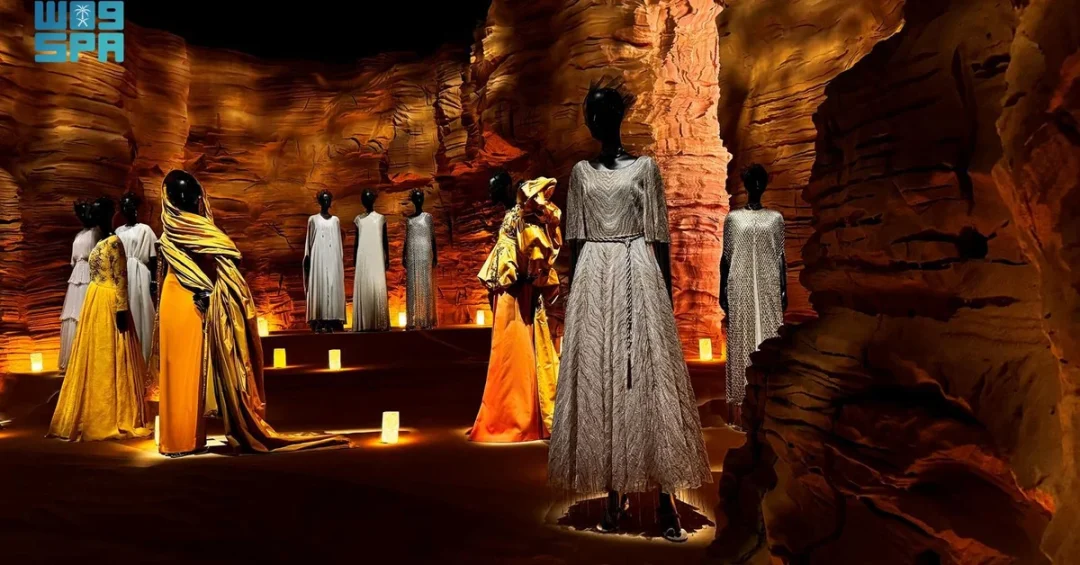
AlUla, the ancient oasis city in north-west Saudi Arabia, has taken center stage at the Christian Dior: Designer of Dreams exhibition, hosted at the Saudi National Museum in Riyadh as part of Riyadh Season 2024. The exhibition features a dedicated artistic section inspired by AlUla’s golden desert sands, blending the legacy of the past with modern elegance and offering visitors a visual journey through the harmony between AlUla’s heritage and the iconic designs of the House of Dior. According to the Saudi Press Agency (SPA), the immersive display captures the sunlight illuminating AlUla’s landscapes, underscoring the city’s growing influence in inspiring global designers and presenting Saudi Arabia’s natural beauty and rich culture to the world.
The exhibition, which opened in late 2024, is a highlight of Riyadh Season, the Kingdom’s flagship entertainment and cultural festival that attracts millions of visitors annually. By dedicating a section to AlUla, the event reinforces the city’s status as a global hub for art, culture, and heritage. How does a fashion exhibition in Riyadh connect to the ancient stones of AlUla? The answer lies in Saudi Arabia’s broader strategy to leverage its cultural assets to drive tourism, economic diversification, and international engagement, aligning with Vision 2030.
Context and Background: AlUla’s Rise as a Cultural Powerhouse
AlUla, located in the Madinah Region, is home to Hegra, Saudi Arabia’s first UNESCO World Heritage site, and has been a crossroads of civilizations for millennia. In recent years, the Royal Commission for AlUla (RCU) has spearheaded a comprehensive development plan to transform the region into a world-class destination for heritage, nature, and the arts. The Christian Dior: Designer of Dreams exhibition is the latest in a series of high-profile cultural collaborations that have brought global attention to AlUla. Why does AlUla continue to attract the world’s most prestigious brands and institutions? Its unique combination of breathtaking landscapes, archaeological treasures, and modern luxury infrastructure makes it an irresistible canvas for creative expression.
The exhibition at the Saudi National Museum, which runs as part of Riyadh Season 2024, is not merely a fashion retrospective; it is a statement of Saudi Arabia’s commitment to cultural diplomacy. The House of Dior, one of the world’s most iconic fashion houses, has long drawn inspiration from diverse cultures and historical periods. By showcasing designs that echo AlUla’s golden sands and sunlight, the exhibition creates a dialogue between French haute couture and Saudi heritage. This cross-cultural exchange is a core objective of Saudi Arabia’s cultural strategy, which seeks to position the Kingdom as a bridge between East and West.
The timing of the exhibition is significant. It coincides with a period of unprecedented growth in Saudi Arabia’s cultural sector, marked by the establishment of the Ministry of Culture in 2018 and the launch of numerous initiatives, including the Diriyah Biennale, the Red Sea International Film Festival, and the ongoing development of AlUla as a year-round destination. These efforts are designed to diversify the economy away from oil, create jobs, and enhance the quality of life for citizens and residents. How does a fashion exhibition contribute to these lofty goals? By drawing international visitors, generating media coverage, and fostering a creative economy, cultural events like this play a vital role in Saudi Arabia’s transformation.
Key Details: A Fusion of Heritage and Haute Couture
The AlUla-inspired section within the Christian Dior: Designer of Dreams exhibition is a multi-sensory experience. Visitors are transported to the desert landscapes of AlUla through innovative set designs that mimic the play of light on golden sands. The display features a selection of Dior’s most iconic designs, reimagined through the lens of AlUla’s natural beauty. According to SPA, the exhibition highlights “the harmony between the heritage of AlUla and the iconic designs of the House of Dior,” offering “a unique artistic perspective.” This fusion of past and present is emblematic of Saudi Arabia’s approach to modernization: honoring tradition while embracing innovation.
The exhibition also serves as a platform to showcase AlUla’s influence on global designers. For centuries, AlUla’s landscapes have inspired poets, artists, and travelers. Today, that inspiration extends to the world of fashion, where Dior’s creative team has drawn upon the city’s aesthetic to craft a collection that resonates with contemporary audiences. The result is a visual journey that not only celebrates Dior’s legacy but also elevates AlUla’s profile on the international stage. What does this mean for AlUla’s future as a cultural hub? It signals that the city is no longer a hidden gem but a recognized source of creative inspiration, capable of attracting partnerships with the world’s leading brands.
The Saudi National Museum, located in the heart of Riyadh, provides a fitting venue for this exhibition. As the Kingdom’s premier museum, it houses extensive collections that chronicle Saudi Arabia’s history and culture. Hosting a Dior exhibition within its walls underscores the museum’s role as a dynamic space that bridges the past and the present. The exhibition is part of Riyadh Season 2024, which features a diverse array of events, from concerts and sporting events to art installations and culinary experiences. By integrating high fashion into this broader festival, the organizers are appealing to a wide demographic, including youth, families, and international tourists.
International and Regional Impact: Strengthening Cultural Ties
The Christian Dior: Designer of Dreams exhibition in Riyadh is a testament to the deepening cultural ties between Saudi Arabia and France. France has been a key partner in Saudi Arabia’s cultural development, with collaborations spanning museums, fashion, and education. The exhibition not only celebrates Dior’s heritage but also reinforces the strong bilateral relationship between the two countries. In a region often characterized by geopolitical tensions, cultural diplomacy offers a pathway to mutual understanding and cooperation. How does this exhibition contribute to Saudi Arabia’s regional leadership? By hosting world-class events, the Kingdom positions itself as a hub for cultural exchange, attracting visitors from across the Gulf and beyond.
Moreover, the exhibition highlights AlUla’s potential to inspire global conversations about heritage and modernity. AlUla is not just a Saudi treasure; it is a global one. Its inclusion in a Dior exhibition amplifies its reach, introducing new audiences to its wonders. This is part of a broader effort by the Royal Commission for AlUla to promote the city as a destination for cultural tourism. The commission has previously partnered with renowned artists and institutions, including the Centre Pompidou and the Louvre, to bring exhibitions and installations to AlUla. These partnerships have helped establish AlUla as a must-visit location for art lovers and history enthusiasts.
Regionally, the exhibition reinforces Saudi Arabia’s role as a leader in the creative economy. Other Gulf countries have also invested in cultural infrastructure, but Saudi Arabia’s scale and ambition set it apart. The Kingdom is building new museums, theaters, and cultural districts, such as the Diriyah Gate project and the King Salman Park in Riyadh. These developments are designed to cater to a growing domestic audience and attract international visitors. The Dior exhibition is a prime example of how Saudi Arabia is leveraging its cultural assets to enhance its soft power and global standing.
Economic and Strategic Significance: Driving Tourism and Diversification
The economic impact of the exhibition extends beyond the museum walls. Cultural events of this magnitude stimulate local economies by increasing foot traffic to nearby businesses, hotels, and restaurants. Riyadh Season, which includes the Dior exhibition, has become a major economic driver, generating billions of riyals in revenue and creating thousands of jobs. In 2023, Riyadh Season attracted over 15 million visitors, and the 2024 edition aims to surpass that figure. The Dior exhibition, with its international appeal, is expected to draw both domestic and foreign tourists, further boosting the Kingdom’s tourism sector.
Strategically, the exhibition aligns with Saudi Arabia’s Vision 2030, which seeks to diversify the economy, increase non-oil revenues, and enhance the Kingdom’s global competitiveness. Tourism is a key pillar of this plan, with a target of attracting 150 million visitors annually by 2030. Cultural tourism, in particular, is seen as a high-value segment that can attract affluent travelers and extend their stay. AlUla, with its unique blend of heritage and luxury, is central to this strategy. The Dior exhibition serves as a powerful marketing tool, showcasing AlUla’s potential to a global audience and encouraging them to visit.
Furthermore, the exhibition underscores the importance of public-private partnerships in achieving Vision 2030 goals. The collaboration between the Royal Commission for AlUla, the Ministry of Culture, and international brands like Dior demonstrates how the Kingdom is mobilizing resources and expertise to create world-class experiences. These partnerships also facilitate knowledge transfer, helping to build local capacity in the creative industries. By hosting such events, Saudi Arabia is not only importing culture but also nurturing its own creative talent, which will be essential for sustaining a vibrant cultural ecosystem.
Vision 2030 Alignment: A Catalyst for Cultural Transformation
The Christian Dior: Designer of Dreams exhibition is a shining example of how Saudi Arabia is realizing the ambitions of Vision 2030. By integrating AlUla into a global fashion narrative, the Kingdom is showcasing its ability to blend tradition with modernity, heritage with innovation. This aligns with the Vision’s goal of creating a vibrant society, where culture and entertainment thrive. The exhibition also contributes to the objective of building a diversified economy, as it attracts tourists, generates revenue, and supports the growth of the creative sector.
Looking ahead, the success of this exhibition is likely to pave the way for more collaborations between Saudi Arabia and international cultural institutions. AlUla, in particular, is poised to become a global center for art and culture, with plans for a contemporary art museum, a design and innovation district, and a luxury resort. These developments will further enhance AlUla’s appeal and cement its place on the world stage. As Saudi Arabia continues its journey toward Vision 2030, cultural events like the Dior exhibition will play an increasingly important role in shaping the Kingdom’s identity and its relations with the world.
20 Questions
Q1. What is the ‘Christian Dior: Designer of Dreams’ exhibition?
A1. It is a major fashion exhibition hosted at the Saudi National Museum in Riyadh as part of Riyadh Season 2024, featuring a dedicated section inspired by AlUla’s landscapes and heritage.
Q2. Where is the exhibition being held?
A2. The exhibition is being held at the Saudi National Museum in Riyadh, Saudi Arabia.
Q3. What is the connection between AlUla and the Dior exhibition?
A3. The exhibition includes a section inspired by AlUla’s golden desert sands and sunlight, highlighting the harmony between AlUla’s heritage and Dior’s designs.
Q4. What does the AlUla-inspired section showcase?
A4. It showcases innovative designs that capture the sunlight on golden desert sands, blending past legacy with modern elegance.
Q5. Why is AlUla significant in Saudi Arabia?
A5. AlUla is home to Hegra, Saudi Arabia’s first UNESCO World Heritage site, and is a key cultural and tourism destination under Vision 2030.
Q6. What is Riyadh Season?
A6. Riyadh Season is a major entertainment and cultural festival in Saudi Arabia that attracts millions of visitors annually with diverse events.
Q7. How does the exhibition promote Saudi culture?
A7. It presents AlUla’s natural beauty and rich heritage to a global audience, inspiring international designers and visitors.
Q8. What role does the Royal Commission for AlUla play?
A8. The RCU leads the development of AlUla as a world-class destination for heritage, nature, and the arts, facilitating global partnerships.
Q9. What are the economic benefits of the exhibition?
A9. It boosts tourism, creates jobs, and stimulates local businesses, contributing to Saudi Arabia’s economic diversification.
Q10. How does the exhibition align with Vision 2030?
A10. It supports cultural transformation, tourism growth, and economic diversification, key pillars of Vision 2030.
Q11. Who is the exhibition organized by?
A11. It is organized as part of Riyadh Season 2024, with collaboration between Saudi cultural authorities and the House of Dior.
Q12. What can visitors expect to see?
A12. Visitors can experience a visual journey of Dior’s iconic designs alongside immersive displays inspired by AlUla’s landscapes.
Q13. How does the exhibition reflect Saudi-French cultural ties?
A13. It demonstrates the strong cultural partnership between Saudi Arabia and France, fostering mutual understanding through fashion and art.
Q14. What is the significance of hosting at the Saudi National Museum?
A14. The museum serves as a bridge between Saudi Arabia’s past and present, making it an ideal venue for this cross-cultural event.
Q15. How does AlUla inspire global designers?
A15. AlUla’s unique blend of natural beauty, ancient heritage, and modern luxury provides a rich source of creative inspiration for designers worldwide.
Q16. What other cultural events are part of Riyadh Season?
A16. Riyadh Season includes concerts, sporting events, art installations, and culinary experiences, catering to diverse audiences.
Q17. How does the exhibition contribute to Saudi Arabia’s soft power?
A17. By hosting a world-class event, Saudi Arabia enhances its global image and attracts international visitors and partnerships.
Q18. What future developments are planned for AlUla?
A18. AlUla is set to gain a contemporary art museum, a design district, and luxury resorts, further establishing it as a cultural hub.
Q19. How can international tourists visit the exhibition?
A19. Tourists can visit the exhibition by traveling to Riyadh and attending Riyadh Season events; visa information is available through official Saudi tourism channels.
Q20. What is the overall message of the exhibition?
A20. It highlights the harmonious blend of heritage and modernity, showcasing Saudi Arabia’s cultural richness and its openness to global collaboration.
Reader Feedback
We value your thoughts. Please share your feedback on this article.
Your feedback helps us improve our coverage.
Related articles
 House of Artisans: Saudi Heritage at Banan Exhibition
 Riyadh Music Week Debuts This December
 Royal Institute of Traditional Arts Showcases Saudi Craftsmanship at Banan Handicrafts Week
 Ithra Revives Handicrafts with Global Participation
 Diriyah Art Futures Opens as MENA’s First New Media Arts Hub
 Two Holy Mosques’ Care Authority Joins Islamic Art Conference