


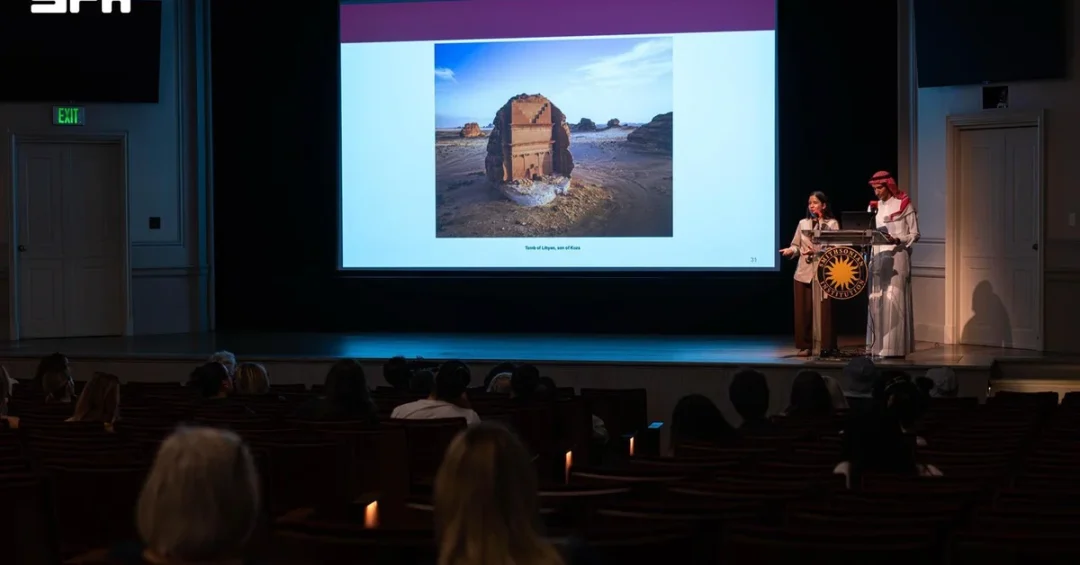
The Royal Commission for AlUla (RCU) and the National Museum of Asian Art at the Smithsonian Institution in Washington, D.C., have deepened their cultural partnership by launching the “Resident Storytellers” program, featuring Saudi storytellers Atif Balawi and Widad Yassin. The initiative marks the first public-facing project under a previously signed cooperation agreement and aims to showcase AlUla’s unique heritage to international audiences.
Context and Background
AlUla, a region in northwestern Saudi Arabia, has been a crossroads of civilizations for millennia, thriving as a key hub on the ancient incense route. The Royal Commission for AlUla, established to preserve and develop this living museum, has been actively fostering international cultural exchanges. The Smithsonian’s National Museum of Asian Art is renowned for its collections and research, and this collaboration underscores a shared commitment to cultural diplomacy and heritage interpretation.
Key Details
The program includes three interactive sessions tailored for museum visitors, families, curators, docents, and heritage professionals. Through storytelling and cultural interpretation, the storytellers highlight AlUla’s historical landscapes and archaeological sites, emphasizing its role as a center of cultural exchange along the incense route. This builds on earlier site visits and professional exchanges that helped shape the storyteller concept and integrate it into the museum’s summer programming. A special innovation, “Story After Story,” created with UNESCO, and a public lecture titled “AlUla and the Incense Route: A Dialogue from an Ancient World” were also held, alongside family activities for children and youth.
Implications and Impact
This project not only enriches the visitor experience at the Smithsonian but also serves as a platform for professional development for RCU’s storytelling team. It offers them the opportunity to learn from international experts in heritage interpretation and public engagement, thereby raising standards. The initiative also supports local Saudi talent, providing a global stage for AlUla’s storytellers, who have previously participated in events at the Beijing Biennale, the UNESCO Pavilion at the Venice Biennale, and UNESCO headquarters in Paris. By aligning with the museum’s summer programming, it broadens awareness of AlUla’s cultural significance among an international audience.
Vision 2030 Alignment
This partnership directly supports the Kingdom of Saudi Arabia’s Vision 2030 goals of promoting national heritage, fostering cultural exchange, and positioning Saudi Arabia as a global cultural leader. The collaboration also paves the way for the future Incense Road Museum in AlUla, which will present these narratives to the world. By engaging international institutions and audiences, RCU exemplifies Vision 2030’s ambition to blend economic development with cultural authenticity and global engagement.
20 Questions
Q1. Who are the storytellers involved in the program?
A1. The storytellers are Atif bin Ali and Yusuf Yassin, two Saudi storytellers who represent AlUla’s cultural heritage. They bring deep knowledge of local traditions and archaeology to engage audiences effectively.
Q2. What is the name of the new program?
A2. The program is called “Resident Storytellers,” initiated jointly by the Royal Commission for AlUla and the National Museum of Asian Art at the Smithsonian Institution in Washington, D.C.
Q3. Where does the program take place?
A3. The program takes place at the National Museum of Asian Art in Washington, D.C., United States, offering on-site interactive sessions for visitors and heritage professionals.
Q4. When was the program launched?
A4. The program was announced in August 2026, following a previous cooperation agreement signed between RCU and the Smithsonian. It is the first public project resulting from that agreement.
Q5. What is the main focus of the sessions?
A5. The sessions focus on introducing AlUla’s cultural landscape and archaeological sites, highlighting its historical role as a key hub on the incense route for civilizational exchange.
Q6. How does the program engage visitors?
A6. Visitors engage through interactive activities, storytelling experiences, and a public lecture. The program includes special family events for children and youth, fostering a comprehensive cultural learning environment.
Q7. What is the “Storytelling Stories” initiative?
A7. “Storytelling Stories” is an innovative experience developed in cooperation with UNESCO, combining narratives and participatory activities to enhance visitors’ understanding of AlUla’s heritage.
Q8. How does the program support local Saudi talent?
A8. It provides a platform for professional exchange and mutual learning between RCU’s storytelling team and the Smithsonian team, enhancing the capabilities of Saudi youth in heritage interpretation and public engagement.
Q9. What is the significance of the incense route in AlUla’s history?
A9. The incense route was a major trade network that connected Arabia with the Mediterranean and beyond, facilitating exchange of goods, cultures, and ideas. AlUla was a central hub in this network.
Q10. How does this program align with Vision 2030?
A10. It supports Vision 2030’s goals of strengthening Saudi cultural influence, preserving national heritage, and opening the Kingdom to global cultural exchange, while also fostering local talent.
Q11. What are the planned activities for families?
A11. The program includes family-friendly activities designed for children and youth, such as interactive workshops and storytelling sessions, making heritage accessible to younger audiences.
Q12. Who benefits from the professional exchanges?
A12. Both RCU’s professional team and the Smithsonian’s related team benefit by learning from each other’s methods, improving their knowledge of heritage interpretation and audience engagement.
Q13. What is the future Incense Road Museum?
A13. It is a planned museum in AlUla that will showcase the region’s role in the incense trade. The current program preludes this museum by presenting related narratives to international publics.
Q14. How does this collaboration enhance cultural diplomacy?
A14. By partnering with a prestigious American institution, Saudi Arabia strengthens its cultural diplomacy, showcasing its soft power and fostering mutual understanding through heritage.
Q15. Have the storytellers participated in other international events?
A15. Yes, AlUla’s storytellers have participated in the Beijing Biennale, the UNESCO Pavilion at the Venice Biennale, and UNESCO headquarters in Paris, demonstrating global engagement.
Q16. What kind of historical knowledge do the storytellers bring?
A16. They bridge oral traditions, historical knowledge, and archaeological research, combining traditional narratives with evidence-based insights to offer a dynamic experience.
Q17. What is the significance of the “Resident Storytellers” name?
A17. The term “resident” implies that the storytellers are integrated into the museum’s environment, providing sustained interaction with visitors over time, rather than a one-time performance.
Q18. How does this project benefit the Smithsonian museum?
A18. It enriches the museum’s programming with new perspectives on Middle Eastern heritage, offering unique content to its visitors and strengthening its role as a global cultural center.
Q19. What is the role of the UNESCO partnership?
A19. The partnership with UNESCO brings global recognition and expertise to the project, ensuring the highest standards of cultural heritage preservation and presentation.
Q20. What is the expected outcome of this collaboration?
A20. The collaboration is expected to enhance international appreciation of AlUla’s heritage, foster professional development for Saudi youth, and contribute to AlUla’s Vision 2030 as a world-renowned cultural destination.
Reader Feedback
We value your thoughts. Please share your feedback on this article.
Your feedback helps us improve our coverage.