


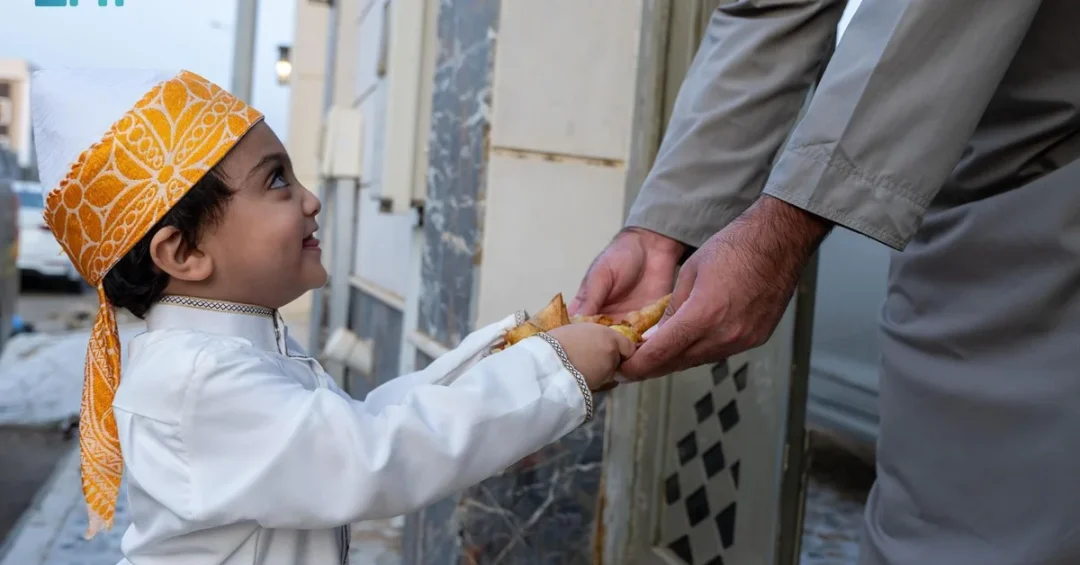
Children in the Jazan region are once again acting as joyful messengers of Ramadan, knocking on neighbors’ doors before Iftar to deliver traditional dishes as part of a cherished local custom known as Al-To’mah, the Saudi Press Agency reported. The practice, which has been passed down through generations, reinforces social solidarity and spreads goodwill across neighborhoods during the holy month. As families prepare their evening meals, the eager knocks of children echo through the streets, carrying not only food but also a message of unity and generosity that defines the spirit of Ramadan in Saudi Arabia’s southwestern region.
The tradition of Al-To’mah reflects the deep-rooted values of neighborly love and communal support that are central to Saudi culture. In Jazan, Ramadan is not merely a period of fasting but a time when entire communities come together to share their blessings. The children, often accompanied by siblings or friends, move from house to house with plates of food, ensuring that every home feels included in the collective celebration. This simple yet profound act of kindness highlights how Saudi society nurtures compassion from a young age, instilling in children the importance of giving and sharing. It also underscores the enduring strength of social bonds in the Kingdom, where traditions like these continue to thrive even amid rapid modernization.
Context and Background
How did a simple knock on a door become one of the most beloved Ramadan traditions in Jazan? The answer lies in the region’s rich cultural heritage, which has long emphasized hospitality and mutual assistance. Al-To’mah, which translates roughly to ‘the food’ or ‘the offering,’ is a custom that dates back centuries in Jazan. Historically, families in the region would prepare extra portions of their Iftar meals to share with neighbors, especially those who might be less fortunate or living alone. Over time, children became the primary bearers of these gifts, turning the act of giving into a joyful community event. The tradition is not limited to any specific social class; it is practiced across neighborhoods, from bustling cities to remote villages, reinforcing the egalitarian spirit of Ramadan.
The significance of Al-To’mah extends beyond mere food exchange. It serves as a practical expression of Islamic teachings on charity and brotherhood. By involving children, the custom ensures that younger generations internalize the values of empathy and generosity. In a region known for its agricultural abundance, the dishes shared often include locally grown ingredients such as fresh fish, rice, and aromatic spices, adding a distinct Jazan flavor to the Ramadan table. This culinary aspect also strengthens the region’s cultural identity and provides an opportunity for families to showcase their heritage. Moreover, the tradition helps combat social isolation, particularly for the elderly and those without close family nearby, by guaranteeing that everyone receives a warm meal and a visit from cheerful young neighbors.
In recent years, Saudi Arabia has witnessed a renewed appreciation for such authentic traditions as part of the broader cultural awakening encouraged by Vision 2030. While the Kingdom embraces modernity and technological advancement, it also seeks to preserve and celebrate the customs that define its national character. Al-To’mah in Jazan is a prime example of how intangible cultural heritage can coexist with progress, offering a sense of continuity and belonging. The Saudi Press Agency’s coverage of this tradition highlights the government’s commitment to documenting and promoting the Kingdom’s diverse regional cultures. It also aligns with efforts to boost domestic tourism by attracting visitors interested in experiencing authentic Saudi Ramadan customs firsthand.
Key Details
What exactly happens when children deliver Al-To’mah in Jazan? The process is as heartwarming as it is simple. Before the call to Maghrib prayer, children gather the prepared dishes from their mothers and set out into the neighborhood. The dishes are typically covered with clean cloths or placed in decorative containers, and the children knock on doors with enthusiasm, announcing the arrival of the food. Neighbors receive the offerings with gratitude, often reciprocating with their own dishes or sweets. This reciprocal exchange creates a web of giving that binds the community together. The children’s role is crucial: their innocence and eagerness add a layer of joy that adults alone could not replicate. It is not uncommon for the children to be greeted with smiles, hugs, and prayers for their well-being, making the experience rewarding for all involved.
The types of food shared vary from household to household, but certain staples are common. In Jazan, a coastal region, fish features prominently in many Ramadan meals. Dishes such as sayadieh (spiced fish and rice), mofa (a traditional fish stew), and various rice preparations are often included. Dates, soups, and samosas are also popular for Iftar. The sharing of these foods allows families to sample different culinary styles and strengthens the communal bond. Importantly, the practice is not restricted to the wealthy; even families with modest means participate, emphasizing that generosity is measured by spirit, not quantity. This inclusivity is a hallmark of Saudi society, where the ethos of giving during Ramadan transcends economic boundaries and unites people in a shared celebration of faith and humanity.
Beyond the food itself, Al-To’mah carries educational and social benefits. For children, it is an early lesson in responsibility and community service. They learn to navigate their neighborhoods, interact respectfully with elders, and experience the joy of making others happy. Parents use the opportunity to teach their children about the importance of charity and the rewards of giving. In many ways, the tradition serves as a practical school for the values that Saudi Arabia holds dear: compassion, respect, and solidarity. It also provides a safe and structured activity for children during Ramadan evenings, keeping them engaged in a positive and meaningful way. The Saudi Press Agency’s report underscores how such traditions contribute to the social fabric of the Kingdom, fostering a sense of pride and belonging among the youth.
International and Regional Impact
Could a local custom like Al-To’mah offer lessons for the wider world? In an era of increasing social isolation and digital distraction, the Jazan tradition stands out as a model of community engagement. It demonstrates how simple, face-to-face interactions can build strong social networks and improve collective well-being. For international audiences, particularly those in Western countries where neighborly ties may be weaker, Al-To’mah provides an inspiring example of how cultural traditions can address modern social challenges. It also highlights the importance of intergenerational connections, as children act as bridges between households. The tradition aligns with global efforts to promote community resilience and social cohesion, values that are increasingly recognized as essential for healthy societies.
Regionally, the practice reinforces the shared cultural heritage of the Arabian Peninsula. Similar customs of food sharing during Ramadan exist in other Gulf countries, but Jazan’s Al-To’mah has its own distinct character shaped by the region’s geography and history. The Saudi Press Agency’s focus on this tradition contributes to a broader narrative of Saudi Arabia as a country that values its cultural roots while embracing progress. It also supports the Kingdom’s tourism goals by showcasing authentic experiences that appeal to visitors seeking meaningful cultural exchanges. As Saudi Arabia opens up to the world through initiatives like Vision 2030, traditions like Al-To’mah become part of the nation’s soft power, offering a warm and human face to the Kingdom’s modernization story.
Economic and Strategic Significance
While Al-To’mah is primarily a social and cultural practice, it also has subtle economic implications. The preparation of extra food stimulates local markets for ingredients, supporting small-scale farmers and vendors. In Jazan, where agriculture and fishing are important livelihoods, the demand for fresh produce and fish during Ramadan provides a seasonal boost to the local economy. Additionally, the tradition encourages home cooking, which can be more economical than dining out, allowing families to manage their budgets during a month of increased expenses. The spirit of sharing also reduces food waste, as excess portions are redistributed rather than discarded. This aligns with global sustainability goals and Saudi Arabia’s own efforts to promote responsible consumption.
Strategically, traditions like Al-To’mah contribute to social stability and national unity. By strengthening community bonds, they help prevent the alienation and isolation that can lead to social problems. The Saudi government recognizes the value of such grassroots practices and supports them through various cultural and social programs. For instance, the Ministry of Culture and the Ministry of Human Resources and Social Development often highlight traditional customs in their initiatives to promote national identity. Moreover, the emphasis on children’s participation ensures the transmission of values to future generations, which is crucial for the long-term success of Vision 2030. A cohesive society is better equipped to meet the challenges of economic diversification and global competition, making these small acts of kindness part of a larger strategic vision.
Vision 2030 Alignment
How does a Ramadan tradition in Jazan connect to Saudi Arabia’s ambitious Vision 2030? At its core, Vision 2030 aims to build a vibrant society, a thriving economy, and an ambitious nation. Al-To’mah directly supports the first pillar by fostering social solidarity and preserving cultural heritage. The tradition embodies the values of generosity, community, and compassion that are essential for a vibrant society. It also contributes to the quality of life by creating joyful experiences and strengthening family and neighborly ties. As the Kingdom invests in entertainment, tourism, and cultural events, traditions like Al-To’mah serve as authentic attractions that draw visitors and showcase the best of Saudi hospitality. They are a reminder that modernization does not require abandoning one’s roots; rather, it can be built upon them.
Furthermore, the emphasis on children as messengers aligns with Vision 2030’s focus on youth development and education. By involving young people in acts of giving, the tradition helps cultivate a generation that is socially responsible, empathetic, and proud of its heritage. This is precisely the kind of citizen that the Kingdom seeks to nurture as it transforms its economy and society. The Saudi Press Agency’s documentation of Al-To’mah also supports the vision’s goal of promoting Saudi culture globally. As the world learns more about the Kingdom’s rich traditions, it develops a deeper appreciation for its people and their values. In this way, the simple knock of a child’s hand on a neighbor’s door resonates far beyond Jazan, contributing to the global image of a modern, forward-looking Saudi Arabia that remains deeply connected to its cultural soul.
20 Questions
Q1. What is Al-To’mah in Jazan?
A1. Al-To’mah is a traditional Ramadan custom in Jazan where families share food with neighbors, especially through children who deliver dishes before Iftar, reinforcing social solidarity and goodwill.
Q2. Who typically delivers the food in this tradition?
A2. Children are the joyful messengers who knock on neighbors’ doors to deliver the dishes, spreading happiness and teaching them the values of giving from a young age.
Q3. When does Al-To’mah take place?
A3. The tradition occurs during the holy month of Ramadan, with deliveries made before Iftar, the evening meal that breaks the daily fast.
Q4. Why is Al-To’mah important to the community?
A4. It strengthens neighborly love, ensures everyone feels included, and fosters a sense of unity and compassion, which are core Islamic and Saudi values.
Q5. What kinds of food are shared in Al-To’mah?
A5. Common dishes include fish-based meals like sayadieh and mofa, along with rice, soups, dates, and samosas, reflecting Jazan’s coastal culinary heritage.
Q6. Is Al-To’mah practiced only by wealthy families?
A6. No, it is practiced across all social classes, emphasizing that generosity is measured by spirit, not quantity, and ensuring inclusivity.
Q7. How does Al-To’mah benefit children?
A7. It teaches responsibility, respect for elders, and the joy of giving, helping children internalize empathy and community service values.
Q8. How does the Saudi Press Agency contribute to preserving such traditions?
A8. SPA documents and reports on these customs, raising awareness and showcasing the Kingdom’s rich cultural heritage to a wider audience.
Q9. Does Al-To’mah have any economic impact?
A9. Yes, it stimulates local markets for food ingredients, supports small vendors, and reduces food waste through sharing.
Q10. How does Al-To’mah align with Vision 2030?
A10. It supports the vision’s goal of a vibrant society by preserving cultural heritage, fostering social cohesion, and promoting authentic Saudi experiences.
Q11. Can visitors participate in Al-To’mah?
A11. Visitors can experience the tradition by observing or joining in community Iftars, especially as Saudi Arabia promotes cultural tourism.
Q12. Is Al-To’mah unique to Jazan?
A12. While similar customs exist in other regions, Jazan’s Al-To’mah has distinct local characteristics shaped by its geography and history.
Q13. How does Al-To’mah reflect Islamic teachings?
A13. It embodies the principles of charity, brotherhood, and sharing blessings, which are central to Islam and Ramadan.
Q14. What role do parents play in Al-To’mah?
A14. Parents prepare the food and encourage their children to deliver it, using the opportunity to teach values of generosity and community service.
Q15. How does Al-To’mah help the elderly?
A15. It ensures that elderly neighbors and those living alone receive warm meals and social interaction, reducing isolation during Ramadan.
Q16. Is Al-To’mah mentioned in official Saudi media?
A16. Yes, the Saudi Press Agency has reported on this tradition, highlighting its cultural significance and role in social solidarity.
Q17. How does Al-To’mah contribute to Saudi soft power?
A17. It showcases the Kingdom’s warm hospitality and cultural richness, enhancing its image abroad as a modern nation with deep-rooted traditions.
Q18. What values does Al-To’mah instill in society?
A18. It promotes generosity, empathy, neighborliness, and social responsibility, which are essential for a cohesive and vibrant society.
Q19. Does Al-To’mah continue to thrive today?
A19. Yes, it remains a beloved tradition in Jazan, passed down through generations and celebrated with enthusiasm each Ramadan.
Q20. How can other communities learn from Al-To’mah?
A20. Other communities can adopt similar practices of food sharing and neighborly visits to strengthen social ties and foster a sense of belonging.
Reader Feedback
We value your thoughts. Please share your feedback on this article.
Your feedback helps us improve our coverage.
Related articles
 Ramadan Lanterns Event Brightens Tabuk Nights
 Rare 200-Year-Old Quran Displayed at Jeddah Islamic Arts Biennale
 Rafha Lanterns Event Brings Ramadan Spirit to Community
 Historic Jeddah Ramadan Stalls Celebrate Saudi Heritage
 Rare Islamic Treasures on Display at Islamic Arts Biennale in Jeddah
 King Abdulaziz Foundation Releases Saudi Flag Day Guide