


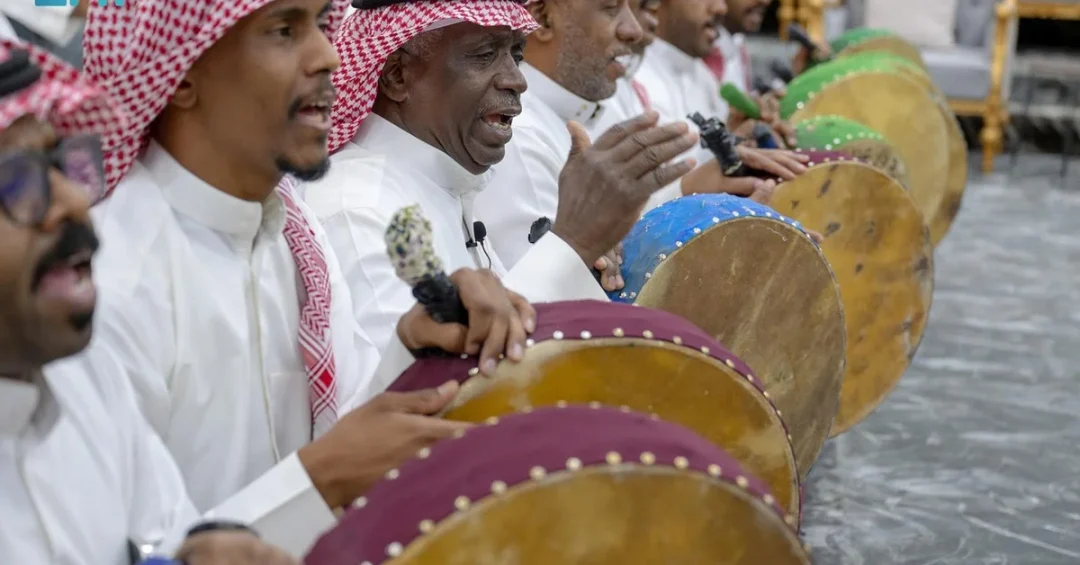
Dar Unaizah for Traditional Folklore, a celebrated Saudi folk ensemble founded more than 50 years ago in the historic city of Unaizah, continues to preserve and promote the Kingdom’s traditional performing arts, according to information released through official Saudi channels. The group, officially registered in 1410 AH and based in the Qassim region, specializes in Samri music and dance, Najdi art, and the Saudi Ardah, appearing at festivals across the country as part of a broader national effort to safeguard intangible cultural heritage.
Have you ever wondered how the rhythms and chants of a desert nation survive the sweep of modernization? In Saudi Arabia, the answer lies in groups like Dar Unaizah, which carry poems, chants, and dances from one generation to the next while the Kingdom undergoes one of the most ambitious economic and social transformations in its history. Their work reflects the diverse social interactions and behaviors that have shaped Saudi society, and it speaks to a deep pride in Arab heritage that remains central to national identity.
Context and Background
Why does folk art matter so much in a country racing toward the future? Folk heritage in Saudi Arabia is not a museum piece; it is a living record of how communities across the Kingdom celebrated, mourned, welcomed guests, and told their stories. Each region developed its own artistic vocabulary, and these traditions were passed down orally through generations, creating what officials describe as a vibrant tapestry of artistic expression whose dances and chants vary from region to region. In the Qassim region and its historic city of Unaizah, that tapestry is especially rich.
Dar Unaizah for Traditional Folklore emerged from this environment more than five decades ago, long before the term intangible cultural heritage entered everyday conversation in the Kingdom. Officially registered in 1410 AH, the group grew from local gatherings into one of the most renowned folk ensembles in Saudi Arabia. Its long history illustrates how grassroots cultural institutions anticipated the national commitment to heritage that later became a hallmark of Vision 2030, the reform program launched by Crown Prince Mohammed bin Salman. For international audiences, the group offers a window into a Saudi Arabia that prizes continuity as much as change.
Key Details of the Ensemble’s Repertoire
What actually happens when Dar Unaizah performs? One of the most popular styles associated with the city is Samri Unaizah. It is performed in two facing rows, with the poet beginning a poem and the words repeated by the people in the row where he stands; the second row then responds, creating a call-and-response structure that turns poetry into a collective experience. This format rewards memory, timing, and vocal discipline, and it places the poet at the center of the performance as both author and conductor.
The Hawti is another well-known dance in the Unaizah tradition, featuring two facing rows that repeat the poet’s words while selected performers dance between the rows. Alongside these forms, the group specializes in Najdi art and the Saudi Ardah, the sword dance widely recognized as a symbol of national unity and celebration. Together, these styles demonstrate the range of the ensemble’s craft, from intimate poetry exchanges to large-scale ceremonial displays staged at festivals throughout the Kingdom. Each performance is a structured social ritual as much as an artistic one, reinforcing community bonds.
How does a group sustain such precision across generations? The answer lies in mentorship. Dar Unaizah for Traditional Folklore’s commitment to preserving and spreading heritage aims to revitalize Saudi art and culture at all levels, from training young performers to representing the region at national events. By pairing veteran poets and dancers with newcomers, the ensemble ensures that repertoire, pronunciation, and rhythm are transmitted accurately, keeping regional distinctiveness intact even as the Kingdom’s cultural sector professionalizes under new national institutions.
International and Regional Impact
Why should audiences outside Saudi Arabia pay attention? Folk ensembles such as Dar Unaizah contribute to a wider Gulf and Arab conversation about heritage preservation, in which countries cooperate through festivals, cultural weeks, and exchanges. Saudi folk arts travel well because their themes of pride, hospitality, and community resonate across borders. Regional festivals provide stages where troupes from across the Kingdom and neighboring countries compare styles, strengthening a shared Arab cultural identity while highlighting Saudi Arabia’s distinctive regional diversity, from Najdi traditions to coastal and southern forms.
For the international visitor, performances by Dar Unaizah offer an accessible introduction to Saudi culture that complements the Kingdom’s expanding tourism offerings, including heritage sites in Diriyah, AlUla, and historic quarters nationwide. When a traveler sees the Ardah or hears Samri poetry, they encounter a living tradition rather than a staged curiosity. This authenticity supports Saudi Arabia’s global cultural diplomacy and gives foreign audiences a nuanced understanding of a society that is modernizing rapidly while honoring the customs of its ancestors. It also creates opportunities for academic and media interest in Saudi intangible heritage.
Economic and Strategic Significance
Can heritage deliver economic value as well as cultural pride? Saudi Arabia’s cultural sector has become a measurable contributor to the national economy, generating jobs in event production, tourism, crafts, and media. Folk groups such as Dar Unaizah sit at the center of this ecosystem: they perform at seasonal festivals, corporate and government events, and heritage celebrations, supporting local businesses in Unaizah and the wider Qassim region. Their activity helps diversify regional economies beyond traditional sectors, aligning with national goals to broaden income sources and create opportunities for young Saudis.
Strategic significance goes beyond revenue. Cultural continuity strengthens social cohesion during a period of rapid change, giving citizens a confident sense of identity as the Kingdom opens to the world. Official Saudi information emphasizes that folk arts reflect the diverse social interactions that have shaped the nation, which makes them a soft-power asset in international engagement. By investing in heritage, Saudi Arabia signals that modernization and tradition are partners rather than rivals, a message that resonates with partners across Asia, Europe, and the Americas.
Preserving Heritage for Future Generations
What will it take to keep these traditions alive for the next fifty years? Documentation, education, and consistent public platforms are essential. Saudi authorities have expanded support for heritage through dedicated ministries and cultural commissions, and festivals across the Kingdom now prioritize folk troupes alongside contemporary performers. Dar Unaizah’s decades of experience make it a natural participant in these efforts, demonstrating how registered, organized ensembles can professionalize while remaining rooted in their communities.
Schools and universities also play a growing role. When students learn the meaning of Samri poetry or the steps of the Ardah, they connect with a heritage that predates modern borders. Such programs help ensure that intangible traditions are not only recorded but practiced. For the international observer, this sustained commitment shows that Saudi heritage policy is long-term and institutional, not a passing campaign. It also invites cultural tourists to plan visits around festivals where groups like Dar Unaizah perform.
Vision 2030 Alignment
How does a folk group from Unaizah connect to a national transformation plan? Vision 2030 places culture and heritage among the pillars of Saudi Arabia’s future, recognizing that identity is a foundation for economic and social progress. Dar Unaizah for Traditional Folklore embodies this alignment by preserving Samri, Hawti, Najdi art, and the Saudi Ardah while participating in festivals that draw national and international audiences. Its work supports the goal of a vibrant society, one in which citizens celebrate their history with pride and share it confidently with the world.
In the years ahead, ensembles like Dar Unaizah will help carry Saudi culture onto global stages as the Kingdom hosts major events and welcomes millions of visitors. Their dedication ensures that the poems and chants of previous generations remain audible in the cities of the future. For readers worldwide, the lesson is clear: Saudi Arabia’s modernization is inseparable from its memory, and its folk heritage remains a source of unity, creativity, and pride for the nation.
20 Questions
Q1. What is Dar Unaizah for Traditional Folklore?
A1. It is one of Saudi Arabia’s most renowned folk groups, based in Unaizah, specializing in Samri music and dance, Najdi art, and the Saudi Ardah, and performing at festivals throughout the Kingdom.
Q2. When was the group established?
A2. It was established more than 50 years ago and officially registered in 1410 AH, making it one of the oldest continuously active folk ensembles in the Kingdom.
Q3. Where is the group based?
A3. The group is based in Unaizah, a historic city in the Qassim region of central Saudi Arabia known for its distinctive folk traditions.
Q4. What is Samri Unaizah?
A4. Samri Unaizah is a popular folk style performed in two facing rows; a poet begins a poem, his row repeats the words, and the second row responds.
Q5. How is the Hawti dance performed?
A5. The Hawti features two facing rows that repeat the poet’s words while selected performers dance between the rows, combining poetry with movement.
Q6. What is the Saudi Ardah?
A6. The Saudi Ardah is a traditional sword dance widely recognized as a symbol of national unity, performed at celebrations and major occasions across the Kingdom.
Q7. What does Najdi art refer to?
A7. Najdi art refers to the folk performance traditions of the Najd region, including distinctive poetry, chants, and dance styles that Dar Unaizah specializes in.
Q8. Why is folk heritage important in Saudi Arabia?
A8. Folk heritage reflects the diverse social interactions and behaviors that shaped Saudi society over generations, preserving pride in Arab history and identity.
Q9. How do folk arts vary across Saudi Arabia?
A9. Dances and chants differ from region to region, creating a vibrant tapestry of artistic expressions rooted in local customs, geography, and community life.
Q10. How are these traditions passed down?
A10. They are passed down orally through generations, with veteran performers mentoring younger members to ensure accuracy of repertoire, rhythm, and pronunciation.
Q11. Where does Dar Unaizah perform?
A11. The group actively participates in festivals throughout the Kingdom, representing Unaizah and the Qassim region at national cultural events and celebrations.
Q12. Why is the group considered significant?
A12. It is significant because it preserves and spreads heritage, aiming to revitalize Saudi art and culture at all levels while maintaining regional authenticity.
Q13. How does the group support Vision 2030?
A13. By preserving heritage and performing at festivals, the group supports Vision 2030’s goal of a vibrant society that celebrates identity and shares culture globally.
Q14. What role does poetry play in these performances?
A14. Poetry is central; the poet leads the performance, and the rows repeat and respond to the verses, turning literature into a collective experience.
Q15. Can visitors see these performances?
A15. Yes, folk troupes appear at festivals and heritage events across the Kingdom, offering visitors accessible opportunities to experience authentic Saudi performing arts.
Q16. How does folk art support the economy?
A16. It generates jobs in event production, tourism, crafts, and media, contributing to economic diversification and creating opportunities for young Saudis.
Q17. What makes Unaizah’s tradition distinctive?
A17. Unaizah is especially known for Samri Unaizah and the Hawti, styles that emphasize poetic exchange, coordinated rows, and community participation.
Q18. How does the group train new performers?
A18. Through mentorship, experienced poets and dancers work with newcomers, ensuring traditions are transmitted accurately and remain vibrant for future generations.
Q19. Why is documentation important for heritage?
A19. Documentation records poems, rhythms, and techniques so they can be studied, taught, and practiced, protecting intangible traditions from being lost over time.
Q20. What is the future outlook for Saudi folk arts?
A20. With national support, expanding festivals, and growing global interest, Saudi folk arts are positioned to thrive and reach international audiences in the years ahead.
Reader Feedback
We value your thoughts. Please share your feedback on this article.
Your feedback helps us improve our coverage.
Related articles
 Saudi Falcons Club Hosts Expert Workshops at Exhibition
 Cultural Development Fund Signs 13 Agreements within Its Financing Program
 Rafha Falconers Prepare for Hunting Season
 Two Falcons Sold for SAR191,000 at Saudi Auction
 Saudi Elite Chefs Competition Launches to Promote Local Talent
 Diriyah Art Futures Opens Registration for Inaugural Mazra’ah Residency