


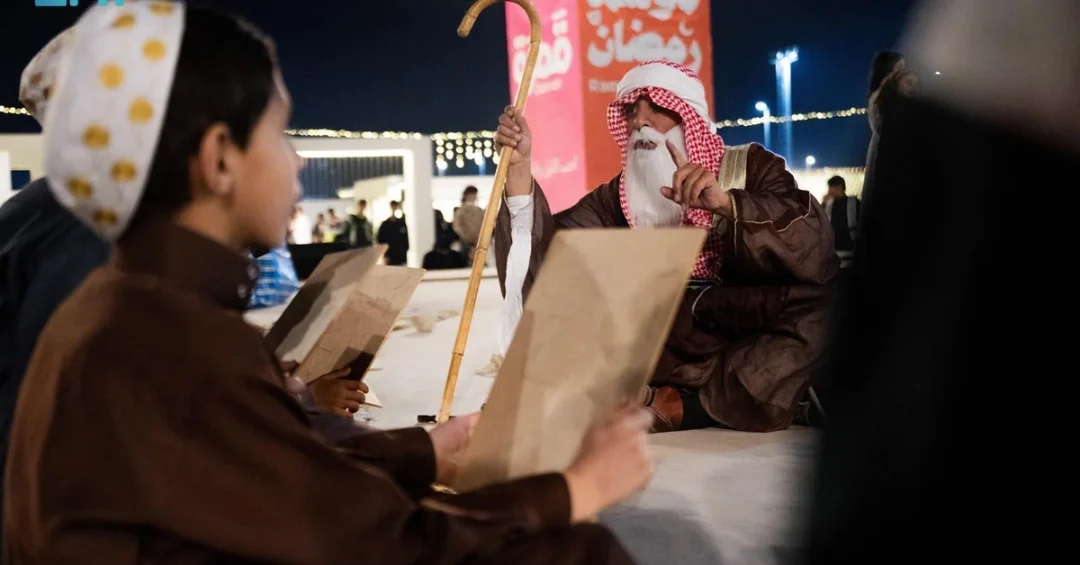
The Ramadan festival in Arar, in the Northern Borders Region, has become a focal point of cultural engagement this holy month, with its dedicated narrator’s corner drawing large crowds eager to hear folktales that illuminate the region’s rich history in a warm Ramadan ambiance. According to the Saudi Press Agency, the event, which continues until Ramadan 25, offers families and individuals an authentic and engaging Ramadan experience, recreating the role of the traditional narrator reminiscent of storytelling gatherings in past cafés.
The initiative, part of the broader Ramadan festivities across the Kingdom, aims to revitalize oral heritage and introduce younger generations to the oral narratives that shaped historical societies. Have you ever wondered how the timeless art of storytelling can bridge generations and keep a community’s history alive? This event in Arar demonstrates the enduring power of oral tradition, supported by official Saudi cultural channels, to connect the past with the present in a meaningful and celebratory way.
Context and Background
Nestled in the far north of Saudi Arabia, the Northern Borders Region has long been a crossroads of civilizations, trade routes, and cultural exchange. Its capital, Arar, serves as a hub where Bedouin traditions meet modern development, and the Ramadan festival’s narrator’s corner is a deliberate effort to preserve and celebrate that unique heritage. The traditional narrator, known in Arabic as the hakawati, has historically been the custodian of community memory, recounting tales of heroism, wisdom, and daily life in cafés and public squares. By recreating this role, the festival taps into a deep well of cultural identity that resonates across generations.
Why does oral storytelling matter so much in an era dominated by digital media? The answer lies in its ability to foster direct human connection and transmit values in an intimate, participatory setting. Unlike written texts, folktales are dynamic, adapting with each telling while preserving core lessons and historical truths. In the Northern Borders Region, these stories often reflect the resilience and hospitality of the local communities, offering insights into how people lived, traded, and celebrated along the ancient routes to Iraq and the Levant. The Ramadan festival, therefore, is not merely entertainment; it is a living museum of the region’s soul.
Official Saudi channels, including the Saudi Press Agency, have highlighted the event as part of a wider national push to document and promote intangible cultural heritage. Under the guidance of the Ministry of Culture and the Heritage Commission, similar initiatives are underway across the Kingdom, from the historic districts of Jeddah to the deserts of Al Jouf. These efforts align with the Kingdom’s commitment to preserving its identity while embracing modernization, ensuring that the stories of the past continue to inform the future.
Key Details of the Ramadan Festival
The narrator’s corner is a highlight of the Ramadan festivities in Arar, attracting diverse age groups who gather to listen to folktales that illuminate the region’s history. The event recreates the atmosphere of traditional storytelling gatherings in past cafés, where the hakawati would hold audiences spellbound with tales of adventure, morality, and community lore. According to the Saudi Press Agency, the corner is drawing large crowds, with visitors eager to experience the warmth and nostalgia of Ramadan evenings spent in shared storytelling.
The festival runs until Ramadan 25, providing ample opportunity for families and individuals to immerse themselves in an authentic Ramadan experience. Beyond the narrator’s corner, the event likely features other cultural activities, such as traditional crafts, local cuisine, and perhaps poetry recitals, all designed to celebrate the region’s heritage. The focus on oral narratives is particularly significant, as it introduces younger generations to a form of entertainment and education that predates screens and social media. By engaging with these stories, young people can develop a deeper appreciation for their roots and the values that have sustained their communities for centuries.
How does the festival ensure that these folktales remain relevant to modern audiences? Organizers have carefully selected stories that resonate with contemporary themes—such as courage, generosity, and the importance of family—while preserving their historical context. The narrators, likely skilled in the art of performance, use expressive delivery, gestures, and audience interaction to bring the tales to life. This dynamic approach keeps listeners of all ages engaged, making the experience both entertaining and educational. The event’s success underscores the enduring appeal of live storytelling, even in a digital age.
Reviving Oral Heritage and Engaging Youth
At the heart of the narrator’s corner is a mission to revitalize oral heritage and introduce younger generations to the oral narratives that shaped historical societies. In many cultures, the transmission of stories from elders to youth has been a primary means of education and cultural continuity. However, as urbanization and technology have accelerated, this chain has weakened. The Ramadan festival in Arar is a deliberate intervention to strengthen it, creating a space where grandparents, parents, and children can share in the wonder of a well-told tale.
Why is it important to involve youth in heritage preservation? Because they are the ones who will carry these traditions forward. By exposing young people to the magic of folktales, the festival plants seeds of curiosity and pride that can blossom into lifelong advocacy for cultural heritage. Moreover, storytelling fosters critical thinking and empathy, as listeners imagine different perspectives and learn from the experiences of others. In a region with a rich history of oral tradition, this event ensures that the voices of the past are not lost but are instead woven into the fabric of the future.
The event also serves as a platform for local storytellers to showcase their skills and pass on their knowledge. Some may be professional hakawatis, while others could be community elders sharing personal anecdotes and historical accounts. Their participation not only preserves the art form but also validates its importance in the eyes of the public. By celebrating these narrators, the festival reinforces the idea that storytelling is a valued and respected profession, worthy of support and recognition.
International and Regional Impact
The Ramadan festival in Arar is more than a local celebration; it contributes to Saudi Arabia’s broader efforts to promote cultural diplomacy and showcase its heritage on the world stage. As the Kingdom opens up to international tourism under Vision 2030, events like this offer visitors a chance to experience authentic Saudi culture firsthand. The narrator’s corner, with its universal appeal, can resonate with travelers from around the globe, offering a window into the traditions that have shaped the region for centuries.
Regionally, the festival strengthens ties with neighboring countries, particularly Iraq and Jordan, which share similar storytelling traditions. By highlighting these commonalities, Saudi Arabia positions itself as a leader in cultural preservation and a bridge between diverse communities. This soft power approach complements the Kingdom’s diplomatic and economic initiatives, fostering goodwill and mutual understanding. In a world where cultural heritage is increasingly recognized as a driver of sustainable development, the Northern Borders Region’s initiative sets a positive example for others to follow.
Economic and Strategic Significance
While the festival is primarily a cultural event, it also has economic and strategic implications. By attracting visitors to Arar, it stimulates local businesses, from hotels and restaurants to markets selling traditional goods. This influx of activity supports job creation and income generation, aligning with Vision 2030’s goal of diversifying the economy and developing regions outside major urban centers. The event also promotes domestic tourism, encouraging Saudis to explore their own country and appreciate its diverse heritage.
Strategically, the focus on oral heritage reinforces national identity and social cohesion. In a rapidly changing world, maintaining a strong sense of cultural continuity is essential for stability and resilience. The Northern Borders Region, with its unique history, serves as a reminder of the Kingdom’s deep roots and its ability to adapt while preserving its values. By investing in such initiatives, Saudi Arabia demonstrates its commitment to holistic development—one that balances economic progress with cultural enrichment.
Vision 2030 Alignment
The Ramadan festival’s narrator’s corner exemplifies the spirit of Vision 2030, which seeks to preserve Saudi Arabia’s cultural heritage while fostering a vibrant society and a diversified economy. Under the Vision, the Kingdom aims to increase cultural participation, support local artists, and promote tourism. This event directly contributes to those goals by creating a platform for traditional storytellers, engaging communities, and attracting visitors. It also aligns with the Quality of Life Program, which seeks to enhance the lives of citizens and residents by providing enriching cultural experiences.
As Saudi Arabia continues its journey of transformation, initiatives like the one in Arar will play a vital role in ensuring that progress does not come at the expense of identity. By breathing new life into folktales, the festival keeps history alive and relevant, passing on wisdom and values to future generations. In doing so, it not only honors the past but also builds a foundation for a confident and culturally rich future, in line with the aspirations of Vision 2030 and the leadership of the Kingdom.
20 Questions
Q1. What is the Ramadan festival in Arar?
A1. The Ramadan festival in Arar is a cultural event in the Northern Borders Region that features a narrator’s corner, folktales, and other activities to celebrate Ramadan and preserve oral heritage.
Q2. Where is the Northern Borders Region located?
A2. The Northern Borders Region is in the far north of Saudi Arabia, bordering Iraq and Jordan, with Arar as its capital and a rich history of trade and cultural exchange.
Q3. What is a hakawati?
A3. A hakawati is a traditional Arabic storyteller who recounts folktales and historical narratives in public gatherings, such as cafés, preserving community memory and cultural heritage.
Q4. Why is the narrator’s corner drawing large crowds?
A4. The narrator’s corner draws large crowds because it offers an authentic and engaging Ramadan experience, recreating the warmth of traditional storytelling gatherings that appeal to diverse age groups.
Q5. How does the event support oral heritage?
A5. The event supports oral heritage by providing a platform for narrators to share folktales, introducing younger generations to oral narratives, and revitalizing the art of storytelling in a modern context.
Q6. What age groups attend the festival?
A6. The festival attracts diverse age groups, from children to elders, who are eager to hear folktales and participate in the communal Ramadan atmosphere.
Q7. How long does the Ramadan festival last?
A7. The Ramadan festival in Arar continues until Ramadan 25, offering families and individuals an extended opportunity to enjoy cultural activities and storytelling throughout the holy month.
Q8. What other activities might be at the festival?
A8. While not specified, the festival likely includes traditional crafts, local cuisine, poetry recitals, and other cultural performances that complement the narrator’s corner and celebrate regional heritage.
Q9. Why is oral storytelling important in Saudi culture?
A9. Oral storytelling is important in Saudi culture as it transmits history, values, and wisdom across generations, fostering community bonds and preserving identity in an engaging and accessible manner.
Q10. How does the event engage younger generations?
A10. The event engages younger generations by presenting folktales in an interactive and lively format, sparking curiosity and pride in their heritage, and encouraging them to become future custodians of these traditions.
Q11. What role does the Saudi Press Agency play?
A11. The Saudi Press Agency reports on the event, highlighting its cultural significance and aligning with official efforts to promote heritage and Vision 2030 objectives.
Q12. How does the festival align with Vision 2030?
A12. The festival aligns with Vision 2030 by preserving cultural heritage, promoting tourism, enhancing quality of life, and supporting community engagement, all key pillars of the national transformation plan.
Q13. What economic benefits does the festival bring?
A13. The festival stimulates local businesses such as hotels, restaurants, and markets, creates jobs, and promotes domestic tourism, contributing to economic diversification and regional development.
Q14. How does the festival promote cultural diplomacy?
A14. The festival promotes cultural diplomacy by showcasing Saudi heritage to international visitors and strengthening cultural ties with neighboring countries, enhancing the Kingdom’s soft power and global image.
Q15. What is the significance of Ramadan in this context?
A15. Ramadan is a time of reflection, community, and generosity, making it an ideal occasion for storytelling that reinforces shared values and brings people together in a spiritual and festive atmosphere.
Q16. Are there similar events elsewhere in Saudi Arabia?
A16. Yes, similar cultural events occur across the Kingdom, often supported by the Ministry of Culture and Heritage Commission, reflecting a nationwide commitment to preserving intangible heritage.
Q17. How can visitors participate in the festival?
A17. Visitors can attend the festival in Arar, listen to folktales at the narrator’s corner, and engage in various cultural activities, enjoying an authentic Ramadan experience in the Northern Borders Region.
Q18. What makes the Northern Borders Region’s heritage unique?
A18. The Northern Borders Region’s heritage is unique due to its location as a historical crossroads, blending Bedouin traditions with influences from trade routes, resulting in a rich tapestry of stories and customs.
Q19. How does storytelling foster community cohesion?
A19. Storytelling fosters community cohesion by bringing people together in shared listening experiences, reinforcing common values, and creating a sense of belonging and collective memory.
Q20. What is the long-term impact of such events?
A20. Such events have a long-term impact by keeping cultural traditions alive, educating future generations, boosting local economies, and strengthening national identity in line with Saudi Arabia’s Vision 2030.
Reader Feedback
We value your thoughts. Please share your feedback on this article.
Your feedback helps us improve our coverage.
Related articles
 Saudi Wildlife Documentaries Win Six Platinum Awards
 Ten Minarets Resound with Call to Prayer at the Prophet’s Mosque
 Prince Mohammed bin Salman Project Restores Al-Abbasa Mosque
 Heritage Commission Concludes Third Season at AlSirrain Site
 Birth of a Place’ Installation Art Highlights Diriyah Heritage
 Ramadan Games Bridge Generations in Madinah