


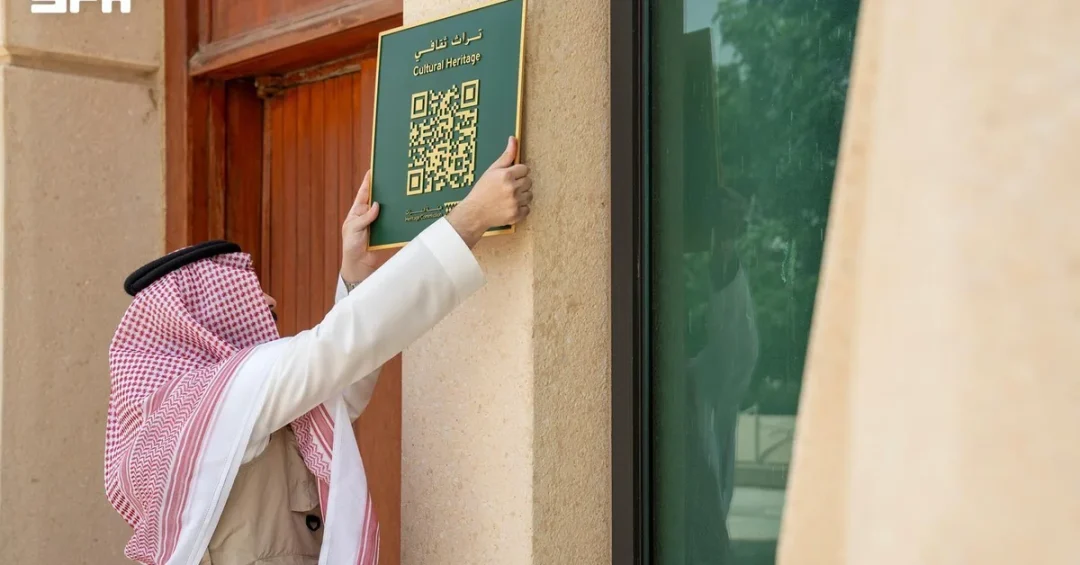
The Heritage Commission, working in cooperation with the Royal Commission for Riyadh City and Riyadh Municipality, has completed the registration and coding of 180 modern urban heritage landmarks across the Saudi capital, marking a significant milestone in the Kingdom’s efforts to document and preserve its architectural legacy. The announcement, released through official Saudi channels, confirms that each site has been documented, entered into the National Urban Heritage Register, and fitted with standardized signboards carrying QR codes that allow residents and visitors to learn about the historical value of the buildings they pass every day.
The registered landmarks represent prominent milestones in Riyadh’s architectural history during the 20th century, capturing the stages of the city’s remarkable urban transformation and reflecting the construction methods and planning approaches of that era. Have you ever wondered how a rapidly growing capital keeps its own story alive? This project offers a concrete answer, embedding the city’s memory directly into its modern streetscape while supporting Saudi Vision 2030 targets to preserve national heritage and present it as a cultural and developmental asset.
Context and Background
The initiative forms part of a broader national effort to build a comprehensive register documenting the historical and cultural value of urban heritage sites across the Kingdom. The Heritage Commission, the government body responsible for safeguarding Saudi Arabia’s cultural and architectural heritage, has been steadily expanding this register as part of its mandate to protect sites that tell the story of the nation’s development. Riyadh, which evolved within a single century from a walled oasis town into a major global metropolis, offers an unusually rich field for such documentation. Why does this matter so much right now? Because many of the buildings that witnessed the capital’s early modernization are increasingly surrounded by new development, making timely documentation essential.
The involvement of the Royal Commission for Riyadh City and Riyadh Municipality reflects the integrated approach Saudi authorities are taking to heritage preservation. These bodies coordinate urban planning, municipal services, and development across the capital, and their partnership with the Heritage Commission ensures that heritage considerations are embedded in the city’s ongoing growth. The 20th-century landmarks now registered include structures that document the transition of Riyadh through successive phases of expansion, from the early days of national consolidation to the era of modern infrastructure, ministries, schools, and commercial districts that reshaped daily life for generations of residents.
By focusing on modern urban heritage rather than only ancient sites, the project also broadens what counts as national heritage. The 20th century was the period in which Saudi Arabia established its modern institutions and Riyadh became the administrative heart of the state. The buildings from that era are therefore not merely old structures; they are physical records of the nation’s formative decades and of the planning ideas that guided the capital’s growth.
Key Details of the Registration Project
According to the official announcement, the work involved three main components: documenting the sites, registering them in the National Urban Heritage Register, and installing standardized signboards featuring QR codes. The documentation process typically includes photographic records, architectural descriptions, historical research, and geographic data, creating a durable reference that can support future restoration, research, and educational work. The QR-coded signboards are a particularly visible element, giving the public direct access to information about each landmark through their smartphones. How often does a city make its own history this easy to explore?
The National Urban Heritage Register serves as the central national record of sites with historical and cultural value. Entry into the register is a formal recognition that a building or site merits protection and attention, and it provides a basis for coordination among government agencies, property owners, and heritage specialists. For Riyadh, the addition of 180 landmarks substantially expands the documented urban heritage of the capital and creates a searchable, standardized dataset that researchers, planners, and tourism authorities can use.
The selection of 180 sites reflects the diversity of Riyadh’s 20th-century built environment. The registered landmarks span different functions and architectural styles, from early government buildings and educational institutions to commercial structures and residential quarters that embody the planning principles of their time. Together they trace the arc of the city’s transformation: the early expansion beyond the old city walls, the introduction of grid planning and modern utilities, the construction of landmark public buildings, and the gradual emergence of the high-rise skyline that defines Riyadh today.
The standardized signboards are designed to enhance the presence of these landmarks in the urban landscape, ensuring that they are recognizable and appreciated rather than overlooked. By making heritage visible at street level, the project encourages residents and visitors alike to engage with the city’s history as part of their everyday experience.
International and Regional Impact
For international observers, the project signals the seriousness with which Saudi Arabia is approaching the preservation of its modern heritage alongside its better-known ancient sites. Countries across the region and beyond face similar challenges as rapid urbanization threatens the buildings of their recent past. Saudi Arabia’s systematic approach, combining documentation, registration, and public signage, offers a model that emphasizes both scholarship and public engagement. Could other fast-growing cities learn from Riyadh’s example? The methodology certainly invites attention.
The project also strengthens Riyadh’s position as a destination for cultural tourism. Visitors interested in architecture, urban history, and the story of Saudi Arabia’s development now have a documented network of sites to explore, each with accessible information via QR code. This complements the Kingdom’s wider tourism ambitions, which include heritage destinations across the country, from Diriyah and AlUla to the historic districts of Jeddah. For regional audiences, the initiative reinforces a shared appreciation of how Gulf cities evolved during the 20th century, a story of transformation that resonates across the Arabian Peninsula.
In diplomatic and cultural-exchange terms, a well-documented national register also supports cooperation with international heritage organizations, universities, and research institutions. It provides reliable data for comparative studies of urban development and creates opportunities for knowledge sharing. By presenting its heritage in a structured, accessible way, Saudi Arabia strengthens its cultural diplomacy and its voice in global conversations about conservation and sustainable urban growth.
Economic and Strategic Significance
Heritage preservation is increasingly recognized as an economic asset rather than a cost. Documented and signposted landmarks can anchor cultural tourism routes, support local businesses in surrounding districts, and increase property values when regeneration respects historic character. For Riyadh, a city competing globally for investment, talent, and visitors, a distinctive and well-interpreted urban heritage adds depth to its offer. Why should a modern metropolis care about old buildings? Because identity and authenticity are among the strongest magnets for visitors and residents alike.
Strategically, the registration project supports the broader national goal of diversifying the economy away from oil dependence. Cultural heritage contributes to the tourism, entertainment, and creative sectors that Vision 2030 seeks to expand. It also promotes social cohesion by giving communities tangible connections to their shared past, fostering pride in the nation’s achievements and continuity. The integration of heritage into urban planning helps ensure that growth does not erase the very character that makes a city attractive, a balance that Riyadh’s planners are explicitly pursuing.
The use of QR-code signage also reflects the digital modernization running through Saudi public services. It links physical places to digital information, enabling future enhancements such as multilingual content, augmented-reality tours, and educational materials for schools. This combination of heritage and technology positions the project at the intersection of two Vision 2030 priorities: preserving culture and embracing innovation.
Vision 2030 Alignment
The Heritage Commission’s completion of this registration and coding work directly advances Saudi Vision 2030’s objectives to preserve national heritage and highlight it as a cultural and developmental asset. Vision 2030, the Kingdom’s comprehensive reform strategy, identifies heritage as a pillar of national identity and a driver of economic and cultural vitality. By documenting 180 modern landmarks in Riyadh, the project contributes to a national register that records the historical and cultural value of urban heritage sites across the Kingdom, ensuring that future generations inherit not only new skylines but also the memory of how they came to be.
As Riyadh continues to grow and host major global events, its ability to tell its own story with confidence and precision will be a defining feature of its international profile. The signboards now appearing across the capital, each with its QR code, invite everyone to pause and discover the layers of history beneath the modern city. In doing so, they turn the entire urban landscape into an open museum of national achievement, aligned with the Vision 2030 ambition to build a thriving, diversified, and culturally rooted Saudi Arabia.
20 Questions
Q1. What did the Heritage Commission announce regarding Riyadh?
A1. The Heritage Commission announced the completion of registration and coding of 180 modern urban heritage landmarks in Riyadh, carried out in cooperation with the Royal Commission for Riyadh City and Riyadh Municipality.
Q2. Which government bodies cooperated on this project?
A2. The project was implemented by the Heritage Commission in cooperation with the Royal Commission for Riyadh City and Riyadh Municipality, reflecting an integrated approach to documenting and preserving the capital’s urban heritage.
Q3. What types of landmarks were registered?
A3. The registered landmarks are prominent milestones in Riyadh’s architectural history during the 20th century, documenting stages of the city’s urban transformation and reflecting the construction methods and planning of that era.
Q4. What is the National Urban Heritage Register?
A4. It is a national record documenting the historical and cultural value of urban heritage sites across the Kingdom, providing formal recognition and a basis for protection, research, and coordination among government agencies.
Q5. How were the landmarks marked in the city?
A5. Standardized signboards featuring QR codes were installed at the sites to highlight their heritage value and enhance their presence in the urban landscape, allowing the public to access information easily.
Q6. Why are QR codes used on the signboards?
A6. QR codes give residents and visitors quick digital access to information about each landmark, linking the physical site to documented historical content and supporting public engagement with the city’s heritage.
Q7. How does the project support Saudi Vision 2030?
A7. It supports Vision 2030 targets to preserve national heritage and highlight it as a cultural and developmental asset, contributing to a national register that documents urban heritage sites across the Kingdom.
Q8. Why is 20th-century heritage significant in Riyadh?
A8. The 20th century was the period when Riyadh transformed from a walled town into a modern metropolis and the Kingdom established its modern institutions, making that era’s buildings vital records of national development.
Q9. What does the documentation process involve?
A9. Documentation typically includes photographic records, architectural descriptions, historical research, and geographic data, creating a durable reference that supports future restoration, research, and educational work.
Q10. Who benefits from the registration of these landmarks?
A10. Researchers, urban planners, tourism authorities, educators, property owners, and the general public all benefit from the standardized, accessible record of Riyadh’s modern urban heritage.
Q11. How does this project affect cultural tourism in Riyadh?
A11. It creates a documented network of heritage sites that visitors can explore, complementing the Kingdom’s wider tourism ambitions and adding architectural and historical depth to the capital’s visitor experience.
Q12. Does the project include sites outside Riyadh?
A12. The current announcement covers 180 landmarks in Riyadh, while the National Urban Heritage Register itself is a national record documenting urban heritage sites across the entire Kingdom.
Q13. What architectural styles are represented?
A13. The registered landmarks span various functions and styles from the 20th century, including early government buildings, educational institutions, commercial structures, and residential quarters reflecting the planning principles of their time.
Q14. How does heritage preservation contribute to the economy?
A14. Documented heritage can anchor cultural tourism routes, support local businesses, increase property values when regeneration respects historic character, and contribute to tourism, entertainment, and creative sectors.
Q15. What role does technology play in this initiative?
A15. QR-code signage links physical landmarks to digital information, enabling future enhancements such as multilingual content, augmented-reality tours, and educational materials, combining heritage preservation with digital modernization.
Q16. Why is preserving modern heritage important for national identity?
A16. Modern heritage buildings are physical records of the nation’s formative decades, giving communities tangible connections to their shared past and fostering pride in the Kingdom’s achievements and continuity.
Q17. How does this project fit into Riyadh’s urban planning?
A17. By embedding heritage considerations into the city’s ongoing growth through cooperation among heritage, planning, and municipal authorities, the project helps ensure development does not erase the capital’s historic character.
Q18. What international impact could this project have?
A18. It offers a model for other rapidly urbanizing cities, supports cooperation with international heritage organizations and universities, and strengthens Saudi Arabia’s cultural diplomacy and global voice in conservation.
Q19. What happens after a site is entered into the register?
A19. Registration provides formal recognition that a site merits protection and attention, creating a basis for coordination among government agencies, property owners, and heritage specialists for future preservation efforts.
Q20. What is the long-term goal of documenting these landmarks?
A20. The long-term goal is to preserve national heritage as a cultural and developmental asset, ensuring future generations inherit both a modern skyline and the documented memory of how it came to be.
Reader Feedback
We value your thoughts. Please share your feedback on this article.
Your feedback helps us improve our coverage.
Related articles
 Al-Atawilah Heritage Festival Launches in Al-Baha
 Saudi Commission Concludes Interpreting Training Program
 Black Gold Museum Showcases Oil’s Role in Civilization
 History of Madinah’s Well of the Ring: A Prophet’s Legacy
 Saudi Post Honors Cultural Legacy of the Postman
 Madinah Dates Season Celebrates Palm Tree Heritage Through Art and Interactive Experiences