


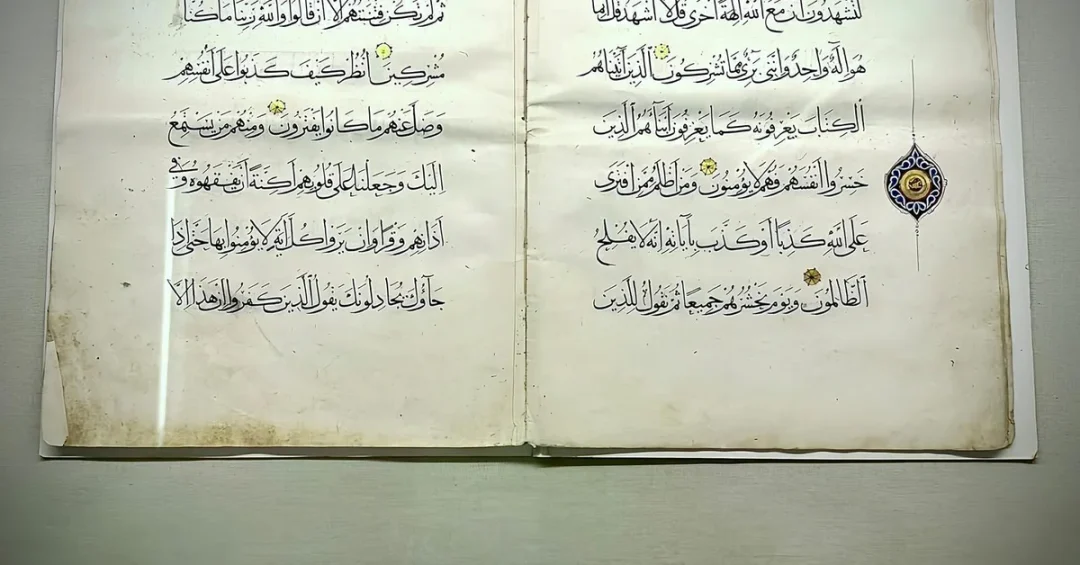
A Quranic manuscript dating back to the 9th century AH (15th century CE) is currently on display at the Holy Quran Museum in the Hira Cultural District of Makkah, offering visitors a rare window into the golden age of Arabic calligraphy. The piece, rendered in the celebrated Thuluth script, was highlighted by the Saudi Press Agency as an exemplar of the historical craftsmanship and visual elegance that defined Quranic transcription during the Mamluk and early Ottoman eras. Housed in a museum purpose-built to narrate the sciences, history, and codification of the Holy Quran, the manuscript stands as a testament to the spiritual veneration and artistic discipline that Islamic civilizations brought to the sacred act of copying the word of God. For international visitors and scholars alike, the exhibit represents far more than a historical artifact; it is a living bridge between the devotional traditions of the past and the cultural ambitions of the present.
Is it any wonder that Makkah, the spiritual heart of the Islamic world, has become a global destination for those seeking to understand the deeper currents of Islamic civilization? The Holy Quran Museum, situated adjacent to Mount Hira — the very site where the first revelation was received by the Prophet Muhammad — provides immersive educational narratives that connect the physical geography of revelation with the intellectual and artistic heritage it inspired. The museum forms an integral part of the Hira Cultural District, a flagship initiative that underscores Saudi Arabia’s commitment to preserving Islamic heritage while presenting it to contemporary audiences in accessible, engaging formats. The Thuluth manuscript, with its sweeping letterforms and balanced proportions, serves as the centerpiece of this effort, drawing attention to the extraordinary care devoted to transcribing and ornamenting the Holy Quran across Islamic eras.
Context and Background
What makes the Thuluth script such a defining chapter in the history of Islamic art? Developed and refined between the 9th and 15th centuries CE, Thuluth emerged as one of the most prestigious and technically demanding styles of Arabic calligraphy. Its name, derived from the Arabic word for “one-third,” refers to the proportion of the pen nib to the letter height, a ratio that gave the script its distinctive elongated characters and intricate curves. Master calligraphers across the Islamic world — from Baghdad and Cairo to Damascus and Makkah — adopted Thuluth as a prime canvas for their most ambitious work, establishing a refined balance between legibility and ornamental grandeur. The script adorned architectural monuments, prayer niches known as mihrabs, and mosque domes, transforming places of worship into total works of art that elevated the written word to a spiritual experience.
The manuscript now on display in Makkah dates to the 9th century AH, a period when the Islamic world witnessed remarkable cross-pollination of artistic traditions. The Mamluk Sultanate, centered in Cairo, and the emerging Ottoman state in Anatolia both invested heavily in the production of sumptuous Quranic manuscripts, commissioning works that combined papermaking innovations, gold illumination, and calligraphic virtuosity. These manuscripts were not merely books; they were objects of devotion, often endowed to mosques and madrasas as acts of piety by sultans, emirs, and wealthy merchants. The Thuluth script of this era is characterized by its structural flexibility and harmonious spacing, allowing calligraphers to adapt the text to the dimensions of the page while maintaining strict proportional rules. The result was a visual harmony that mirrored the spiritual harmony the Quran itself was believed to embody.
Why does the preservation of authentic Quranic manuscripts matter in an age of digital reproduction? The answer lies in the unique information these physical objects carry. Each manuscript documents the lineage of calligraphic mastery transmitted across centuries, safeguarding the distinct stylistic nuances of each historical epoch. The paper, ink, gold leaf, and binding of a 15th-century Quran reveal trade routes, economic conditions, and technological capabilities that no digital scan can fully capture. Moreover, the handwritten manuscript preserves the human dimension of devotion — the hours of disciplined labor, the prayers uttered before dipping the pen, the intention that transformed a copyist’s task into an act of worship. In this sense, the Holy Quran Museum’s exhibit is not simply a display of artistic skill; it is an archive of spiritual practice, a record of how generations of Muslims approached the sacred text with reverence and creativity.
Key Details of the Exhibition
How does the Holy Quran Museum bring this historical treasure to life for modern visitors? The museum, located in the Hira Cultural District, employs a range of immersive techniques to contextualize the manuscript within the broader story of Quranic codification. Visitors encounter the Thuluth manuscript not as an isolated artifact but as part of a narrative arc that begins with the oral transmission of the Quran during the lifetime of the Prophet Muhammad, moves through the compilation of the written text under the early caliphs, and culminates in the artistic flowering of the medieval period. The exhibit explains the materials and methods used by calligraphers, from the preparation of reed pens and soot-based inks to the application of gold leaf in illumination. It also highlights the role of women as patrons and copyists in certain periods, a detail that enriches the often male-dominated narrative of Islamic art history.
The Thuluth manuscript itself is displayed with careful attention to conservation standards, ensuring that temperature, humidity, and light exposure are controlled to protect the fragile organic materials. The museum’s curatorial team, working in coordination with Saudi heritage authorities, has designed the display to allow visitors to appreciate both the overall composition of the pages and the minute details of individual letterforms. Magnification tools and digital companions — accessible through the museum’s multilingual platforms — enable non-Arabic speakers to understand the script’s aesthetic principles and the meaning of the illuminated verses. This inclusive approach reflects the museum’s mission to serve a diverse international audience, including the millions of pilgrims who visit Makkah annually for Hajj and Umrah, as well as researchers and tourists with a general interest in Islamic civilization.
What role do specialized cultural institutions play in Saudi Arabia’s broader heritage strategy? The Holy Quran Museum is one of several initiatives launched under the umbrella of the Hira Cultural District, a development designed to complement the spiritual experience of pilgrimage with educational and cultural enrichment. By situating the museum adjacent to Mount Hira, Saudi planners have created a physical and symbolic link between the moment of revelation and the centuries of intellectual and artistic production that followed. The district also includes facilities for research, public lectures, and temporary exhibitions, positioning it as a hub for Quranic studies and interfaith dialogue. The Thuluth manuscript, as a centerpiece of the museum’s permanent collection, exemplifies the district’s commitment to presenting Islamic heritage not as a static relic but as a dynamic tradition that continues to inspire contemporary artists and scholars.
International and Regional Impact
What does the display of this manuscript signal to the wider world about Saudi Arabia’s cultural priorities? For international observers, the exhibit reinforces the Kingdom’s emergence as a global leader in heritage preservation and cultural diplomacy. Saudi Arabia has invested significantly in restoring historical sites, digitizing archives, and establishing world-class museums that attract visitors from across the globe. The Holy Quran Museum, with its focus on the Quran’s sciences and history, complements other major cultural projects such as the restoration of historic Jeddah, the development of AlUla as an open-air museum, and the expansion of the National Museum in Riyadh. Together, these initiatives present a narrative of a nation that honors its past while embracing the future, a message that resonates with both Muslim and non-Muslim audiences.
Regionally, the exhibit strengthens Makkah’s position as the preeminent center for Islamic learning and pilgrimage. The city already hosts the Grand Mosque and the Kaaba, drawing millions of worshippers each year. By adding a sophisticated museum experience to the pilgrimage journey, Saudi authorities are responding to a growing demand among visitors for deeper engagement with Islamic history and culture. Pilgrims who once focused solely on the rituals of Hajj and Umrah now seek opportunities to learn about the Quran’s transmission, the lives of the early Muslim community, and the artistic traditions that grew around the faith. The Thuluth manuscript offers a tangible connection to that heritage, allowing visitors to see and almost touch the devotion of past generations. For scholars from Egypt, Turkey, Iran, and South Asia — regions with their own rich calligraphic traditions — the exhibit also serves as a point of comparative study, highlighting the interconnectedness of Islamic art across political and geographic boundaries.
Economic and Strategic Significance
How does a single manuscript contribute to Saudi Arabia’s economic diversification goals? Cultural tourism is a key pillar of the Kingdom’s strategy to reduce dependence on oil revenues, and heritage sites such as the Holy Quran Museum are central to attracting international visitors. The Hira Cultural District, with its combination of religious, educational, and leisure offerings, is designed to extend the average length of stay for pilgrims and encourage them to explore beyond the immediate vicinity of the Grand Mosque. This, in turn, supports local businesses, creates jobs in hospitality and retail, and generates revenue that can be reinvested in heritage conservation. The Thuluth manuscript, as a unique and irreplaceable artifact, provides a compelling reason for cultural tourists to include Makkah in their itineraries, even if they are not performing pilgrimage.
Strategically, the exhibit reinforces Saudi Arabia’s soft power by positioning the Kingdom as a custodian of Islamic heritage. The care taken to preserve and display the manuscript demonstrates a commitment to the values of scholarship, piety, and artistic excellence that are central to Islamic identity. This message resonates with Muslim communities worldwide, many of whom look to Saudi Arabia for leadership in religious affairs. By sharing its collections through exhibitions, digital platforms, and scholarly publications, the Kingdom fosters goodwill and strengthens its relationships with countries across the Islamic world and beyond. The Holy Quran Museum thus functions not only as a cultural institution but also as an instrument of diplomacy, building bridges of understanding through the universal language of art and faith.
Vision 2030 Alignment
In what ways does the Holy Quran Museum embody the aspirations of Saudi Vision 2030? The Vision, launched in 2016 under the leadership of Crown Prince Mohammed bin Salman, seeks to transform Saudi Arabia into a vibrant society, a thriving economy, and an ambitious nation. Cultural heritage is explicitly identified as a source of national pride and a driver of economic growth. The museum’s emphasis on education, research, and visitor engagement aligns with the Vision’s goals of enhancing quality of life, promoting lifelong learning, and creating attractive destinations for both citizens and international guests. The Hira Cultural District, of which the museum is a part, represents a model of integrated development that respects the sanctity of the site while providing modern amenities and experiences.
As Saudi Arabia continues to open up to the world through initiatives such as Vision 2030, the Holy Quran Museum stands as a beacon of the Kingdom’s dual commitment to spiritual authenticity and cultural innovation. The Thuluth manuscript, with its centuries-old beauty, reminds us that the pursuit of excellence is timeless. By preserving such treasures and making them accessible to a global audience, Saudi Arabia honors its role as the guardian of Islam’s holiest sites and as a bridge between civilizations. The museum invites visitors to reflect on the power of the written word and the enduring legacy of those who dedicated their lives to preserving it. In doing so, it contributes to a future in which heritage and progress walk hand in hand, fulfilling the promise of a Kingdom that values its past as it builds its tomorrow.
20 Questions
Q1. What is the Holy Quran Museum in Makkah currently exhibiting?
A1. The museum is displaying a Quranic manuscript dating back to the 9th century AH (15th century CE), rendered in the Thuluth script. This exhibit showcases the historical craftsmanship and visual elegance of Arabic calligraphy from the Islamic golden age.
Q2. Where is the Holy Quran Museum located?
A2. The Holy Quran Museum is located in the Hira Cultural District of Makkah, adjacent to Mount Hira. This site is significant as the place where the first revelation was received by the Prophet Muhammad, adding spiritual context to the museum’s collections.
Q3. What is the Thuluth script and why is it significant?
A3. Thuluth is a prestigious Arabic calligraphy style known for its sweeping letterforms, structural flexibility, and balanced proportions. It was historically used for architectural monuments, mihrabs, and mosque domes, representing the pinnacle of calligraphic artistry in Islamic civilization.
Q4. What does the 9th century AH refer to in the Gregorian calendar?
A4. The 9th century AH corresponds to the 15th century CE. This period saw remarkable artistic production across the Islamic world, including sumptuous Quranic manuscripts commissioned by Mamluk and early Ottoman rulers.
Q5. Why is the preservation of Quranic manuscripts important?
A5. Preserving authentic Quranic manuscripts serves as a cultural archive, documenting the lineage of calligraphic mastery across centuries. It safeguards the distinct stylistic nuances of each historical epoch and preserves the spiritual devotion embedded in their creation.
Q6. What educational narratives does the Holy Quran Museum provide?
A6. The museum offers immersive narratives on the sciences, history, and codification of the Quran. It educates visitors about the oral transmission of the text, its compilation, and the artistic traditions that developed around its transcription.
Q7. How does the Hira Cultural District enhance the pilgrimage experience?
A7. The district complements the spiritual journey of Hajj and Umrah with cultural and educational offerings. It allows pilgrims to deepen their understanding of Islamic heritage, extending their visit beyond the rituals of the Grand Mosque.
Q8. What role does the Saudi Press Agency play in reporting this exhibit?
A8. The Saudi Press Agency (SPA) is the official news agency of the Kingdom. It reported on the manuscript’s display, highlighting its historical and artistic significance as part of the museum’s permanent collection.
Q9. How does the Thuluth manuscript reflect Islamic artistic evolution?
A9. The manuscript illustrates the development of Quranic transcription, showing the intersection of spiritual veneration and artistic evolution. Its elongated characters and harmonious spacing demonstrate the refinement of regional calligraphic schools over centuries.
Q10. What materials were used in creating such manuscripts?
A10. Calligraphers used reed pens, soot-based inks, and gold leaf for illumination. The paper was often treated and polished to create a smooth surface, allowing the intricate curves of the Thuluth script to be rendered with precision and elegance.
Q11. Who were the patrons of Quranic manuscripts in the 15th century?
A11. Sultans, emirs, and wealthy merchants commissioned these manuscripts as acts of piety. They endowed them to mosques and madrasas, ensuring their preservation and making them accessible to scholars and worshippers.
Q12. How does the museum make the exhibit accessible to non-Arabic speakers?
A12. The museum provides multilingual digital companions and magnification tools. These resources explain the aesthetic principles of the script and the meanings of illuminated verses, ensuring that international visitors can fully appreciate the manuscript.
Q13. What other cultural projects complement the Holy Quran Museum?
A13. Projects such as the restoration of historic Jeddah, the development of AlUla, and the expansion of the National Museum in Riyadh collectively showcase Saudi Arabia’s commitment to heritage preservation and cultural tourism.
Q14. How does cultural tourism support Saudi Vision 2030?
A14. Cultural tourism is a key pillar of economic diversification under Vision 2030. It attracts international visitors, creates jobs, and generates revenue that supports heritage conservation and community development across the Kingdom.
Q15. What is the significance of Mount Hira in Islamic history?
A15. Mount Hira is where the Prophet Muhammad received the first revelation of the Quran. Its proximity to the museum creates a powerful symbolic link between the moment of revelation and the centuries of artistic and scholarly production that followed.
Q16. How does the exhibit promote interfaith and intercultural dialogue?
A16. By presenting Islamic heritage in an accessible and engaging manner, the museum invites people of all backgrounds to appreciate the artistic and spiritual dimensions of the Quran. It serves as a platform for dialogue and mutual understanding.
Q17. What conservation measures protect the manuscript?
A17. The museum controls temperature, humidity, and light exposure to protect the fragile organic materials. Curatorial teams work with heritage authorities to ensure the manuscript is preserved for future generations.
Q18. How does the museum engage with contemporary artists and scholars?
A18. The Hira Cultural District hosts research facilities, public lectures, and temporary exhibitions. These programs position the museum as a hub for Quranic studies, fostering dialogue between historical traditions and contemporary creativity.
Q19. What message does the exhibit convey about Saudi Arabia’s global role?
A19. The exhibit reinforces Saudi Arabia’s role as a custodian of Islamic heritage and a leader in cultural diplomacy. It demonstrates the Kingdom’s commitment to preserving and sharing the treasures of Islamic civilization with the world.
Q20. How can international visitors learn more about the Holy Quran Museum?
A20. International visitors can access information through the museum’s official platforms and the Saudi Press Agency. The museum welcomes pilgrims, tourists, and researchers, offering guided tours and digital resources to enhance their experience.
Reader Feedback
We value your thoughts. Please share your feedback on this article.
Your feedback helps us improve our coverage.
Related articles
 Haql Beaches Serve as Ramadan Iftar Setting on Saudi Coastline
 Prince Mohammed bin Salman Project Restores Al-Hosn Al-Asfal Mosque in Aseer
 Najran University Launches Book on Heritage and Innovation
 Literature Association Marks World Arabic Novel Day in Khamis Mushait and Rijal Almaa
 Saudi Embassy in Washington Hosts ‘Mishwar’ Exhibition
 Red Sea Film Labs Showcases Visual Storytelling at Busan