


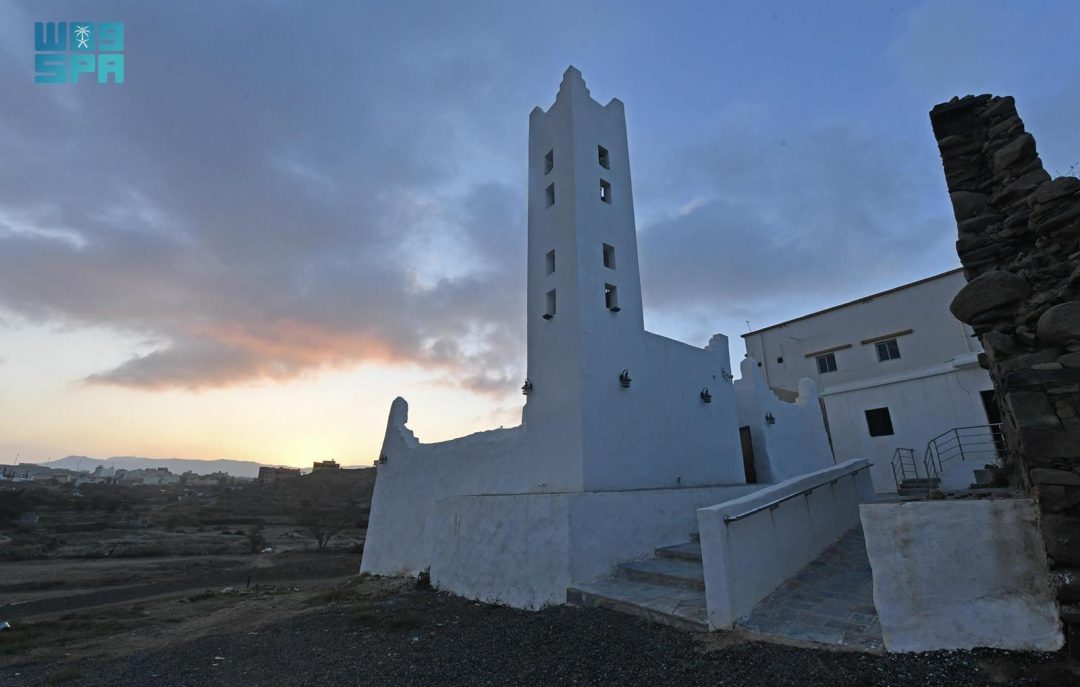
The Prince Mohammed bin Salman Project for the Development of Historical Mosques (Phase Two) is prioritizing the principles of sustainability, exemplified by the restoration of the Al-Hosn Al-Asfal (lower fort) Mosque in Aseer Region, established 271 years ago. The mosque, originally built in 1173 AH, will be renovated to preserve its original design and geometric shape, while restoring its unique sustainable features. These include rainwater collection and storage in the mosque’s reservoir, which is then used in the ablution area.
SPA reported that the Al-Hosn Al-Asfal Mosque features a Sarat-style design and covers an area of 134.18 square meters, accommodating up to 32 worshippers. A notable feature of the mosque is the “al-manzala” room, traditionally used to host travelers. Its construction reflects the urban fabric of upper mountain villages, characterized by stone construction and thick walls. The mosque is adorned with white plaster, setting it apart from neighboring buildings.
Why does the restoration of a 271-year-old mosque matter for the preservation of Saudi heritage? The Sarat style in urban patterns and composition is shaped by climatic conditions, local topography, and social and cultural influences. How do these factors continue to influence architectural choices in the Aseer Region today?
The mosque’s original construction in 1173 AH places it within a long lineage of worship spaces in the region. What can the survival of such structures tell us about the resilience of traditional building methods? The use of rainwater collection and storage in the mosque’s reservoir, later used in the ablution area, reflects an early form of water conservation. How might such sustainable features inform modern mosque design?
The al-manzala room, traditionally used to host travelers, highlights the mosque’s historical role beyond worship. What does this dual function suggest about the social fabric of upper mountain villages? The stone construction and thick walls are characteristic of the urban fabric in these villages. How do these materials respond to the climatic conditions of the Aseer Region?
The white plaster that adorns the mosque sets it apart from neighboring buildings. What does this visual distinction signify within the local architectural context? The Sarat-style design, with its geometric shape and original features, is being carefully preserved during the renovation. Why is it important to maintain original design elements rather than introducing modern alternatives?
The Prince Mohammed bin Salman Project for the Development of Historical Mosques (Phase Two) is prioritizing sustainability principles in its restoration work. How does this focus on sustainability align with broader efforts to preserve historical sites? The mosque covers an area of 134.18 square meters and can accommodate up to 32 worshippers. What does the modest scale of the mosque reveal about the size of the community it originally served?
The restoration aims to preserve the mosque’s original design and geometric shape while restoring its unique sustainable features. What challenges might arise in balancing preservation with the reintroduction of historical water systems? The mosque was established 271 years ago, and its renovation is part of a larger project. How does the inclusion of this mosque in Phase Two reflect on the selection criteria for historical restoration?
SPA did not include the expected completion date for the restoration, the total cost of the project, or the specific contractors involved. The source also did not mention any changes to the mosque’s capacity or additional facilities that might be added. What other details would you like to know about the restoration process?
What is the Al-Hosn Al-Asfal Mosque and where is it located? The Al-Hosn Al-Asfal Mosque, also known as the lower fort mosque, is located in Aseer Region. It was originally built in 1173 AH, which is 271 years ago. The mosque features a Sarat-style design and covers an area of 134.18 square meters, accommodating up to 32 worshippers. It is being restored by the Prince Mohammed bin Salman Project for the Development of Historical Mosques (Phase Two), which prioritizes sustainability principles.
What sustainable features are being restored in the mosque? The restoration includes the mosque’s unique sustainable features, such as rainwater collection and storage in the mosque’s reservoir. This stored water is then used in the ablution area. The project aims to preserve the original design and geometric shape while restoring these features. The Sarat style in urban patterns and composition is shaped by climatic conditions, local topography, and social and cultural influences, which are reflected in the mosque’s sustainable design.
What is the al-manzala room and its historical purpose? The al-manzala room is a notable feature of the Al-Hosn Al-Asfal Mosque, traditionally used to host travelers. Its construction reflects the urban fabric of upper mountain villages, characterized by stone construction and thick walls. The mosque is adorned with white plaster, setting it apart from neighboring buildings. This room highlights the mosque’s historical role as a place of hospitality in addition to worship.
What architectural style is the mosque built in? The mosque features a Sarat-style design. The Sarat style in urban patterns and composition is shaped by climatic conditions, local topography, and social and cultural influences. The construction reflects the urban fabric of upper mountain villages, characterized by stone construction and thick walls. The mosque is adorned with white plaster, setting it apart from neighboring buildings. The restoration aims to preserve its original design and geometric shape.
What is the Prince Mohammed bin Salman Project for the Development of Historical Mosques? The Prince Mohammed bin Salman Project for the Development of Historical Mosques is currently in its Phase Two. It is prioritizing the principles of sustainability, as exemplified by the restoration of the Al-Hosn Al-Asfal Mosque in Aseer Region. The project aims to renovate historical mosques to preserve their original design and geometric shape while restoring unique sustainable features. The Al-Hosn Al-Asfal Mosque, established 271 years ago, is one of the mosques being restored under this phase.