


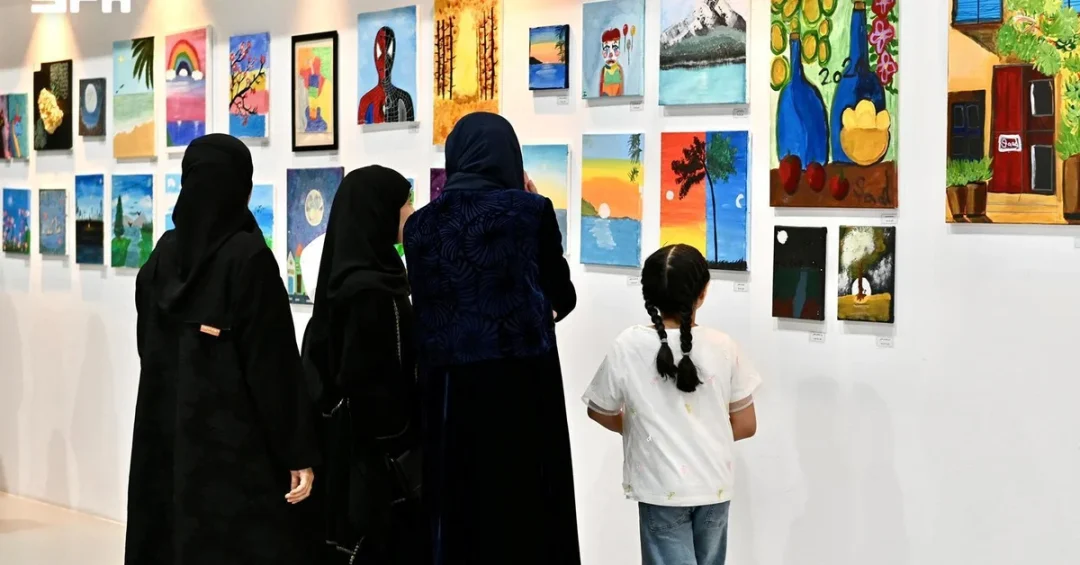
The Saudi Arabian Society for Culture and Arts (SASCA) in Dammam concluded its eight-day children’s art exhibition, “Imagination Draws,” on November 23, 2026, marking World Children’s Day with a vibrant showcase of 108 selected artworks by 90 young creators. The exhibition, which opened on November 16, drew hundreds of visitors to the society’s Dammam branch, where families and art enthusiasts celebrated the imaginative power of the Kingdom’s youngest talents. Organized under the guidance of SASCA’s Dammam branch director, Yousif Al-Harbi, the event featured two hands-on art workshops and a rigorous selection process that whittled down 761 entries to the final 108 pieces on display.
Have you ever wondered how a child’s sketch can capture an entire universe of hope and curiosity? The “Imagination Draws” exhibition answered that question emphatically, offering a window into the minds of children who used freehand drawings, watercolors, acrylic paintings, collages, and mixed-media pieces to express their dreams, observations, and emotions. Each artwork, as Al-Harbi noted, reflected “the world of the child who created it,” turning the gallery into a mosaic of perspectives that resonated with visitors of all ages. The event not only honored World Children’s Day but also underscored Saudi Arabia’s growing commitment to nurturing creative expression from an early age, a cornerstone of the Kingdom’s cultural renaissance under Vision 2030.
Context and Background
Why does a children’s art exhibition in Dammam matter on the global stage? The answer lies in the broader transformation of Saudi Arabia’s cultural landscape, where investment in arts and youth engagement has become a national priority. The Saudi Arabian Society for Culture and Arts, a longstanding institution dedicated to promoting cultural activities across the Kingdom, has been at the forefront of this shift, organizing exhibitions, workshops, and performances that cater to diverse age groups. The Dammam branch, in particular, has emerged as a hub for creative expression in the Eastern Province, a region known for its rich artistic heritage and growing contemporary scene.
The “Imagination Draws” exhibition was timed to coincide with World Children’s Day, observed annually on November 20, a global initiative that champions children’s rights and well-being. By aligning the exhibition with this international occasion, SASCA highlighted the universal importance of allowing children to explore their creativity. The event also reflected the Kingdom’s broader efforts to enhance quality of life, a key objective of Vision 2030, which seeks to build a vibrant society where citizens of all ages can thrive. The eight-day run, from November 16 to November 23, provided ample opportunity for the public to engage with the artworks, reinforcing community bonds and cultural pride.
Moreover, the exhibition’s location in Dammam is significant. As part of the Eastern Province, Dammam has witnessed substantial cultural investment in recent years, including the development of art galleries, theaters, and community centers. The SASCA branch itself has become a focal point for such activities, hosting events that range from poetry readings to visual arts competitions. The “Imagination Draws” exhibition thus built on this momentum, offering a platform for young artists to shine while contributing to the region’s cultural vitality.
Key Details
What exactly did the young artists create, and how were their works selected? According to Yousif Al-Harbi, the director of SASCA’s Dammam branch, the exhibition featured 108 works chosen from a pool of 761 entries, a selection rate of approximately 14 percent. This rigorous process ensured that only the most compelling pieces were displayed, though every entry represented a child’s sincere effort. The selected artworks spanned multiple mediums: freehand drawings, watercolors, acrylic paintings, collages, and mixed-media pieces. Each medium allowed the children to experiment with texture, color, and form, resulting in a diverse collection that defied a single style or theme.
The two art workshops held during the exhibition were a highlight for participants, offering hands-on guidance from experienced artists. These workshops not only taught technical skills but also encouraged children to think creatively and collaboratively. Al-Harbi emphasized that the workshops were designed to complement the exhibition, giving young visitors the chance to create their own art inspired by what they saw. The interactive nature of these sessions fostered a sense of community and mentorship, with older children often assisting younger ones.
The subjects of the artworks were as varied as the children themselves. Some pieces depicted family scenes, pets, and landscapes, while others explored abstract concepts, imaginary worlds, and social themes. The use of bright colors and bold strokes was common, reflecting the unbridled optimism of youth. One collage, for instance, combined magazine cutouts with painted elements to comment on environmental conservation, showing that even young minds are attuned to global issues. Such works demonstrated that children are not just passive observers but active interpreters of the world around them.
International and Regional Impact
How does a local children’s art exhibition in Dammam resonate beyond Saudi Arabia’s borders? In an era where cultural diplomacy plays an increasingly vital role in international relations, events like “Imagination Draws” contribute to the Kingdom’s soft power. By showcasing the creativity of its youth, Saudi Arabia signals to the world that it is a nation investing in human potential, a message that aligns with its G20 commitments and its broader global engagement. The exhibition also serves as a counter-narrative to stereotypes, presenting a dynamic, forward-looking society where art and culture are accessible to all.
Regionally, the event reinforces the Eastern Province’s status as a cultural destination. Neighboring Gulf countries have similarly ramped up investments in children’s education and arts, creating a friendly competition that benefits the entire region. The “Imagination Draws” exhibition could inspire similar initiatives in other Saudi cities, such as Riyadh, Jeddah, and Al-Khobar, where SASCA branches are also active. Furthermore, the involvement of international organizations like UNESCO, which advocates for arts education, lends additional weight to such grassroots efforts. By participating in global conversations about child development and cultural rights, Saudi Arabia positions itself as a responsible global citizen.
Economic and Strategic Significance
What economic value does a children’s art exhibition hold for Saudi Arabia? While the immediate economic impact may seem modest, the long-term strategic benefits are substantial. Investing in youth creativity fosters innovation, critical thinking, and problem-solving skills—qualities essential for the knowledge-based economy that Vision 2030 aims to build. Children who engage with the arts are more likely to become creative professionals, entrepreneurs, and leaders who can drive diversification beyond oil. The exhibition thus represents a small but meaningful step toward human capital development.
Additionally, cultural events like “Imagination Draws” stimulate local economies by attracting visitors to galleries, cafes, and shops in the surrounding area. They also create opportunities for artists, instructors, and event organizers, contributing to employment in the creative sector. As Saudi Arabia expands its tourism and entertainment offerings, such grassroots cultural activities add depth to the visitor experience, complementing mega-projects like NEOM and the Red Sea Project. The strategic significance lies in building a holistic ecosystem where culture, education, and economy intersect.
Vision 2030 Alignment
How does the “Imagination Draws” exhibition embody the spirit of Vision 2030? At its core, Vision 2030 is about empowering Saudi citizens, especially the youth, to reach their full potential. The exhibition directly supports the Quality of Life Program, one of the Vision’s realization programs, which aims to enhance cultural participation and community engagement. By providing a platform for children to express themselves, SASCA is nurturing the next generation of artists, designers, and creative thinkers who will shape the Kingdom’s cultural identity in the decades to come.
Furthermore, the event reflects the Vision’s emphasis on building a vibrant society where families can enjoy enriching experiences. The strong turnout and positive feedback from parents and educators underscore the demand for such initiatives. As Saudi Arabia continues to invest in arts education, from school curricula to public workshops, exhibitions like this will become increasingly common. The “Imagination Draws” exhibition is not just a one-off event; it is a testament to the Kingdom’s unwavering commitment to its children and its cultural future. In a world where creativity is a currency, Saudi Arabia is investing wisely.
20 Questions
Q1. What was the “Imagination Draws” exhibition?
A1. It was an eight-day children’s art exhibition organized by the Saudi Arabian Society for Culture and Arts (SASCA) in Dammam, marking World Children’s Day and featuring 108 selected artworks by 90 children.
Q2. When and where did the exhibition take place?
A2. The exhibition ran from November 16 to November 23, 2026, at SASCA’s Dammam branch in the Eastern Province of Saudi Arabia.
Q3. Who organized the exhibition?
A3. It was organized by the Saudi Arabian Society for Culture and Arts (SASCA), a national institution dedicated to promoting cultural activities across the Kingdom.
Q4. How many artworks were displayed?
A4. A total of 108 artworks were displayed, selected from 761 entries submitted by children.
Q5. How many children participated?
A5. Ninety children had their works selected for the final exhibition, representing a diverse group of young artists.
Q6. What types of art were featured?
A6. The exhibition included freehand drawings, watercolors, acrylic paintings, collages, and mixed-media pieces, showcasing a range of artistic techniques.
Q7. Who is Yousif Al-Harbi?
A7. Yousif Al-Harbi is the director of SASCA’s Dammam branch and provided official commentary on the exhibition’s details and success.
Q8. What workshops were held during the exhibition?
A8. Two art workshops were conducted, offering children hands-on experience and guidance from professional artists.
Q9. Why was the exhibition timed with World Children’s Day?
A9. It was timed to coincide with World Children’s Day on November 20 to celebrate children’s creativity and highlight their importance in society.
Q10. How were the artworks selected?
A10. A review committee evaluated 761 entries and selected 108 based on creativity, originality, and artistic expression.
Q11. What themes did the children explore?
A11. Themes ranged from family and nature to abstract concepts and social issues, reflecting the children’s diverse perspectives and imaginations.
Q12. What is the significance of the exhibition for Dammam?
A12. It reinforces Dammam’s status as a cultural hub in the Eastern Province and provides a platform for young local talent.
Q13. How does the exhibition align with Vision 2030?
A13. It supports the Quality of Life Program by promoting cultural participation, youth empowerment, and community engagement.
Q14. What impact did the exhibition have on the community?
A14. It brought families together, fostered creativity, and strengthened community bonds through art appreciation and workshops.
Q15. Were there any international participants?
A15. The exhibition focused on local children from Dammam and surrounding areas, but its message resonates globally.
Q16. How can other cities replicate this success?
A16. By organizing similar events through SASCA branches, schools, and community centers, with support from local authorities and sponsors.
Q17. What role does SASCA play in Saudi culture?
A17. SASCA promotes cultural and artistic activities nationwide, nurturing talent and preserving heritage while embracing modernity.
Q18. What was the public response to the exhibition?
A18. The exhibition received positive feedback from visitors, with many praising the creativity of the children and the organization of the event.
Q19. Will there be future editions of “Imagination Draws”?
A19. While no official announcement has been made, SASCA’s track record suggests continued support for children’s art initiatives.
Q20. How can parents encourage their children’s artistic talents?
A20. Parents can enroll children in art workshops, provide art supplies at home, and visit exhibitions like “Imagination Draws” to inspire creativity.
Reader Feedback
We value your thoughts. Please share your feedback on this article.
Your feedback helps us improve our coverage.
Related articles
 Saudi Heritage Shines at ‘Bridge of Civilizations’ in Cairo
 Al-Baha Integrates Traditional Architecture into Public Spaces
 Local Amateur Falconers Begin Milwah Race Qualifying at King Abdulaziz Falconry Festival
 Sadd Samallaqi: Ancient Taif Dam Tells Water Management Story
 Red Sea Museum Showcases Jeddah’s Black Coral Prayer-Bead Craft
 Diriyah Biennale Foundation Announces Third Edition of PaperBack Art Book Fair