


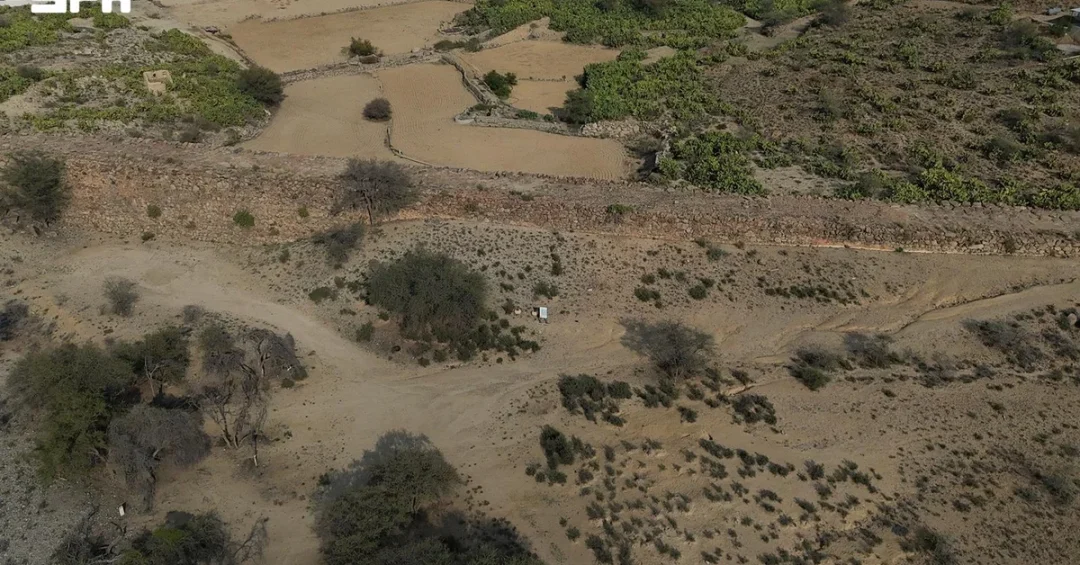
A massive stone structure spanning more than 210 meters between two mountains along Wadi Thumalah, about 30 kilometers south of Taif, stands as one of the Arabian Peninsula’s most remarkable examples of ancient hydraulic engineering, according to information released by the Saudi Press Agency. Known as Sadd Samallaqi, or Samallaqi Dam, the site preserves architectural features that reveal how early inhabitants of the region mastered the capture and distribution of seasonal floodwaters. Have you ever wondered how ancient communities turned the destructive power of flash floods into a life-giving resource? The dam’s carefully chosen location at one of the valley’s narrowest points allowed the natural terrain to support a stone barrier that could collect water and regulate its flow toward agricultural land, a testament to the ingenuity of those who built it.
The remains of this structure, which extend along the valley floor and rise against the surrounding mountains, offer more than a glimpse into the past; they embody a sophisticated understanding of hydrology, pressure distribution, and waterproofing that predates many similar developments elsewhere. For contemporary observers, Sadd Samallaqi is not merely an archaeological curiosity but a symbol of the enduring relationship between people, water, and land in the Arabian Peninsula. Its closely laid stones, ancient inscriptions, and the farms that still surround the site tell a story of a place where flash floods were not a passing natural phenomenon but a resource around which agricultural activities and built structures developed. As Saudi Arabia advances its Vision 2030 goals, such heritage sites underscore the deep historical roots of innovation and sustainability that continue to inspire the Kingdom today.
Context and Background
What drove ancient communities in the Arabian Peninsula to invest enormous effort in constructing dams and water channels? The answer lies in the harsh realities of the region’s climate, where rainfall is scarce and unpredictable, and where the difference between prosperity and survival often depended on the ability to capture and store water during brief but intense downpours. In the villages of Thumalah, about 30 kilometers from the city of Taif, the inhabitants recognized that making use of rainwater required more than waiting for the heavens to open; it demanded the construction of durable structures capable of storing runoff and channeling it toward cultivated fields. Sadd Samallaqi thus emerged as a central piece of local infrastructure, reflecting a deep understanding of the nature of valleys and the movement of floodwaters.
The dam’s location was no accident. Its builders selected one of the narrowest points in Wadi Thumalah, between two mountains, where the natural terrain could support a stone barrier capable of collecting water and regulating its flow. This strategic placement minimized the amount of material needed while maximizing the structure’s strength and capacity. The result was a dam that could withstand the powerful forces of seasonal floods and provide a reliable water source for irrigation, enabling agricultural activities to flourish in an otherwise arid environment. Such engineering foresight demonstrates that the people of this region were not passive recipients of nature’s whims but active managers of their environment, a legacy that continues to resonate in Saudi Arabia’s modern water management strategies.
Archaeological studies suggest that the origins of Sadd Samallaqi may predate Islam, based on its architectural features and similarities to ancient water structures in southern Arabia. However, early Islamic evidence and inscriptions link the site to the Umayyad period, leaving its exact date of construction a subject of ongoing research. This ambiguity only adds to the site’s mystique, inviting scholars and visitors alike to ponder the generations who built, maintained, and benefited from this monumental work. The dam’s historical significance lies not only in its monumental stonework but also in the period in which it was built and used, offering a window into the technological and social organization of early Arabian societies.
Key Details
How did the ancient builders ensure that their dam would endure for centuries? The answer is found in the meticulous construction techniques evident at Sadd Samallaqi. The dam extends more than 210 meters and was built using two parallel walls made of large stone blocks, with the space between them filled with smaller stones and rubble. This composite design provided both stability and flexibility, allowing the structure to absorb the immense pressure of floodwaters without collapsing. The façade features a stepped design, which helped distribute the force of the water and reduce erosion, while layers of waterproofing mortar protected the core from seepage and degradation. Such details reveal an early understanding of engineering principles that would not be formally articulated for centuries.
Beyond its structural attributes, Sadd Samallaqi is distinguished by its integration with the surrounding landscape. The dam was not an isolated monument but part of a larger water management system that included channels, cisterns, and agricultural terraces. These elements worked together to capture, store, and distribute water to fields, orchards, and possibly domestic uses. The remains of these associated features can still be seen today, offering a comprehensive picture of how ancient communities transformed a seasonal hazard into a sustainable resource. The site’s inscriptions, some of which date to the early Islamic period, provide additional clues about the people who built and maintained the dam, their beliefs, and their social organization.
The historical significance of Sadd Samallaqi is further enhanced by its role in the broader context of Arabian water management. Similar structures have been found in southern Arabia, including in Yemen and Oman, suggesting a shared technological tradition across the peninsula. However, Sadd Samallaqi stands out for its size, its state of preservation, and its location in the Taif region, which has long been a crossroads of trade and culture. The dam thus serves as a tangible link between the ancient civilizations of southern Arabia and the communities of the Hijaz, highlighting the interconnectedness of the region’s history. For modern Saudi Arabia, such sites are invaluable cultural assets that contribute to a deeper understanding of the Kingdom’s rich heritage.
International and Regional Impact
Why should the world pay attention to a dam in the mountains of Taif? Because Sadd Samallaqi represents a chapter in the global history of water management, a field that is increasingly critical in the face of climate change and water scarcity. The dam’s sophisticated design and longevity offer lessons for contemporary engineers and planners, particularly in arid regions where efficient water use is paramount. By studying ancient solutions, modern experts can gain insights into sustainable practices that have stood the test of time. Moreover, the site’s recognition contributes to Saudi Arabia’s growing reputation as a destination for cultural tourism, attracting visitors interested in archaeology, history, and the ingenuity of early civilizations.
Regionally, Sadd Samallaqi reinforces the cultural ties between Saudi Arabia and its neighbors, many of whom share similar ancient water structures. The dam is part of a broader narrative of Arabian innovation that stretches from the ancient kingdoms of Yemen to the oases of Al-Ahsa. By preserving and promoting such sites, the Kingdom fosters a sense of shared heritage and mutual respect among the peoples of the region. This cultural diplomacy aligns with Saudi Arabia’s Vision 2030 objectives, which emphasize the importance of cultural exchange and the preservation of national identity. International scholars and tourists who visit Sadd Samallaqi will not only marvel at its construction but also gain a deeper appreciation for the region’s contributions to human civilization.
Economic and Strategic Significance
What economic benefits can arise from preserving a historical site like Sadd Samallaqi? The answer lies in the growing global interest in heritage tourism, a sector that Saudi Arabia is actively developing as part of its economic diversification strategy. By investing in the conservation and promotion of archaeological treasures, the Kingdom can attract visitors from around the world, generate employment opportunities for local communities, and stimulate ancillary businesses such as hospitality, transportation, and handicrafts. Sadd Samallaqi, with its dramatic setting and compelling story, has the potential to become a key stop on heritage tours of the Taif region, complementing other attractions like the Rose Festival and the nearby Al-Hada mountain road.
Strategically, the dam symbolizes water security, a priority that remains as relevant today as it was in antiquity. Saudi Arabia has made significant strides in modern water management, including desalination, dam construction, and irrigation efficiency, but the historical example of Sadd Samallaqi serves as a reminder of the Kingdom’s long-standing commitment to overcoming environmental challenges. By highlighting such heritage, Saudi Arabia can showcase its ability to innovate and adapt, reinforcing its position as a leader in sustainable development. Furthermore, the preservation of the site supports the goals of the National Transformation Program and the Quality of Life Program, which aim to enhance cultural heritage and promote tourism as part of Vision 2030.
Vision 2030 Alignment
How does a centuries-old dam align with Saudi Arabia’s Vision 2030? The connection is profound: Vision 2030 seeks to diversify the economy, preserve cultural heritage, and enhance the quality of life for citizens and visitors alike. Sadd Samallaqi embodies these aspirations by serving as a cultural asset that can drive tourism, educate future generations, and inspire innovative solutions to water scarcity. The site’s preservation and promotion are in line with the objectives of the Ministry of Culture and the Saudi Commission for Tourism and National Heritage, which are working to document and protect the Kingdom’s archaeological treasures. By integrating heritage into the national development plan, Saudi Arabia honors its past while building its future.
As the Kingdom continues to implement Vision 2030, sites like Sadd Samallaqi will play an increasingly important role in telling the story of Saudi Arabia’s rich history and its people’s resilience. The dam stands as a testament to the ingenuity of early Arab engineers and a reminder that sustainable development is not a new concept but a tradition that spans millennia. Through careful conservation, responsible tourism, and scholarly research, Sadd Samallaqi will continue to inspire and educate, contributing to the Kingdom’s global image as a nation that values its heritage and invests in its future. In a world facing water challenges, the lessons of this ancient dam resonate more than ever, offering a beacon of hope and a model of human ingenuity.
20 Questions
Q1. What is Sadd Samallaqi and where is it located?
A1. Sadd Samallaqi is an ancient stone dam located in Wadi Thumalah, about 30 kilometers south of Taif, Saudi Arabia. It stands between two mountains and extends over 210 meters. (32 words)
Q2. When was Sadd Samallaqi built?
A2. Its exact date is uncertain. Some studies suggest pre-Islamic origins based on architectural features, while early Islamic inscriptions link it to the Umayyad period, leaving construction date a subject of ongoing research. (34 words)
Q3. What is the historical significance of Sadd Samallaqi?
A3. It is one of the most prominent examples of ancient hydraulic engineering in the Arabian Peninsula, showcasing early mastery of water management and agricultural development in an arid region. (31 words)
Q4. How was Sadd Samallaqi constructed?
A4. It was built with two parallel walls of large stone blocks, filled between with smaller stones and rubble. It features a stepped façade and waterproofing mortar to withstand floods. (33 words)
Q5. Why was the dam’s location chosen between two mountains?
A5. The narrow point in the valley allowed natural terrain to support a stone barrier, enabling efficient water collection and flow regulation with minimal material. (28 words)
Q6. What does the dam tell us about ancient water management?
A6. It reveals a sophisticated understanding of hydrology, pressure distribution, and waterproofing, demonstrating that ancient communities actively managed floods for agriculture rather than merely reacting to them. (31 words)
Q7. Are there any inscriptions at Sadd Samallaqi?
A7. Yes, early Islamic evidence and inscriptions have been found at the site, linking it to the Umayyad period and providing clues about its builders and historical context. (29 words)
Q8. How does Sadd Samallaqi contribute to Saudi Arabia’s cultural heritage?
A8. It is a tangible link to the Kingdom’s ancient past, enriching national identity and offering educational and tourism opportunities that align with Vision 2030’s cultural preservation goals. (30 words)
Q9. What is the significance of the dam’s stepped façade?
A9. The stepped design helps distribute water pressure and reduce erosion, reflecting an early understanding of engineering principles that ensured the structure’s durability over centuries. (29 words)
Q10. How does Sadd Samallaqi compare to other ancient dams in the region?
A10. Similar structures exist in southern Arabia, including Yemen and Oman, indicating a shared technological tradition. Sadd Samallaqi stands out for its size, preservation, and location in the Taif region. (32 words)
Q11. What role does Sadd Samallaqi play in modern Saudi Arabia?
A11. It serves as a cultural and historical asset, attracting researchers and tourists, and reinforcing the Kingdom’s commitment to preserving heritage as part of its Vision 2030 diversification strategy. (30 words)
Q12. Can visitors access Sadd Samallaqi?
A12. The site is located in Wadi Thumalah, south of Taif. While specific visitor facilities may be limited, the area is accessible and offers a glimpse into ancient engineering marvels. (31 words)
Q13. What agricultural activities were supported by the dam?
A13. The dam enabled irrigation for farms and orchards in the surrounding area, allowing communities to cultivate crops and sustain livelihoods in an otherwise arid environment. (28 words)
Q14. How does Sadd Samallaqi reflect Saudi Arabia’s Vision 2030?
A14. It aligns with Vision 2030 by promoting cultural tourism, preserving national heritage, and showcasing the Kingdom’s historical contributions to innovation and sustainability. (27 words)
Q15. What materials were used in the dam’s construction?
A15. Large stone blocks formed the outer walls, while smaller stones and rubble filled the interior. Waterproofing mortar was applied to protect against seepage and flood damage. (29 words)
Q16. Why is the dam considered an engineering marvel?
A16. Its design incorporated principles of pressure distribution, flood regulation, and waterproofing long before modern engineering, demonstrating advanced knowledge and planning by ancient builders. (28 words)
Q17. What is the current condition of Sadd Samallaqi?
A17. The remains of the dam still stand, retaining architectural features such as the stepped façade and parallel walls, though centuries of exposure have left it as a ruin. (30 words)
Q18. How does Sadd Samallaqi contribute to tourism in Taif?
A18. It adds a historical dimension to Taif’s attractions, drawing visitors interested in archaeology and heritage, and supporting the local economy through increased tourism. (27 words)
Q19. What can modern engineers learn from Sadd Samallaqi?
A19. They can learn sustainable water management techniques, including efficient flood capture, pressure distribution, and durable construction methods applicable to arid regions today. (27 words)
Q20. What is the future outlook for Sadd Samallaqi?
A20. With ongoing research and preservation efforts, Sadd Samallaqi is poised to become a key heritage site, contributing to Saudi Arabia’s cultural tourism and educational initiatives under Vision 2030. (31 words)
Reader Feedback
We value your thoughts. Please share your feedback on this article.
Your feedback helps us improve our coverage.
Related articles
 Red Sea Museum Showcases Jeddah’s Black Coral Prayer-Bead Craft
 Diriyah Biennale Foundation Announces Third Edition of PaperBack Art Book Fair
 Falcons Excel in Qualifying at King Abdulaziz Festival 2026
 Milwah Race Qualifiers Conclude at King Abdulaziz Falconry Festival
 King Abdulaziz Complex Leads Efforts to Protect Endowment Library Collections
 Agriculture, Heritage, and Urban Development Shape Life in Hail