


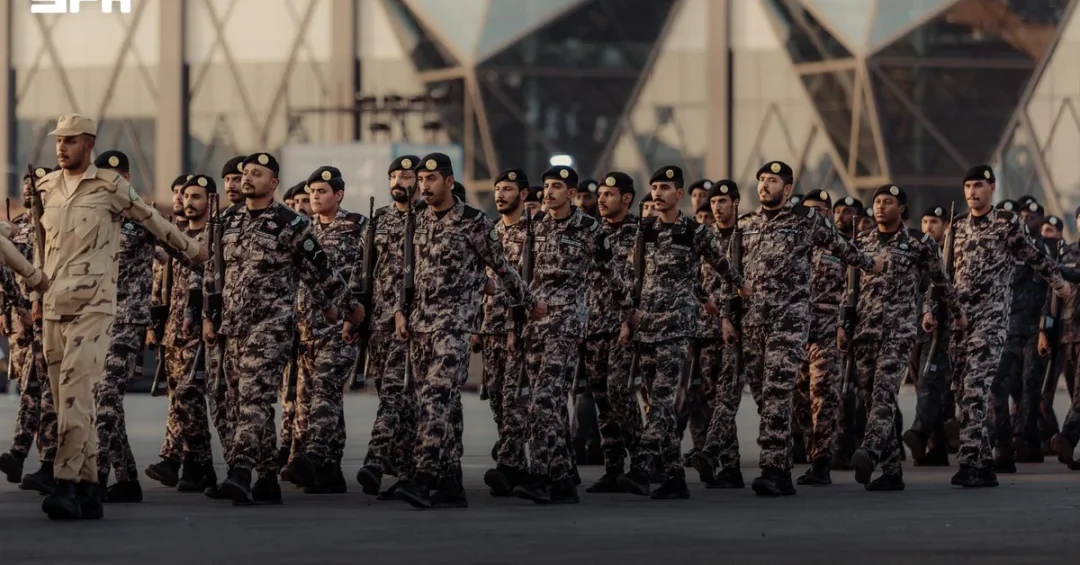
The military infantry parades presented by the Ministry of Interior drew large crowds at the International Saudi Falcons and Hunting Exhibition 2026, with visitors gathering in the demonstration area to watch formations, synchronized marching, and precision drills at the Riyadh Exhibition and Convention Center in Malham, north of Riyadh. The displays, staged as part of the exhibition’s military demonstration program, showcased the discipline and advanced training of the Ministry of Interior’s personnel, according to the Saudi Press Agency. Visitors watched infantry units execute coordinated movements and group formations, reflecting a high level of preparation and operational readiness.
The exhibition, one of the Kingdom’s flagship cultural and heritage events, has become a major draw for families, falconry enthusiasts, and international guests. This year’s edition continues to blend tradition with national capability, offering live demonstrations that go beyond static displays. The infantry parade added a new dimension to the visitor experience, placing the skills of Saudi security personnel alongside the heritage crafts and wildlife traditions that define the event. For many attendees, the parade was a highlight of the day, drawing crowds to the demonstration area well before the formations began. The event runs under the patronage of the Saudi leadership, reinforcing the exhibition’s role as a platform for both cultural pride and public engagement.
Context and Background
Why has a falconry and hunting exhibition become a stage for military pageantry? The International Saudi Falcons and Hunting Exhibition has grown steadily since its launch, evolving from a niche gathering for falconers into a comprehensive national event that celebrates Saudi heritage while showcasing modern institutional capabilities. Held at the Riyadh Exhibition and Convention Center in Malham, the exhibition is organized with support from official Saudi bodies and attracts exhibitors, breeders, and visitors from across the Kingdom and beyond. The Ministry of Interior’s participation is part of a broader effort to bring government institutions closer to the public in an accessible, family-friendly setting.
The infantry parade is not an isolated spectacle. It forms part of a structured program of military demonstrations that the Ministry of Interior presents during the exhibition, highlighting the skills and discipline of its military teams. These demonstrations are designed to inform the public about the roles and responsibilities of security personnel, while also inspiring young Saudis who may consider careers in national service. The exhibition’s dual identity, as a celebration of falconry and a showcase of national institutions, reflects a wider trend in Saudi Arabia: public events that combine cultural heritage with displays of state capability and modernization.
Falconry holds a special place in Saudi culture, recognized by UNESCO as intangible cultural heritage. The exhibition builds on that legacy by creating a space where tradition and contemporary national life meet. The Ministry of Interior’s presence adds a layer of civic education, allowing visitors to see firsthand the training and coordination that underpin public safety. For international observers, the event offers a window into how Saudi Arabia presents its institutions to its own people and to the world, in a setting that is welcoming, well-organized, and rooted in national identity.
Key Details
What exactly did visitors see at the demonstration area? According to the Saudi Press Agency, large numbers of visitors gathered to watch infantry personnel perform coordinated movements and group formations. The troops executed synchronized steps and disciplined marching, demonstrating a high level of training and precision. The formations were not merely ceremonial; they reflected the kind of collective discipline that underpins operational effectiveness. The Ministry of Interior’s teams moved in unison, with each member’s position and timing contributing to the overall display of coordination.
The parade was one component of a wider set of military demonstrations presented by the Ministry of Interior during this year’s exhibition. These demonstrations are intended to highlight the skills and discipline of the ministry’s military teams, giving the public an up-close view of the professionalism that defines Saudi security forces. Visitors responded with visible enthusiasm, gathering in the demonstration area and watching the formations with attention. The event’s layout allowed spectators to observe the drills clearly, with the Riyadh Exhibition and Convention Center providing a spacious and well-equipped venue in Malham, north of Riyadh.
Beyond the parade, the exhibition features a range of activities tied to falconry and hunting, including displays of falcons, equipment, and heritage crafts. The combination of cultural and institutional programming has helped the event attract a broad audience, from seasoned falconers to families and school groups. The Ministry of Interior’s participation adds a distinctive element, reminding visitors that national heritage and national service are complementary parts of Saudi identity. The exhibition’s organizers have emphasized that the event is designed to be educational and engaging, with demonstrations that inform as much as they impress.
International and Regional Impact
How does an event rooted in Saudi heritage resonate beyond the Kingdom’s borders? The International Saudi Falcons and Hunting Exhibition has become a meeting point for international falconry communities, drawing participants and visitors from Gulf states and further afield. The presence of military demonstrations alongside heritage exhibits presents a nuanced image of Saudi Arabia: a nation that honors its traditions while investing in modern institutions and public engagement. For regional audiences, the event reinforces the Kingdom’s role as a cultural and organizational hub in the Gulf, capable of hosting large-scale events that blend tradition with contemporary national life.
Internationally, the exhibition contributes to Saudi Arabia’s growing portfolio of cultural diplomacy. By welcoming foreign visitors and exhibitors, it supports people-to-people connections and showcases the Kingdom’s hospitality and organizational capacity. The Ministry of Interior’s demonstrations add a dimension of transparency, allowing visitors to see the training and discipline of security personnel in a public setting. This openness aligns with broader efforts to present Saudi institutions as professional, approachable, and committed to public safety. The event also complements other national initiatives that position Saudi Arabia as a destination for cultural tourism, sport, and heritage experiences.
Economic and Strategic Significance
What economic and strategic value does a heritage exhibition generate? Large public events like the International Saudi Falcons and Hunting Exhibition stimulate local commerce, from hospitality and retail to transport and venue services. The Riyadh Exhibition and Convention Center in Malham hosts thousands of visitors, creating demand that benefits businesses across the capital. Falconry-related trade, including equipment, breeding, and related services, forms a specialized market that the exhibition helps to connect with regional and international buyers. The event also supports the growth of Riyadh as a hub for exhibitions and conferences, a priority under Saudi Arabia’s broader economic diversification agenda.
Strategically, the exhibition strengthens the relationship between national institutions and the public. The Ministry of Interior’s participation demonstrates a commitment to engagement and education, building trust through direct interaction. For young Saudis, the military demonstrations can serve as inspiration for careers in security and public service, supporting human capital development. The event also reinforces national pride by celebrating falconry, a heritage practice that connects generations. By integrating cultural and institutional programming, the exhibition contributes to social cohesion and to the Kingdom’s reputation as a country that values both its past and its future.
Vision 2030 Alignment
How does a falconry exhibition connect to Saudi Vision 2030? The Vision aims to diversify the economy, enhance quality of life, and strengthen national identity. Events like the International Saudi Falcons and Hunting Exhibition advance all three goals. They attract visitors, support local businesses, and create opportunities for cultural exchange. They also celebrate heritage in a modern format, ensuring that traditions such as falconry remain vibrant and relevant. The Ministry of Interior’s demonstrations add a civic dimension, showcasing the professionalism of national institutions and encouraging public engagement. Together, these elements reflect the Vision’s holistic approach to development.
As the exhibition continues to grow, its role in Saudi Arabia’s public calendar is likely to expand. The combination of heritage, education, and national capability makes it a distinctive platform for both domestic and international audiences. For the Ministry of Interior, participation offers a chance to connect with citizens and residents in a positive, celebratory environment. For the Kingdom, the event exemplifies how Vision 2030 is being translated into tangible experiences that inform, entertain, and inspire. The infantry parades at this year’s edition were a vivid reminder that discipline, tradition, and modernization can stand together, drawing crowds and building pride in equal measure.
20 Questions
Q1. What event featured the Ministry of Interior’s infantry parades?
A1. The infantry parades were presented at the International Saudi Falcons and Hunting Exhibition 2026, held at the Riyadh Exhibition and Convention Center in Malham, north of Riyadh, according to the Saudi Press Agency.
Q2. When did the military infantry parades take place?
A2. The parades were presented yesterday relative to the SPA report dated October 03, 2026, during the exhibition’s run at the Riyadh Exhibition and Convention Center in Malham.
Q3. Where was the exhibition held?
A3. The exhibition took place at the Riyadh Exhibition and Convention Center in Malham, located north of Riyadh, a venue that hosts major national events and accommodates large numbers of visitors.
Q4. Who presented the military demonstrations?
A4. The Ministry of Interior presented the military demonstrations, including the infantry parades, as part of its participation in this year’s International Saudi Falcons and Hunting Exhibition.
Q5. What did visitors watch at the demonstration area?
A5. Visitors watched infantry personnel perform coordinated movements and group formations, showcasing synchronized steps and disciplined execution that reflected a high level of training and precision.
Q6. Why did the parades attract large numbers of visitors?
A6. The parades attracted visitors because they offered a rare public view of military discipline and precision, presented in an accessible, family-friendly setting at a major national exhibition.
Q7. What skills did the infantry personnel demonstrate?
A7. The personnel demonstrated coordinated movements, group formations, synchronized steps, and disciplined marching, all of which reflected their high level of training and operational precision.
Q8. How does the parade fit into the exhibition’s program?
A8. The infantry parade is part of the military demonstrations presented by the Ministry of Interior during the exhibition, highlighting the skills and discipline of its military teams alongside heritage activities.
Q9. What is the International Saudi Falcons and Hunting Exhibition?
A9. It is a major Saudi event that celebrates falconry and hunting heritage while hosting exhibitors, visitors, and cultural displays, and it has become a prominent fixture on the Kingdom’s public calendar.
Q10. Why is falconry significant in Saudi culture?
A10. Falconry is a traditional heritage practice in Saudi Arabia and is recognized by UNESCO as intangible cultural heritage, symbolizing skill, patience, and a deep connection to the desert environment.
Q11. How does the Ministry of Interior benefit from participating?
A11. Participation allows the Ministry of Interior to engage with the public, showcase the professionalism of its teams, and inspire young Saudis to consider careers in national service and public safety.
Q12. What was the atmosphere at the demonstration area?
A12. The atmosphere was lively and attentive, with large crowds gathering to watch the formations and responding with interest to the synchronized movements and disciplined marching of the infantry personnel.
Q13. Does the exhibition attract international visitors?
A13. Yes, the exhibition draws participants and visitors from Gulf states and beyond, serving as a meeting point for falconry communities and supporting cultural exchange and people-to-people connections.
Q14. How does the event support the Saudi economy?
A14. The event stimulates local commerce in hospitality, retail, transport, and venue services, while supporting the specialized falconry trade and reinforcing Riyadh’s role as a hub for exhibitions.
Q15. What role does the event play in cultural diplomacy?
A15. It showcases Saudi hospitality and organizational capacity, welcomes foreign visitors, and presents a positive image of the Kingdom’s heritage and institutions to an international audience.
Q16. How does the parade reflect national capability?
A16. The parade reflects national capability by demonstrating the training, coordination, and discipline of Ministry of Interior personnel, which are essential qualities for operational effectiveness and public safety.
Q17. What opportunities does the exhibition create for youth?
A17. It exposes young Saudis to career possibilities in security and public service, while also connecting them with heritage crafts and traditions that foster national pride and identity.
Q18. How does the exhibition align with Vision 2030?
A18. It supports economic diversification, enhances quality of life, and strengthens national identity by celebrating heritage in a modern format and attracting visitors and investment to Riyadh.
Q19. What other activities are featured at the exhibition?
A19. The exhibition includes displays of falcons, hunting equipment, heritage crafts, and educational programming, alongside the military demonstrations presented by the Ministry of Interior.
Q20. What is the outlook for future editions of the exhibition?
A20. The exhibition is expected to continue growing, building on its success in blending heritage, education, and national capability, and further establishing Riyadh as a destination for major cultural events.
Reader Feedback
We value your thoughts. Please share your feedback on this article.
Your feedback helps us improve our coverage.
Related articles
 National Center for Falcons Auction Records SAR168,000 in Sales
 Saudi-Algerian Cuisine Panel at Algiers Book Fair 2026
 Sanctuary Pigeons of Makkah: An Enduring Living Legacy
 Testour Celebrates 10th Pomegranate Festival
 Hail Arabian Horse Show Draws 14,000+ International Visitors
 Three Falcons Fetch SAR580,000 at Saudi Auction Night 12