


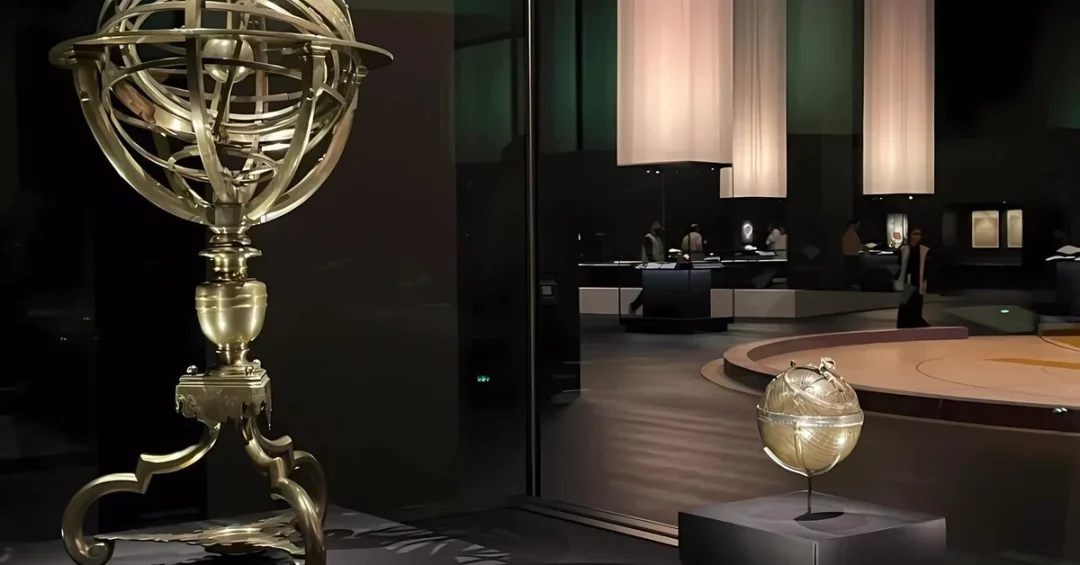
AlMadar, a central component of the second edition of the Islamic Arts Biennale in Jeddah, is offering visitors a rare opportunity to explore the scientific and cultural achievements of Islamic civilizations through more than 265 artworks and artifacts drawn from over 30 international institutions across 20 countries. Held under the theme “And All That Is In Between,” the exhibition takes audiences on a journey across continents and centuries, tracing the evolution of numbers, mathematics, astronomy, engineering, and design. According to official information released by the Saudi Press Agency, AlMadar highlights how Islamic scholars and artisans sought to understand humanity’s place in the vast universe, blending spiritual insight with empirical inquiry.
The Islamic Arts Biennale, hosted in Jeddah, has quickly become a landmark event on the global cultural calendar, showcasing the Kingdom’s commitment to preserving and promoting Islamic heritage while fostering cross-cultural dialogue. AlMadar, which translates to “the orbit” or “the pathway,” serves as a thematic anchor for the biennale, guiding visitors through a curated narrative that connects historical scientific instruments with contemporary artistic expression. Why does this exhibition matter so profoundly at this particular moment in global cultural exchange? The answer lies in its unique ability to present Islamic scientific heritage not as a relic of the past, but as a living, breathing tradition that continues to inspire innovation and discovery today.
Context and Background
What makes AlMadar more than just an exhibition of ancient artifacts? The second edition of the Islamic Arts Biennale builds upon the success of its inaugural iteration, expanding its scope to include a more comprehensive exploration of the intersection between science, art, and faith in Islamic history. The biennale is organized under the patronage of the Saudi Ministry of Culture, reflecting the Kingdom’s broader strategy to position itself as a global hub for cultural diplomacy and heritage preservation. AlMadar specifically focuses on the scientific instruments and intellectual achievements that flourished during the Islamic Golden Age, a period spanning roughly from the 8th to the 14th century, when scholars in Baghdad, Damascus, Cairo, and Cordoba made groundbreaking contributions to mathematics, astronomy, medicine, and engineering.
The exhibition’s theme, “And All That Is In Between,” invites visitors to contemplate the spaces between known and unknown, between earthly and celestial, between tradition and innovation. This curatorial vision aligns with Saudi Arabia’s Vision 2030, which seeks to diversify the Kingdom’s economy and cultural offerings while strengthening its role as a bridge between civilizations. By hosting such a prestigious event, Jeddah reinforces its historical identity as a gateway for pilgrims and traders, a city that has long served as a meeting point for diverse cultures and ideas. The biennale also underscores Saudi Arabia’s commitment to preserving Islamic heritage and making it accessible to a global audience, a goal that resonates with the Ministry of Culture’s mandate to promote cultural exchange and understanding.
The artifacts on display in AlMadar are not merely objects of historical curiosity; they are tangible evidence of a civilization that valued inquiry, precision, and creativity. The exhibition brings together loans from renowned institutions in Kuwait, the United Kingdom, France, Germany, and beyond, demonstrating the universal appeal of Islamic scientific heritage. This collaborative effort reflects the Kingdom’s openness to international partnerships and its desire to share the rich legacy of Islamic civilization with the world. How often do visitors have the chance to witness firsthand the instruments that revolutionized navigation, timekeeping, and astronomical observation? AlMadar makes this possible, offering an immersive experience that connects past and present in meaningful ways.
Key Details
Among the most remarkable pieces in AlMadar is the oldest dated astrolabe from the Al-Sabah Collection, an artifact that dates back to the Abbasid Period and bears the signature of its maker, Nasṭūlus, a renowned astrolabe maker in Baghdad. The astrolabe, inscribed with the year 315 AH (approximately 927 CE), enabled precise measurements and mapping of the skies, playing a crucial role in distance calculation and timekeeping—both essential for navigation and astronomy. This instrument represents a pinnacle of scientific achievement in the Islamic world, demonstrating the advanced understanding of geometry, metallurgy, and celestial mechanics that scholars of the era possessed. The astrolabe’s intricate design and accurate functionality speak to a culture that prized both intellectual rigor and artistic beauty.
Another highlight is the astrolabe with a geared calendar, created by Muhammad Ibn Abi Bakr, which features upper windows displaying the moon’s changing phases and lower windows indicating its motion. This complex mechanism beautifully illustrates the intricate relationship between creativity and scientific discovery, showcasing how Islamic artisans combined mathematical precision with aesthetic elegance. The geared calendar astrolabe is a testament to the sophisticated mechanical engineering that Islamic scholars developed centuries before similar devices appeared in Europe. Visitors to AlMadar can marvel at the ingenuity of these instruments, which were used not only for practical purposes but also for spiritual ones, such as determining prayer times and the direction of the Qibla.
In addition to astrolabes, AlMadar presents a diverse collection of scientific and cultural artifacts, including mechanical instruments, ancient lamps that once illuminated mosques, and other objects that highlight the connection between knowledge and creativity in Islamic cultures. These items encourage visitors to expand their understanding of the universe and to appreciate the holistic approach to learning that characterized Islamic civilization. The exhibition is carefully curated to lead visitors through a chronological and thematic journey, starting with the foundations of mathematics and astronomy, moving through the development of mechanical devices, and culminating in contemporary artistic responses to these historical achievements. What can modern audiences learn from the way Islamic scholars integrated science, art, and spirituality? AlMadar provides compelling answers through its thoughtfully arranged displays and interpretive materials.
International and Regional Impact
How does an exhibition like AlMadar influence global perceptions of Saudi Arabia and the broader Islamic world? By hosting the Islamic Arts Biennale and featuring AlMadar, the Kingdom positions itself as a custodian of Islamic heritage and a champion of cultural diplomacy. The event attracts visitors, scholars, and art enthusiasts from around the world, fostering dialogue and mutual understanding. The participation of over 30 international institutions underscores the global recognition of the biennale’s significance and the universal value of the artifacts on display. This cultural exchange is a soft power asset for Saudi Arabia, enhancing its image as a modern, open, and culturally vibrant nation while remaining deeply rooted in its Islamic identity.
Regionally, AlMadar reinforces the bonds between Saudi Arabia and its neighbors, particularly Kuwait, whose Al-Sabah Collection has contributed invaluable pieces to the exhibition. Such collaborations highlight the shared heritage of the Gulf region and the potential for cultural tourism to drive economic diversification. The biennale also serves as a platform for emerging artists and scholars from the Middle East and beyond, providing them with international exposure and opportunities for networking. By investing in cultural initiatives like the Islamic Arts Biennale, Saudi Arabia is building bridges between East and West, North and South, creating spaces where diverse perspectives can converge and enrich one another. Isn’t it remarkable how a single exhibition can serve as a catalyst for such wide-ranging diplomatic and cultural outcomes?
Economic and Strategic Significance
What role does the Islamic Arts Biennale play in Saudi Arabia’s economic transformation? Cultural tourism is a key pillar of Vision 2030, which aims to increase the tourism sector’s contribution to the national GDP and create jobs for Saudi citizens. Events like the biennale attract high-value visitors, generate revenue for local businesses, and stimulate investment in hospitality, transportation, and creative industries. Jeddah, already a major commercial hub and gateway to the holy cities, benefits from increased footfall and international visibility. The biennale also supports the growth of Saudi Arabia’s creative economy, nurturing local talent in art, design, and curation while providing platforms for Saudi artists to showcase their work alongside international peers.
Strategically, AlMadar and the broader biennale reinforce Saudi Arabia’s leadership in the Islamic world and its commitment to preserving cultural heritage as a foundation for future prosperity. By highlighting the scientific achievements of Islamic civilizations, the exhibition challenges outdated narratives and presents a more accurate, nuanced picture of Islamic contributions to global knowledge. This narrative aligns with the Kingdom’s efforts to promote moderation, tolerance, and intellectual curiosity. Furthermore, the biennale enhances Saudi Arabia’s soft power, making it an attractive destination for cultural tourism and international partnerships. How can such cultural investments yield long-term dividends for the Kingdom’s economy and global standing? The evidence from the biennale’s success suggests that they already are.
Vision 2030 Alignment
How does AlMadar embody the aspirations of Saudi Vision 2030? At its core, Vision 2030 seeks to transform Saudi Arabia into a diversified, knowledge-based economy that values innovation, culture, and quality of life. The Islamic Arts Biennale, with AlMadar as its centerpiece, directly supports these objectives by promoting cultural tourism, fostering creative industries, and showcasing the Kingdom’s rich heritage. The exhibition also aligns with the Vision’s emphasis on education and lifelong learning, offering visitors a chance to engage with scientific and historical knowledge in an accessible, engaging manner. By investing in such world-class cultural events, Saudi Arabia signals its intention to be a global leader not only in energy and finance but also in arts and culture.
Ultimately, AlMadar is more than an exhibition; it is a statement about the enduring relevance of Islamic scientific heritage and the Kingdom’s role in preserving and advancing it. As visitors walk through the galleries, they are invited to reflect on the timeless human quest for understanding and the ways in which Islamic scholars contributed to that quest. The biennale’s success demonstrates that Saudi Arabia is not only preserving its past but also shaping its future as a vibrant, open, and culturally dynamic nation. With Vision 2030 as its guiding framework, the Kingdom continues to build bridges between civilizations, ensuring that the light of Islamic knowledge shines brightly for generations to come.
20 Questions
Q1. What is AlMadar?
A1. AlMadar is a major exhibition within the second edition of the Islamic Arts Biennale in Jeddah, featuring over 265 artworks and artifacts that explore Islamic contributions to science, mathematics, astronomy, and design across centuries and continents.
Q2. Where is the Islamic Arts Biennale taking place?
A2. The Islamic Arts Biennale is being held in Jeddah, Saudi Arabia, under the theme “And All That Is In Between.” Jeddah’s historic role as a cultural gateway enhances the event’s significance.
Q3. What is the theme of the second Islamic Arts Biennale?
A3. The theme is “And All That Is In Between,” which invites visitors to explore the spaces between known and unknown, earthly and celestial, and tradition and innovation in Islamic art and science.
Q4. How many artworks and institutions are featured in AlMadar?
A4. AlMadar features more than 265 artworks from over 30 international institutions across 20 countries, making it a truly global showcase of Islamic scientific and cultural heritage.
Q5. What is the oldest dated astrolabe in the exhibition?
A5. The oldest dated astrolabe is from the Al-Sabah Collection, dating back to the Abbasid Period and bearing the signature of Nasṭūlus, a renowned maker from Baghdad, inscribed with the year 315 AH.
Q6. Who was Nasṭūlus?
A6. Nasṭūlus was a renowned astrolabe maker in Baghdad during the Abbasid era. His signature on the astrolabe confirms his craftsmanship and the instrument’s historical authenticity.
Q7. What was the astrolabe used for?
A7. The astrolabe enabled precise measurements and mapping of the skies, playing a crucial role in distance calculation, timekeeping, navigation, and determining prayer times and the Qibla direction.
Q8. What is unique about the astrolabe with a geared calendar?
A8. The astrolabe with a geared calendar, created by Muhammad Ibn Abi Bakr, features upper windows displaying the moon’s changing phases and lower windows indicating its motion, illustrating the link between creativity and scientific discovery.
Q9. Who created the geared calendar astrolabe?
A9. Muhammad Ibn Abi Bakr created the geared calendar astrolabe. His intricate mechanism demonstrates advanced Islamic engineering and astronomical knowledge from the medieval period.
Q10. What other artifacts are displayed in AlMadar?
A10. Besides astrolabes, AlMadar displays mechanical instruments, ancient lamps that once illuminated mosques, and various cultural artifacts that highlight the connection between knowledge and creativity in Islamic cultures.
Q11. Why is AlMadar significant for Saudi Arabia?
A11. AlMadar reinforces Saudi Arabia’s role as a custodian of Islamic heritage and a hub for cultural diplomacy, aligning with Vision 2030’s goals of promoting cultural tourism and global engagement.
Q12. How does AlMadar support Vision 2030?
A12. AlMadar supports Vision 2030 by boosting cultural tourism, fostering creative industries, and showcasing Saudi Arabia’s commitment to preserving and promoting Islamic scientific and artistic heritage on a global stage.
Q13. What is the historical significance of the astrolabe?
A13. The astrolabe represents a pinnacle of Islamic scientific achievement, demonstrating advanced knowledge in geometry, metallurgy, and celestial mechanics that influenced navigation and astronomy worldwide for centuries.
Q14. How does AlMadar connect science and art?
A14. AlMadar showcases how Islamic artisans combined mathematical precision with aesthetic elegance, revealing a holistic approach where scientific inquiry and artistic expression were deeply intertwined in Islamic civilization.
Q15. Which countries contributed artifacts to AlMadar?
A15. Over 20 countries contributed, including Kuwait, the United Kingdom, France, and Germany, reflecting the universal appeal of Islamic scientific heritage and the collaborative spirit of the biennale.
Q16. What can visitors learn from AlMadar?
A16. Visitors can learn about the evolution of numbers, mathematics, astronomy, engineering, and design in Islamic cultures, and how these fields contributed to humanity’s understanding of the universe.
Q17. How does the biennale promote cultural exchange?
A17. The biennale attracts international visitors, scholars, and institutions, fostering dialogue and mutual understanding while positioning Saudi Arabia as a bridge between civilizations and a champion of cultural diplomacy.
Q18. What is the economic impact of the Islamic Arts Biennale?
A18. The biennale stimulates cultural tourism, generates revenue for local businesses, creates jobs, and supports the growth of Saudi Arabia’s creative economy, aligning with Vision 2030’s economic diversification goals.
Q19. Why is Jeddah an appropriate host for the biennale?
A19. Jeddah has historically served as a gateway for pilgrims and traders, making it a natural meeting point for diverse cultures. Its rich heritage and modern infrastructure make it ideal for hosting international cultural events.
Q20. What does the future hold for Islamic Arts Biennale?
A20. The success of the second edition, including AlMadar, suggests a bright future. The biennale is poised to become a recurring landmark event, further establishing Saudi Arabia as a global cultural destination under Vision 2030.
Reader Feedback
We value your thoughts. Please share your feedback on this article.
Your feedback helps us improve our coverage.
Related articles
 Historic Al-Hazimi Mosque Restored in Al-Aflaj
 AlMidhallah Revives Islamic Garden at Jeddah Biennale
 Historic Gates of Taif: Ramadan Journey of Culture, Literature
 Saudi Arabia to Participate in London Book Fair 2025
 KSGAAL to Host 2025 Global Lexicography Conference in Riyadh
 King Abdulaziz Public Library Displays Rare Quran Copies in Makkah