


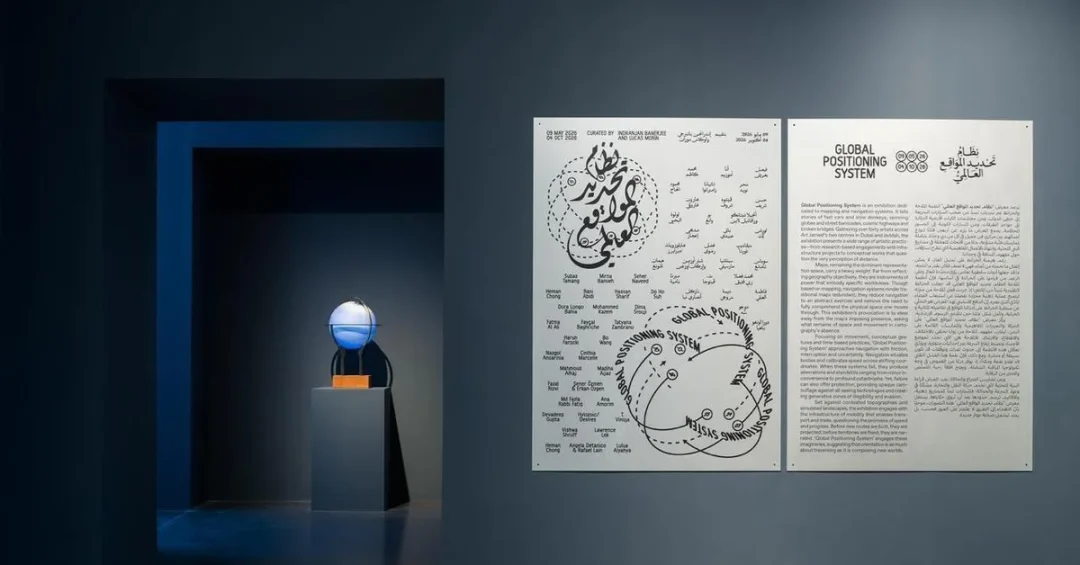
The “Global Positioning System” exhibition at Hayy Jameel in Jeddah concluded its six-month run at the end of October 2026, offering a cross-border cultural and artistic experience that explored the relationship between people, place, movement and memory. Organized by Art Jameel at Hayy Arts from May to the end of October 2026, the exhibition brought together more than 40 artists from over 20 countries, as reported by the Saudi Press Agency (SPA). Curated by Indranjan Banerjee and Lucas Morin, the project examined how maps, transport networks and navigation systems shape human experiences, presenting diverse perspectives on mobility and the impact of infrastructure, trade and communication networks on relations between communities. The exhibition formed part of a broader art project that united local and international creative practices, reinforcing Jeddah’s growing role as a hub for contemporary cultural dialogue.
Have you ever considered how the simple act of locating yourself on a map influences your sense of belonging? The “Global Positioning System” exhibition invited audiences to confront that question through contemporary artworks that ranged from large-scale installations and research projects to conceptual practices. It raised questions about borders and belonging in light of geographical and technological changes, while exploring the differences between maps and lived realities. The impact of modern navigation technologies on perceptions of distance and place was a recurring theme, as were artistic interpretations of landscapes and routes of movement that reflect social, cultural and environmental changes. The exhibition was accompanied by a cultural and educational programme featuring discussion sessions, art workshops and interactive experiences, including “Coordinates in Motion,” “Mapping Memories of the City,” and “As Told by the Land.”
Context and Background
How does a city like Jeddah become a canvas for exploring movement and memory? The “Global Positioning System” exhibition, organized by Art Jameel at Hayy Arts, was conceived as a cross-border cultural and artistic experience that examined the relationship between people, place, movement and memory. Running from May to the end of October 2026 at Hayy Jameel in Jeddah, it brought together more than 40 artists from over 20 countries. According to the Saudi Press Agency, the exhibition was curated by Indranjan Banerjee and Lucas Morin, whose combined vision shaped a project that transcended traditional artistic boundaries. The choice of Jeddah as the host city is significant: as a historic gateway for trade, pilgrimage and cultural exchange, Jeddah has long been a meeting point of peoples and ideas, making it an ideal setting for an exhibition about navigation, mobility and belonging.
The exhibition was part of a wider art project that united local and international creative practices, reflecting Saudi Arabia’s commitment to fostering cultural dialogue under Vision 2030. Art Jameel, a leading cultural organization in the Kingdom, has been instrumental in developing contemporary art spaces such as Hayy Jameel, which serves as a multidisciplinary creative hub. By hosting an exhibition of this scale and ambition, Hayy Arts reinforced its position as a platform for critical engagement with global themes. The curators, Banerjee and Morin, assembled a diverse group of artists whose works explored how maps, transport networks and navigation systems shape human experiences. The exhibition’s timing, spanning six months, allowed for deep audience engagement and a robust accompanying programme of talks, workshops and interactive experiences.
In a world where digital navigation increasingly mediates our relationship with space, the exhibition’s focus on the tension between mapped representations and lived realities resonated with audiences. It asked viewers to consider how infrastructure, trade and communication networks affect relations between communities, and how borders and belonging are reconfigured by geographical and technological changes. The Saudi Press Agency noted that the works ranged from large-scale installations to research projects and conceptual practices, each offering a distinct perspective on mobility. This breadth ensured that the exhibition appealed to both seasoned art audiences and newcomers, while also serving as an educational resource for schools and families.
Key Details
What does it mean to map a memory, or to navigate by coordinates that shift with every step? The “Global Positioning System” exhibition answered such questions through a rich array of artworks and public programmes. The cultural and educational programme featured discussion sessions, art workshops and interactive experiences designed to engage visitors of all ages. Among the highlights was a session titled “Coordinates in Motion,” which explored concepts of movement and mobility beyond traditional mapping frameworks. This session invited participants to rethink how we define and experience motion in an era of global positioning technologies. Another key component was the workshop “Mapping Memories of the City,” inspired by Jeddah’s streets, landmarks, neighborhoods and residents’ memories. Participants were encouraged to create personal maps that reflected their own connections to the city, blending cartography with storytelling.
The “As Told by the Land” program allowed children and young people to explore their relationship with place through documentation, experimentation and the development of creative ideas inspired by their surrounding environments. This initiative underscored the exhibition’s commitment to nurturing the next generation of creative thinkers and fostering a sense of stewardship for cultural and natural heritage. According to the Saudi Press Agency, the exhibition featured more than 40 artists from over 20 countries, making it a truly international endeavor. The works on display examined the differences between maps and lived realities, the impact of modern navigation technologies on perceptions of distance and place, and artistic interpretations of landscapes and routes of movement. These themes were explored through various media, including installation, video, photography and research-based practices.
The exhibition also raised profound questions about borders and belonging in light of geographical and technological changes. Artists interrogated how maps can both connect and divide communities, and how navigation systems influence our understanding of proximity and distance. By presenting diverse perspectives on mobility and the impact of infrastructure, trade and communication networks on relations between communities, the exhibition served as a catalyst for dialogue on some of the most pressing issues of our time. The accompanying programme, which included workshops and interactive experiences, ensured that these conversations extended beyond the gallery walls and into the daily lives of Jeddah’s residents and visitors.
International and Regional Impact
How does an exhibition in Jeddah resonate with audiences across the globe? The “Global Positioning System” exhibition demonstrated Saudi Arabia’s growing influence as a cultural bridge between East and West. By hosting artists from over 20 countries, Hayy Jameel and Art Jameel facilitated a cross-cultural exchange that enriched the local art scene and projected Jeddah’s cultural vitality onto the international stage. The Saudi Press Agency highlighted that the exhibition offered a cross-border cultural and artistic experience, underscoring its role in fostering mutual understanding and appreciation among diverse communities. This aligns with the Kingdom’s broader efforts to promote cultural diplomacy and people-to-people ties, as outlined in Vision 2030.
Regionally, the exhibition contributed to the vibrant contemporary art ecosystem emerging across the Gulf. It provided a platform for artists from the Middle East and beyond to engage with themes of mobility, migration and memory, which are particularly pertinent in a region shaped by trade routes, pilgrimage and rapid urbanization. The curators, Indranjan Banerjee and Lucas Morin, drew on their international expertise to create a narrative that resonated with local audiences while appealing to global art enthusiasts. The accompanying programme, including “Coordinates in Motion” and “Mapping Memories of the City,” encouraged participants to reflect on Jeddah’s unique heritage and its place in a networked world. Such initiatives strengthen cultural ties and position Saudi Arabia as a dynamic participant in global artistic discourse.
Economic and Strategic Significance
What economic and strategic value does a cultural exhibition bring to Saudi Arabia? The “Global Positioning System” exhibition is part of a broader strategy to diversify the Kingdom’s economy by investing in creative industries and cultural tourism. Under Vision 2030, Saudi Arabia aims to increase the contribution of culture and entertainment to GDP, create jobs, and attract international visitors. By hosting a major exhibition at Hayy Jameel, Art Jameel and its partners contributed to these goals by drawing audiences to Jeddah, stimulating local businesses, and showcasing the city’s cultural infrastructure. The Saudi Press Agency noted that the exhibition ran for six months, from May to the end of October 2026, providing a sustained boost to the local economy through increased footfall and spending in the surrounding area.
Strategically, the exhibition reinforced Saudi Arabia’s soft power by presenting a nuanced, forward-looking image of the Kingdom to the world. It demonstrated the country’s ability to host world-class cultural events that tackle universal themes while celebrating local identity. The involvement of more than 40 artists from over 20 countries highlights the Kingdom’s openness to global collaboration and its commitment to fostering a vibrant creative sector. Moreover, the educational components, such as “As Told by the Land,” invested in human capital by nurturing creativity and critical thinking among young Saudis. These outcomes align with Vision 2030’s objectives of building a thriving society, a diversified economy, and a globally engaged nation.
Vision 2030 Alignment
How does an art exhibition about navigation and memory connect to Saudi Arabia’s long-term vision? The “Global Positioning System” exhibition exemplifies the cultural transformation underway in the Kingdom under Vision 2030. By supporting institutions like Art Jameel and venues like Hayy Jameel, Saudi Arabia is cultivating a dynamic cultural landscape that honors heritage while embracing innovation. The exhibition’s exploration of people, place, movement and memory resonates with the Vision’s emphasis on quality of life, cultural enrichment, and the creation of vibrant communities. It also reflects the Kingdom’s commitment to international cultural exchange, as evidenced by the participation of artists from over 20 countries and the diverse programme of talks and workshops.
Looking ahead, the success of this exhibition sets a precedent for future cultural initiatives that bridge local and global perspectives. It demonstrates how art can serve as a powerful tool for dialogue, education, and economic development. As Saudi Arabia continues to invest in its creative economy and cultural infrastructure, events like the “Global Positioning System” exhibition will play a vital role in showcasing the Kingdom’s progress and its welcoming spirit to the world. The Saudi Press Agency’s coverage underscores the official recognition of such initiatives as integral to the nation’s journey toward a prosperous and culturally rich future.
20 Questions
Q1. What was the “Global Positioning System” exhibition?
A1. It was a cross-border cultural and artistic experience at Hayy Jameel in Jeddah that explored the relationship between people, place, movement and memory through contemporary artworks, as reported by the Saudi Press Agency.
Q2. Who organized the exhibition?
A2. The exhibition was organized by Art Jameel at Hayy Arts. It ran from May to the end of October 2026.
Q3. Where did the exhibition take place?
A3. It was held at Hayy Jameel in Jeddah, a multidisciplinary creative hub that hosts contemporary art and cultural events.
Q4. Who curated the exhibition?
A4. It was curated by Indranjan Banerjee and Lucas Morin, who brought together diverse artistic perspectives from around the world.
Q5. How many artists participated?
A5. More than 40 artists from over 20 countries participated, making it a truly international exhibition.
Q6. What themes did the exhibition explore?
A6. It examined how maps, transport networks and navigation systems shape human experiences, and raised questions about borders and belonging.
Q7. What types of artworks were featured?
A7. The works ranged from large-scale installations and research projects to conceptual practices, exploring maps versus lived realities and modern navigation technologies.
Q8. What was the “Coordinates in Motion” session?
A8. It was a discussion session that explored concepts of movement and mobility beyond traditional mapping frameworks.
Q9. What was the “Mapping Memories of the City” workshop?
A9. It was a workshop inspired by Jeddah’s streets, landmarks, neighborhoods and residents’ memories, encouraging personal map-making.
Q10. What was the “As Told by the Land” program?
A10. It allowed children and young people to explore their relationship with place through documentation, experimentation and creative ideas inspired by their environments.
Q11. When did the exhibition take place?
A11. It ran from May to the end of October 2026, lasting six months.
Q12. Why was Jeddah chosen as the host city?
A12. Jeddah is a historic gateway for trade, pilgrimage and cultural exchange, making it an ideal setting for an exhibition about navigation and mobility.
Q13. How does the exhibition align with Vision 2030?
A13. It supports cultural transformation, economic diversification, and international cultural exchange, key objectives of Vision 2030.
Q14. What was the impact on the local community?
A14. The exhibition drew audiences to Jeddah, stimulated local businesses, and provided educational opportunities for youth and families.
Q15. What is Hayy Jameel?
A15. Hayy Jameel is a creative hub in Jeddah operated by Art Jameel, hosting contemporary art exhibitions and cultural programmes.
Q16. How many countries were represented?
A16. Artists from over 20 countries participated, showcasing a wide range of cultural and artistic perspectives.
Q17. What questions did the exhibition raise?
A17. It raised questions about borders and belonging in light of geographical and technological changes, and the impact of navigation technologies on perceptions of distance.
Q18. Was there an educational component?
A18. Yes, the exhibition included a cultural and educational programme with discussion sessions, art workshops and interactive experiences for all ages.
Q19. How does the exhibition reflect Saudi Arabia’s cultural diplomacy?
A19. By hosting international artists and fostering cross-cultural dialogue, it strengthens Saudi Arabia’s role as a bridge between cultures and promotes mutual understanding.
Q20. What is the lasting legacy of the exhibition?
A20. It reinforced Jeddah’s position as a cultural hub, contributed to the creative economy, and set a precedent for future international art initiatives in the Kingdom.
Reader Feedback
We value your thoughts. Please share your feedback on this article.
Your feedback helps us improve our coverage.
Related articles
 Makkah Homes Revive Traditional Architecture with Modern Touch
 Jazan Cinema Club Launches Film Accelerator for Filmmakers
 Saudi Calligraphy Center Shines at Algiers Book Fair
 Red Sea Museum in Jeddah Unveils October Cultural Program
 Dhariyah Camel Festival Boosts Qassim Trade
 Two Falcons Fetch SAR382,000 at Saudi Auction