


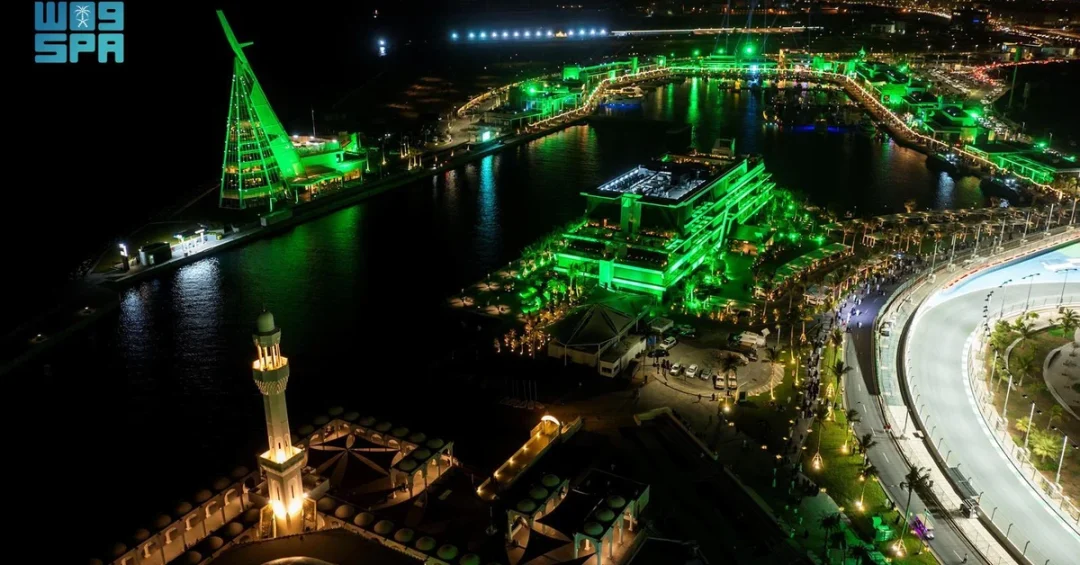
Jeddah’s historic landmarks and key thoroughfares were illuminated in green on September 23, 2024, to mark the 94th National Day of the Kingdom of Saudi Arabia, as reported by the Saudi Press Agency (SPA). The vibrant display transformed the city’s urban landscape, highlighting its rich cultural heritage and unifying residents and visitors in celebration of the nation’s progress and unity.
Context and Background
National Day in Saudi Arabia commemorates the unification of the Kingdom in 1932 by the late King Abdulaziz Al Saud. Each year, cities across the country host events and decorations that reflect national pride and the enduring legacy of the nation’s founding. Jeddah, a cosmopolitan hub and gateway to the holy cities, holds particular significance due to its historical role as a trading port and cultural melting pot. The green illuminations, a color symbolizing peace and prosperity, are part of broader festivities that showcase Saudi Arabia’s journey of modernization and its Vision 2030 goals.
Key Details
The green lighting adorned the main entrance to Jeddah’s Al-Balad district, a UNESCO World Heritage site renowned for its coral-stone architecture and traditional markets. Additionally, the entrances to the Western and Eastern Madinah Roads were embellished with artistic representations, including the national emblem and poetic verses praising the nation’s spirit. Various buildings and sites that embody the cultural and urban legacy of historic Jeddah were also bathed in green light, along with the city’s inner alleys and thoroughfares. These displays not only beautified the city but also served as a tribute to the Kingdom’s deep-rooted heritage and its forward-looking vision.
Implications and Impact
The celebrations in Jeddah attracted both locals and visitors, fostering a sense of community and national pride. Such events play a crucial role in promoting domestic tourism and showcasing the Kingdom’s rich cultural tapestry to the world. By highlighting historic sites like Al-Balad, the initiative supports efforts to preserve and promote Saudi heritage under Vision 2030, which aims to diversify the economy and enhance quality of life. Moreover, the festivities reflect the Kingdom’s commitment to moderation and cultural openness, aligning with its global engagement and diplomatic outreach.
Vision 2030 Alignment
This celebration exemplifies Saudi Arabia’s Vision 2030 objectives, particularly in the realms of tourism, culture, and national identity. By illuminating historical landmarks, the Kingdom underscores its dedication to preserving cultural heritage while advancing as a global destination. Such initiatives not only boost local pride but also attract international visitors, contributing to economic diversification and the promotion of Saudi Arabia as a vibrant, forward-looking nation. As the Kingdom continues its transformative journey, events like these reinforce the unity and resilience of its people and their shared vision for a prosperous future.
20 Questions
Q1. What occasion did Jeddah’s green illuminations commemorate?
A1. The green illuminations in Jeddah commemorated the 94th National Day of the Kingdom of Saudi Arabia, which marks the unification of the nation in 1932. This annual celebration honors the country’s founding and its continued progress under the leadership of the Custodian of the Two Holy Mosques.
Q2. Which district in Jeddah received special green lighting?
A2. The Al-Balad district, a UNESCO World Heritage site, received special green lighting at its main entrance. Al-Balad is renowned for its historic coral-stone buildings and traditional markets, reflecting Jeddah’s rich cultural heritage and its importance as a historical gateway to the holy cities.
Q3. What other locations in Jeddah were illuminated?
A3. The entrances to the Western and Eastern Madinah Roads were illuminated with green lights and artistic representations, including the national emblem and poems. Additionally, various buildings, sites, inner alleys, and thoroughfares across historic Jeddah were bathed in green to celebrate the occasion.
Q4. What do the green lights symbolize?
A4. The green lights symbolize peace, prosperity, and the enduring spirit of the Saudi nation. Green is also the color of the Saudi flag, representing the Kingdom’s Islamic heritage and its commitment to moderation and growth under Vision 2030.
Q5. Who reported on the green illuminations in Jeddah?
A5. The Saudi Press Agency (SPA) reported on the green illuminations in Jeddah. As the official news agency of Saudi Arabia, SPA provides authoritative coverage of national events and government initiatives, ensuring accurate and timely information for the public and international audiences.
Q6. How did locals and visitors respond to the festivities?
A6. Locals and visitors enjoyed the festivities, which underscored the diverse and vibrant heritage of the Kingdom. The celebrations fostered a sense of community and national pride, with many taking the opportunity to appreciate Jeddah’s historic landmarks and participate in the joyful atmosphere.
Q7. Why is Al-Balad significant in Saudi Arabia?
A7. Al-Balad is significant as a UNESCO World Heritage site and the historic core of Jeddah. It served as a major trading hub and gateway for pilgrims traveling to Mecca. Its coral-stone architecture and traditional markets reflect the Kingdom’s rich cultural and urban legacy.
Q8. What artistic representations were featured on the Madinah Roads?
A8. The entrances to the Western and Eastern Madinah Roads featured artistic representations including the national emblem and poems praising the nation’s spirit. These displays combined visual art with poetic tributes, enhancing the celebratory atmosphere and highlighting Saudi cultural expressions.
Q9. How does this celebration align with Vision 2030?
A9. The celebration aligns with Vision 2030 by promoting cultural heritage, tourism, and national identity. It supports efforts to diversify the economy and enhance quality of life, showcasing Saudi Arabia as a vibrant destination while preserving its historical legacy for future generations.
Q10. What is the significance of National Day in Saudi Arabia?
A10. National Day commemorates the unification of the Kingdom in 1932 by King Abdulaziz Al Saud. It is a time for Saudis to reflect on their nation’s achievements, celebrate their shared identity, and look forward to future progress under the leadership of the Custodian of the Two Holy Mosques.
Q11. Which roads in Jeddah were specifically mentioned as being lit?
A11. The Western and Eastern Madinah Roads were specifically mentioned as being lit with green illuminations. These major thoroughfares are key arteries in Jeddah, connecting the city to important routes and serving as prominent locations for public celebrations.
Q12. What role does Jeddah play in Saudi Arabia’s tourism strategy?
A12. Jeddah serves as a gateway for pilgrims and tourists, with its historic Al-Balad district and Red Sea coastline. Under Vision 2030, the city is being developed as a cultural and touristic hub, attracting visitors and contributing to the Kingdom’s economic diversification.
Q13. How do such celebrations impact national unity?
A13. Celebrations like the green illuminations foster national unity by bringing together citizens and residents in shared pride. They reinforce a collective identity and highlight the Kingdom’s progress, strengthening social cohesion and a sense of belonging among all segments of society.
Q14. What does the national emblem represent?
A14. The national emblem of Saudi Arabia features a palm tree and two crossed swords. The palm tree symbolizes vitality and prosperity, while the swords represent justice and the defense of the nation. It reflects the Kingdom’s values and its rich heritage.
Q15. Were there any poetic elements in the celebrations?
A15. Yes, poems praising the nation’s spirit were featured as part of the artistic representations on the Madinah Roads. These poems celebrated Saudi Arabia’s achievements, unity, and cultural richness, adding a literary dimension to the visual displays.
Q16. How does the lighting of historic sites contribute to heritage preservation?
A16. Lighting historic sites raises public awareness of their cultural value and encourages preservation efforts. It also promotes tourism, generating revenue that can be reinvested into maintaining these landmarks, ensuring they remain vibrant symbols of Saudi heritage for future generations.
Q17. What message does Saudi Arabia send to the world through such celebrations?
A17. Through such celebrations, Saudi Arabia conveys a message of unity, progress, and openness. It showcases the Kingdom’s rich culture and its commitment to Vision 2030, inviting the world to witness its transformation and engage with its heritage and modern achievements.
Q18. How do green illuminations reflect Saudi Arabia’s environmental commitments?
A18. Green, the color of the Saudi flag, also symbolizes environmental awareness and sustainability. The illuminations subtly reflect the Kingdom’s commitment to environmental initiatives, such as the Saudi Green Initiative, which aims to combat climate change and promote sustainable development.
Q19. What other cities in Saudi Arabia likely held similar celebrations?
A19. While the report focused on Jeddah, other major cities like Riyadh, Mecca, and Dammam typically host similar National Day celebrations. These include fireworks, cultural performances, and illuminations, reflecting nationwide participation in commemorating the Kingdom’s unification.
Q20. How can international visitors participate in future National Day events?
A20. International visitors can participate by planning trips to coincide with National Day on September 23. They can enjoy public festivities, visit illuminated landmarks, and experience Saudi hospitality. Tourist visas are available, and information can be found through official Saudi tourism channels.
Reader Feedback
We value your thoughts. Please share your feedback on this article.
Your feedback helps us improve our coverage.
Related articles
 Al Masmak Palace: A Pillar of Saudi History
 Taif Camel Festival Sets Record with SAR10 Million in Daily Sales
 SPL Issues Commemorative Stamp on 94th Saudi National Day
 Tariq Abdulhakim Centre Concludes National Day Events
 Riyadh International Book Fair 2024: Online Registration Now Open
 Imam Turki bin Abdullah Reserve Hosts National Day Events