


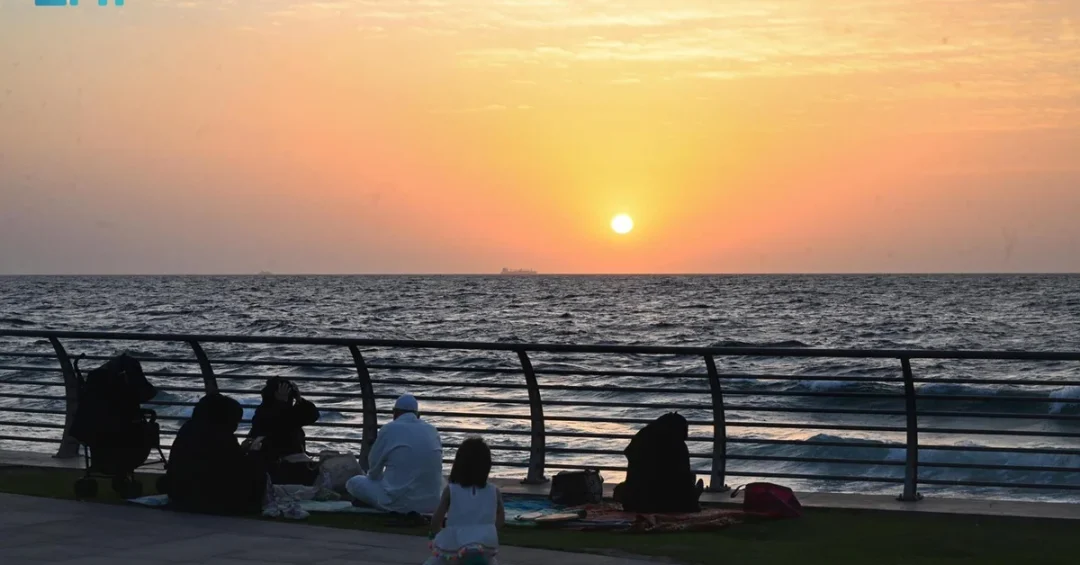
Jeddah, Saudi Arabia — Residents and visitors in Jeddah are marking the holy month of Ramadan by blending the city’s deep-rooted heritage with the tranquility of the Red Sea coast, as families gather along the Jeddah Corniche for iftar at sunset, according to the Saudi Press Agency (SPA). The scene, reported by the Kingdom’s official news agency, captures a distinctive Ramadan rhythm in Saudi Arabia’s second-largest city: as dusk falls, families assemble by the water, breaking their fast while the call to prayer echoes from nearby mosques, creating what SPA described as a spiritually enriching atmosphere. In the historic district, meanwhile, a younger generation of Jeddah residents is keeping culinary traditions alive, serving time-honored dishes accompanied by the melodies of inherited folk songs. Together, these two settings — the modern waterfront and the UNESCO-listed old town — illustrate how Ramadan in Jeddah weaves together heritage and seaside serenity.
The observance reflects a broader pattern across the Kingdom, where Ramadan is both a period of devotion and a season of community life, shaped by Saudi Arabia’s cultural continuity and its ongoing modernization. For international observers, Jeddah’s Ramadan traditions offer a window into how Saudis balance religious observance with the public spaces, hospitality and family customs that define the month. The SPA report underscores that these practices are not staged events but living traditions, passed between generations and adapted to the city’s geography. As the Kingdom continues to welcome greater numbers of international visitors and residents under the framework of Saudi Vision 2030, the visibility of such traditions takes on added significance, presenting a culturally authentic image of the country to a global audience.
Context and Background
How did Ramadan in Jeddah come to be defined by both the sea and the old city? The answer lies in the city’s history as a centuries-old gateway on the Red Sea, long a meeting point for pilgrims, merchants and travelers. Jeddah’s historic district, recognized by UNESCO as a World Heritage Site, preserves coral-stone houses, narrow alleyways and traditional markets that come alive during Ramadan. According to SPA, the younger generation in this district is actively sustaining culinary customs — preparing and sharing time-honored dishes and singing folk songs inherited from earlier generations. This transmission of knowledge from elders to youth is central to how the city maintains its identity amid rapid change.
The Jeddah Corniche, a long coastal promenade developed along the Red Sea, provides a contrasting but complementary setting. Here, the Ramadan experience is shaped by open air, sea breezes and the rhythm of the sunset prayer. SPA reported that families gather along the Corniche for iftar, enjoying the sunset as the call to prayer sounds from nearby mosques. The combination of natural beauty and religious observance gives Jeddah’s Ramadan a character distinct from inland cities. It also reflects how Saudi urban planning has created public spaces that support communal religious practice, family recreation and tourism simultaneously — a balance that has become increasingly important as the Kingdom’s domestic and international visitor numbers grow.
Key Details
What actually happens at iftar on the Jeddah Corniche? According to the SPA report, the daily fast is broken at sunset, with families positioned along the waterfront to take in the view of the Red Sea as the call to prayer echoes from mosques in the vicinity. The timing of iftar follows the sunset prayer, and the atmosphere is described as spiritually enriching — a phrase that captures both the devotional and social dimensions of the moment. The Corniche’s accessibility makes it a natural gathering point for residents from across the city, and its popularity during Ramadan highlights how public infrastructure supports religious and family life.
In the historic district, the emphasis falls on continuity. SPA reported that the younger generation keeps culinary traditions alive, offering time-honored dishes accompanied by the melodies of inherited folk songs. This detail matters because it shows that Ramadan customs in Jeddah are not confined to private homes; they are expressed in shared spaces and passed down through practice. Folk songs, in particular, connect the month’s celebrations to the region’s musical heritage, giving the iftar experience a cultural texture that visitors can observe and, in many cases, participate in. The result is a Ramadan season that is at once devotional, familial and cultural.
International and Regional Impact
Why does Jeddah’s Ramadan observance matter beyond Saudi Arabia? As the Kingdom’s principal Red Sea port and a major entry point for pilgrims traveling to Makkah and Madinah, Jeddah hosts large numbers of international visitors during Ramadan. The city’s ability to present its traditions clearly and hospitably contributes to how the wider world understands Saudi culture. The SPA report’s emphasis on family gatherings, heritage cuisine and folk music offers international audiences a human-scale picture of Ramadan in the Kingdom — one grounded in everyday life rather than abstract description. For regional neighbors and Muslim communities worldwide, Jeddah’s seaside iftar traditions resonate as a recognizable expression of shared religious practice, adapted to a specific local setting.
Within the region, Saudi Arabia’s Ramadan season also carries diplomatic and soft-power significance. The Kingdom regularly hosts pilgrims and guests during the holy month, and its cities serve as showcases of Saudi hospitality. Jeddah’s combination of historic districts and modern waterfronts demonstrates how the country manages rapid development while preserving cultural landmarks. That balance is watched closely by governments and investors interested in how Saudi Arabia implements large-scale change without erasing its heritage. The scenes described by SPA — families at the Corniche, young people singing inherited songs — are therefore more than local color; they are evidence of a society negotiating continuity and transformation in real time.
Economic and Strategic Significance
How does Ramadan shape Jeddah’s economic life? The holy month is a major period for retail, food service, hospitality and tourism across the Kingdom. In Jeddah, waterfront gatherings and historic-district activity support restaurants, markets and family-oriented venues, while the presence of visitors adds demand for accommodation and transport. The SPA report does not present commercial figures, but it documents patterns — communal iftars, heritage cuisine, cultural performance — that align with the Kingdom’s efforts to grow domestic tourism and extend the visitor economy beyond the pilgrimage seasons. Public spaces such as the Corniche effectively function as free, open-access venues that concentrate activity and spending in accessible locations.
Strategically, the visibility of Ramadan traditions supports Saudi Arabia’s broader goals of diversifying the economy and strengthening its international image. When official media highlight heritage cuisine and folk music alongside modern infrastructure, they communicate that development and tradition can advance together. This message is important for investors and partners assessing the stability and cultural confidence of the Saudi market. It is also important for the tourism sector, which benefits when destinations offer distinctive, authentic experiences. Jeddah’s seaside iftar culture is precisely such an experience: rooted in local practice, easy to share with guests, and consistent with the Kingdom’s emphasis on hospitality as a national value.
Vision 2030 Alignment
How does a family iftar on the Corniche connect to Saudi Vision 2030? The Vision, launched in 2016 under the leadership of Crown Prince Mohammed bin Salman, sets out to diversify the economy, expand cultural and entertainment offerings, and improve quality of life for citizens and residents. Ramadan traditions in Jeddah touch several of these objectives at once: they animate public spaces, support local businesses, sustain cultural heritage and create meaningful experiences for families. The preservation of the historic district and the development of the Corniche both reflect long-term investment in places that bring people together. In this sense, the scenes reported by SPA are not separate from the Vision — they are part of its everyday expression.
The Kingdom’s cultural ambitions also depend on transmission between generations, and Jeddah’s younger residents are playing a visible role. By preparing time-honored dishes and performing inherited folk songs, they keep knowledge alive in a form that can be shared with visitors from around the world. That combination of authenticity and openness is central to how Saudi Arabia presents itself internationally. As Ramadan continues, Jeddah’s waterfront and historic quarters will remain stages for a tradition that is both deeply local and globally legible — a reminder that the Kingdom’s future is being built alongside, not instead of, its heritage. For international audiences, the message is clear: Saudi Arabia’s modernization is accompanied by a confident, living culture.
20 Questions
Q1. What is notable about Ramadan in Jeddah?
A1. Ramadan in Jeddah combines the city’s heritage with its Red Sea setting. Families gather along the Jeddah Corniche for iftar at sunset, while the historic district keeps culinary traditions alive with time-honored dishes and inherited folk songs, according to the Saudi Press Agency.
Q2. Where do families in Jeddah often break their fast?
A2. Many families gather along the Jeddah Corniche, the city’s coastal promenade on the Red Sea. As dusk falls, they share iftar while watching the sunset and hearing the call to prayer echo from nearby mosques, creating a spiritually enriching atmosphere.
Q3. What role does the historic district play during Ramadan?
A3. Jeddah’s historic district, a UNESCO World Heritage Site, is where the younger generation keeps culinary traditions alive. They offer time-honored dishes accompanied by the melodies of inherited folk songs, helping transmit local culture across generations during the holy month.
Q4. Why is the call to prayer significant for seaside iftar?
A4. The call to prayer marks the end of the daily fast at sunset. Hearing it from nearby mosques while gathered by the Red Sea adds a spiritual dimension to iftar, linking the communal meal directly to the religious observance that defines Ramadan.
Q5. How does Jeddah’s location shape its Ramadan customs?
A5. Jeddah sits on the Red Sea and has long been a gateway for pilgrims and traders. This coastal identity gives its Ramadan customs a seaside character, with open-air gatherings and waterfront views complementing the traditional practices found in the city’s historic quarters.
Q6. What dishes are associated with Ramadan in Jeddah?
A6. The Saudi Press Agency report refers to time-honored dishes prepared in the historic district without listing specific recipes. These culinary traditions are passed down through generations and are central to how Jeddah families and communities observe the holy month together.
Q7. What are the inherited folk songs mentioned in the report?
A7. They are traditional songs handed down through generations in Jeddah, performed alongside food in the historic district during Ramadan. Their presence shows that the month’s observances include cultural expression, not only fasting and prayer, keeping local musical heritage alive.
Q8. Who is keeping these traditions alive?
A8. According to the Saudi Press Agency, the younger generation in Jeddah’s historic district is maintaining culinary traditions and performing inherited folk songs. Their participation ensures that Ramadan customs continue to be practiced and shared within the community.
Q9. How does Ramadan affect daily life in Jeddah?
A9. Ramadan reshapes daily routines, with fasting during daylight and communal iftar at sunset. In Jeddah, public spaces such as the Corniche and the historic district become focal points for family gatherings, prayer and cultural activity throughout the holy month.
Q10. Is the Jeddah Corniche accessible to visitors?
A10. The Jeddah Corniche is a public waterfront promenade open to residents and visitors. During Ramadan it hosts many families for iftar, and its open layout makes it a natural gathering place for people from across the city and abroad.
Q11. What makes Jeddah’s Ramadan atmosphere distinctive?
A11. The combination of Red Sea views, the call to prayer from nearby mosques and the heritage of the historic district gives Jeddah a Ramadan atmosphere that blends seaside serenity with cultural depth, as described in the Saudi Press Agency report.
Q12. Does Ramadan in Jeddah attract international visitors?
A12. Jeddah is a major entry point for pilgrims and travelers, and Ramadan brings many international guests to the Kingdom. The city’s traditions, hospitality and public gatherings offer visitors a direct experience of Saudi culture during the holy month.
Q13. How does Ramadan support local businesses in Jeddah?
A13. The holy month increases activity in food service, retail, hospitality and transport, as families gather for iftar and visitors arrive. Waterfront and historic-district venues benefit from the concentration of communal activity in accessible public spaces.
Q14. What does the Saudi Press Agency report emphasize?
A14. The report highlights two settings: families gathering along the Jeddah Corniche for iftar at sunset, and the younger generation in the historic district preserving culinary traditions and folk songs. It describes the atmosphere as spiritually enriching.
Q15. How does Ramadan reflect Saudi cultural continuity?
A15. Ramadan practices in Jeddah are passed from older to younger generations through food, music and shared gatherings. This continuity shows that Saudi cultural heritage remains active and is adapted to contemporary life rather than confined to the past.
Q16. What is the significance of gathering for iftar as a family?
A16. Family iftar strengthens social bonds and reinforces the communal character of Ramadan. In Jeddah, gathering by the sea or in the historic district turns the daily breaking of the fast into a shared experience that connects religious devotion with family life.
Q17. How does Jeddah’s Ramadan relate to Saudi Vision 2030?
A17. Vision 2030 aims to improve quality of life, expand cultural offerings and grow tourism. Jeddah’s Ramadan traditions support these goals by animating public spaces, sustaining heritage and creating authentic experiences for residents and international visitors alike.
Q18. Are there public iftar gatherings in Jeddah?
A18. The Saudi Press Agency report describes families gathering along the Jeddah Corniche for iftar, indicating that public and semi-public spaces host communal breaking of the fast. Such gatherings reflect the Kingdom’s hospitality traditions during Ramadan.
Q19. What can visitors learn from Jeddah’s Ramadan customs?
A19. Visitors can observe how Saudis combine devotion, family life and cultural heritage. The seaside iftar and historic-district traditions show a society that values hospitality and maintains its customs while embracing modernization and international engagement.
Q20. What is the outlook for Ramadan traditions in Jeddah?
A20. With younger generations actively preserving cuisine and folk songs, and public spaces supporting family gatherings, Jeddah’s Ramadan traditions appear well positioned to continue. They align with Saudi Arabia’s cultural and tourism goals under Vision 2030.
Reader Feedback
We value your thoughts. Please share your feedback on this article.
Your feedback helps us improve our coverage.
Related articles
 Islamic Arts Biennale’s AlMadar Showcases Islamic Scientific Heritage
 Historic Al-Hazimi Mosque Restored in Al-Aflaj
 AlMidhallah Revives Islamic Garden at Jeddah Biennale
 Historic Gates of Taif: Ramadan Journey of Culture, Literature
 Saudi Arabia to Participate in London Book Fair 2025
 KSGAAL to Host 2025 Global Lexicography Conference in Riyadh