


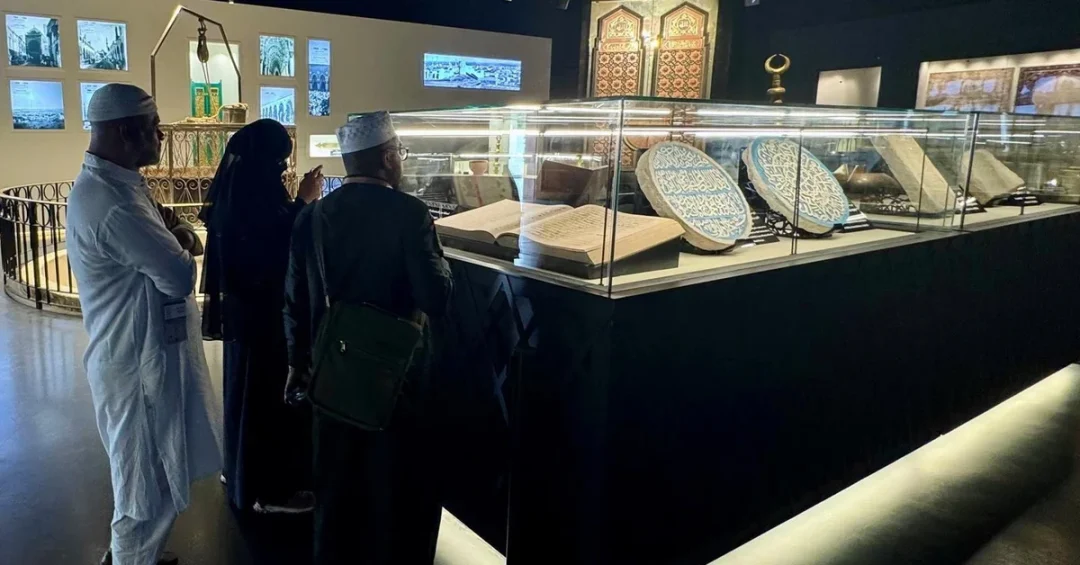
A rare marble plaque dating back to 1073 AH (1662 CE) is drawing international attention at the Exhibition of the Two Holy Mosques Architecture in Makkah, where it stands as tangible evidence of construction work carried out in the porticoes of the Grand Mosque more than three and a half centuries ago. The artifact, documented by the Saudi Press Agency, is among the most historically significant pieces housed at the exhibition, offering visitors a direct connection to the architectural evolution of Islam’s holiest site. Have you ever wondered how the Grand Mosque’s majestic colonnades were built and preserved across the centuries?
The exhibition, located in the Umm Al-Joud district of Makkah and spanning approximately 1,200 square meters, serves as a prominent cultural and historical destination dedicated to tracing the architectural development of the Grand Mosque in Makkah and the Prophet’s Mosque in Madinah. Its design harmonizes with the distinctive Islamic architectural style of the Grand Mosque, creating an immersive environment where original artifacts are linked to the historical contexts in which they originated. For international visitors and researchers alike, the exhibition represents a rare opportunity to understand how one of the world’s most visited religious sites has been maintained, expanded, and enhanced over many centuries of continuous care.
Context and Background
How did a simple marble plaque survive for more than three centuries to tell its story today? The plaque dates to 1073 AH, corresponding to 1662 CE, and is associated with construction work carried out in the porticoes of the Grand Mosque. In the Islamic calendar, this period fell within an era when the Holy Mosques received sustained attention from rulers and benefactors committed to their upkeep and expansion. The porticoes, known as riwaqs, are the shaded colonnaded areas that surround the courtyard of the Grand Mosque, providing worshippers with shelter and serving as architectural framing for the sacred space at the center of Islamic pilgrimage.
The Exhibition of the Two Holy Mosques Architecture was established to preserve and present this long history of care. It houses rare historical artifacts that document the evolution and maintenance of the Grand Mosque’s architecture throughout the ages, including architectural elements, inscriptions, manuscripts, items associated with the Holy Kaaba and the Two Holy Mosques, as well as historical photographs and models illustrating stages of urban and architectural development. The marble plaque is displayed alongside this broader collection, reinforcing the exhibition’s role as a window into the history of Islamic architecture at the Two Holy Mosques.
The documentary value of the plaque lies not only in its age but in what it records. It exemplifies the materials and methods used to document architectural works and modifications undertaken at the Grand Mosque across different historical periods. Such inscriptions and architectural elements preserve information that helps historians and conservators understand how the site was built, repaired, and expanded over time, making the exhibition an educational journey that connects original artifacts to the historical contexts in which they originated.
Key Details
What makes this particular artifact so valuable to historians and visitors? The marble plaque draws visitors’ attention for its documentary value, serving as tangible evidence of the site’s architectural history. It sheds light on documentation methods associated with the construction and maintenance of facilities linked to the Grand Mosque, demonstrating that even centuries ago, builders and administrators recognized the importance of recording their work for future generations. The plaque is not merely a decorative object; it is a historical record inscribed in stone.
The exhibition’s collection extends far beyond this single artifact. Visitors can examine a wide range of historical items, including architectural elements salvaged from past renovations, inscriptions that record royal decrees and endowment details, manuscripts that describe the management of the Holy Mosques, and items associated with the Holy Kaaba and the Two Holy Mosques. Historical photographs and scale models further illustrate the stages of urban and architectural development, allowing visitors to visualize how the Grand Mosque has transformed over the centuries.
The significance of these artifacts extends beyond their display as historical objects. They contribute to a deeper understanding of the architectural transformations of the Two Holy Mosques and highlight information preserved in inscriptions and architectural elements that helps document the history of the two sites. The exhibition thereby reinforces its cultural role as a window into the history of Islamic architecture at the Two Holy Mosques, offering scholars, pilgrims, and tourists a comprehensive view of the continuous care that has shaped these sacred spaces.
International and Regional Impact
Why should the world pay attention to an exhibition in Makkah? The Exhibition of the Two Holy Mosques Architecture has become a significant cultural and historical destination that attracts visitors from across the Islamic world and beyond. For international audiences, it provides a rare glimpse into the architectural heritage of the Grand Mosque and the Prophet’s Mosque, two sites that hold profound spiritual significance for nearly two billion Muslims worldwide. By presenting original artifacts in a thoughtfully designed space, the exhibition fosters a deeper appreciation of Islamic civilization’s contributions to architecture, engineering, and the arts.
Regionally, the exhibition supports Saudi Arabia’s broader efforts to preserve and promote Islamic heritage. It complements other initiatives aimed at documenting the history of the Two Holy Mosques, including scholarly research, restoration projects, and digital archiving. Visitors from countries such as Indonesia, Pakistan, Egypt, Turkey, and Nigeria can engage with the exhibition as part of their pilgrimage journey, gaining historical context that enriches their spiritual experience. The exhibition also serves as a resource for researchers and academics specializing in Islamic architecture, history, and conservation, positioning Makkah as a center for cultural scholarship as well as religious devotion.
Economic and Strategic Significance
How does cultural preservation contribute to Saudi Arabia’s economic and strategic goals? The Exhibition of the Two Holy Mosques Architecture plays a role in the Kingdom’s efforts to diversify its economy and expand cultural tourism. As part of the broader Vision 2030 strategy, Saudi Arabia is investing in heritage and cultural attractions that appeal to international visitors, extending their stay and encouraging repeat visits. The exhibition, with its unique collection and educational value, adds depth to the pilgrimage experience and contributes to the growing cultural tourism sector in Makkah and the surrounding region.
Strategically, the preservation of artifacts such as the marble plaque reinforces Saudi Arabia’s role as the custodian of Islam’s holiest sites. The Kingdom’s commitment to maintaining and documenting the Two Holy Mosques is a central element of its leadership in the Islamic world. By showcasing these efforts through exhibitions and cultural initiatives, Saudi Arabia demonstrates its dedication to protecting Islamic heritage for future generations. This commitment aligns with the objectives of Vision 2030, which emphasizes the importance of cultural preservation, knowledge exchange, and the promotion of Saudi Arabia’s rich history on the global stage.
Vision 2030 Alignment
In what ways does this exhibition reflect the ambitions of Saudi Vision 2030? The Exhibition of the Two Holy Mosques Architecture embodies several key pillars of Vision 2030, including the promotion of cultural heritage, the enhancement of the pilgrimage experience, and the diversification of the economy through tourism. By preserving and displaying rare artifacts such as the marble plaque, the exhibition contributes to the Kingdom’s goal of increasing the number of Umrah and Hajj pilgrims and enriching their visit with educational and cultural dimensions. It also supports the development of Makkah as a destination that offers both spiritual fulfillment and historical discovery.
As Saudi Arabia continues to invest in cultural infrastructure and heritage preservation, the exhibition stands as a testament to the Kingdom’s forward-looking vision. The marble plaque and the many other artifacts on display connect the past to the present, reminding visitors that the Grand Mosque’s grandeur is the result of centuries of dedicated care. Through initiatives like this, Saudi Arabia not only honors its Islamic heritage but also shares it with the world, reinforcing its role as a global leader in cultural preservation and a welcoming host to millions of pilgrims and tourists each year.
20 Questions
Q1. What is the Exhibition of the Two Holy Mosques Architecture?
A1. It is a cultural and historical exhibition in Makkah dedicated to tracing the architectural evolution of the Grand Mosque and the Prophet’s Mosque across the ages, displaying original artifacts, inscriptions, manuscripts, and models.
Q2. Where is the exhibition located?
A2. The exhibition is located in the Umm Al-Joud district of Makkah and spans approximately 1,200 square meters, designed to harmonize with the Islamic architectural style of the Grand Mosque.
Q3. What is the marble plaque and why is it significant?
A3. The marble plaque dates back to 1073 AH (1662 CE) and is associated with construction work in the Grand Mosque’s porticoes. It serves as tangible evidence of the site’s architectural history and documentation methods.
Q4. How old is the marble plaque?
A4. The plaque dates to 1073 AH in the Islamic calendar, which corresponds to 1662 CE, making it more than three and a half centuries old.
Q5. What does the plaque document?
A5. It documents construction work carried out in the porticoes of the Grand Mosque, providing insight into the materials and methods used for architectural works and modifications during that historical period.
Q6. What other artifacts are displayed at the exhibition?
A6. The exhibition houses architectural elements, inscriptions, manuscripts, items associated with the Holy Kaaba and the Two Holy Mosques, as well as historical photographs and models illustrating urban and architectural development.
Q7. Why is the exhibition important for understanding Islamic architecture?
A7. It links original artifacts to their historical contexts, helping visitors and scholars understand the architectural transformations of the Two Holy Mosques and the continuous care they have received over centuries.
Q8. Who is the exhibition intended for?
A8. The exhibition serves pilgrims, international tourists, researchers, academics, and anyone interested in Islamic history and architecture, offering an educational journey through the architectural evolution of the Two Holy Mosques.
Q9. How does the exhibition support Saudi Vision 2030?
A9. It supports Vision 2030 by promoting cultural heritage, enhancing the pilgrimage experience, diversifying the economy through tourism, and reinforcing Saudi Arabia’s role as custodian of Islam’s holiest sites.
Q10. What are the porticoes of the Grand Mosque?
A10. The porticoes, known as riwaqs, are shaded colonnaded areas surrounding the courtyard of the Grand Mosque, providing shelter for worshippers and architectural framing for the sacred space.
Q11. How does the plaque help historians?
A11. The plaque preserves information about construction and maintenance methods from the 17th century, helping historians document the architectural history of the Grand Mosque and understand past renovation efforts.
Q12. What documentation methods does the plaque reveal?
A12. It reveals that builders and administrators in the past used inscriptions on materials like marble to record construction work, ensuring that future generations could trace the site’s development.
Q13. Why is the exhibition considered a cultural destination?
A13. It offers a unique educational experience, combining rare artifacts with historical context in a space designed to reflect Islamic architectural style, attracting visitors from around the world.
Q14. How does the exhibition contribute to the pilgrimage experience?
A14. It enriches the pilgrimage by providing historical and cultural context, allowing pilgrims to deepen their understanding of the Two Holy Mosques beyond their spiritual visit.
Q15. What role does the Saudi Press Agency play in documenting such artifacts?
A15. The Saudi Press Agency reports on official Saudi cultural and historical initiatives, sharing information about exhibitions and artifacts with international audiences, thereby promoting awareness of Islamic heritage.
Q16. Are there similar exhibitions in Saudi Arabia?
A16. Saudi Arabia hosts various cultural and historical exhibitions, but the Exhibition of the Two Holy Mosques Architecture is uniquely focused on the architectural evolution of the Grand Mosque and the Prophet’s Mosque.
Q17. How can international visitors access the exhibition?
A17. International visitors can access the exhibition during their visit to Makkah, particularly during pilgrimage journeys. It is open to the public and offers educational tours and displays.
Q18. What makes the marble plaque a rare artifact?
A18. Its age, specific historical association with the Grand Mosque’s porticoes, and its role in documenting construction work from over three centuries ago make it a rare and valuable historical record.
Q19. How does the exhibition preserve Islamic heritage?
A19. By collecting, displaying, and contextualizing original artifacts, the exhibition ensures that the architectural and cultural history of the Two Holy Mosques is preserved and shared with future generations.
Q20. What message does the exhibition convey about Saudi Arabia’s commitment?
A20. It conveys Saudi Arabia’s deep commitment to preserving Islamic heritage, supporting cultural tourism, and sharing the history of the Two Holy Mosques with the world in line with Vision 2030.
Reader Feedback
We value your thoughts. Please share your feedback on this article.
Your feedback helps us improve our coverage.
Related articles
 Darah Publishes Map of Madinah Mosques and Prophetic Sites
 Red Sea Fund Backs 30 Film Projects in 2026 Cycles
 Bab Al-Bunt: Jeddah’s Maritime History and Red Sea Museum
 Grand Mosque Library Preserves 9,612 Rare Islamic Works
 Culinary Arts Commission Reissues Pioneering Saudi Cookbook
 UNESCO Chair’s Routledge Volume Redefines Translation Studies