


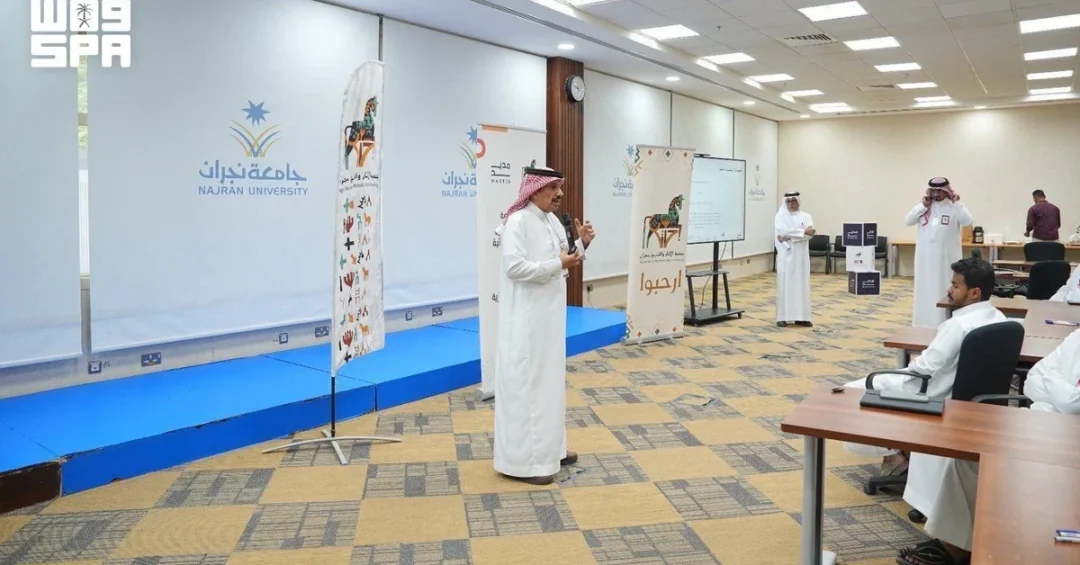
Najran Region has launched a pioneering translation program to document and translate local heritage terms into both Arabic and English, with the support of Saudi Arabia’s Literature, Publishing and Translation Commission under its “Madeed” initiative. The project was introduced yesterday at Najran University in partnership with the Heritage Commission and the National Center for Non-Profit Sector, marking the first initiative of its kind in the region.
Context and Background
This program responds to the growing need to preserve the cultural identity of Najran, a region rich in historical architecture, traditional crafts, and unique social customs. By formally documenting heritage terms, the initiative ensures that local expressions and concepts are accurately represented for future generations and for international audiences. It also addresses the risk of misrepresentation that often arises when translating culturally specific terms without proper context.
Key Details
The project will compile a comprehensive glossary of heritage terminology, with each term defined in both Arabic and English and accompanied by illustrative visuals. The final outcome will be a bilingual printed and digital booklet featuring QR codes, making it easy for visitors to access the information on their mobile devices. This booklet is slated for distribution across regional development and tourism sites, serving as a practical guide for both domestic and international tourists exploring Najran’s heritage landmarks.
The program is designed not only to preserve Najran’s cultural assets but also to empower local translators, particularly students and researchers, with specialized tools for cultural translation. By equipping them with these skills, the initiative aims to elevate the Kingdom’s cultural presence both locally and globally, fostering a deeper understanding of Saudi heritage among diverse audiences.
Implications and Impact
This initiative underscores Saudi Arabia’s commitment to cultural preservation and knowledge exchange. By bridging language barriers, it enhances the accessibility of Najran’s heritage to a global audience, supporting the region’s tourism sector. Moreover, it creates opportunities for academic collaboration and vocational development for young Saudis, aligning with the country’s broader human capital development goals. The involvement of the National Center for Non-Profit Sector highlights the importance of partnerships across public, academic, and non-profit sectors in cultural projects.
Vision 2030 Alignment
This program is a direct contributor to Saudi Vision 2030’s objectives of preserving national heritage and promoting cultural engagement. It supports the Quality of Life Program, which aims to enrich residents’ and visitors’ experiences, and reinforces the Kingdom’s position as a cultural hub that values its historical legacy while embracing modern communication tools. As such, Najran’s initiative serves as a model for other regions, demonstrating how targeted translation and documentation efforts can elevate cultural heritage on the international stage.
20 Questions
Q1. What is the main purpose of the program launched in Najran?
A1. The program aims to document and translate local heritage terms in both Arabic and English, preserving Najran’s cultural identity and preventing the misrepresentation of heritage terms, while providing a practical guide for visitors.
Q2. Which entities are backing this initiative?
A2. The program is backed by the Literature, Publishing and Translation Commission through its “Madeed” initiative, in partnership with Najran University, the Heritage Commission, and the National Center for Non-Profit Sector.
Q3. Where was the program launched?
A3. The program was launched at Najran University, located in Najran Region in the southern part of Saudi Arabia, as announced by the Saudi Press Agency.
Q4. Is this program the first of its kind in the region?
A4. Yes, it is described as the first initiative of its kind in the region, making it a pioneering effort in heritage documentation and translation specific to Najran.
Q5. What will be the final deliverable of the program?
A5. The program will produce a bilingual printed and digital booklet containing defined heritage terms, accompanied by illustrative visuals and QR codes for easy access, designed as a practical guide for visitors.
Q6. How will the booklet be distributed?
A6. The booklet will be distributed across regional development and tourism sites in Najran, enabling visitors to learn about local heritage terms in both Arabic and English.
Q7. What is the “Madeed” initiative?
A7. “Madeed” is an initiative by Saudi Arabia’s Literature, Publishing and Translation Commission that supports translation-related projects and cultural activities, fostering the development of the translation sector in the Kingdom.
Q8. Who will benefit from the specialized translation tools?
A8. Students and researchers, particularly those involved in translation studies, will benefit from specialized cultural translation tools provided by the program, enhancing their skills and career prospects.
Q9. Why is preserving heritage terms important?
A9. Preserving heritage terms ensures that cultural meanings and nuances are accurately conveyed across languages, preventing loss of identity and misrepresentation, which is vital for cultural continuity.
Q10. How does this program support tourism in Najran?
A10. By providing a bilingual guide with definitions and visuals, tourists can better understand and appreciate local heritage sites, enhancing their experience and promoting cultural exchange.
Q11. What role does the Heritage Commission play?
A11. The Heritage Commission contributes its expertise in Saudi heritage, ensuring the accuracy and authenticity of the terms documented and facilitating connections with heritage sites and traditions.
Q12. How does the program involve the non-profit sector?
A12. The National Center for Non-Profit Sector ensures community engagement and support, potentially involving volunteers and civil society organizations in the documentation and dissemination process.
Q13. What kind of heritage terms will be documented?
A13. The terms will include local dialect words, traditional crafts, architectural elements, customs, and other cultural expressions specific to Najran’s regional heritage.
Q14. Will the booklet be available digitally?
A14. Yes, the booklet will be produced in a digital version with QR codes, allowing easy access on smartphones and other devices for widespread reach.
Q15. How does this program align with Saudi Vision 2030?
A15. It aligns with Vision 2030 by preserving national heritage, boosting cultural tourism, and developing human capital, directly supporting the Quality of Life Program and cultural enrichment goals.
Q16. What is the expected impact on translators in Saudi Arabia?
A16. The program equips translators with specialized skills in cultural translation, enabling them to work on similar projects and raising professional standards in the field.
Q17. How will the program prevent misrepresentation of heritage terms?
A17. By providing accurate definitions and visual aids, the program reduces ambiguity and ensures that heritage terms are correctly understood and used in both Arabic and English contexts.
Q18. What makes this program unique at the national level?
A18. It is the first regional initiative focusing specifically on heritage term documentation and translation, serving as a pilot model that could be replicated in other Saudi regions.
Q19. Who announced the program?
A19. The Saudi Press Agency (SPA) announced the program’s launch, citing that it took place yesterday at Najran University, with details on participants and goals.
Q20. What is the long-term benefit for Najran’s cultural identity?
A20. The program safeguards intangible heritage by recording terms for future generations, reinforcing a sense of pride and cultural uniqueness, while opening dialogue with global audiences.
Reader Feedback
We value your thoughts. Please share your feedback on this article.
Your feedback helps us improve our coverage.