


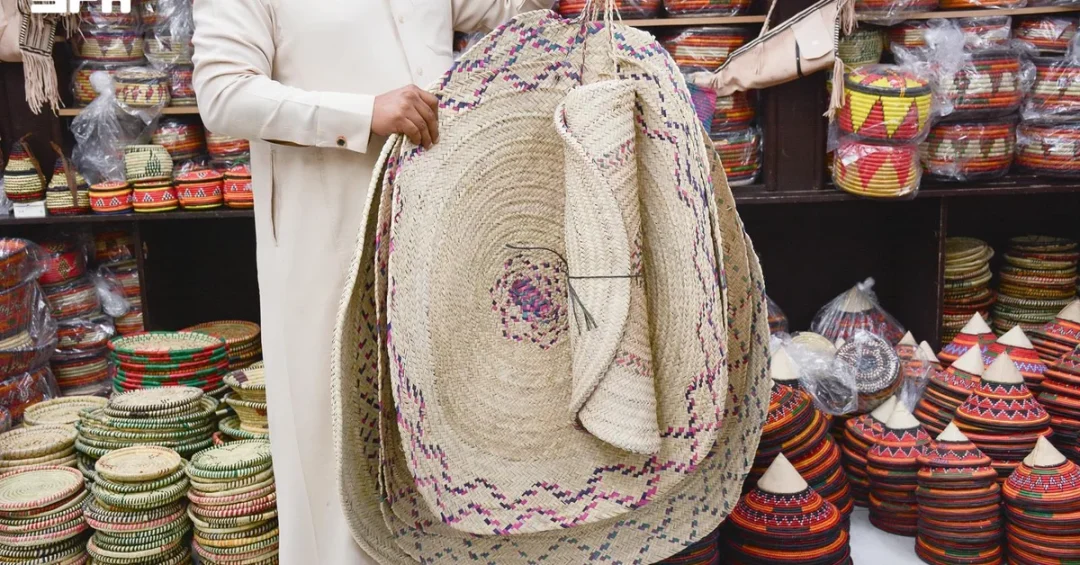
Traditional palm leaf weaving in the Najran region remains a respected craft that showcases the skill of local artisans who transform natural palm leaves and fibers into a variety of everyday items, including mats, baskets, cushions, fans, and ropes. This heritage practice, reported by the Saudi Press Agency on August 16, 2026, continues to thrive, reflecting a deep connection between the region’s inhabitants and their natural environment.
Context and Background
The craft of palm leaf weaving has been passed down through generations in Najran, a region known for its rich cultural heritage and abundant palm groves. Artisans play a vital role in preserving this traditional skill, which is not only an economic activity but also a symbol of cultural identity. The historical market in the Aba al-Saud district serves as a vibrant hub where these woven goods are displayed and sold, attracting both locals and visitors interested in authentic Saudi handicrafts.
Key Details
At the historical market in the Aba al-Saud area, shops offer a wide range of intricately woven items that blend tradition with modern design. Artisans emphasize that the craft requires precision and patience, starting with careful selection and preparation of leaves before weaving them into various shapes and bright colors. Several female artisans have noted that they inherited this craft from previous generations, perfecting their techniques to create functional and contemporary products while preserving authentic cultural identity. This dedication ensures that the craft remains relevant in today’s market.
Implications and Impact
The preservation of palm leaf weaving has significant implications for cultural sustainability and local economic development. By maintaining traditional crafts, the Kingdom supports the livelihoods of artisans and contributes to the diversification of the local economy, in line with the goals of Saudi Vision 2030. Moreover, such cultural practices promote tourism, as visitors are drawn to experience the unique heritage and craftsmanship of Najran.
Vision 2030 Alignment
The ongoing practice of palm leaf weaving in Najran aligns with Saudi Arabia’s Vision 2030, which emphasizes the importance of preserving national heritage and fostering cultural identity. By supporting traditional crafts and integrating them into the modern economy, the Kingdom ensures that its rich history remains a cornerstone of its future. This craft not only sustains local traditions but also enhances Saudi Arabia’s global cultural presence, showcasing the Kingdom’s commitment to cultural preservation and sustainable development.
20 Questions
Q1. What is the traditional palm leaf weaving craft in Najran?
A1. It is a traditional craft where artisans use palm leaves and fibers to make everyday items like mats, baskets, cushions, fans, and ropes, reflecting local culture and nature.
Q2. Where is the historical market mentioned in the article?
A2. The historical market is located in the Aba al-Saud district in the Najran region of Saudi Arabia, where woven goods are displayed and sold.
Q3. Why is the craft considered important?
A3. The craft preserves cultural heritage, supports the local economy, and strengthens the connection between people and their natural environment.
Q4. Who reported on this craft?
A4. The Saudi Press Agency (SPA) reported on the craft, highlighting its significance in the region.
Q5. What items are made through palm leaf weaving?
A5. Artisans make mats, baskets, cushions, fans, and ropes using palm leaves and fibers.
Q6. How do artisans ensure quality in their products?
A6. They carefully select and prepare leaves, requiring precision and patience to create well-crafted items.
Q7. How is the craft passed down?
A7. The craft is inherited from previous generations, with artisans perfecting techniques over time.
Q8. What is the significance of the Aba al-Saud market?
A8. It is a historical market that serves as a hub for showcasing woven goods, attracting locals and tourists.
Q9. How does this craft align with Vision 2030?
A9. It aligns by preserving heritage, supporting economic diversification, and promoting cultural tourism.
Q10. What role do female artisans play?
A10. Female artisans are active in weaving, contributing to the craft’s continuity and modern adaptation.
Q11. How does the craft connect to the environment?
A11. It uses natural palm leaves, reflecting the region’s abundant palm groves and the people’s bond with nature.
Q12. Are the woven items modern or traditional?
A12. The items blend traditional techniques with modern designs, making them functional and appealing.
Q13. What is the cultural impact of the craft?
A13. It preserves cultural identity and shares Saudi heritage with a wider audience.
Q14. How does the craft benefit the local economy?
A14. It provides income for artisans and attracts tourism, boosting local businesses.
Q15. What skills are needed for weaving?
A15. Precision, patience, and knowledge of leaf selection and weaving techniques are essential.
Q16. Where else in Saudi Arabia is palm weaving common?
A16. Palm weaving is common in various regions with palm groves, though Najran’s market is notable.
Q17. How can tourists experience this craft?
A17. By visiting the Aba al-Saud market, they can see artisans at work and purchase authentic items.
Q18. What are the colors of the woven items?
A18. The items come in various bright colors, achieved through natural dyes or creative combinations.
Q19. Does the craft have a sustainable aspect?
A19. Yes, it uses renewable palm leaves, and preserving it contributes to cultural sustainability.
Q20. What is the future outlook for the craft?
A20. With support from Vision 2030, the craft is expected to continue growing, blending tradition with modern markets.
Reader Feedback
We value your thoughts. Please share your feedback on this article.
Your feedback helps us improve our coverage.