


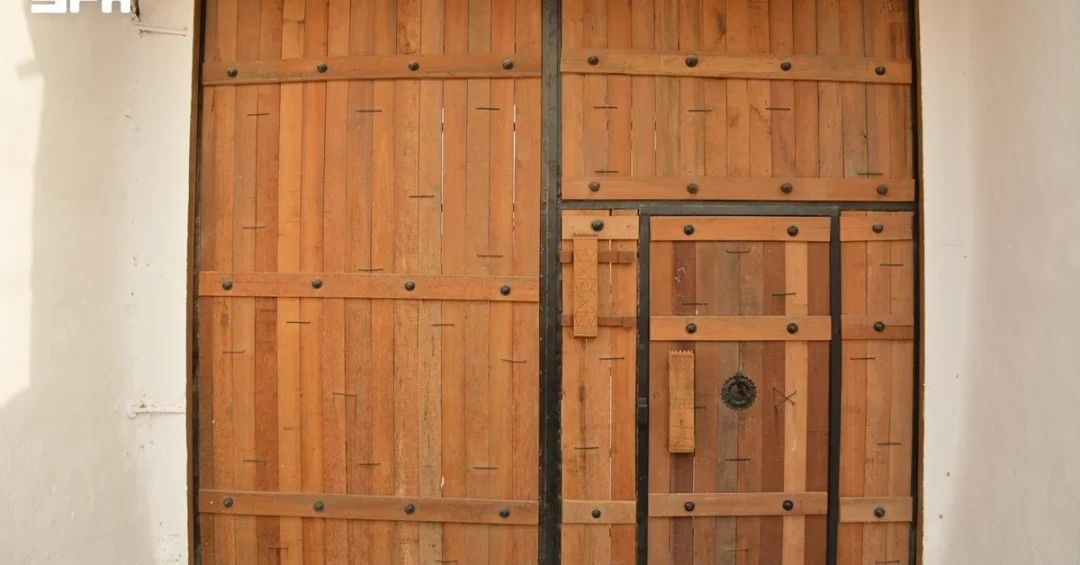
Traditional handcrafted wooden doors preserved within the historic mud-brick palaces and dwellings of Najran Region stand as enduring testaments to local craftsmanship, vernacular architecture, and daily community life, according to information released by the Saudi Press Agency (SPA). These remarkable artifacts, which balance privacy, security, and aesthetics, serve as decorative gateways between public spaces and domestic privacy across one of the Kingdom’s most historically rich regions. The doors, found throughout Najran’s heritage villages and traditional quarters, offer a tangible connection to generations of Saudi artisans whose skills shaped the architectural identity of the southern region.
Have you ever considered how a single doorway can tell the story of an entire civilization? In Najran, each wooden door does exactly that — encoding centuries of craftsmanship, social customs, and environmental adaptation into every plank, hinge, and carved motif. The preservation of these doors has become a priority for heritage specialists who recognize their documentary value in understanding historical carpentry and architecture. As Saudi Arabia accelerates its Vision 2030 transformation, these traditional elements of the built environment are being re-examined not merely as relics of the past but as living evidence of the Kingdom’s deep-rooted cultural sophistication and the ingenuity of its people.
Context and Background
How did Najran’s unique geography and climate shape the development of its distinctive door-making tradition? Located in the southwestern corner of Saudi Arabia, Najran Region has long been a crossroads of trade routes and cultural exchange, influences that are reflected in the region’s vernacular architecture. The historic mud-brick palaces and dwellings that define Najran’s heritage settlements required robust, climate-appropriate solutions for entryways that could withstand temperature extremes while providing security and aesthetic distinction. Local carpenters developed techniques using durable indigenous timber suited to the regional climate, creating doors that have survived for generations.
Mohammed Al Hetailah, Board Chairman of the Najran Society for History and Archaeology, stated that these doors offer valuable documentary insight into historical carpentry and architectural practices. According to Al Hetailah, the doors functioned on multiple levels — large, reinforced exterior doors were built for security and to allow the passage of livestock and agricultural harvests, while smaller internal doors served private rooms within the household. Many installations featured smaller pass-through openings in the main door, allowing entry without compromising household privacy, a design feature that reflects the sophisticated understanding of domestic spatial organization in traditional Najran society.
Why do these architectural details matter in an era of rapid modernization? Because they represent an unbroken chain of knowledge transfer that spans generations. The doors of Najran are not isolated artifacts but components of a complete architectural system that integrated mud-brick construction, timber framing, and metalwork into a coherent aesthetic and functional whole. Understanding this system provides modern architects and preservationists with valuable lessons about sustainable building practices adapted to local conditions — lessons that resonate with contemporary global conversations about climate-responsive design.
Key Details of Traditional Door Construction
What exactly goes into the creation of a door that can last for centuries in a demanding desert environment? Dr. Khaled Almazam, Assistant Professor of Architecture at Najran University, explained that fabrication relied on the inherited expertise of local carpenters using durable indigenous timber suited to regional climatic extremes. The process began with the preparation of longitudinal wooden planks, which were then secured with rear horizontal crossbars to ensure structural integrity. Craftsmen carved decorative elements into the wood, fitted traditional locking mechanisms and metal studs, and mounted the completed structures directly into mud-wall frames — a technique that allowed the doors to move slightly with the building’s natural settling without losing functionality.
The decorative vocabulary employed on these doors reveals a rich visual language. Doors featured traditional iron and wooden hardware, including knockers, latches, locks, and bolts, often embellished with geometric motifs, floral carvings, dates, and owner emblems. These embellishments were not merely ornamental; they communicated information about the household’s identity, status, and lineage. The geometric patterns echoed broader Islamic artistic traditions while maintaining distinctly local characteristics, and the owner emblems served as markers of family heritage within the community. This integration of function and meaning represents a hallmark of Najran’s vernacular architectural genius.
How were these doors maintained and repaired over time? The answer lies in the community-based nature of traditional craftsmanship. When a door required repair or replacement, local carpenters would be called upon to apply the same techniques used by their predecessors, ensuring continuity of method and style. This cyclical process of maintenance and renewal kept traditional skills alive and relevant, passing knowledge from master to apprentice in an unbroken chain. The doors themselves became living archives of this process, with layers of repair and adaptation visible to those trained to read them.
International and Regional Impact
What does Najran’s door-making heritage mean for the broader study of vernacular architecture worldwide? The region’s traditional wooden doors represent a significant contribution to the global understanding of how human societies adapt their built environments to local conditions. Scholars of architectural history have increasingly recognized the importance of studying non-monumental structures — the everyday buildings and their components — as primary sources for understanding past societies. Najran’s doors offer a particularly rich case study because they combine functional engineering, aesthetic expression, and social meaning in a single artifact.
Regionally, the preservation of these doors strengthens Saudi Arabia’s position as a custodian of Arabian cultural heritage. As the Kingdom welcomes increasing numbers of international visitors and researchers, sites like Najran’s heritage villages provide tangible evidence of the depth and sophistication of Saudi civilization. This aligns with broader efforts across the Gulf region to document and celebrate traditional architecture before it is lost to modernization. Saudi Arabia’s leadership in this area — through institutions like the Heritage Commission and regional historical societies — demonstrates a commitment to cultural preservation that resonates with global heritage organizations.
Could the techniques embedded in these doors inform contemporary sustainable design? Absolutely. The use of locally sourced timber, the integration of structural elements that allow for natural movement, and the application of decorative motifs that require minimal maintenance all represent principles that modern architects are rediscovering in the context of environmental sustainability. Najran’s traditional carpenters were, in effect, early practitioners of what today would be called green building — designing with nature rather than against it, and creating structures that could endure for generations with minimal intervention.
Economic and Strategic Significance
How does the preservation of traditional crafts contribute to Saudi Arabia’s economic diversification goals? The documentation, restoration, and promotion of Najran’s architectural heritage create opportunities for skilled employment, cultural tourism, and the development of specialized craft industries. As part of the Kingdom’s broader Vision 2030 strategy to diversify away from oil dependence, heritage-based economic activities represent a sustainable and culturally authentic avenue for growth. Training programs that pass traditional carpentry skills to new generations can simultaneously preserve intangible cultural heritage and create a skilled workforce capable of serving the restoration and construction sectors.
The strategic significance extends beyond economics. By investing in the preservation of regional heritage, Saudi Arabia reinforces its national identity and social cohesion. Najran’s doors are not merely objects; they are symbols of the Kingdom’s deep history and the shared cultural inheritance of all Saudis. In a rapidly changing world, such symbols provide continuity and a sense of rootedness that complements the forward-looking ambitions of Vision 2030. The integration of heritage preservation into national development strategies demonstrates a mature approach to modernization — one that values the past while embracing the future.
What role do academic institutions play in this process? Najran University, through the work of scholars like Dr. Khaled Almazam, is actively engaged in documenting and analyzing the region’s architectural heritage. This research provides the foundation for informed preservation decisions and helps train the next generation of architects and conservators. The collaboration between academic institutions, government heritage bodies, and local communities creates a comprehensive approach to safeguarding Najran’s architectural legacy. Such partnerships ensure that preservation efforts are grounded in rigorous scholarship and community participation, increasing their effectiveness and sustainability.
Vision 2030 Alignment
How does the preservation of Najran’s traditional wooden doors connect to Saudi Arabia’s Vision 2030? At its core, Vision 2030 is about building a prosperous, diversified, and culturally vibrant nation. The preservation of heritage sites and traditional crafts directly supports the vision’s cultural objectives, which aim to celebrate and protect Saudi Arabia’s rich history while creating new opportunities for economic and social development. By documenting and restoring these doors, the Kingdom is investing in a form of cultural capital that enhances national pride, attracts visitors, and supports the growth of creative industries.
Both specialists underscored the importance of documenting, restoring, and preserving original heritage doors against environmental wear, weathering, and modernization. They highlighted that protecting these historic artifacts safeguards Najran’s architectural identity while passing traditional carpentry skills to future generations. This dual focus — on the physical artifacts and the intangible knowledge required to create them — reflects a comprehensive understanding of heritage preservation that aligns with Vision 2030’s emphasis on human capital development and cultural enrichment.
Will future generations thank us for preserving these doors? The answer depends on the actions taken today. Through the dedicated efforts of organizations like the Najran Society for History and Archaeology, academic institutions like Najran University, and the broader framework of national heritage policy, Saudi Arabia is demonstrating that it values its past as much as it anticipates its future. The traditional wooden doors of Najran will continue to stand as gateways — not just between public and private spaces, but between generations, carrying forward the story of a region whose craftsmanship and cultural depth remain a source of pride for the entire Kingdom.
20 Questions
Q1. What are the traditional wooden doors of Najran?
A1. They are handcrafted wooden doors preserved within historic mud-brick palaces and dwellings across Najran Region, serving as decorative gateways that balance privacy, security, and aesthetics while reflecting local craftsmanship and vernacular architecture.
Q2. Who provided information about these doors?
A2. Information was released via the Saudi Press Agency (SPA), quoting Mohammed Al Hetailah, Board Chairman of the Najran Society for History and Archaeology, and Dr. Khaled Almazam, Assistant Professor of Architecture at Najran University.
Q3. What is the historical significance of these doors?
A3. They offer documentary insight into historical carpentry and architecture, showing how local builders adapted to environmental conditions and social needs while creating durable, functional, and beautiful entryways for homes and palaces.
Q4. How were large exterior doors designed for security?
A4. Large, reinforced exterior doors were built for security and to allow the passage of livestock and agricultural harvests, featuring robust construction with rear horizontal crossbars and traditional locking mechanisms including bolts, latches, and locks.
Q5. What were smaller internal doors used for?
A5. Smaller internal doors served private rooms within the household, providing access while maintaining the separation between public and private spaces that was important in traditional Najran society.
Q6. What are pass-through openings in the main door?
A6. Many installations featured smaller pass-through openings in the main door, allowing entry or delivery of items without compromising household privacy, demonstrating sophisticated spatial organization in traditional architecture.
Q7. What decorative elements appear on these doors?
A7. Doors featured geometric motifs, floral carvings, dates, and owner emblems, often embellished with traditional iron and wooden hardware including knockers, latches, locks, and bolts that combined functionality with aesthetic expression.
Q8. What materials were used in door construction?
A8. Craftsmen used durable indigenous timber suited to regional climatic extremes, preparing longitudinal wooden planks secured with rear horizontal crossbars and fitted with traditional locking mechanisms and metal studs.
Q9. How were the doors mounted into buildings?
A9. The doors were mounted directly into mud-wall frames, a technique that allowed for natural movement with the building’s settling while maintaining structural integrity and functionality over long periods.
Q10. Who is Mohammed Al Hetailah?
A10. Mohammed Al Hetailah is the Board Chairman of the Najran Society for History and Archaeology, who stated that these doors offer valuable documentary insight into historical carpentry and architecture in the region.
Q11. Who is Dr. Khaled Almazam?
A11. Dr. Khaled Almazam is an Assistant Professor of Architecture at Najran University who explained the fabrication techniques, including the use of indigenous timber and traditional construction methods adapted to the regional climate.
Q12. Why is documentation of these doors important?
A12. Documentation is important because it records traditional carpentry techniques and architectural knowledge that might otherwise be lost, providing a foundation for preservation efforts and educational resources for future generations.
Q13. What threats do these heritage doors face?
A13. They face environmental wear, weathering, and the impacts of modernization, which can lead to deterioration or replacement with contemporary materials that lack the cultural and historical significance of the originals.
Q14. How does preservation benefit Najran’s architectural identity?
A14. Preservation safeguards Najran’s architectural identity by maintaining the visual and material character of historic districts, ensuring that future generations can experience and learn from the region’s distinctive built heritage.
Q15. What skills are passed to future generations through this preservation?
A15. Traditional carpentry skills, including timber preparation, joinery, carving, and the installation of locking mechanisms, are passed to future generations, ensuring the continuity of intangible cultural heritage.
Q16. How does this relate to Saudi Vision 2030?
A16. It supports Vision 2030’s cultural objectives by preserving national heritage, promoting cultural tourism, creating economic opportunities, and reinforcing national identity while embracing modernization and development.
Q17. What role does Najran University play?
A17. Najran University, through scholars like Dr. Khaled Almazam, contributes research and academic analysis that informs preservation decisions and helps train future architects and conservators in traditional building techniques.
Q18. What role does the Najran Society for History and Archaeology play?
A18. The Society, led by Mohammed Al Hetailah, works to document, study, and promote awareness of the region’s historical and archaeological heritage, including its distinctive architectural traditions.
Q19. How do these doors reflect daily community life?
A19. The doors reflect daily community life by serving as gateways between public and domestic spheres, accommodating agricultural activities, providing privacy, and expressing household identity through decorative emblems and motifs.
Q20. What is the future outlook for Najran’s traditional doors?
A20. The future outlook is positive, with ongoing efforts by heritage organizations, academic institutions, and government bodies to document, restore, and preserve these doors while passing traditional skills to new generations.
Reader Feedback
We value your thoughts. Please share your feedback on this article.
Your feedback helps us improve our coverage.
Related articles
 Cissus rotundifolia plant in Jazan blends biodiversity and culinary tradition
 Jazan’s Cissus Rotundifolia: Biodiversity and Culinary Heritage
 AlUla Life of Forms exhibition to open in Paris
 Buraidah International Dates Carnival auctions drive trade
 National Center for Falcons opens International Falcon Breeders Auction 2026
 Falcon Auction Opens October 1 After SAR45 Million Sales