


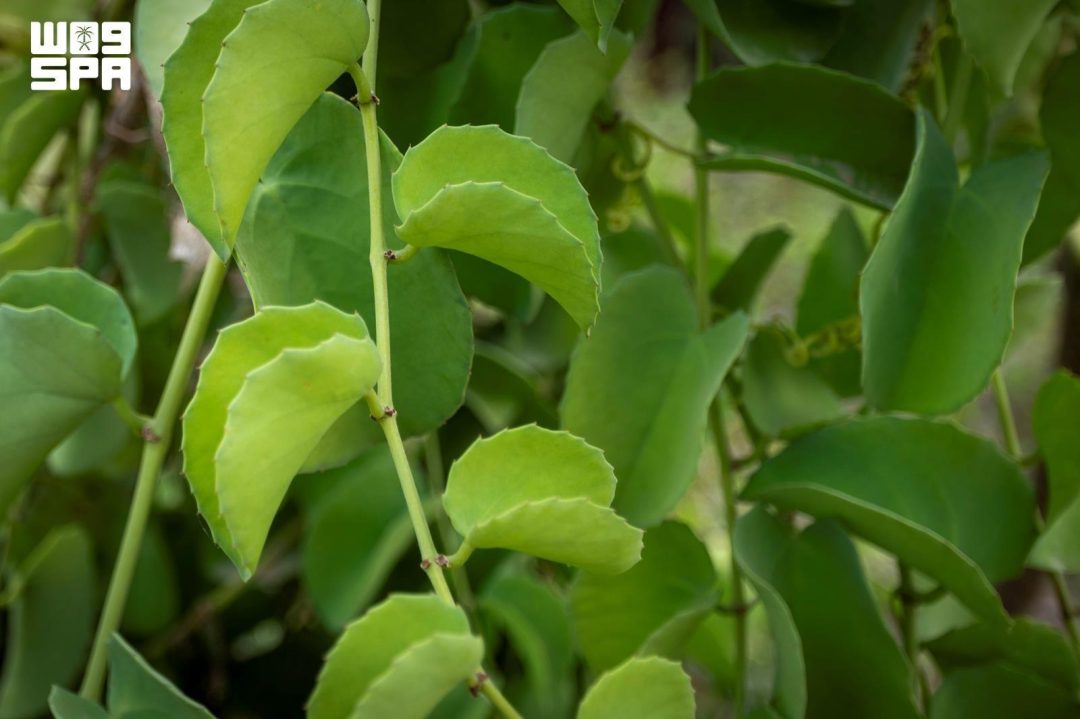
Jazan Region is home to the wild climber Cissus rotundifolia, a perennial of the grapevine family native to southwestern Saudi Arabia. The plant features succulent, water-storing stems that can reach 10 meters, enabling it to climb rocky terrain, hillsides, valleys, and trees.
According to SPA, Jazan University plant ecology professor Dr. Yahya Masrahi stated the plant bears small greenish-yellow flowers, fleshy serrated leaves, and berry-like fruits that ripen to a deep red color.
The plant is integrated into regional culinary heritage, where leaves are boiled, mashed, and seasoned with sesame oil for traditional flatbreads, or cooked with meats for flavor. Folk practices also include using the foliage for customary remedies and polishing silverware.
What are the physical characteristics of the Cissus rotundifolia plant? The Cissus rotundifolia is a perennial climber from the grapevine family native to southwestern Saudi Arabia. It possesses succulent stems that store water and can grow up to 10 meters in length. Additionally, the plant is characterized by fleshy, serrated leaves, small flowers that are greenish-yellow, and berry-like fruits that turn deep red as they ripen.
How is the Cissus rotundifolia plant used in Jazan’s culinary traditions? In the Jazan Region, the plant’s leaves are utilized in two primary culinary ways. They are traditionally cooked alongside meats to provide a distinct flavor, or they are boiled, mashed, and seasoned with sesame oil to be served as an accompaniment to traditional flatbreads.
What are the non-culinary folk uses of the Cissus rotundifolia plant? Beyond its use in food, folk practices in the region record the use of Cissus rotundifolia foliage for specific household and health tasks. Specifically, the leaves have been used historically for the polishing of silverware and as part of customary remedies.