


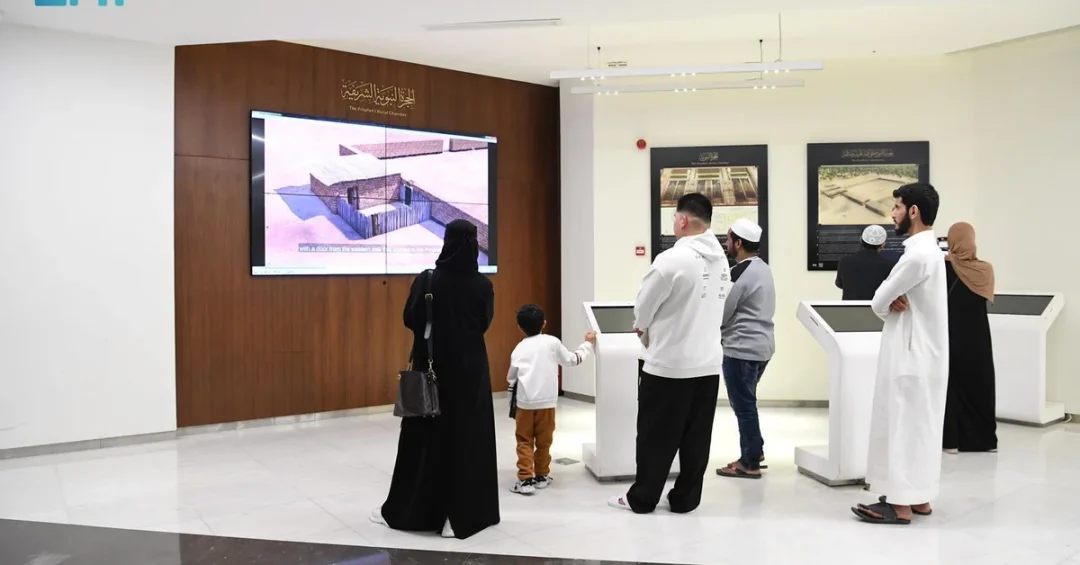
The Prophet’s Mosque Expansion Exhibition in Madinah is offering visitors a rare, immersive journey into the architectural and historical splendor of one of Islam’s holiest sites, as announced by the Saudi Press Agency (SPA). Spanning more than 2,200 square meters just south of the Prophet’s Mosque, the exhibition showcases intricate architectural details—from the minbar and mihrab to domes, canopies, doors, minarets, and courtyards—while highlighting the visitor-friendly services that accommodate millions of worshippers and pilgrims each year. Through modern murals, multilingual displays, and cutting-edge interactive screens, the exhibition provides a comprehensive educational experience that deepens understanding of the mosque’s rich heritage and the significance of the Two Holy Mosques.
Have you ever wondered how the timeless beauty of the Prophet’s Mosque is preserved and shared with the world? This exhibition serves as a bridge between past and present, allowing visitors to explore the mosque’s architectural evolution and its central role in Islamic history. It reflects the Kingdom of Saudi Arabia’s unwavering commitment to preserving Islamic heritage while embracing modernity, in line with the ambitious goals of Vision 2030. By combining traditional craftsmanship with advanced technology, the exhibition not only educates but also inspires a deeper appreciation for the sacred site that millions hold dear.
Context and Background
Why is the Prophet’s Mosque Expansion Exhibition so significant in today’s world? The exhibition was inaugurated as part of the broader efforts led by the Kingdom of Saudi Arabia to enhance the experience of visitors to the Prophet’s Mosque, the second holiest site in Islam after the Grand Mosque in Makkah. Located in the heart of Madinah, the mosque has undergone numerous expansions throughout history, most notably under the Saudi leadership, which has dedicated immense resources to accommodate the growing number of pilgrims and worshippers. The exhibition, therefore, stands as a testament to the Kingdom’s role as the custodian of the Two Holy Mosques and its commitment to preserving Islamic heritage for future generations.
The exhibition is not merely a display of architectural elements; it is a narrative of devotion and craftsmanship. It highlights the meticulous work of Saudi and international artisans who have contributed to the mosque’s expansions over the decades. From the intricate calligraphy adorning the walls to the geometrically precise domes, every detail reflects a deep reverence for the site’s spiritual significance. By presenting these elements in an accessible and engaging manner, the exhibition ensures that visitors—regardless of their background or language—can grasp the profound historical and religious importance of the Prophet’s Mosque.
Moreover, the exhibition is a response to the increasing number of visitors, which exceeded 300 million in recent years, necessitating innovative ways to manage crowds while preserving the sanctity of the site. Through interactive screens and multilingual displays, the exhibition offers an educational alternative that complements the physical visit, allowing pilgrims to gain a deeper understanding of the mosque’s architecture and history before or after their prayers. This initiative is part of a larger strategy to enhance the pilgrimage experience, a key pillar of Vision 2030.
Key Details
What exactly can visitors expect to see and experience at this groundbreaking exhibition? The exhibition spans over 2,200 square meters and is divided into several thematic areas. One of the most striking features is the detailed replicas of the mosque’s minbar (pulpit) and mihrab (prayer niche), which are presented alongside explanations of their historical and functional significance. Visitors can also examine the intricate designs of the domes and canopies, which are not only architectural marvels but also serve practical purposes in regulating temperature and acoustics within the mosque.
The exhibition also showcases the mosque’s numerous doors and minarets, each with its own unique story and craftsmanship. The doors, made from the finest wood and adorned with intricate carvings, reflect the artistry of different Islamic eras, while the minarets stand as beacons of faith, their towering presence visible from afar. Courtyards are given special attention, with displays explaining how these open spaces facilitate the flow of worshippers and provide a serene environment for reflection. Additionally, visitor-friendly services such as cooling systems, shading, and accessibility features are highlighted, demonstrating how modern technology is seamlessly integrated with traditional design.
Cutting-edge technology and interactive screens allow visitors to delve into the mosque’s architectural intricacies and explore its history in an engaging manner. A dedicated hall displays a rare collection of artifacts, including historical manuscripts, tools used in the mosque’s construction, and other relics that reflect the significance of the Prophet’s Mosque and the historical importance of the Two Holy Mosques. These artifacts are carefully curated to provide a comprehensive educational journey, offering insights into the various phases of expansion and renovation that the mosque has undergone.
The exhibition is designed to be accessible to all, with multilingual displays in Arabic, English, and other major languages, ensuring that international visitors can fully appreciate the content. Modern murals and interactive screens are used to present the information, making the experience both visually appealing and intellectually stimulating. The layout guides visitors through a chronological journey, starting from the mosque’s original construction in the 7th century to the present-day expansions under Saudi leadership. Each section is thoughtfully curated to highlight the architectural and spiritual evolution of the site.
International and Regional Impact
How does this exhibition influence the global perception of Saudi Arabia’s stewardship of Islamic heritage? The Prophet’s Mosque Expansion Exhibition not only serves pilgrims and local visitors but also projects a positive image of the Kingdom on the international stage. It demonstrates Saudi Arabia’s dedication to preserving Islamic history and culture, countering negative stereotypes and showcasing the country’s modernization efforts. By inviting the world to learn about the architectural marvels of the Prophet’s Mosque, the exhibition fosters cultural exchange and mutual understanding among diverse communities.
Regionally, the exhibition reinforces the Kingdom’s leadership role in the Islamic world. As the custodian of the Two Holy Mosques, Saudi Arabia has consistently invested in the upkeep and expansion of these sacred sites, ensuring that they remain accessible and safe for all Muslims. The exhibition is a clear manifestation of this commitment, offering a tangible example of how the Kingdom balances tradition with innovation. It also serves as a model for other countries seeking to preserve their own heritage while adapting to modern demands.
Furthermore, the exhibition contributes to the Kingdom’s tourism goals by attracting visitors to Madinah, thereby boosting the local economy and creating job opportunities. It aligns with the National Transformation Program and the Pilgrim Experience Program, both of which aim to enrich the spiritual journey of pilgrims and enhance the quality of services provided. By showcasing the architectural heritage of the Prophet’s Mosque, the exhibition also promotes religious tourism, a key segment of the Kingdom’s tourism strategy.
Economic and Strategic Significance
What economic and strategic benefits does the exhibition bring to Saudi Arabia? The exhibition is a strategic investment in the Kingdom’s growing tourism and cultural sectors. By attracting more visitors to Madinah, it stimulates local businesses, from hotels and restaurants to souvenir shops and transportation services. This influx of visitors contributes to job creation and economic diversification, aligning with Vision 2030’s goal of reducing dependence on oil revenues. The exhibition also serves as a showcase for Saudi Arabia’s capabilities in event management, technology integration, and heritage preservation, positioning the Kingdom as a leader in cultural tourism.
Strategically, the exhibition enhances the Kingdom’s soft power by promoting a positive image of Saudi Arabia as a modern, open, and culturally rich nation. It supports the broader efforts to increase the number of Umrah and Hajj pilgrims, which is a key objective of the Pilgrim Experience Program. By providing an educational and engaging experience, the exhibition encourages longer stays in Madinah, thereby increasing spending in the local economy. Moreover, it demonstrates the Kingdom’s ability to manage large-scale projects that require precision, coordination, and respect for cultural sensitivities.
In addition, the exhibition leverages cutting-edge technology to create a sustainable and scalable model for heritage display. The use of interactive screens and digital archives not only preserves information for future generations but also allows for easy updates as new discoveries are made. This technological infrastructure can be replicated in other heritage sites across the Kingdom, further enhancing the visitor experience and promoting cultural tourism nationwide.
Vision 2030 Alignment
How does the Prophet’s Mosque Expansion Exhibition align with Saudi Vision 2030? The exhibition is a concrete example of Vision 2030’s cultural and tourism objectives, which aim to enrich the quality of life for citizens and visitors while preserving the Kingdom’s Islamic heritage. By investing in projects that enhance the pilgrimage experience, Saudi Arabia is fulfilling its role as the custodian of the Two Holy Mosques and ensuring that millions of worshippers can perform their religious duties with ease and comfort. The exhibition also supports the goal of increasing international tourist arrivals, a key performance indicator of Vision 2030.
Furthermore, the exhibition embodies the spirit of innovation and modernization that Vision 2030 promotes. It uses advanced technology to present historical content in an engaging manner, demonstrating how tradition and modernity can coexist harmoniously. This approach not only elevates the visitor experience but also sets a benchmark for heritage preservation worldwide. As Saudi Arabia continues to implement Vision 2030, such initiatives will play a crucial role in showcasing the Kingdom’s rich history and its bright future, reinforcing its position as a global leader in cultural and religious tourism.
In conclusion, the Prophet’s Mosque Expansion Exhibition is more than a display of architectural wonders; it is a celebration of Saudi Arabia’s dedication to preserving Islamic heritage and sharing it with the world. By combining historical artifacts with modern technology, the exhibition offers a unique and enriching experience for all visitors. It stands as a shining example of how Vision 2030 is transforming the Kingdom into a hub of cultural exchange and spiritual enlightenment. As the exhibition continues to welcome guests from around the globe, it will undoubtedly leave a lasting impression, inspiring awe and appreciation for the timeless beauty of the Prophet’s Mosque.
20 Questions
Q1. What is the Prophet’s Mosque Expansion Exhibition?
A1. The Prophet’s Mosque Expansion Exhibition is a cultural and historical showcase in Madinah that highlights the intricate Islamic architecture of the Prophet’s Mosque, offering visitors an educational journey through its design and heritage.
Q2. Where is the exhibition located?
A2. It is located south of the Prophet’s Mosque in Madinah, spanning over 2,200 square meters, providing easy access for pilgrims and visitors to explore the mosque’s architectural splendor.
Q3. What can visitors see at the exhibition?
A3. Visitors can see detailed displays of the minbar, mihrab, domes, canopies, doors, minarets, courtyards, and visitor-friendly services, along with rare artifacts and interactive screens that bring the mosque’s history to life.
Q4. How does the exhibition enhance the visitor experience?
A4. It uses modern murals, multilingual displays, and cutting-edge technology to present the mosque’s architectural intricacies and history in an engaging and accessible manner, deepening visitors’ understanding and appreciation.
Q5. What is the significance of the Two Holy Mosques?
A5. The Two Holy Mosques, comprising the Grand Mosque in Makkah and the Prophet’s Mosque in Madinah, are the holiest sites in Islam, drawing millions of pilgrims annually and holding immense spiritual and historical importance.
Q6. How does the exhibition reflect Saudi Arabia’s commitment to heritage?
A6. It demonstrates the Kingdom’s dedication to preserving Islamic heritage by investing in educational and cultural initiatives that showcase the architectural and historical legacy of the Prophet’s Mosque for future generations.
Q7. What role does technology play in the exhibition?
A7. Cutting-edge technology and interactive screens allow visitors to delve into the mosque’s architectural intricacies and explore its history dynamically, making the experience both informative and engaging.
Q8. Are there artifacts on display?
A8. Yes, a dedicated hall displays a rare collection of artifacts, including historical manuscripts and tools, reflecting the significance of the Prophet’s Mosque and the historical importance of the Two Holy Mosques.
Q9. How does the exhibition support Vision 2030?
A9. It aligns with Vision 2030 by enhancing the pilgrimage experience, promoting cultural tourism, and showcasing Saudi Arabia’s ability to blend tradition with modernity, thereby enriching the quality of life for visitors.
Q10. Who is responsible for the exhibition?
A10. The exhibition is part of the initiatives led by the Kingdom of Saudi Arabia under the guidance of its leadership, reflecting the nation’s role as the custodian of the Two Holy Mosques.
Q11. What languages are used in the displays?
A11. Multilingual displays are available, including Arabic and English, ensuring that international visitors can fully understand and appreciate the content regardless of their language.
Q12. How does the exhibition contribute to the local economy?
A12. By attracting more visitors to Madinah, it stimulates local businesses such as hotels, restaurants, and shops, creating job opportunities and supporting economic diversification in line with Vision 2030.
Q13. Is the exhibition accessible to people with disabilities?
A13. Yes, the exhibition highlights visitor-friendly services and is designed to be accessible, with features that accommodate the needs of all visitors, ensuring an inclusive experience.
Q14. What is the historical significance of the minbar and mihrab?
A14. The minbar and mihrab are central elements of the mosque, used for delivering sermons and indicating the direction of prayer, and their intricate designs reflect centuries of Islamic artistry and devotion.
Q15. How does the exhibition handle large crowds?
A15. The exhibition uses modern technology and multilingual displays to manage visitor flow efficiently, offering an educational alternative that complements the physical visit and helps accommodate the millions of pilgrims.
Q16. What are the opening hours of the exhibition?
A16. Specific opening hours are typically aligned with prayer times and visitor convenience; details can be obtained from official Saudi tourism or religious affairs sources.
Q17. Can visitors take photographs inside the exhibition?
A17. Photography policies are designed to respect the sanctity of the site and the comfort of all visitors; visitors are advised to follow on-site guidelines and instructions from staff.
Q18. How does the exhibition promote interfaith dialogue?
A18. By presenting the architectural and historical heritage of the Prophet’s Mosque in an accessible way, the exhibition fosters cultural exchange and mutual understanding among people of different faiths and backgrounds.
Q19. What is the expected impact on tourism numbers?
A19. The exhibition is expected to boost tourism by enriching the visitor experience, encouraging longer stays in Madinah, and attracting more international visitors interested in Islamic heritage and culture.
Q20. How can one learn more about the exhibition?
A20. Information is available through official Saudi channels, including the Saudi Press Agency and the Ministry of Hajj and Umrah, as well as on-site visitor centers at the Prophet’s Mosque in Madinah.
Reader Feedback
We value your thoughts. Please share your feedback on this article.
Your feedback helps us improve our coverage.
Related articles
 Saudi Museums Commission Explores Digital Future
 Mohammed bin Salman Project Revives Historic Najdi Mosque in Farasan
 Ramadan in Al-Baha Brings Generations of Flavor to the Table
 Saudi Film Commission Shines at Hong Kong FILMART
 Truffle Season Enriches Ramadan Tables in Northern Borders
 Vigna Bean: Traditional Delicacy on Jazan’s Ramadan Tables