


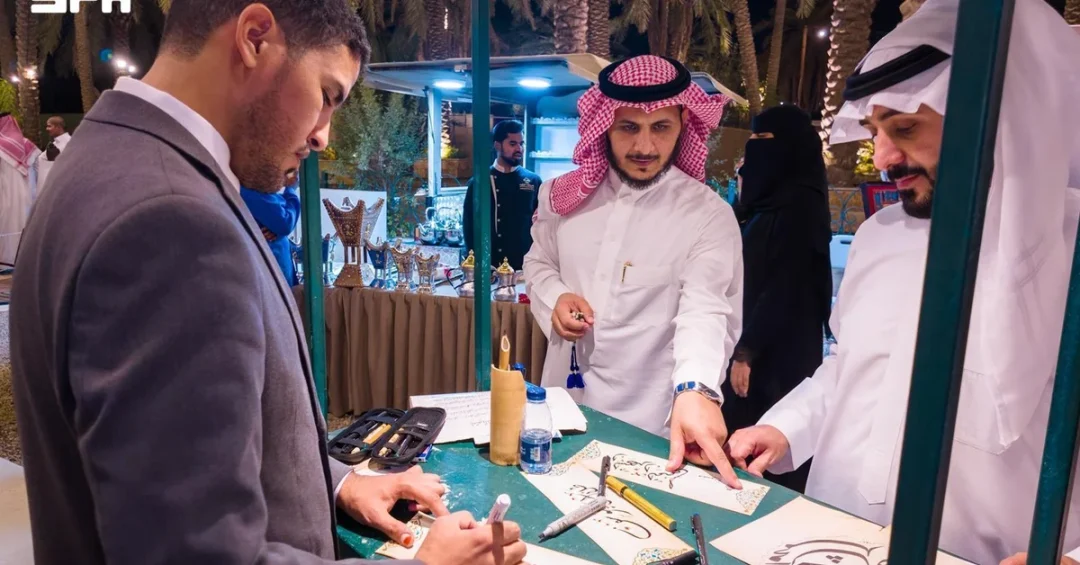
The Unaizah Tourism Cooperative Association in the Qassim region organized a two-day event titled “Heritage District” at Jadat Al-Nakheel to mark the International Day of the Intangible Cultural Heritage, highlighting Saudi Arabia’s traditions, crafts, and cultural identity. The event, reported by the Saudi Press Agency, brought together seven heritage pavilions showcasing falconry, Saudi coffee, traditional crafts, Arabic calligraphy, folk arts, and an exhibition dedicated to the writer Abdullah bin Khamis, offering visitors a firsthand opportunity to explore the Kingdom’s cultural heritage and traditional ways of life.
Held in Unaizah, a historic city in the heart of the Qassim region known for its date palms and longstanding cultural traditions, the gathering reflects a broader national effort to safeguard intangible cultural heritage and transmit inherited knowledge to younger generations. The event drew families, craftspeople, falconers, and heritage enthusiasts, and it forms part of a wider movement across Saudi Arabia to document, celebrate, and sustain the living practices that define the Kingdom’s identity. How does a two-day heritage festival in one city connect to a national strategy for culture and identity? The answer lies in the Kingdom’s expanding cultural calendar and its commitment to preserving traditions as a foundation for modern national development.
Context and Background
Intangible cultural heritage refers to the practices, expressions, knowledge, and skills that communities recognize as part of their cultural heritage — from oral traditions and performing arts to social practices, rituals, and traditional craftsmanship. UNESCO, the United Nations Educational, Scientific and Cultural Organization, established the International Day of the Intangible Cultural Heritage to raise awareness of these living traditions and encourage their safeguarding. Saudi Arabia has been an active participant in these global efforts, recognizing that heritage is not merely a record of the past but a living resource that shapes identity and community cohesion. Isn’t it remarkable how a single day of recognition can spotlight traditions that have been passed down for generations? The Unaizah event demonstrates how local associations translate international observances into community-level action.
The Unaizah Tourism Cooperative Association, a local body dedicated to promoting tourism and cultural awareness in the Qassim region, organized the event at Jadat Al-Nakheel, a site that itself evokes the region’s agricultural and cultural heritage. The choice of venue was deliberate: Jadat Al-Nakheel, with its association with palm cultivation and traditional desert life, provided an authentic backdrop for pavilions devoted to falconry, coffee, calligraphy, and folk arts. The event’s two-day format allowed visitors to move through the pavilions at their own pace, engaging directly with practitioners rather than merely observing displays. This hands-on approach to heritage transmission is consistent with best practices in cultural preservation, where direct interaction between artisans and the public helps keep skills alive rather than frozen in museums.
Bandar Al-Jenaini, the association’s Executive Director, explained that the event aims to preserve inherited practices and skills, including traditional arts, crafts, and dialects, and to introduce them to younger generations. His statement underscores a central challenge in heritage work: ensuring that traditions remain meaningful to young people who are growing up in a rapidly modernizing society. By placing youth engagement at the center of the event, the association addresses that challenge directly. The involvement of families, in particular, was encouraged, with organizers emphasizing that heritage transmission begins at home and continues in public celebrations like this one. What better way to keep a tradition alive than to let a child try it firsthand?
Key Details and Highlights
The “Heritage District” event featured seven distinct pavilions, each dedicated to a different aspect of Saudi intangible cultural heritage. The falconry pavilion, one of the most visually striking, featured 11 falcons and approximately eight falconers, according to falconer Nahar Al-Otaibi. Visitors were introduced to traditional and modern falconry equipment and learned about the care and training of these magnificent birds. Falconry holds a special place in Arabian culture, representing patience, skill, and a deep connection to the desert environment. The presence of both traditional and modern equipment illustrates how heritage practices adapt over time while retaining their essential character. Isn’t it fascinating that a practice rooted in ancient desert survival remains a living passion today?
Another pavilion celebrated Saudi coffee, a beverage that has become a global symbol of Saudi hospitality. Visitors learned about the preparation of traditional Saudi coffee, from roasting and grinding the beans to the addition of cardamom and saffron, and the rituals of serving it to guests. The coffee pavilion reflected the deep social significance of coffee in Saudi culture, where the serving of coffee is an expression of generosity and respect. Alongside coffee, the event showcased traditional crafts and Arabic calligraphy, two fields in which Saudi artisans continue to excel. Calligraphy, in particular, is a highly respected art form in the Islamic world, and the pavilion allowed visitors to watch calligraphers at work and appreciate the precision and beauty of the craft.
Folk arts performances added a dynamic, auditory dimension to the event. Kholoud Al-Mizani, the association’s Public Relations and Media Officer, emphasized the importance of passing down cultural traditions, including camel chanting (Al-Hidaa), falconry, Saudi coffee preparation, and folk arts, and she encouraged families to involve children in heritage activities. Al-Hidaa, the traditional chanting used to accompany camels, is a distinctive oral tradition that combines poetry, rhythm, and the practical needs of desert travel. Its inclusion in the event highlights the breadth of intangible heritage beyond visual crafts. The event also featured an exhibition dedicated to the writer Abdullah bin Khamis, honoring a literary figure whose work has contributed to the cultural life of the region. How often do we pause to appreciate the writers and artists who chronicle our communities? This exhibition ensured that literary heritage received its due alongside crafts and performances.
International and Regional Impact
Saudi Arabia’s engagement with the International Day of the Intangible Cultural Heritage is part of a broader international effort to protect living heritage, an effort in which the Kingdom plays an increasingly prominent role. UNESCO’s conventions on cultural heritage provide a framework for countries to identify, document, and safeguard intangible traditions, and Saudi Arabia has participated actively in these mechanisms. Events like the one in Unaizah contribute to this global conversation by demonstrating grassroots commitment to heritage preservation. Regional neighbors in the Gulf and the wider Arab world share many of these traditions — falconry, coffee rituals, oral poetry — and Saudi initiatives help strengthen cultural ties across the region. Isn’t it encouraging to see cultural cooperation complement economic and political cooperation?
For international audiences, the event offers a window into a Saudi Arabia that is both deeply rooted in tradition and confidently modern. The Kingdom’s cultural diplomacy has expanded significantly in recent years, with festivals, exhibitions, and heritage initiatives attracting visitors from around the world. The Qassim region, known for its hospitality and agricultural heritage, is emerging as a destination for cultural tourism, complementing better-known sites in Riyadh, Jeddah, and AlUla. By organizing the “Heritage District” event, the Unaizah Tourism Cooperative Association contributes to this wider effort, showcasing the region’s distinct identity within the national mosaic. The event also aligns with the Kingdom’s goals of promoting domestic tourism and creating cultural experiences that appeal to both residents and international visitors.
Economic and Strategic Significance
Cultural heritage is not only a matter of identity; it is also an economic asset. Heritage tourism generates revenue, creates jobs for artisans, guides, and hospitality providers, and supports local economies. The “Heritage District” event, by drawing visitors to Unaizah and Jadat Al-Nakheel, contributes to the local economy while raising the profile of the Qassim region as a tourism destination. Traditional crafts showcased at the event — from weaving to calligraphy — represent skills that can be commercialized in sustainable ways, providing income for practitioners and preserving techniques that might otherwise fade. The association’s efforts thus serve both cultural and economic objectives. Could heritage preservation and economic development be more closely linked than we usually assume? In Saudi Arabia, the answer is increasingly yes.
Strategically, the event supports the Kingdom’s broader vision of diversifying its economy and enhancing its soft power. As Saudi Arabia hosts major international events and invests in cultural infrastructure, its ability to present authentic heritage alongside modern achievements strengthens its global image. The preservation of intangible heritage also contributes to social cohesion, giving citizens a shared sense of identity and continuity amid rapid change. The Unaizah event, though local in scale, exemplifies the national strategy of weaving heritage into the fabric of modern life. It also demonstrates the role of cooperative associations and civil society in complementing government efforts, a theme that resonates with the participatory ethos of national development.
Vision 2030 Alignment
The “Heritage District” event aligns closely with Saudi Vision 2030, the Kingdom’s comprehensive plan for economic and social transformation. Vision 2030 emphasizes the importance of preserving cultural heritage as part of national identity, while also developing tourism and entertainment sectors that showcase that heritage to the world. The Unaizah Tourism Cooperative Association’s initiative reflects these dual goals: safeguarding traditions for future generations and presenting them to visitors in engaging, accessible formats. The event’s focus on youth and families also supports the Vision’s human development objectives, ensuring that young Saudis grow up with a strong connection to their cultural roots. Isn’t that the essence of sustainable development — building the future without losing the past?
As Saudi Arabia continues its transformation, events like the International Day of the Intangible Cultural Heritage celebration in Unaizah remind us that progress and tradition can advance together. The Kingdom’s leadership has consistently highlighted the importance of cultural heritage, and local initiatives translate that vision into tangible experiences. By preserving falconry, Saudi coffee traditions, calligraphy, folk arts, and oral heritage, the event contributes to a national narrative of pride and continuity. For international observers, it offers a compelling example of how a modernizing nation can honor its roots while embracing the future. The Qassim region, through this event, has shown that heritage is not a static relic but a living, breathing part of Saudi life — one that will continue to inspire generations to come.
20 Questions
Q1. What event was organized in Unaizah to mark the International Day of the Intangible Cultural Heritage?
A1. The Unaizah Tourism Cooperative Association organized a two-day event titled “Heritage District” at Jadat Al-Nakheel, highlighting Saudi Arabia’s traditions, crafts, and cultural identity through seven heritage pavilions and various activities.
Q2. How many heritage pavilions were featured at the event?
A2. Seven heritage pavilions were featured, showcasing falconry, Saudi coffee, traditional crafts, Arabic calligraphy, folk arts, and an exhibition dedicated to writer Abdullah bin Khamis, offering visitors a comprehensive cultural experience.
Q3. Who is Bandar Al-Jenaini and what did he say about the event?
A3. Bandar Al-Jenaini is the Executive Director of the Unaizah Tourism Cooperative Association. He said the event aims to preserve inherited practices and skills, including traditional arts, crafts, and dialects, and introduce them to younger generations.
Q4. What did Kholoud Al-Mizani emphasize regarding cultural traditions?
A4. Kholoud Al-Mizani, the association’s Public Relations and Media Officer, emphasized the importance of passing down cultural traditions such as camel chanting (Al-Hidaa), falconry, Saudi coffee preparation, and folk arts, encouraging families to involve children in heritage activities.
Q5. What was showcased at the falconry pavilion?
A5. The falconry pavilion featured 11 falcons and approximately eight falconers, showcasing traditional and modern equipment and introducing visitors to falcon care, according to falconer Nahar Al-Otaibi.
Q6. What is Al-Hidaa and why is it significant?
A6. Al-Hidaa is traditional camel chanting that combines poetry, rhythm, and the practical needs of desert travel. It is a distinctive oral tradition that forms part of Saudi Arabia’s intangible cultural heritage and was highlighted at the event.
Q7. Where was the “Heritage District” event held?
A7. The event was held at Jadat Al-Nakheel in Unaizah, a historic city in the Qassim region known for its date palms and cultural traditions, providing an authentic backdrop for the heritage pavilions.
Q8. What is the International Day of the Intangible Cultural Heritage?
A8. It is a UNESCO-established observance designed to raise awareness of living traditions such as oral practices, performing arts, social rituals, and traditional craftsmanship, and to encourage their safeguarding worldwide.
Q9. How does the event support younger generations?
A9. The event introduces inherited practices and skills to younger generations through direct interaction with artisans and practitioners, encouraging families to involve children in heritage activities to ensure traditions continue.
Q10. What role does the Unaizah Tourism Cooperative Association play?
A10. The association promotes tourism and cultural awareness in the Qassim region. It organized the “Heritage District” event to safeguard intangible cultural heritage, strengthen cultural identity, and preserve traditional knowledge for future generations.
Q11. What was the exhibition dedicated to Abdullah bin Khamis about?
A11. The exhibition honored writer Abdullah bin Khamis, celebrating his literary contributions to the region’s cultural life and ensuring that literary heritage received recognition alongside crafts and performances at the event.
Q12. Why is Saudi coffee an important part of the event?
A12. Saudi coffee is a global symbol of Saudi hospitality. The pavilion taught visitors about roasting, grinding, and serving coffee, reflecting the deep social significance of coffee in Saudi culture as an expression of generosity and respect.
Q13. How does the event align with Saudi Vision 2030?
A13. The event aligns with Vision 2030 by preserving cultural heritage as part of national identity, developing tourism and entertainment sectors, and supporting human development objectives that connect young Saudis to their cultural roots.
Q14. What is the significance of Arabic calligraphy at the event?
A14. Arabic calligraphy is a highly respected art form in the Islamic world. The pavilion allowed visitors to watch calligraphers at work, appreciating the precision and beauty of a craft that represents a key element of Saudi intangible heritage.
Q15. How does the event contribute to the local economy?
A15. By drawing visitors to Unaizah and Jadat Al-Nakheel, the event supports local businesses and creates opportunities for artisans, guides, and hospitality providers, demonstrating how heritage tourism can generate revenue and jobs.
Q16. What types of traditional crafts were showcased?
A16. The event showcased traditional crafts alongside Arabic calligraphy, falconry equipment, and coffee preparation. These crafts represent skills that can be commercialized sustainably, providing income for practitioners while preserving techniques.
Q17. Why is the Qassim region important for cultural tourism?
A17. Qassim is known for its hospitality, agricultural heritage, and historic cities like Unaizah. It is emerging as a cultural tourism destination, complementing better-known sites and offering authentic experiences of Saudi traditions.
Q18. How does the event reflect Saudi Arabia’s cultural diplomacy?
A18. The event showcases Saudi Arabia’s living heritage to international audiences, strengthening the Kingdom’s global image and cultural ties. It forms part of broader efforts to present authentic traditions alongside modern achievements.
Q19. What is the role of families in heritage preservation according to the event?
A19. Families are encouraged to involve children in heritage activities, as transmission begins at home. The event’s family-friendly format helps ensure that traditions like falconry, coffee preparation, and folk arts continue across generations.
Q20. What is the overall message of the “Heritage District” event?
A20. The event demonstrates that progress and tradition can advance together. By preserving intangible cultural heritage and engaging youth, Saudi Arabia honors its roots while embracing the future, in line with Vision 2030 goals.
Reader Feedback
We value your thoughts. Please share your feedback on this article.
Your feedback helps us improve our coverage.