


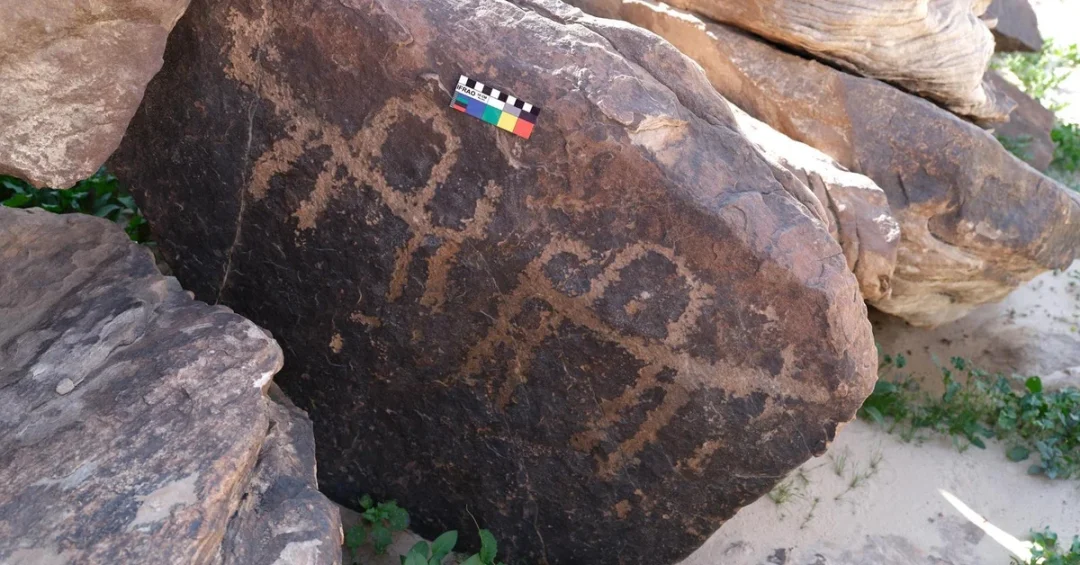
Saudi Arabia’s King Abdulaziz Royal Reserve Development Authority (KARRDA) has announced exceptional archaeological discoveries in the Rawdat Al-Khafs area, located in the southern section of the reserve, dating from the 4th century BC to the 1st century AD. The finds, which include early Arabic inscriptions and rock drawings of human and animal forms, were revealed on April 18 to mark World Heritage Day, according to the Saudi Press Agency (SPA). The announcement underscores the Kingdom’s ongoing commitment to preserving its cultural treasures and promoting its rich heritage both regionally and internationally, in line with the ambitious goals of Saudi Vision 2030.
Could these ancient markings hold the key to understanding early civilizations that once thrived in the Arabian Peninsula? The discovery offers a rare window into a bygone era, revealing the reserve’s wealth of human, cultural, and historical heritage. The King Abdulaziz Royal Reserve, one of Saudi Arabia’s largest protected areas, continues to yield evidence of ancient human activity, reinforcing the Kingdom’s role as a custodian of world heritage. This latest find not only enriches Saudi Arabia’s archaeological record but also adds a significant chapter to the global story of human settlement and cultural exchange.
Context and Background
What makes the Rawdat Al-Khafs area so historically significant? Located within the southern expanse of the King Abdulaziz Royal Reserve, this region has long been recognized for its natural beauty and biodiversity. However, the recent archaeological discoveries reveal that it was also a vibrant hub of human activity millennia ago. The King Abdulaziz Royal Reserve Development Authority (KARRDA), established to oversee the conservation and development of the reserve, has been instrumental in uncovering these treasures. The reserve itself spans a vast area of diverse landscapes, from rugged mountains to lush valleys, and is home to a wide array of wildlife, including the Arabian oryx and sand gazelle.
The artifacts date back to a period spanning from the 4th century BC to the 1st century AD, a time when the Arabian Peninsula was a crossroads for trade, culture, and ideas. Early Arabic inscriptions found at the site provide valuable insights into the development of writing systems in the region. Rock drawings depicting human and animal forms offer a glimpse into the daily life, beliefs, and artistic expressions of ancient inhabitants. These discoveries are part of a broader effort by Saudi Arabia to document and preserve its extensive archaeological heritage, which includes thousands of sites across the Kingdom.
The timing of the announcement, coinciding with World Heritage Day on April 18, highlights Saudi Arabia’s dedication to celebrating and protecting its cultural legacy. World Heritage Day, observed globally, aims to raise awareness about the diversity of cultural heritage and the efforts required to safeguard it. By revealing these finds on this occasion, the Kingdom sends a powerful message about the importance of heritage preservation as a pillar of national identity and global cultural diplomacy.
Key Details of the Discovery
What exactly did archaeologists uncover in Rawdat Al-Khafs? The finds comprise a collection of early Arabic inscriptions and rock art. The inscriptions, etched into stone, are among the earliest examples of Arabic script, offering linguists and historians a rare opportunity to study the evolution of the language. The rock drawings feature human figures, animals such as camels, horses, and possibly lions, and abstract symbols. These artistic expressions likely served ritualistic, communicative, or decorative purposes, reflecting the cultural and spiritual life of ancient communities.
The King Abdulaziz Royal Reserve Development Authority (KARRDA) has been leading excavation and documentation efforts in the area. According to the Saudi Press Agency, the discoveries highlight the reserve’s wealth of human, cultural, and historical heritage. The authority’s work is part of a larger national strategy to inventory and protect archaeological sites, many of which remain unexplored. The Rawdat Al-Khafs area, with its strategic location and natural resources, appears to have been a favored settlement or stopping point for ancient travelers and traders.
Detailed analysis of the inscriptions and drawings is ongoing. Experts will study the script, motifs, and materials to determine precise dates and cultural affiliations. Such research can reveal trade routes, social structures, and religious practices of the time. The findings also complement other major archaeological discoveries in Saudi Arabia, such as those in AlUla, Mada’in Salih, and the Farasan Islands, further enriching the Kingdom’s historical narrative.
International and Regional Impact
How will these discoveries influence Saudi Arabia’s standing in the global heritage community? The announcement reinforces the Kingdom’s reputation as a guardian of ancient civilizations. By sharing these findings with the world, Saudi Arabia contributes to the collective understanding of human history. International scholars and institutions are likely to take keen interest, potentially leading to collaborative research projects. The discovery also aligns with UNESCO’s objectives to protect cultural heritage, and it may bolster Saudi Arabia’s case for listing additional sites on the World Heritage List.
Regionally, the finds strengthen cultural ties among Gulf Cooperation Council (GCC) countries, which share a deep historical connection. The Arabian Peninsula has always been a bridge between continents, and these artifacts underscore that legacy. For neighboring nations, the discovery serves as a reminder of the shared heritage that unites the region. It also enhances the appeal of Saudi Arabia as a destination for cultural tourism, attracting visitors eager to explore its ancient past. The Kingdom’s efforts to preserve and promote heritage are part of a broader strategy to diversify its economy and international image.
Furthermore, the timing of the announcement on World Heritage Day amplifies its impact. It demonstrates Saudi Arabia’s active participation in global cultural dialogues and its commitment to the principles of the World Heritage Convention. This move is consistent with the Kingdom’s Vision 2030, which seeks to position Saudi Arabia as a hub for culture, tourism, and knowledge exchange.
Economic and Strategic Significance
What do these archaeological finds mean for Saudi Arabia’s economy and strategic goals? Heritage tourism is a growing sector under Vision 2030, which aims to increase the tourism sector’s contribution to GDP and create jobs. Discoveries like those in Rawdat Al-Khafs add value to the Kingdom’s tourism offerings, providing unique attractions for both domestic and international visitors. The King Abdulaziz Royal Reserve, with its natural and cultural assets, could become a key destination for eco-tourism and cultural exploration, driving economic diversification.
Strategically, the preservation of heritage supports national identity and social cohesion. By investing in archaeological research and site management, Saudi Arabia demonstrates its commitment to safeguarding its history for future generations. This not only fosters pride among citizens but also enhances the Kingdom’s soft power on the global stage. The discoveries also create opportunities for academic partnerships, technology transfer in areas like digital documentation and conservation, and the development of local expertise in archaeology and museum studies.
Moreover, the announcement aligns with the Public Investment Fund’s (PIF) initiatives to develop tourism and entertainment projects. The integration of heritage sites into broader development plans can stimulate infrastructure improvements, attract private investment, and promote sustainable practices. As Saudi Arabia opens up to the world, its rich archaeological heritage becomes a vital component of its economic and cultural diplomacy.
Vision 2030 Alignment
How does this discovery fit into Saudi Arabia’s long-term vision? Vision 2030, launched by Crown Prince Mohammed bin Salman, aims to transform the Kingdom into a diversified, knowledge-based economy and a global leader in various fields. Cultural heritage preservation is explicitly recognized as a key pillar of this vision, contributing to the enrichment of national identity and the promotion of Saudi Arabia’s image abroad. The King Abdulaziz Royal Reserve Development Authority’s work exemplifies this commitment, combining environmental conservation with cultural stewardship.
The discovery in Rawdat Al-Khafs is more than an archaeological find; it is a testament to Saudi Arabia’s dedication to honoring its past while building its future. By uncovering and sharing these ancient inscriptions and drawings, the Kingdom invites the world to appreciate its deep-rooted history. As Vision 2030 progresses, such initiatives will continue to strengthen Saudi Arabia’s role as a bridge between civilizations and a champion of heritage preservation. This aligns with the broader goals of enhancing quality of life, fostering national pride, and positioning the Kingdom as a premier destination for culture and tourism.
20 Questions
Q1. What archaeological discoveries were announced in the King Abdulaziz Royal Reserve?
A1. The King Abdulaziz Royal Reserve Development Authority announced exceptional archaeological discoveries in the Rawdat Al-Khafs area, including early Arabic inscriptions and rock drawings of human and animal forms, dating from the 4th century BC to the 1st century AD.
Q2. When and where were these discoveries made?
A2. The discoveries were made in the Rawdat Al-Khafs area, located in the southern section of the King Abdulaziz Royal Reserve. They were announced on April 18, 2025, to mark World Heritage Day.
Q3. What is the significance of the early Arabic inscriptions?
A3. The early Arabic inscriptions are among the oldest examples of Arabic script, offering valuable insights into the development of writing systems in the Arabian Peninsula and the cultural history of ancient inhabitants.
Q4. What do the rock drawings depict?
A4. The rock drawings depict human figures, animals such as camels, horses, and possibly lions, as well as abstract symbols. They likely served ritualistic, communicative, or decorative purposes in ancient times.
Q5. Which authority is responsible for the discoveries?
A5. The King Abdulaziz Royal Reserve Development Authority (KARRDA) is responsible for the discoveries and ongoing excavation efforts in the reserve, as part of its mission to preserve and promote Saudi Arabia’s heritage.
Q6. How do these findings contribute to Saudi Arabia’s heritage preservation efforts?
A6. The findings enrich Saudi Arabia’s archaeological record and demonstrate the Kingdom’s commitment to preserving its cultural treasures. They support national strategies to document and protect heritage sites for future generations.
Q7. What is the historical period covered by these artifacts?
A7. The artifacts date from the 4th century BC to the 1st century AD, spanning a period of significant cultural and trade activity in the Arabian Peninsula.
Q8. Why was World Heritage Day chosen for the announcement?
A8. World Heritage Day, observed on April 18, highlights the importance of cultural heritage. Announcing the discoveries on this day underscores Saudi Arabia’s dedication to heritage preservation and its participation in global cultural celebrations.
Q9. What impact will these discoveries have on tourism in Saudi Arabia?
A9. The discoveries enhance Saudi Arabia’s appeal as a cultural tourism destination, attracting visitors interested in ancient history. This supports Vision 2030 goals to diversify the economy and boost the tourism sector.
Q10. How do these findings align with Vision 2030?
A10. Vision 2030 emphasizes cultural heritage preservation as a pillar of national identity and economic diversification. The discoveries contribute to these goals by promoting tourism, education, and global cultural exchange.
Q11. What other archaeological sites exist in Saudi Arabia?
A11. Saudi Arabia is home to numerous archaeological sites, including AlUla, Mada’in Salih, and the Farasan Islands. These sites showcase the Kingdom’s rich history and attract researchers and tourists from around the world.
Q12. How will experts analyze the inscriptions and drawings?
A12. Experts will study the script, motifs, and materials to determine precise dates and cultural affiliations. This research can reveal trade routes, social structures, and religious practices of ancient communities.
Q13. What is the role of the King Abdulaziz Royal Reserve in conservation?
A13. The reserve protects diverse landscapes and wildlife, including the Arabian oryx and sand gazelle. It also preserves cultural heritage, balancing environmental conservation with historical research and public education.
Q14. How does this discovery enhance Saudi Arabia’s international standing?
A14. It reinforces Saudi Arabia’s reputation as a guardian of ancient civilizations and a contributor to global heritage knowledge. It may lead to international research collaborations and boost cultural diplomacy.
Q15. What economic benefits could arise from this discovery?
A15. The discovery can stimulate heritage tourism, create jobs, and attract investment in infrastructure and services. It supports economic diversification by adding unique cultural attractions to Saudi Arabia’s tourism offerings.
Q16. Are there plans to develop the Rawdat Al-Khafs area for visitors?
A16. While specific plans are not detailed, the King Abdulaziz Royal Reserve Development Authority aims to balance conservation with sustainable tourism, potentially developing guided tours and educational programs in the future.
Q17. How do these findings compare to other regional discoveries?
A17. They are part of a growing body of evidence showing the Arabian Peninsula’s role as a crossroads of ancient civilizations. Similar finds in neighboring countries highlight shared heritage and regional cultural connections.
Q18. What technology is used in documenting these findings?
A18. Modern techniques such as digital imaging, 3D scanning, and GIS mapping are likely used to document and analyze the inscriptions and drawings, ensuring accurate preservation and study.
Q19. How can the public learn more about these discoveries?
A19. The public can follow announcements from the Saudi Press Agency and the King Abdulaziz Royal Reserve Development Authority. Museums and cultural events may also feature the findings in the future.
Q20. What is the long-term vision for Saudi Arabia’s archaeological heritage?
A20. Saudi Arabia aims to preserve and promote its heritage as part of Vision 2030, integrating archaeological sites into tourism, education, and research. This will enhance national pride and global appreciation of the Kingdom’s history.
Reader Feedback
We value your thoughts. Please share your feedback on this article.
Your feedback helps us improve our coverage.
Related articles
 Al Mousa Heritage Village: A Cultural Gem in Al-Baha
 Traditional Plowing Endures in Aseer’s Terraced Farms
 Riyadh Named Guest of Honor at Buenos Aires Book Fair
 First Makkah Clock: 1930s Saudi Custodianship Milestone
 Jazan Cultural House Explores Symbolism of Saudi Flag
 Saudi Flag Exhibition at King Khalid University