


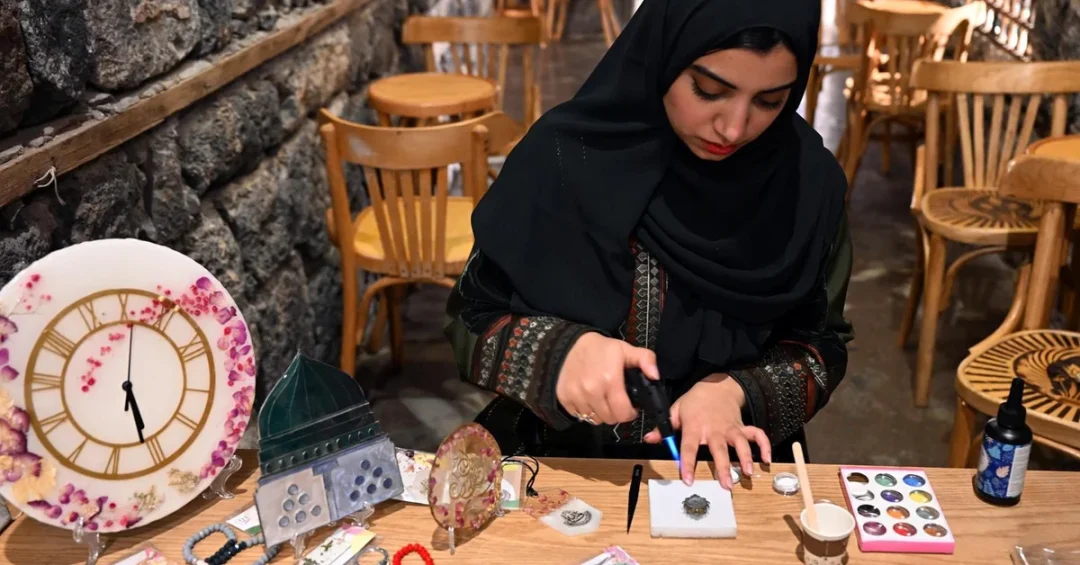
Resin art, a contemporary crafting technique that transforms liquid resin into three-dimensional objects and glossy coatings, has surged in popularity across Saudi Arabia, with artists in Madinah leading a creative revival that blends modern materials with the Kingdom’s deep cultural heritage. According to the Saudi Press Agency (SPA), when liquid resin is mixed with a hardener, it solidifies into a durable, glass-like finish that has captured the imagination of visual artists and crafters alike. Among the most prominent figures in this movement is Elyan Al-Aufi, a Saudi artist from Madinah who has made significant contributions to resin art following her visual arts studies at Taibah University. Her work often captures Madinah’s cultural essence, featuring local elements such as the Madani script, roses, mint, and basil. Travelers to Madinah and the Prophet’s Mosque frequently acquire her art as souvenirs, carrying a piece of the city’s spiritual and artistic identity home with them. The growing appeal of resin art raises a compelling question: how has a modern synthetic medium become such an effective vehicle for expressing centuries-old cultural traditions?
The rise of resin art in Saudi Arabia reflects a broader creative awakening taking place across the Kingdom, where traditional crafts and contemporary techniques increasingly intersect. Resin, a versatile material that can be poured, molded, and shaped, allows artists to experiment with color, transparency, and form in ways that were previously impossible with conventional media. As Saudi Arabia invests in its cultural economy through Vision 2030, initiatives aimed at empowering artists and expanding creative industries have created fertile ground for new art forms to flourish. Isn’t it remarkable how a material originally developed for industrial applications has become a canvas for cultural storytelling? The Kingdom’s commitment to nurturing artistic talent, particularly among women and young people, has positioned resin art as both a creative outlet and an economic opportunity for artisans in regions like Madinah, where heritage and innovation naturally converge.
Context and Background
What exactly is resin art, and why has it captured the attention of artists and collectors around the world? Resin art is a crafting technique that utilizes a liquid resin substance, typically a two-part epoxy or polyurethane compound, to form three-dimensional objects or glossy coatings. When the resin is mixed with a hardener, a chemical reaction occurs that causes the material to solidify, creating a transparent, glass-like finish that can preserve colors, shapes, and embedded objects for years. This durability is a key reason why resin has become a preferred medium for artists seeking to create pieces that withstand time and environmental conditions effectively. The technique has gained global traction, but in Saudi Arabia, it has taken on a distinctly local character, with artists drawing inspiration from the Kingdom’s landscapes, traditions, and religious heritage.
Elyan Al-Aufi’s journey exemplifies how formal education and cultural pride can combine to produce innovative art. After completing her visual arts studies at Taibah University in Madinah, she began experimenting with resin as a medium to express the essence of her hometown. Her creations often incorporate the Madani script, a distinctive calligraphic style associated with Madinah, alongside botanical elements like roses, mint, and basil that are deeply rooted in the city’s identity. These elements are not merely decorative; they serve as cultural markers that connect the artwork to a specific place and history. Travelers visiting Madinah and the Prophet’s Mosque often purchase her pieces as souvenirs, transforming them into ambassadors of Saudi culture that travel across the globe. How often does a souvenir carry such profound meaning, serving as both a memento and a testament to a city’s living heritage?
The context for this artistic surge is inseparable from Saudi Arabia’s broader cultural transformation. Under Vision 2030, the Kingdom has prioritized the development of cultural and creative industries as drivers of economic diversification and social enrichment. The Ministry of Culture, established in 2018, has launched numerous programs to support artists, preserve heritage, and promote Saudi creativity on the international stage. Resin art, with its blend of modern technique and traditional inspiration, aligns perfectly with these objectives. It offers a way for artists to engage with global trends while remaining rooted in local identity, and it provides economic opportunities for artisans who can sell their work to the millions of pilgrims and tourists who visit the Kingdom each year. In this sense, resin art is not just a hobby; it is a small but meaningful component of a national strategy to build a vibrant, diversified economy.
Key Details
What makes resin art so versatile, and how is it being applied in Saudi Arabia and beyond? According to the Saudi Press Agency, resin art is used to craft a wide variety of items, from accessories and jewelry to household furnishings and decorative pieces. Artisans create necklaces, rings, and earrings using special molds, often embedding flowers, shells, or metallic flakes within the resin to achieve unique visual effects. The pouring technique, in which colored resins are layered and blended, yields paintings with fluid, abstract patterns that cannot be replicated exactly, making each piece one of a kind. This unpredictability is part of the medium’s allure; artists must work quickly and intuitively, embracing the organic flow of the material as it sets. The result is a body of work that celebrates spontaneity and individuality, values that resonate with contemporary art collectors.
Beyond jewelry and paintings, resin has found its way into functional household items such as tables, trays, and coasters. Artisans often incorporate natural elements like wood, flowers, and leaves into these pieces, creating a fusion of organic and synthetic materials that is both practical and aesthetically striking. Resin’s ability to encapsulate and preserve objects has also made it a popular choice for memorabilia. Leaves, photographs, and other personal items can be embedded in resin, creating lasting keepsakes that protect fragile materials from decay. In a region where preserving family history and cultural artifacts is deeply valued, this application of resin art holds particular significance. Could there be a more fitting metaphor for Saudi Arabia’s approach to modernization, one that preserves the past while embracing the future?
The technical properties of resin contribute to its growing popularity. Once cured, resin is highly durable, resistant to moisture, and capable of maintaining its clarity and color for many years. This makes it suitable for both indoor and outdoor applications, although prolonged exposure to direct sunlight can cause yellowing in some formulations. Artists in Saudi Arabia have adapted their techniques to account for the Kingdom’s intense climate, using UV-resistant resins and protective coatings to ensure their work endures. The glossy, glass-like finish that resin imparts is another key attraction; it enhances the vibrancy of colors and gives pieces a polished, professional appearance. For artists like Elyan Al-Aufi, these qualities provide a canvas for expressing the beauty of Madinah in a form that can be appreciated by visitors from around the world.
International and Regional Impact
How does the popularity of resin art in Saudi Arabia resonate beyond the Kingdom’s borders? The global art market has shown increasing interest in contemporary Middle Eastern art, and Saudi artists are gaining recognition at international exhibitions and fairs. Resin art, with its universal appeal and striking visual qualities, has the potential to travel well, appealing to collectors who value both craftsmanship and cultural authenticity. Elyan Al-Aufi’s work, which draws on the specific heritage of Madinah, offers international audiences a window into a city that is central to Islamic history but often understood only through its religious significance. By transforming local motifs like the Madani script and native botanicals into contemporary art objects, she and other Saudi artists are contributing to a more nuanced global understanding of the Kingdom’s cultural richness.
Regionally, the rise of resin art reflects a broader trend across the Gulf, where artists are increasingly experimenting with new materials and techniques. In the United Arab Emirates, Qatar, and Kuwait, similar movements are underway, often supported by government initiatives and private galleries. Saudi Arabia’s unique position as the custodian of Islam’s holiest sites gives its artistic output a distinct character, one that blends spiritual reverence with creative innovation. Pilgrims who purchase resin art souvenirs in Madinah carry with them not only a beautiful object but also a connection to a place of profound significance. This soft power dimension of cultural exchange is difficult to quantify but undeniably valuable, as it fosters goodwill and understanding between Saudi Arabia and the millions of people who visit each year. Isn’t it fascinating how a small piece of art can serve as a bridge between cultures?
Economic and Strategic Significance
What economic opportunities does resin art create for Saudi artisans and entrepreneurs? The global arts and crafts market is substantial, and niche segments like resin art have seen steady growth, particularly through online platforms and social media. Saudi artists can leverage digital tools to reach customers far beyond the Kingdom, selling their work through e-commerce sites and showcasing it on platforms like Instagram and TikTok. For women in particular, resin art offers a flexible and potentially lucrative avenue for economic participation, aligning with Vision 2030’s goal of increasing female workforce participation. Elyan Al-Aufi’s success demonstrates that a career in the arts is viable in Saudi Arabia, and her story can inspire others to pursue creative paths. The Kingdom’s investment in cultural infrastructure, including galleries, festivals, and educational programs, further supports this ecosystem.
From a strategic perspective, the growth of resin art and other creative industries contributes to Saudi Arabia’s efforts to diversify its economy away from oil dependence. The cultural sector is a key pillar of Vision 2030, with targets to increase its contribution to GDP and create jobs for Saudi nationals. Resin art, though a niche, is part of a larger tapestry of creative enterprises that include film, fashion, design, and heritage crafts. By nurturing these industries, the Kingdom not only preserves its cultural identity but also builds a more resilient and diversified economy. The presence of resin art in tourist markets near the Prophet’s Mosque in Madinah illustrates how cultural products can generate revenue while also enhancing the visitor experience. Could this be a model for other regions in Saudi Arabia seeking to develop their own cultural economies?
Vision 2030 Alignment
How does resin art align with the aspirations of Saudi Vision 2030? At its core, Vision 2030 is about transforming Saudi society and economy while preserving the Kingdom’s values and heritage. Resin art embodies this balance by using modern materials and techniques to express traditional cultural themes. The Saudi Press Agency’s coverage of Elyan Al-Aufi’s work highlights the role of individual artists in this national journey, showcasing how personal creativity can contribute to a broader cultural renaissance. The Ministry of Culture and other government bodies have actively supported artists through grants, residencies, and exhibition opportunities, recognizing that a vibrant cultural scene is essential to a thriving society. As more Saudis engage with resin art, whether as creators or consumers, they participate in the ongoing story of a nation that honors its past while building its future.
Looking ahead, the future of resin art in Saudi Arabia appears bright. With continued support from Vision 2030 initiatives, artists like Elyan Al-Aufi will likely inspire a new generation of creators to explore the medium. The unique fusion of Madinah’s spiritual and cultural heritage with contemporary artistic practice offers a powerful example of how tradition and innovation can coexist. Travelers to the Kingdom will continue to seek out meaningful souvenirs, and resin art, with its beauty and durability, is well-positioned to meet that demand. In a world where mass-produced goods dominate, the handmade, one-of-a-kind nature of resin art stands out as a testament to human creativity and cultural pride. As Saudi Arabia continues its remarkable transformation, the arts will remain a vital expression of its identity, and resin art will be a shining example of how beauty and durability can be combined in ways that resonate across generations.
20 Questions
Q1. What is resin art?
A1. Resin art is a crafting technique that uses liquid resin, which when mixed with a hardener solidifies into three-dimensional objects or glossy coatings. It creates a glass-like finish and is used for jewelry, paintings, and household items.
Q2. Who is Elyan Al-Aufi?
A2. Elyan Al-Aufi is a Saudi artist from Madinah who studied visual arts at Taibah University. She is known for her resin art that incorporates local cultural elements such as the Madani script, roses, mint, and basil.
Q3. What makes resin art popular in Saudi Arabia?
A3. Resin art is popular in Saudi Arabia because it allows artists to blend modern techniques with traditional cultural motifs. It also produces durable, beautiful items that appeal to tourists and locals alike, especially in Madinah.
Q4. How is resin art used in jewelry?
A4. Resin art is used to create necklaces, rings, and earrings using special molds. Artists can embed flowers, shells, or other small objects within the resin to create unique, personalized pieces that are lightweight and durable.
Q5. What is the Madani script?
A5. The Madani script is a distinctive calligraphic style associated with Madinah. It is often used in local art and crafts, including resin art, to reflect the city’s cultural and historical identity.
Q6. Can resin art preserve natural elements?
A6. Yes, resin can encapsulate and preserve natural elements like leaves, flowers, and even photographs. This makes it a popular choice for keepsakes and memorabilia, protecting fragile items from decay and damage.
Q7. What are the benefits of using resin in art?
A7. Resin offers a glass-like transparency, glossy finish, and high durability. It allows for creative blending of colors and materials, and once cured, it withstands time and environmental conditions effectively.
Q8. How does resin art align with Vision 2030?
A8. Resin art supports Vision 2030 by contributing to the cultural economy, empowering artists, and creating economic opportunities. It reflects the Kingdom’s commitment to preserving heritage while embracing modernization and innovation.
Q9. Where can travelers buy resin art in Saudi Arabia?
A9. Travelers to Madinah and the Prophet’s Mosque often purchase resin art as souvenirs from local artists like Elyan Al-Aufi. These pieces are available in markets and galleries near the holy sites.
Q10. Is resin art difficult to learn?
A10. Resin art requires practice and precision, but it is accessible to beginners. Many artists learn through formal education, workshops, or online tutorials. The medium allows for experimentation and personal expression.
Q11. What household items can be made with resin?
A11. Resin is used to create tables, trays, coasters, and decorative bowls. Artists often incorporate natural elements like wood or flowers, resulting in functional pieces that are both artistic and durable.
Q12. How does resin art reflect Saudi culture?
A12. Resin art in Saudi Arabia often features local symbols, scripts, and botanicals, such as the Madani script and native plants. This blends contemporary technique with cultural heritage, creating a unique Saudi artistic identity.
Q13. What is the pouring technique in resin art?
A13. The pouring technique involves mixing and layering colored resins, then pouring them onto a surface. The colors blend organically, creating abstract patterns. Each piece is unique because the flow cannot be exactly replicated.
Q14. Is resin art environmentally friendly?
A14. Traditional epoxy resins are synthetic and not biodegradable, but artists can use eco-friendly formulations and practice responsible disposal. The durability of resin art means pieces last long, reducing the need for replacements.
Q15. Can resin art be displayed outdoors?
A15. Resin art can be displayed outdoors if made with UV-resistant resin and protective coatings. However, prolonged direct sunlight may cause yellowing. Artists in Saudi Arabia adapt techniques for the local climate.
Q16. How long does it take to create a resin art piece?
A16. Creation time varies by complexity. Small jewelry may take a few hours plus curing time, while larger paintings or tables can take days or weeks. Curing typically requires 24 to 72 hours.
Q17. What role do women play in Saudi resin art?
A17. Women are prominent in Saudi resin art, with artists like Elyan Al-Aufi leading the way. Vision 2030 supports female participation in the arts, providing opportunities for economic empowerment and creative expression.
Q18. Are there resin art exhibitions in Saudi Arabia?
A18. Yes, resin art is increasingly featured in galleries and cultural festivals across the Kingdom. The Ministry of Culture supports such events, showcasing local talent and promoting the creative economy.
Q19. How does resin art contribute to tourism in Madinah?
A19. Resin art offers tourists unique, handcrafted souvenirs that embody Madinah’s culture. This enhances the visitor experience and supports local artisans, contributing to the growth of cultural tourism in the region.
Q20. What is the future of resin art in Saudi Arabia?
A20. The future looks promising, with growing interest from artists and collectors. Continued support from Vision 2030 initiatives and the Ministry of Culture will likely foster innovation and expand market opportunities for Saudi resin artists.
Reader Feedback
We value your thoughts. Please share your feedback on this article.
Your feedback helps us improve our coverage.
Related articles
 Over 700 Visitors Enjoy Camel-Riding at King Abdulaziz Festival
 Saudi Academy Welcomes Second Abjad Arabic Cohort
 King Abdulaziz Public Library Presents Children’s Play on Camel Heritage
 Saudi Attire Experience Draws Crowds at Camel Festival
 Qassim Craftsmanship Shines at King Abdulaziz Camel Festival
 Riyadh Theater Festival Draws Exceptional Crowds on Day Eight