


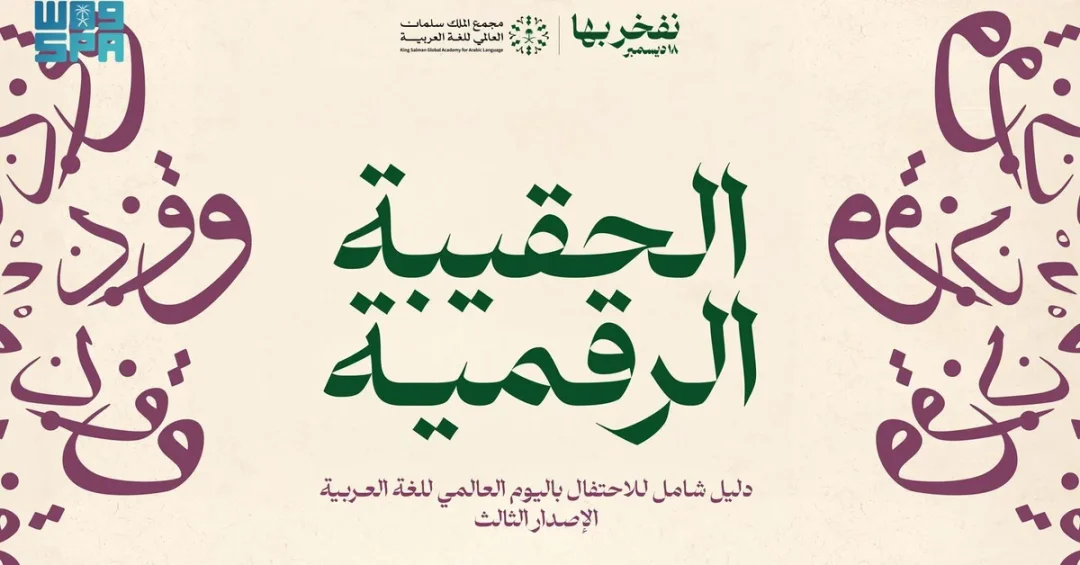
The King Salman Global Academy for Arabic Language has released a comprehensive digital toolkit under the theme “Proud of it,” as part of its preparations to celebrate World Arabic Language Day, observed annually on December 18. The announcement, carried by the Saudi Press Agency, represents a significant step in the Kingdom’s ongoing efforts to promote and preserve the Arabic language across public and private sectors, as well as among individuals worldwide. The initiative reflects the unwavering support that the Kingdom and its wise leadership continue to give to the Arabic language, recognizing it as a cornerstone of cultural identity and a bridge between civilizations.
Could there be a more fitting way to honor a language spoken by over 400 million people across the globe? The digital toolkit offers a wealth of linguistic information and supportive ideas designed to enrich resources about the Arabic language, honor its legacy, and enhance its status on the international stage. It specifically aims to support institutions and empower individuals working in the field of Arabic language, providing them with practical tools ahead of the World Arabic Language Day celebrations. This initiative coincides with the United Nations-designated observance, which was established by UN General Assembly resolution on December 18, 1973, designating Arabic as one of the official working languages of the United Nations.
Context and Background
What makes this particular moment in history so significant for the Arabic language? The observance of World Arabic Language Day each December 18 serves as a consistent platform to reinforce the cultural and historical legacy of Arabic, one of the world’s oldest and most influential languages. The day seeks to raise awareness about the history, culture, and development of the Arabic language through a program featuring specialized activities and events that span the globe. The King Salman Global Academy for Arabic Language, based in Riyadh, has consistently been at the forefront of these efforts, working tirelessly to promote the language through innovative educational initiatives and cultural programs.
The academy’s release of the digital toolkit under the theme “Proud of it” represents a strategic approach to modernizing how the Arabic language is taught, learned, and celebrated. By providing linguistic information and supportive ideas in a digital format, the academy acknowledges the evolving ways in which people engage with language in the twenty-first century. This initiative is not merely about preservation but about active promotion and adaptation, ensuring that Arabic remains vibrant and relevant in an increasingly digital world. The toolkit is designed to be accessible to a wide range of users, from educators and students to institutions and individuals passionate about Arabic language and culture.
The United Nations Educational, Scientific, and Cultural Organization (UNESCO) has set the theme for this year’s World Arabic Language Day as “Arabic Language and AI – Advancing Innovation While Preserving Cultural Heritage.” This theme perfectly encapsulates the dual imperatives facing the Arabic language today: embracing technological advancement while safeguarding the linguistic and cultural heritage that has been passed down through generations. The King Salman Global Academy for Arabic Language’s digital toolkit directly supports this theme by providing modern tools that leverage technology to enhance Arabic language education and appreciation.
Key Details of the Digital Toolkit
What exactly does this digital toolkit offer to its users? The toolkit provides a comprehensive array of linguistic information and supportive ideas that contribute to enriching the resources available about the Arabic language. It is designed to honor the language, enhance its status, support institutions, and empower individuals working in the field of Arabic language. The academy has developed this resource with a clear understanding that the promotion of Arabic requires a multi-faceted approach, one that combines traditional appreciation with modern accessibility. The toolkit serves as a practical resource for anyone seeking to celebrate and promote the Arabic language in their community, workplace, or educational institution.
The timing of the release is particularly strategic, coming in advance of the December 18 celebrations. This allows institutions and individuals ample time to prepare their own events and activities using the resources provided. The academy’s proactive approach ensures that the celebration of Arabic is not confined to a single day but extends throughout the year, fostering sustained engagement with the language. By empowering stakeholders with practical tools and ideas, the academy multiplies the impact of its efforts, creating a ripple effect that reaches far beyond its own direct initiatives.
The digital toolkit also reflects the Kingdom’s broader commitment to cultural diplomacy and soft power. Saudi Arabia has long recognized that language is one of the most effective vehicles for cultural exchange and mutual understanding between nations. By investing in the promotion of Arabic, the Kingdom positions itself as a global leader in cultural preservation and innovation. This initiative aligns with the vision of Saudi leadership to project a positive image of the Kingdom on the world stage, showcasing its rich cultural heritage and its embrace of modernity.
International and Regional Impact
How does the promotion of the Arabic language contribute to global cultural understanding? Arabic is not only the liturgical language of Islam but also a language of immense historical, scientific, and literary significance. From the Golden Age of Islamic civilization, when Arabic was the language of groundbreaking advances in mathematics, medicine, astronomy, and philosophy, to the present day, Arabic has served as a vital conduit for knowledge and cultural exchange. The King Salman Global Academy for Arabic Language’s efforts to promote the language internationally contribute to a deeper appreciation of this heritage and foster greater cross-cultural dialogue.
For non-Arabic speakers around the world, the digital toolkit provides an accessible entry point into the rich world of Arabic language and culture. By offering linguistic information and supportive ideas in a user-friendly digital format, the academy lowers the barriers to engagement with Arabic. This is particularly important in a globalized world where cultural literacy is increasingly valued. The toolkit not only serves Arabic speakers seeking to deepen their connection to their linguistic heritage but also extends an invitation to the international community to discover the beauty and complexity of the Arabic language.
Regionally, the initiative reinforces Saudi Arabia’s role as a custodian of Arab and Islamic heritage. The Kingdom has consistently invested in institutions and programs that preserve and promote the Arabic language, recognizing its centrality to Arab identity and its importance as a unifying force across the region. The King Salman Global Academy for Arabic Language stands as a testament to this commitment, serving as a hub for research, education, and cultural exchange that benefits the entire Arab world and beyond.
Economic and Strategic Significance
Why should the promotion of language be viewed through an economic and strategic lens? Language is a crucial component of soft power, and nations that successfully promote their languages internationally gain significant diplomatic, economic, and cultural advantages. Arabic is one of the six official languages of the United Nations and is spoken across a vast geographic area encompassing some of the world’s most dynamic economies. The promotion of Arabic facilitates trade, investment, and tourism by enabling deeper communication and understanding between Saudi Arabia and its international partners.
The digital toolkit released by the King Salman Global Academy for Arabic Language represents an investment in human capital and cultural infrastructure. By empowering individuals and institutions to celebrate and promote Arabic, the academy contributes to the development of a skilled workforce capable of engaging with Arabic-speaking markets and cultures. This aligns with Saudi Arabia’s strategic objectives of economic diversification and global integration, as outlined in Vision 2030. A vibrant Arabic language ecosystem supports sectors ranging from education and media to tourism and international business.
Furthermore, the integration of artificial intelligence and digital tools in language promotion, as highlighted by UNESCO’s theme for this year’s World Arabic Language Day, opens new avenues for innovation and economic growth. The Arabic language technology sector is rapidly expanding, with applications in machine translation, natural language processing, and educational technology. The academy’s digital toolkit positions Saudi Arabia at the forefront of this emerging field, showcasing the Kingdom’s capacity for technological innovation while preserving its cultural heritage.
Vision 2030 Alignment
How does the promotion of the Arabic language connect to Saudi Arabia’s ambitious Vision 2030? Vision 2030 is fundamentally about transforming Saudi Arabia into a diversified, knowledge-based economy while preserving its cultural and religious heritage. The promotion of Arabic language and culture is an integral part of this vision, as it strengthens national identity, fosters cultural pride, and enhances the Kingdom’s global standing. The King Salman Global Academy for Arabic Language’s digital toolkit exemplifies how Vision 2030 objectives can be advanced through innovative, culturally grounded initiatives that leverage technology and empower individuals.
The academy’s work supports several key pillars of Vision 2030, including the development of a vibrant society, the creation of a thriving economy, and the realization of an ambitious nation. By enhancing the status of the Arabic language and supporting those who work in the field, the academy contributes to educational excellence, cultural enrichment, and international engagement. As Saudi Arabia continues its journey of transformation, initiatives like the digital toolkit demonstrate the Kingdom’s commitment to honoring its past while embracing its future, ensuring that the Arabic language remains a source of pride and a bridge to the world for generations to come.
In conclusion, the release of the digital toolkit by the King Salman Global Academy for Arabic Language is more than a preparatory step for World Arabic Language Day; it is a declaration of the Kingdom’s enduring commitment to the Arabic language as a vessel of culture, knowledge, and identity. As the world celebrates Arabic on December 18, the academy’s efforts will resonate far beyond the day itself, contributing to a global appreciation of a language that has shaped human civilization for centuries. Isn’t it fitting that Saudi Arabia, the heartland of the Arab and Islamic world, should lead this charge?
20 Questions
Q1. What is the King Salman Global Academy for Arabic Language?
A1. The King Salman Global Academy for Arabic Language is a leading Saudi institution based in Riyadh dedicated to promoting, preserving, and enhancing the Arabic language globally through research, education, and cultural initiatives.
Q2. What is the digital toolkit released by the academy?
A2. The digital toolkit is a comprehensive resource under the theme “Proud of it,” offering linguistic information and supportive ideas to enrich Arabic language celebrations and empower institutions and individuals working in the field.
Q3. When is World Arabic Language Day observed?
A3. World Arabic Language Day is observed annually on December 18, following a UN General Assembly resolution in 1973 that designated Arabic as an official working language of the United Nations.
Q4. Why was December 18 chosen for World Arabic Language Day?
A4. December 18 commemorates the date in 1973 when the UN General Assembly adopted Arabic as one of its official working languages, recognizing its global cultural and historical significance.
Q5. What is the theme of this year’s World Arabic Language Day?
A5. UNESCO has set the theme as “Arabic Language and AI – Advancing Innovation While Preserving Cultural Heritage,” highlighting the intersection of technology and linguistic tradition.
Q6. How does the digital toolkit support the Arabic language?
A6. The toolkit provides linguistic resources, supportive ideas, and practical tools that honor the language, enhance its status, and empower individuals and institutions dedicated to its promotion.
Q7. Who can benefit from the digital toolkit?
A7. Educators, students, cultural institutions, government entities, and individuals passionate about the Arabic language can all benefit from the resources and ideas provided in the toolkit.
Q8. How does this initiative reflect Saudi leadership’s support for Arabic?
A8. The initiative reflects the Kingdom’s wise leadership’s unwavering commitment to the Arabic language as a cornerstone of cultural identity and a bridge between civilizations.
Q9. What is the significance of the theme “Proud of it”?
A9. The theme “Proud of it” expresses pride in the Arabic language’s rich heritage and its continued relevance, encouraging individuals and institutions to celebrate and promote it with enthusiasm.
Q10. How does the toolkit align with UNESCO’s theme on AI and heritage?
A10. The toolkit leverages digital tools to modernize Arabic language promotion, aligning with UNESCO’s focus on advancing innovation while preserving cultural heritage, particularly through technology.
Q11. What role does the academy play in Saudi Vision 2030?
A11. The academy supports Vision 2030 by promoting cultural pride, enhancing educational resources, and fostering international engagement, all of which contribute to a vibrant society and a diversified economy.
Q12. How does the promotion of Arabic contribute to global cultural understanding?
A12. Promoting Arabic facilitates cross-cultural dialogue, deepens appreciation of Arab and Islamic heritage, and enables greater communication between Saudi Arabia and the international community.
Q13. What is the historical significance of the Arabic language?
A13. Arabic has been a language of science, philosophy, and literature since the Golden Age of Islamic civilization, serving as a vital conduit for knowledge and cultural exchange across continents.
Q14. How many people speak Arabic worldwide?
A14. Arabic is spoken by over 400 million people globally, making it one of the most widely spoken languages and a key medium of communication across the Middle East, North Africa, and beyond.
Q15. What events typically mark World Arabic Language Day?
A15. Celebrations include specialized activities, educational programs, cultural events, and social media campaigns that raise awareness about the history, culture, and development of the Arabic language.
Q16. How can institutions use the digital toolkit?
A16. Institutions can use the toolkit to plan events, develop educational materials, and implement initiatives that celebrate Arabic, thereby enhancing their contribution to the language’s promotion.
Q17. What is the significance of Arabic as a UN official language?
A17. Arabic’s status as a UN official language underscores its global importance, facilitating diplomatic communication and ensuring that Arabic-speaking nations are represented in international forums.
Q18. How does the academy empower individuals working in Arabic language fields?
A18. The academy provides resources, training, and networking opportunities that enhance the skills and reach of teachers, translators, researchers, and other professionals dedicated to Arabic.
Q19. What economic benefits can arise from promoting Arabic?
A19. Promoting Arabic can boost trade, tourism, and investment by enabling deeper communication with Arabic-speaking markets, and it supports the growth of language technology and educational sectors.
Q20. How can the international community participate in World Arabic Language Day?
A20. The international community can participate by organizing events, sharing the digital toolkit, learning Arabic, and engaging with the academy’s resources to celebrate the language’s rich heritage and global influence.
Reader Feedback
We value your thoughts. Please share your feedback on this article.
Your feedback helps us improve our coverage.
Related articles
 Ministry of Culture Selects 20 Research Proposals for Camel Studies Grant
 Saudi Arabia, France Deepen Cultural Cooperation with New Executive Programs
 Interior Ministry Launches Falconry Festival Stamp
 KSGAAL Concludes Arabic Language Month in Thailand
 Darah Showcases 2,000+ Manuscripts at Saudi Exhibition
 Saudi Manuscripts Exhibition: 1,200 Years of Heritage