


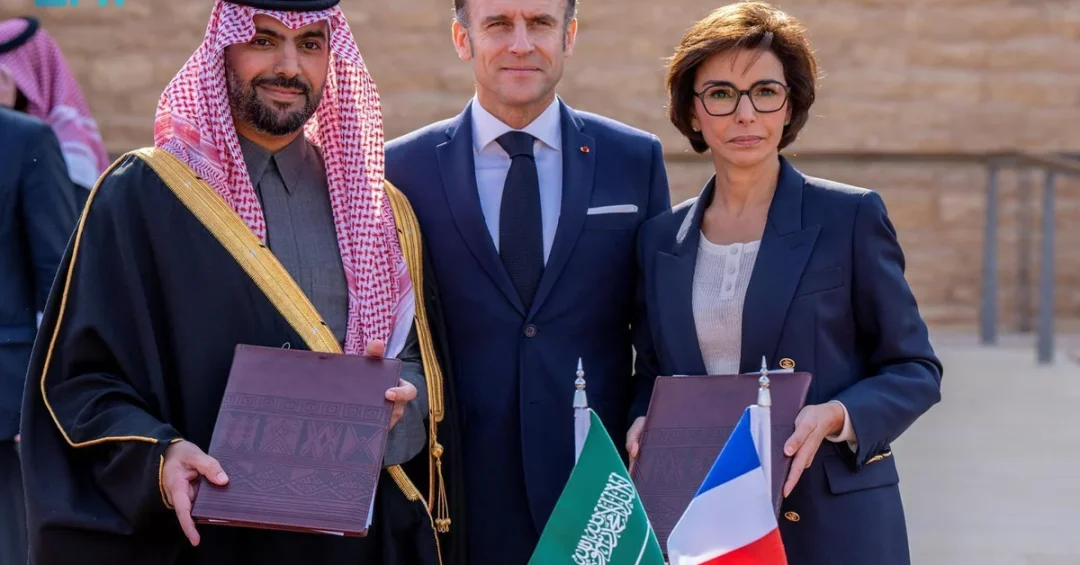
Saudi Arabia and France have signed a new package of executive cultural programs during President Emmanuel Macron’s official visit to the Kingdom, with Saudi Minister of Culture Prince Bader bin Abdullah bin Farhan Al Saud and French Minister of Culture Rachida Dati concluding agreements with nine leading French cultural institutions. The programs, announced in Riyadh, cover heritage preservation, museums, libraries, film, manuscripts, archaeology, and creative industries, and mark a significant milestone in Saudi-French cultural relations.
The agreements were released through official Saudi channels, including the Saudi Press Agency, and reflect the two nations’ shared commitment to advancing global cultural heritage and fostering innovation in the arts. For international observers, the timing matters: the deals convert a long-standing diplomatic relationship into concrete, project-based cooperation that will train Saudi artisans, support archaeological research, and bring French expertise into the Kingdom’s fast-expanding cultural sector. How often does a single state visit produce nine institutional agreements across the full spectrum of cultural activity? Rarely, and that breadth is precisely what makes this week’s announcement notable.
Context and Background
Why has culture become such a central pillar of the Saudi-French relationship? The answer lies in the depth of the bilateral partnership, which spans energy, defense, investment, and now increasingly the arts. France has long been a preferred partner for the Kingdom in cultural matters, thanks to its world-class institutions in archaeology, museology, and cinema. The meeting between Prince Bader bin Abdullah bin Farhan Al Saud, Saudi Minister of Culture, and Rachida Dati, Minister of Culture of the French Republic, took place on the margins of President Macron’s official visit, underscoring how cultural diplomacy now sits alongside trade and security on the bilateral agenda.
The executive programs signed in Riyadh are not isolated gestures. They build on years of growing engagement between Saudi cultural bodies and French counterparts, including cooperation in heritage conservation and the training of Saudi professionals in France. The new agreements formalize that cooperation into structured programs with named institutions, clear thematic focus areas, and deliverable activities such as archaeological surveys, educational workshops, exhibitions, and talent development in film. For a global audience, the significance is straightforward: Saudi Arabia is systematically building the institutional scaffolding of a modern cultural economy, and France is one of its most valued partners in that effort.
It is also worth noting the broader diplomatic context. President Macron’s visit to the Kingdom covered a wide range of topics, from regional stability to economic investment. Culture, however, offers a uniquely durable form of engagement. Exhibitions, manuscript exchanges, and joint archaeological missions create people-to-people ties that outlast political cycles. Does that make cultural diplomacy less important than trade deals? On the contrary, it often makes it more resilient, and both Riyadh and Paris appear to understand that logic well.
Key Details of the Executive Programs
The agreements were signed with nine French institutions, each bringing specialized expertise. They are the National Monuments Center, the Operator of Heritage and Cultural Real Estate Projects, the French National Institute for Preventive Archaeological Research, the Ecole Nationale Supérieure de Création Industrielle, the National Library of France, the Grand Palais, the National Center for Cinema and the Moving Image, the National Institute of Cultural Heritage of France, and the National School of Photography of Arles. Together, they cover the full chain of cultural work, from excavation and preservation to design, publishing, exhibition-making, and film production.
Activities under the programs are concrete and varied. They include training artisans in traditional crafts, conducting archaeological surveys, organizing educational workshops, facilitating exhibitions, showcasing manuscripts, and nurturing talent in film and related fields. Heritage preservation and archaeological research feature prominently, reflecting Saudi Arabia’s rich archaeological landscape and its ambition to present that heritage to the world with international standards of scholarship and conservation. The involvement of the National Library of France and the Grand Palais signals a parallel emphasis on manuscripts, exhibitions, and public engagement.
Cinema and the creative industries also receive dedicated attention. The National Center for Cinema and the Moving Image and the National School of Photography of Arles will support talent development, technical training, and visual storytelling, areas where Saudi Arabia has been investing heavily as it builds a domestic film and media sector. Meanwhile, the Ecole Nationale Supérieure de Création Industrielle brings design thinking into the mix, linking cultural production to innovation and the wider creative economy. What do these partnerships enable that standalone national efforts might not? Access to decades of institutional experience, international networks, and proven methodologies.
The agreements emphasize knowledge sharing and capacity building, not one-way transfers. Saudi professionals will work alongside French counterparts, and joint projects will generate shared outputs such as exhibitions, publications, and research findings. That reciprocal design is a hallmark of the Kingdom’s cultural strategy, which seeks genuine partnership rather than passive import of expertise.
International and Regional Impact
How will these programs be received beyond Riyadh and Paris? For the wider Middle East, the agreements reinforce a trend of cultural investment as a driver of economic diversification and soft power. Saudi Arabia’s cultural sector is expanding rapidly, with new museums, festivals, and heritage initiatives attracting global attention. Partnering with France, a country whose cultural diplomacy is admired worldwide, strengthens the Kingdom’s position as a serious cultural actor and a convener of international dialogue. The ripple effects could include greater regional collaboration, as neighboring states watch and potentially seek similar arrangements.
For Europe and the broader international community, the deals signal that Saudi Arabia remains open to deep institutional cooperation. French institutions gain access to Saudi heritage sites, audiences, and emerging talent, while Saudi partners gain training, credibility, and global reach. The emphasis on manuscripts, archaeology, and preventive research also connects to global efforts to protect cultural heritage from conflict and climate risks, a cause France has championed. In that sense, the programs contribute to a global public good, not just bilateral interests. Could this become a model for other countries seeking to combine cultural preservation with modern creative industries? The structure suggests it could.
Economic and Strategic Significance
What does culture have to do with economic strategy? In Saudi Arabia’s case, a great deal. The cultural and creative sectors are identified as growth areas that can create jobs, attract visitors, and diversify revenue beyond hydrocarbons. Training artisans, developing film talent, and mounting international exhibitions all contribute to a creative economy with export potential. The involvement of institutions like the Grand Palais and the National Library of France also raises the profile of Saudi cultural offerings, which in turn supports tourism and international engagement.
Strategically, the agreements deepen a relationship that already spans multiple domains. France is a major investor and trading partner, and cultural cooperation adds a durable, human dimension to that ties. For Saudi Arabia, working with French institutions supports the transfer of best practices in conservation, curation, and creative education, which will be essential as the Kingdom opens new cultural infrastructure. For France, the partnership offers access to a dynamic region and to heritage resources of global significance. Both sides gain from the exchange, and both have an interest in seeing the programs delivered successfully.
The signing also demonstrates how cultural agreements can be structured for measurable outcomes. Rather than vague statements of intent, the executive programs list specific activities and responsible institutions. That approach aligns with broader Saudi efforts to make international partnerships results-oriented, with clear deliverables in training, research, and public programming. Does that make the agreements more likely to endure? It certainly improves the odds, because success can be tracked and built upon year after year.
Vision 2030 Alignment
How does this fit into Saudi Arabia’s long-term national plan? Vision 2030, the Kingdom’s reform and diversification agenda, explicitly recognizes culture as a pillar of national identity and economic development. Initiatives such as the Quality of Life Program and the development of world-class museums, heritage sites, and film infrastructure are all intended to enrich society, attract visitors, and create opportunities for young Saudis. The new executive programs with France directly support those goals by building skills, preserving heritage, and connecting Saudi cultural institutions to global networks.
Under the leadership of Prince Bader bin Abdullah bin Farhan Al Saud, the Ministry of Culture has pursued an ambitious agenda of international partnerships, and the French agreements are among the most comprehensive to date. They touch on heritage, museums, libraries, film, manuscripts, archaeology, design, and photography, mirroring the breadth of the Ministry’s own portfolio. For international readers, the message is clear: Saudi Arabia is investing in culture not as a luxury, but as a strategic asset that supports education, employment, tourism, and global standing.
As the programs move into implementation, the focus will shift to training cohorts, joint fieldwork, exhibitions, and creative productions that bring the partnership to life. Success will be measured in the skills acquired, the heritage preserved, and the audiences reached. The signing in Riyadh is therefore best understood as a beginning, not an endpoint. It reflects a Kingdom confident in its cultural heritage and eager to share it with the world, and a France willing to engage as a partner in that journey. For both nations, the coming years of cooperation promise to enrich cultural landscapes at home and contribute to global cultural dialogue abroad.
20 Questions
Q1. What was signed during President Macron’s visit to Saudi Arabia?
A1. Saudi Arabia and France signed executive cultural programs with nine leading French institutions, covering heritage, museums, libraries, film, manuscripts, archaeology, and creative industries. The agreements were announced via official Saudi channels during the official visit.
Q2. Who represented Saudi Arabia at the signing?
A2. Saudi Minister of Culture Prince Bader bin Abdullah bin Farhan Al Saud represented the Kingdom. He met with French Minister of Culture Rachida Dati to conclude the agreements, which aim to strengthen cultural collaboration between the two nations.
Q3. Which French institutions signed the executive programs?
A3. The institutions include the National Monuments Center, the Operator of Heritage and Cultural Real Estate Projects, the French National Institute for Preventive Archaeological Research, the Ecole Nationale Supérieure de Création Industrielle, the National Library of France, the Grand Palais, the National Center for Cinema and the Moving Image, the National Institute of Cultural Heritage of France, and the National School of Photography of Arles.
Q4. What sectors do the programs focus on?
A4. The programs focus on heritage preservation, museums, libraries, film, manuscripts, archaeological research, creative industries, design, and photography. They promote cultural exchange, mutual understanding, and innovation through shared expertise and resources.
Q5. What activities are planned under the agreements?
A5. Planned activities include training artisans, conducting archaeological surveys, organizing educational workshops, facilitating exhibitions, showcasing manuscripts, and nurturing talent in film and related fields. These efforts emphasize knowledge sharing and capacity building.
Q6. Why is this agreement significant for Saudi-French relations?
A6. It represents a significant milestone in Saudi-French cultural relations, converting a long-standing partnership into concrete, project-based cooperation. It highlights both nations’ shared commitment to advancing global cultural heritage and fostering innovation in the arts.
Q7. How does this support Saudi Arabia’s Vision 2030?
A7. Vision 2030 recognizes culture as a pillar of national identity and economic development. The programs build skills, preserve heritage, and connect Saudi cultural institutions to global networks, supporting diversification, tourism, and opportunities for young Saudis.
Q8. How will the programs benefit French institutions?
A8. French institutions gain access to Saudi heritage sites, audiences, and emerging talent. They also expand their international reach and participate in joint research, exhibitions, and training programs that enrich their own cultural landscapes.
Q9. Will the cooperation include archaeological research?
A9. Yes. The French National Institute for Preventive Archaeological Research and the National Institute of Cultural Heritage of France are partners, and activities include archaeological surveys and research, helping to document and preserve Saudi Arabia’s rich archaeological heritage.
Q10. What role does cinema play in the agreements?
A10. The National Center for Cinema and the Moving Image and the National School of Photography of Arles will support talent development, technical training, and visual storytelling, helping Saudi Arabia build a domestic film and media sector.
Q11. How will manuscripts be involved?
A11. The National Library of France will partner on showcasing manuscripts and related activities. This supports scholarship, preservation, and public engagement with documentary heritage from both countries.
Q12. What does the Grand Palais bring to the partnership?
A12. The Grand Palais brings expertise in exhibitions, cultural events, and public engagement. Its involvement signals a focus on high-quality exhibitions and audience development, connecting Saudi cultural programming to international standards.
Q13. How does this affect cultural exchange between the two nations?
A13. The programs promote cultural exchange through joint training, workshops, exhibitions, and research. They create people-to-people ties that deepen mutual understanding and support long-term collaboration across the cultural sector.
Q14. What is the role of the Ecole Nationale Supérieure de Création Industrielle?
A14. It brings design expertise into the partnership, linking cultural production to innovation and the creative economy. Its involvement supports capacity building in design education and creative industries.
Q15. Will Saudi artisans receive training?
A15. Yes. Training artisans is a listed activity, reflecting a commitment to preserving traditional crafts and building skills. This supports cultural heritage and creates economic opportunities in the creative sector.
Q16. How does this fit into Saudi Arabia’s broader cultural strategy?
A16. It aligns with the Ministry of Culture’s agenda of international partnerships and the Kingdom’s efforts to develop museums, heritage sites, and film infrastructure. It reflects a strategic view of culture as an asset for education, employment, and global standing.
Q17. What impact could this have on regional cultural cooperation?
A17. It reinforces a regional trend of cultural investment as a driver of diversification and soft power. Other countries may seek similar arrangements, and Saudi Arabia’s position as a cultural convener could strengthen.
Q18. How will success of the programs be measured?
A18. Success will be measured through skills acquired, heritage preserved, exhibitions mounted, research published, and audiences reached. The agreements list specific activities and responsible institutions, making outcomes trackable.
Q19. What is the timeline for implementation?
A19. The agreements establish executive programs with defined activities. Implementation will proceed through joint projects, training cohorts, and scheduled events, with both sides working to deliver results in the coming years.
Q20. What does this mean for global cultural heritage?
A20. The partnership contributes to global cultural heritage by supporting preservation, research, and public engagement. It connects Saudi and French expertise, enriching both cultural landscapes and advancing international cultural dialogue.
Reader Feedback
We value your thoughts. Please share your feedback on this article.
Your feedback helps us improve our coverage.
Related articles
 Interior Ministry Launches Falconry Festival Stamp
 KSGAAL Concludes Arabic Language Month in Thailand
 Darah Showcases 2,000+ Manuscripts at Saudi Exhibition
 Saudi Manuscripts Exhibition: 1,200 Years of Heritage
 9th King Abdulaziz Camel Festival Attracts Diverse Investments
 French President Macron Tours AlUla’s Historic Hegra Sites