


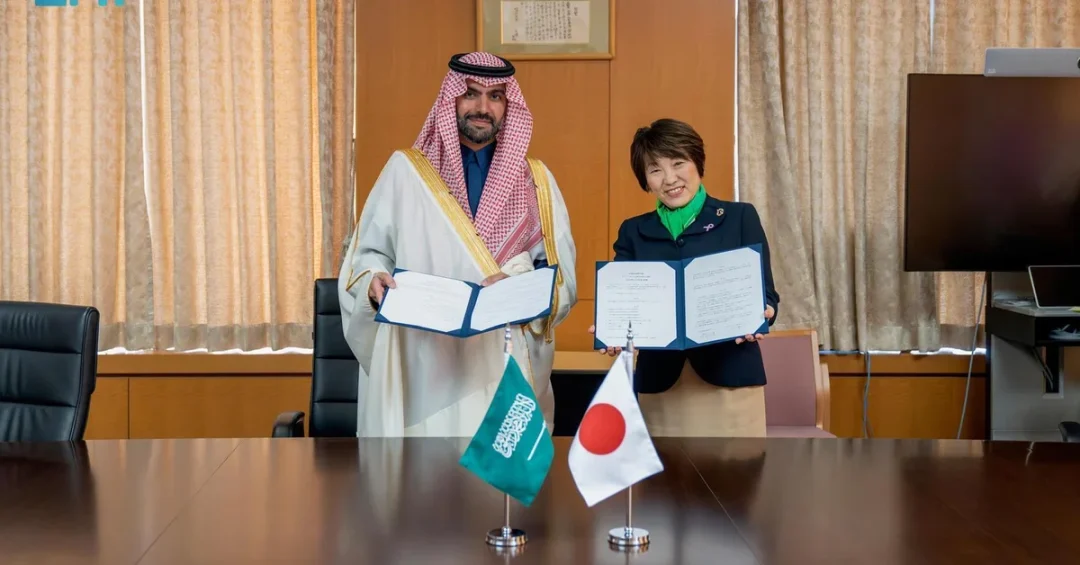
Saudi Arabia and Japan signed a memorandum of understanding (MoU) to deepen cultural cooperation, formalized in Tokyo by Saudi Minister of Culture Prince Badr bin Abdullah bin Farhan and Japanese Minister of Education, Culture, Sports, Science and Technology Dr. Toshiko Abe. The agreement, announced by the Saudi Ministry of Culture on November 22, 2024, establishes a comprehensive framework for collaboration in animation, heritage preservation, and cultural exchange, marking a new chapter in the two nations’ longstanding partnership. The signing took place during Prince Badr’s official visit to Japan, underscoring the Kingdom’s commitment to international cultural diplomacy under Vision 2030.
This MoU arrives at a time when Saudi Arabia is rapidly transforming its cultural landscape, investing in creative industries, and opening its doors to global collaboration. For Japan, a nation renowned for its cultural exports and preservation expertise, the partnership offers a strategic ally in the Middle East. Together, the two countries aim to foster mutual understanding, drive innovation, and safeguard heritage for future generations. What does this mean for the global cultural economy, and how will it shape the next decade of Saudi-Japanese relations?
Context and Background
How did Saudi-Japanese cultural ties evolve to reach this milestone? The relationship between the Kingdom and Japan has deep roots, spanning decades of cooperation in energy, trade, and diplomacy. Cultural exchange has long been a pillar of this partnership, with initiatives ranging from art exhibitions to academic exchanges. However, the new MoU elevates this collaboration to a strategic level, creating a structured framework for joint projects and knowledge sharing. The agreement reflects a shared recognition that culture is not merely a soft-power tool but an economic driver and a bridge between societies.
The signing comes as Saudi Arabia accelerates its Vision 2030 agenda, which seeks to diversify the economy and promote cultural enrichment. The Ministry of Culture, established in 2018, has since launched numerous initiatives, from the Diriyah Biennale to the Red Sea International Film Festival, positioning the Kingdom as a global cultural hub. Japan, with its advanced animation industry and deep expertise in heritage conservation, is a natural partner. The MoU builds on prior collaborations, including the Saudi-Japan Vision 2030 partnership framework, and signals a mutual desire to expand beyond traditional sectors into creative and cultural domains.
Prince Badr’s visit to Japan was not an isolated event but part of a broader diplomatic push. In recent years, Saudi cultural delegations have engaged with counterparts in Europe, Asia, and the Americas, but the Japan agreement stands out for its focus on animation—a field where Japan leads globally. By aligning with Japan, Saudi Arabia gains access to cutting-edge techniques and a thriving creative ecosystem, while Japan taps into the Kingdom’s growing youth market and cultural investment funds. This synergy is expected to yield tangible outcomes, from co-produced films to joint archaeological expeditions.
Key Details of the Memorandum
What exactly does the MoU entail? According to the Saudi Ministry of Culture’s press release, the agreement establishes a comprehensive framework for cooperation in several key areas. First, the animation industry: the two parties will collaborate on training programs, joint productions, and knowledge exchange to develop Saudi Arabia’s emerging animation sector. Second, heritage preservation: joint projects will focus on conservation techniques, archaeological research, and the protection of cultural artifacts. Third, cultural exchange: programs, workshops, and seminars will bring together intellectuals, cultural specialists, and artists from both nations to share expertise and foster mutual appreciation.
The MoU also emphasizes the exchange of experts in various cultural fields, facilitating residencies and fellowships that will allow Saudi professionals to learn from Japanese counterparts and vice versa. This people-to-people dimension is crucial for building lasting ties. Prince Badr bin Abdullah bin Farhan Al Saud highlighted the significance of the partnership, stating: “This collaboration underscores the shared vision of Saudi Arabia and Japan to preserve, celebrate, and advance cultural understanding. By joining forces in areas such as heritage preservation and artistic innovation, we not only honor our histories but also inspire future generations to embrace creativity and cultural exchange.”
The agreement is not legally binding but serves as a statement of intent, paving the way for specific projects and funding allocations. It builds upon the longstanding tradition of cooperation between the two countries in arts, culture, and heritage, reinforcing their commitment to innovation while preserving cultural identity. The Ministry of Culture release noted that the MoU represents a significant milestone in deepening bilateral relations, with both sides expected to establish working groups to implement the outlined initiatives. The focus on animation is particularly noteworthy, as Saudi Arabia seeks to grow its domestic creative industries, which are projected to contribute significantly to GDP and job creation.
International and Regional Impact
How will this MoU resonate beyond Saudi Arabia and Japan? The agreement sends a strong signal that cultural diplomacy is becoming a central component of international relations, especially in the Middle East. For Saudi Arabia, it reinforces its position as a bridge between East and West, capable of forging partnerships that transcend traditional economic ties. For Japan, it opens doors to a rapidly changing region, offering a platform to showcase its cultural soft power and participate in Vision 2030 projects. The partnership could also inspire similar agreements with other nations, creating a ripple effect of cultural collaboration.
Regionally, the MoU aligns with Saudi Arabia’s efforts to diversify its international alliances and promote a positive image abroad. By collaborating with Japan, a nation admired for its cultural preservation and innovation, the Kingdom enhances its own cultural credentials. This is particularly important as Saudi Arabia prepares to host major global events, such as Expo 2030 in Riyadh and the 2034 FIFA World Cup. Cultural exchange with Japan will enrich these events, bringing diverse perspectives and creative talent. Moreover, the agreement could stimulate tourism, as Japanese cultural enthusiasts may be drawn to Saudi heritage sites and events, and Saudi travelers may explore Japan’s cultural offerings.
Economic and Strategic Significance
What are the economic implications of this cultural MoU? While cultural agreements are often viewed as soft diplomacy, they carry tangible economic benefits. The animation industry, for instance, is a multi-billion-dollar global market, and Saudi Arabia’s entry into this space could generate revenue, create jobs, and foster a new generation of creative entrepreneurs. By partnering with Japan, Saudi Arabia can accelerate the development of its animation sector, learning from Japan’s world-class studios and production techniques. This knowledge transfer could lead to co-productions that appeal to both regional and global audiences, boosting Saudi Arabia’s creative economy.
Heritage preservation also has economic value, as restored sites and cultural artifacts attract tourists and researchers. Saudi Arabia is home to UNESCO World Heritage sites such as AlUla and Diriyah, and Japanese expertise in conservation could enhance their preservation and presentation. This, in turn, supports the tourism sector, a key pillar of Vision 2030. Strategically, the MoU strengthens the Saudi-Japanese relationship, which already includes significant energy and trade ties. By adding culture to the mix, both nations build a more resilient and multifaceted partnership, capable of withstanding geopolitical shifts. The agreement also positions Saudi Arabia as a leader in cultural diplomacy, enhancing its influence in international forums.
Vision 2030 Alignment
How does this MoU align with Saudi Arabia’s Vision 2030? The agreement directly supports several Vision 2030 objectives, including economic diversification, cultural enrichment, and international collaboration. By developing the animation industry, Saudi Arabia taps into a high-growth sector that can contribute to GDP and provide employment for its young population. Heritage preservation aligns with the goal of protecting the Kingdom’s rich history while promoting tourism. Cultural exchange fosters global engagement, a core principle of Vision 2030, which seeks to position Saudi Arabia as a hub for creativity and innovation.
Furthermore, the MoU exemplifies the Vision 2030 commitment to building partnerships that drive progress. Japan’s expertise and experience complement Saudi Arabia’s ambitions, creating a synergy that benefits both nations. As the Kingdom continues its transformation, cultural initiatives like this will play a vital role in shaping its identity and global standing. The partnership with Japan is not just about preserving the past; it is about inspiring the future, ensuring that Saudi Arabia’s cultural renaissance is inclusive, sustainable, and globally connected. With this MoU, Saudi Arabia and Japan are not only strengthening bilateral ties but also contributing to a more interconnected and culturally vibrant world.
20 Questions
Q1. What is the main purpose of the memorandum of understanding signed between Saudi Arabia and Japan?
A1. The MoU establishes a comprehensive framework for cultural cooperation, focusing on animation, heritage preservation, and cultural exchange to deepen bilateral relations and foster mutual understanding.
Q2. Who signed the memorandum of understanding on behalf of Saudi Arabia?
A2. Saudi Minister of Culture Prince Badr bin Abdullah bin Farhan signed the MoU, representing the Kingdom during his official visit to Japan.
Q3. Who signed the memorandum of understanding on behalf of Japan?
A3. Japanese Minister of Education, Culture, Sports, Science and Technology Dr. Toshiko Abe signed the MoU on behalf of Japan.
Q4. When and where was the memorandum of understanding signed?
A4. The MoU was signed in Tokyo, Japan, on November 22, 2024, during Prince Badr’s official visit, as announced by the Saudi Ministry of Culture.
Q5. What are the key areas of cooperation outlined in the MoU?
A5. The key areas include the animation industry, joint projects for heritage preservation and conservation, and promoting cultural exchange through programs, workshops, and seminars.
Q6. How does the MoU aim to foster mutual understanding between the two nations?
A6. It promotes cultural exchanges, including the exchange of experts, and organizes programs for intellectuals, cultural specialists, and artists from both countries to share knowledge and appreciation.
Q7. What did Prince Badr bin Abdullah bin Farhan say about the partnership?
A7. He emphasized that the collaboration underscores a shared vision to preserve, celebrate, and advance cultural understanding, honoring histories and inspiring future generations.
Q8. Does the MoU build on previous cooperation between Saudi Arabia and Japan?
A8. Yes, it builds upon a longstanding tradition of cooperation in arts, culture, and heritage, reinforcing the commitment to innovation and preservation.
Q9. What is the significance of focusing on the animation industry in this agreement?
A9. Animation is a high-growth global sector, and partnering with Japan allows Saudi Arabia to develop its creative industries, create jobs, and access world-class expertise.
Q10. How will heritage preservation be addressed under the MoU?
A10. Joint projects will focus on conservation techniques, archaeological research, and the protection of cultural artifacts, leveraging Japanese expertise to safeguard Saudi heritage.
Q11. What role does cultural exchange play in the agreement?
A11. Cultural exchange is central, with plans for expert exchanges, workshops, and seminars that bring together intellectuals, specialists, and artists to foster mutual appreciation.
Q12. How does this MoU align with Saudi Arabia’s Vision 2030?
A12. It supports economic diversification, cultural enrichment, and international collaboration, key pillars of Vision 2030, by developing creative industries and promoting tourism.
Q13. What economic benefits could arise from this cultural cooperation?
A13. It can generate revenue, create jobs in animation and heritage tourism, and boost the creative economy, contributing to GDP growth and sustainable development.
Q14. How might this agreement impact regional cultural dynamics?
A14. It positions Saudi Arabia as a cultural bridge between East and West, inspiring similar collaborations and enhancing the Kingdom’s soft power in the Middle East.
Q15. Will the MoU lead to specific projects or is it just a statement of intent?
A15. It is a framework agreement that paves the way for specific projects, with working groups expected to be established to implement initiatives and allocate resources.
Q16. How does Japan benefit from this cultural partnership?
A16. Japan gains access to Saudi Arabia’s growing youth market, cultural investment funds, and opportunities to showcase its soft power in the Middle East.
Q17. What is the expected timeline for implementing the initiatives?
A17. While no specific timeline was announced, both parties are committed to moving forward promptly, with working groups to be formed to detail and execute projects.
Q18. Are there any other sectors included in the MoU beyond culture?
A18. The MoU focuses on cultural fields, but it complements existing Saudi-Japanese cooperation in energy, trade, and technology, strengthening overall bilateral ties.
Q19. How does this MoU reflect Saudi Arabia’s broader cultural diplomacy efforts?
A19. It is part of the Kingdom’s strategic push to engage globally, promote its cultural heritage, and build partnerships that support Vision 2030’s international objectives.
Q20. What message does this agreement send to the international community?
A20. It signals that Saudi Arabia is open to cultural collaboration, committed to preserving heritage, and eager to foster innovation and mutual understanding on the world stage.
Reader Feedback
We value your thoughts. Please share your feedback on this article.
Your feedback helps us improve our coverage.
Related articles
 Saudi Culture Minister Meets Japanese Counterpart in Tokyo
 Cultural Development Fund Supports Handicrafts at Banan Exhibition
 Al-Baha Women’s Markets: Cultural and Economic Hub
 Saudi Handicrafts Week Opens in Riyadh with 500 Artisans
 Saudi Culture Minister Meets Manga Students in Tokyo
 Riyadh Season ‘Bangladesh Days’ Conclude at Al-Suwaidi Park