


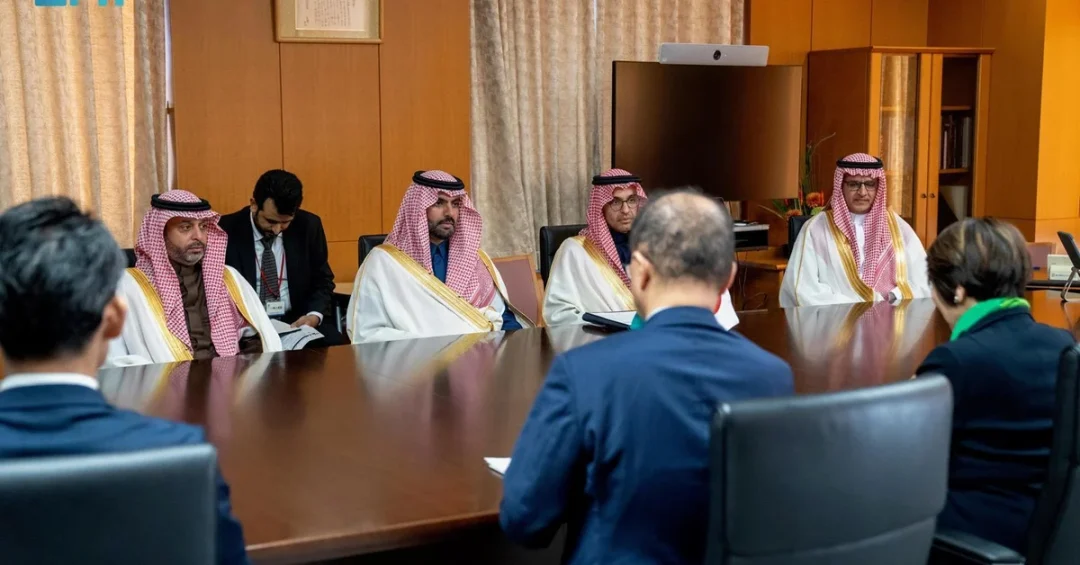
Saudi Arabia’s Minister of Culture, Prince Badr bin Abdullah bin Farhan, met with Japan’s Minister of Education, Culture, Sports, Science and Technology, Dr. Toshiko Abe, in Tokyo on November 22, 2024, during an official visit to attend the Marvels of Saudi Orchestra performance, according to the Saudi Press Agency (SPA). The meeting underscored the depth of Saudi-Japanese cultural relations and produced a shared commitment to expand cooperation across heritage preservation, regulatory exchange, and creative industries, including a landmark initiative to train Saudi students in the art of Manga comics. The encounter took place on the sidelines of a cultural program that has become a symbol of the Kingdom’s growing global cultural footprint.
Prince Badr congratulated Minister Abe on her recent appointment and reaffirmed the Kingdom’s participation in Expo 2025 in Osaka, expressing Saudi Arabia’s best wishes to the Japanese government and people for the success of the major international event. The two officials discussed strategic initiatives spanning artistic and cultural fields, from digital heritage preservation to artist residency programs. The meeting reflects a broader pattern of Saudi cultural diplomacy that has accelerated under Vision 2030, positioning the Kingdom as a global partner in creativity, knowledge exchange, and mutual respect among nations. How did a single meeting in Tokyo come to embody such a wide-ranging partnership?
Context and Background
Saudi-Japanese relations have long been anchored in energy and trade, but the cultural dimension has grown markedly in recent years as both countries invest in people-to-people ties. Japan has been a key partner for Saudi Arabia in technology, manufacturing, and education, while Saudi Arabia has emerged as a cultural hub in the Middle East, hosting international events and building world-class institutions. The meeting between Prince Badr and Minister Abe builds on this foundation, adding a cultural layer to an already robust bilateral relationship.
The Marvels of Saudi Orchestra, which brought Prince Badr to Tokyo, is a flagship initiative of the Saudi Music Commission, one of eleven sector-specific commissions under the Ministry of Culture. These commissions are designed to nurture talent, preserve heritage, and promote international exchange. The orchestra’s performance in Japan follows earlier tours in Europe and the United States, signaling Saudi Arabia’s intent to share its musical heritage with global audiences. What does it mean for a Saudi cultural institution to perform in a country with such a distinct and celebrated artistic tradition?
Japan’s own cultural diplomacy, from anime to cuisine, offers a model that Saudi Arabia has studied closely. The two nations share an appreciation for tradition and innovation, and both are investing in creative economies as engines of growth. The meeting therefore was not merely ceremonial; it was a working session on how to align regulatory frameworks, protect heritage in the digital age, and create opportunities for young artists. The presence of senior Saudi officials, including Vice Minister of Culture Hamid bin Mohammed Fayez, Assistant Minister of Culture Rakan bin Ibrahim Al-Touq, and Saudi Ambassador to Japan Dr. Ghazi Binzagr, underscored the seriousness of the engagement.
Key Details
According to the Saudi Press Agency, the two ministers discussed strengthening cultural ties through strategic initiatives in a variety of artistic and cultural fields. These included the exchange of knowledge concerning regulations and organizations involved in cultural affairs, projects pertaining to the preservation of heritage, including digital preservation techniques, the advancement of cultural sectors, and art residency programs. Each of these areas represents a concrete avenue for collaboration that can yield tangible results for both nations.
A standout item on the agenda was the need to strengthen cooperation between the Literature, Publishing and Translation Commission and the Japanese side to train Saudi students in the art of Manga comics. Manga is a global cultural phenomenon, and Saudi Arabia has a young, enthusiastic audience for comics and graphic novels. By partnering with Japan, the Kingdom aims to build local capacity in this creative field, enabling Saudi artists to learn from Japanese masters and eventually produce their own stories for regional and international markets. Could this initiative spark a new generation of Saudi storytellers who bridge cultures through visual narrative?
Digital preservation techniques were also highlighted, reflecting Saudi Arabia’s commitment to safeguarding its rich heritage using cutting-edge technology. The Kingdom has invested in digitizing archaeological findings, manuscripts, and oral histories, and Japan’s expertise in imaging, archiving, and data management can complement these efforts. Art residency programs, meanwhile, offer artists from both countries the chance to live and work abroad, fostering cross-cultural dialogue and experimentation. These programs align with the Ministry of Culture’s broader strategy to support creative professionals and integrate Saudi Arabia into global artistic networks.
International and Regional Impact
The meeting in Tokyo sends a signal that Saudi cultural diplomacy is expanding beyond traditional partners in the West and the Arab world. Japan, with its sophisticated cultural infrastructure and global soft power, is a natural ally for the Kingdom as it seeks to diversify its international engagements. For Japan, deeper cultural ties with Saudi Arabia open doors to a dynamic region and a young, growing market for cultural products and services. The collaboration could also serve as a template for Saudi partnerships with other Asian nations, enhancing the Kingdom’s role as a bridge between East and West.
Regionally, the agreement to train Saudi students in Manga and to exchange regulatory knowledge reinforces Saudi Arabia’s position as a cultural leader in the Middle East. The Kingdom is already hosting major events like the Red Sea International Film Festival and the Diriyah Biennale, and partnerships with Japan add a new dimension of expertise and prestige. By learning from Japan’s experience in managing cultural organizations and intellectual property, Saudi Arabia can strengthen its own creative economy and attract global talent. How might this collaboration influence the broader cultural landscape of the Gulf region?
Economic and Strategic Significance
Culture is increasingly recognized as an economic driver, and Saudi Arabia’s investment in cultural sectors is part of a deliberate strategy to diversify revenue streams away from oil. The creative industries—film, music, publishing, gaming, and design—are projected to contribute significantly to GDP and employment in the coming years. Cooperation with Japan on heritage preservation and cultural sector advancement can accelerate the development of these industries by providing access to technology, training, and markets. The Manga training initiative, for instance, could seed a local comics industry that generates jobs and exports.
Strategically, the cultural partnership complements Saudi-Japanese economic ties that include the Saudi-Japan Vision 2030 partnership, which focuses on areas such as healthcare, energy, and manufacturing. Adding culture to the mix broadens the relationship and deepens mutual understanding, which is essential for long-term cooperation. It also supports Saudi Arabia’s bid to host Expo 2030 in Riyadh, as the Kingdom can draw on Japan’s experience with Expo 2025 in Osaka. The exchange of best practices in hosting mega-events is a valuable subtext to the ministers’ discussions. What economic multiplier effects could arise from a sustained cultural exchange between these two advanced economies?
Vision 2030 Alignment
The meeting directly advances several objectives of Saudi Vision 2030, the national transformation plan spearheaded by Crown Prince Mohammed bin Salman. Vision 2030 seeks to cultivate a vibrant society, a thriving economy, and an ambitious nation. Cultural exchange and heritage preservation are central to the vibrant society pillar, as they enrich quality of life and strengthen national identity. The training of Saudi students in Manga and the advancement of cultural sectors also support the thriving economy pillar by creating new career paths and fostering innovation.
Furthermore, the partnership with Japan exemplifies the Kingdom’s commitment to international collaboration and knowledge transfer, which are critical for achieving the ambitious goals of Vision 2030. By learning from Japan’s world-renowned cultural institutions, Saudi Arabia can accelerate its own cultural development and share its unique heritage with the world. The Ministry of Culture, under Prince Badr’s leadership, has been a driving force in this effort, launching numerous initiatives that have elevated the Kingdom’s cultural profile globally. As Saudi Arabia continues to open up and engage with the world, partnerships like this one will be essential in building a sustainable and diversified future. How will the next chapter of Saudi-Japanese cultural cooperation unfold, and what new creative horizons will it open for both nations?
20 Questions
Q1. Who represented Saudi Arabia at the meeting in Tokyo?
A1. Saudi Arabia was represented by Minister of Culture Prince Badr bin Abdullah bin Farhan, along with Vice Minister of Culture Hamid bin Mohammed Fayez, Assistant Minister of Culture Rakan bin Ibrahim Al-Touq, and Saudi Ambassador to Japan Dr. Ghazi Binzagr.
Q2. Who was the Japanese counterpart in the meeting?
A2. The Japanese counterpart was Dr. Toshiko Abe, Minister of Education, Culture, Sports, Science and Technology. She welcomed the Saudi delegation and discussed avenues for cultural collaboration between the two nations.
Q3. What event brought the Saudi Minister of Culture to Japan?
A3. Prince Badr was in Japan to attend the Marvels of Saudi Orchestra in Tokyo, a performance by the Saudi Music Commission that showcases Saudi musical heritage to international audiences and promotes cultural exchange.
Q4. What did Prince Badr say about Expo 2025 in Osaka?
A4. Prince Badr congratulated Japan on hosting Expo 2025 and stressed that Saudi Arabia will participate, reflecting the strong bilateral relations. He also wished the Japanese government and people success in hosting the major international event.
Q5. What areas of cultural cooperation were discussed?
A5. The ministers discussed exchanging knowledge on cultural regulations and organizations, heritage preservation including digital techniques, advancement of cultural sectors, art residency programs, and training Saudi students in Manga comics.
Q6. What is the significance of the Manga training initiative?
A6. The initiative aims to build local capacity in comics and graphic novels by learning from Japan’s expertise. It can create new opportunities for Saudi artists and help develop a creative industry that appeals to young audiences.
Q7. How does this meeting reflect Saudi Arabia’s cultural diplomacy?
A7. It shows Saudi Arabia’s proactive approach to building cultural partnerships beyond traditional allies. By engaging with Japan, the Kingdom expands its global cultural network and reinforces its role as a cultural leader in the Middle East.
Q8. What is the Marvels of Saudi Orchestra?
A8. It is a flagship initiative of the Saudi Music Commission that presents Saudi musical traditions and contemporary compositions to international audiences. The Tokyo performance is part of a series of global tours.
Q9. Why is digital heritage preservation important?
A9. Digital preservation ensures that cultural heritage is safeguarded for future generations. It allows broader access to archives, manuscripts, and artifacts, and leverages technology to protect items from deterioration or loss.
Q10. What are art residency programs?
A10. Art residency programs provide artists with time, space, and resources to create work away from their usual environment. They foster cross-cultural exchange and experimentation, and are a key tool for nurturing creative talent.
Q11. How does this collaboration align with Vision 2030?
A11. It supports Vision 2030’s goals of a vibrant society and thriving economy by enriching cultural life, creating jobs in creative sectors, and fostering international partnerships that drive knowledge transfer and innovation.
Q12. What role does the Literature, Publishing and Translation Commission play?
A12. The commission is responsible for developing the publishing and translation sectors in Saudi Arabia. It will lead the cooperation with Japan on Manga training and other literary exchanges.
Q13. How might this partnership affect Saudi youth?
A13. It offers Saudi youth new educational and career pathways in creative fields, from comics to digital heritage. It also inspires cross-cultural understanding and global perspectives.
Q14. What is the strategic importance of Saudi-Japan relations?
A14. The relationship spans energy, trade, technology, and now culture. Japan is a key partner for Saudi Arabia’s diversification efforts, and cultural ties deepen mutual trust and long-term cooperation.
Q15. What other cultural exchanges exist between the two countries?
A15. Saudi Arabia and Japan have engaged in film festivals, art exhibitions, and academic exchanges. The new initiatives build on these efforts and expand into new areas like Manga and digital preservation.
Q16. How does Japan benefit from this cultural cooperation?
A16. Japan gains access to Saudi Arabia’s growing cultural market and strengthens its soft power in the Middle East. It also fosters people-to-people ties that can lead to broader economic and diplomatic benefits.
Q17. What is the expected impact of Saudi participation in Expo 2025?
A17. Saudi Arabia’s pavilion at Expo 2025 will showcase its culture, innovation, and Vision 2030 achievements. It will attract visitors and investors, and reinforce the Kingdom’s global engagement.
Q18. How does the Ministry of Culture support such initiatives?
A18. The Ministry of Culture, under Prince Badr, oversees sector-specific commissions that drive cultural development. It provides funding, policy support, and international platforms for Saudi artists and cultural professionals.
Q19. What are the next steps for the Saudi-Japan cultural partnership?
A19. Next steps include formalizing agreements on Manga training, launching joint heritage preservation projects, and facilitating artist residencies. Both sides will continue dialogue to implement the discussed initiatives.
Q20. How does this meeting reflect Saudi Arabia’s global role?
A20. It demonstrates Saudi Arabia’s commitment to international cultural engagement and its ability to forge partnerships that promote mutual understanding. It positions the Kingdom as a dynamic, open, and forward-looking nation.
Reader Feedback
We value your thoughts. Please share your feedback on this article.
Your feedback helps us improve our coverage.
Related articles
 Cultural Development Fund Supports Handicrafts at Banan Exhibition
 Al-Baha Women’s Markets: Cultural and Economic Hub
 Saudi Handicrafts Week Opens in Riyadh with 500 Artisans
 Saudi Culture Minister Meets Manga Students in Tokyo
 Riyadh Season ‘Bangladesh Days’ Conclude at Al-Suwaidi Park
 Saudi Handicrafts Week Opens in Riyadh with 25 Nations