


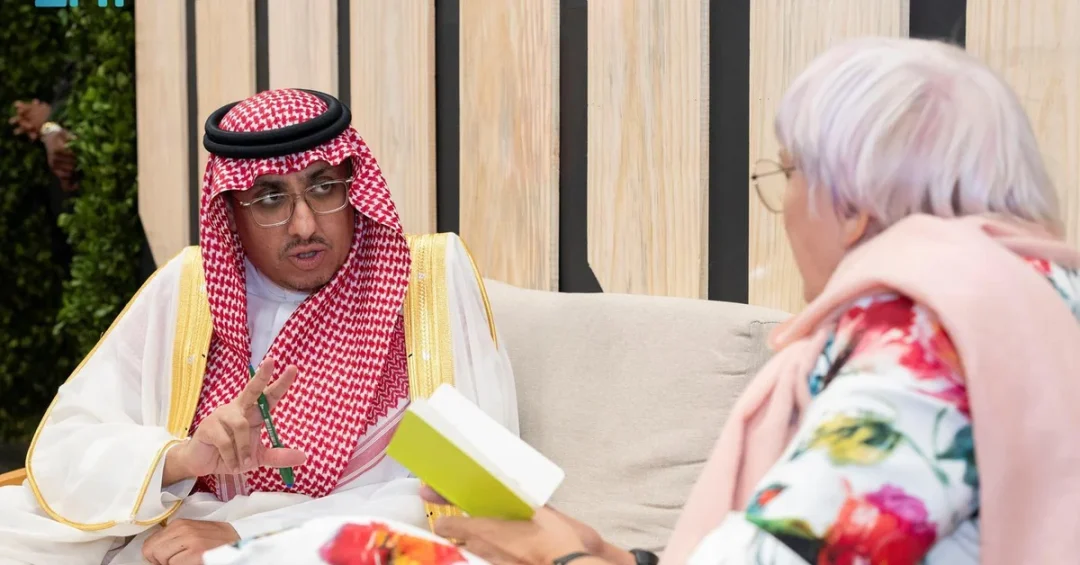
Saudi Deputy Minister of Culture for International Cultural Relations Eng. Fahad Abdulrahman Alkanaan met with several ministers and senior officials in Salvador, Brazil, on the margins of the 5th G20 Culture Ministers’ Meeting, representing Minister of Culture Prince Badr bin Abdullah bin Farhan, the Saudi Press Agency reported. The meetings, held on November 9, 2024, brought together counterparts from Germany, China, and Nigeria, and focused on deepening cultural cooperation across museum exchange, film, literature, heritage preservation, and joint cultural programming. The engagements underscore the Kingdom’s expanding role in global cultural diplomacy and its commitment to international partnerships that advance the objectives of Saudi Vision 2030.
The 5th G20 Culture Ministers’ Meeting, hosted in the Brazilian city of Salvador, provided a high-level platform for Saudi Arabia to strengthen bilateral cultural ties and showcase its cultural transformation on the world stage. Eng. Alkanaan’s participation on behalf of Prince Badr bin Abdullah bin Farhan signals the Kingdom’s prioritization of culture as a pillar of its international engagement strategy, aligning with the Ministry of Culture’s mandate to foster cross-border collaboration and promote Saudi cultural heritage and creative industries globally. The discussions also reflect the growing institutional depth of Saudi Arabia’s cultural sector, which has expanded rapidly under Vision 2030 through new commissions, festivals, and international agreements.
Context and Background
How has Saudi Arabia’s cultural diplomacy evolved into a central element of its global engagement? Under Vision 2030, the Kingdom has transformed its cultural sector from a largely domestic focus into a dynamic instrument of soft power and international partnership. The Ministry of Culture, established in 2018, has since launched 11 sector-specific commissions covering film, literature, museums, heritage, music, and more, each tasked with building international linkages. These bodies have signed executive programs and memoranda of understanding with counterparts worldwide, from the Berlin State Library to the Frankfurt Book Fair, creating a dense network of cultural exchange.
The G20 Culture Ministers’ Meeting, first convened in 2021 under Italy’s presidency, has become a key forum for shaping global cultural policy. Saudi Arabia’s active participation reflects its broader strategy of engaging multilateral platforms to advance cultural dialogue, economic diversification, and people-to-people ties. The Kingdom’s hosting of major cultural events, such as the Diriyah Biennale and the Red Sea International Film Festival, has further positioned it as a cultural hub connecting East and West. In Salvador, Eng. Alkanaan’s bilateral meetings translated this strategic vision into concrete cooperation agendas with Germany, China, and Nigeria.
The timing of these meetings is significant. As the global cultural economy recovers and evolves post-pandemic, countries are seeking new partnerships to revitalize creative industries, protect heritage, and expand audiences. Saudi Arabia, with its rapidly growing cultural infrastructure and Vision 2030 funding, offers a compelling partner for nations looking to collaborate on exhibitions, film production, and heritage conservation. The discussions in Brazil therefore represent both a continuation of existing relationships and a foundation for new joint initiatives.
Key Details
Eng. Fahad Abdulrahman Alkanaan’s meeting with Claudia Roth, Minister of State for Culture and the Media of the Federal Republic of Germany, covered a wide range of cooperative areas. The two officials discussed the loan of art and archaeological artifacts, the exchange of expertise, and the hosting of specialized exhibitions in the museum sector. They also reviewed the participation of the Saudi Literature, Publishing & Translation Commission in the 2024 Frankfurt Book Fair, one of the world’s largest publishing events, and the executive program signed between the Libraries Commission and the Berlin State Library in May 2024. Additionally, they noted the participation of the Saudi Film Commission in the Berlin International Film Festival earlier this year, highlighting the growing cinematic ties between the two countries.
In his meeting with Zhang Zheng, China’s Vice Minister of Culture and Tourism, Eng. Alkanaan discussed ongoing cultural cooperation under the memorandum of understanding signed last March. A centerpiece of this collaboration is the establishment of the Saudi-China Cultural Year 2025, which aims to strengthen cultural ties and introduce the cultural and civilizational heritage of both nations through cultural events, festivals, and joint programs. This initiative builds on a long history of Saudi-Chinese exchange and reflects the two countries’ shared interest in promoting mutual understanding through culture.
Eng. Alkanaan also met with Hannatu Musa Musawa, Minister of Art, Culture, and the Creative Economy of the Federal Republic of Nigeria. Their discussions focused on existing cultural cooperation, including the establishment of traveling exhibitions, artistic residencies, and efforts to preserve cultural heritage. Nigeria, like Saudi Arabia, possesses a rich and diverse cultural legacy, and the meeting opened avenues for collaborative projects that could benefit both nations’ creative sectors and heritage institutions.
These bilateral engagements were part of a busy agenda at the G20 Culture Ministers’ Meeting, where Saudi Arabia joined other G20 members in discussing shared priorities such as cultural heritage protection, the creative economy, and the role of culture in sustainable development. The Kingdom’s participation reinforces its commitment to multilateral cultural governance and its readiness to contribute to global cultural policy discussions.
International and Regional Impact
What do these cultural partnerships mean for Saudi Arabia’s standing in the region and beyond? The meetings in Brazil demonstrate the Kingdom’s ability to build bridges with countries across different continents and cultural spheres. By engaging with Germany, a European cultural powerhouse; China, a rising global cultural influencer; and Nigeria, a leading African creative economy, Saudi Arabia positions itself as a connector and convener in the global cultural landscape. This diversified outreach reduces reliance on any single region and strengthens the Kingdom’s network of cultural allies.
Regionally, Saudi Arabia’s cultural diplomacy supports stability and mutual understanding in the Middle East by fostering positive exchanges with international partners. It also complements the Kingdom’s economic diversification efforts, as cultural tourism and creative industries become increasingly important contributors to GDP. The partnerships discussed in Salvador could lead to increased visitor flows, collaborative productions, and joint heritage projects that raise the profile of Saudi culture worldwide. For Germany, China, and Nigeria, cooperation with Saudi Arabia offers access to a dynamic cultural market and a partner committed to long-term investment in culture.
Economic and Strategic Significance
How does cultural cooperation translate into economic and strategic value for Saudi Arabia? The cultural sector is a key component of Vision 2030’s economic diversification agenda, with the Kingdom targeting significant growth in cultural tourism, entertainment, and creative industries. International partnerships facilitate the exchange of expertise, attract foreign investment, and open new markets for Saudi cultural products. For example, participation in the Frankfurt Book Fair and the Berlin International Film Festival provides Saudi publishers and filmmakers with global exposure, while museum collaborations can boost cultural tourism to the Kingdom.
Strategically, these cultural ties reinforce Saudi Arabia’s diplomatic relationships. Cultural diplomacy often paves the way for broader cooperation in trade, education, and technology. The Saudi-China Cultural Year 2025, for instance, not only celebrates heritage but also strengthens the overall bilateral relationship between two major economies. Similarly, the executive program with the Berlin State Library enhances institutional links that can extend to other fields. By investing in culture, Saudi Arabia builds goodwill and soft power, which are essential in a multipolar world.
Vision 2030 Alignment
How do these international cultural engagements align with Saudi Vision 2030? Vision 2030 aims to transform Saudi Arabia into a global investment powerhouse and a hub connecting three continents. Culture is explicitly recognized as a driver of economic growth and national identity. The Ministry of Culture’s strategy focuses on promoting Saudi heritage, supporting creative expression, and fostering international cultural exchange. The meetings in Salvador directly advance these goals by expanding the reach of Saudi cultural institutions and creating opportunities for collaboration that will enrich the Kingdom’s cultural landscape.
Furthermore, Vision 2030’s Quality of Life Program seeks to increase cultural participation and entertainment options for citizens and residents. International partnerships bring world-class exhibitions, film festivals, and literary events to Saudi Arabia, while also showcasing Saudi talent abroad. The Saudi-China Cultural Year 2025 and the collaborations with Germany and Nigeria will contribute to this by facilitating joint events and exchanges. As Saudi Arabia continues to open up to the world, its cultural diplomacy will remain a vital tool for building understanding and driving sustainable development, in line with the visionary leadership of the Kingdom.
20 Questions
Q1. Who represented Saudi Arabia at the 5th G20 Culture Ministers’ Meeting in Brazil?
A1. Eng. Fahad Abdulrahman Alkanaan, Deputy Minister of Culture for International Cultural Relations, represented Saudi Arabia on behalf of Minister of Culture Prince Badr bin Abdullah bin Farhan.
Q2. Where and when was the 5th G20 Culture Ministers’ Meeting held?
A2. The meeting was held in Salvador, Brazil, on November 9, 2024, bringing together culture ministers and officials from G20 member countries.
Q3. Which German official did Eng. Alkanaan meet with?
A3. He met with Claudia Roth, Minister of State for Culture and the Media of the Federal Republic of Germany, to discuss cultural cooperation.
Q4. What topics were discussed in the meeting with Germany?
A4. They discussed the loan of art and archaeological artifacts, exchange of expertise, hosting specialized exhibitions, and participation in the Frankfurt Book Fair and Berlin International Film Festival.
Q5. What agreement between Saudi Arabia and Germany was highlighted?
A5. The executive program signed between the Saudi Libraries Commission and the Berlin State Library in May 2024 was reviewed during the meeting.
Q6. Which Chinese official met with Eng. Alkanaan?
A6. Eng. Alkanaan met with Zhang Zheng, China’s Vice Minister of Culture and Tourism, to discuss cultural cooperation.
Q7. What is the Saudi-China Cultural Year 2025?
A7. It is an initiative established under a memorandum of understanding signed last March to strengthen cultural ties through events, festivals, and joint programs highlighting Saudi and Chinese heritage.
Q8. What is the significance of the Saudi-China Cultural Year 2025?
A8. It aims to deepen cultural relations, introduce the cultural and civilizational heritage of both nations, and implement joint activities that showcase the depth of Saudi-Chinese ties.
Q9. Which Nigerian official did Eng. Alkanaan meet with?
A9. He met with Hannatu Musa Musawa, Minister of Art, Culture, and the Creative Economy of the Federal Republic of Nigeria.
Q10. What areas of cooperation were discussed with Nigeria?
A10. They discussed traveling exhibitions, artistic residencies, and efforts to preserve cultural heritage between the two countries.
Q11. How does Saudi Arabia’s participation in the G20 Culture Ministers’ Meeting benefit the Kingdom?
A11. It strengthens cultural diplomacy, builds international partnerships, and showcases Saudi Arabia’s cultural transformation under Vision 2030.
Q12. What is the role of the Ministry of Culture in Saudi Arabia’s international engagement?
A12. The Ministry of Culture, led by Prince Badr bin Abdullah bin Farhan, promotes Saudi cultural heritage and creative industries globally through partnerships and exchanges.
Q13. What is the connection between these meetings and Vision 2030?
A13. They align with Vision 2030’s goals of economic diversification, cultural enrichment, and global engagement, supporting the Quality of Life Program.
Q14. How does cultural cooperation with Germany benefit Saudi Arabia?
A14. It provides access to expertise in museum management, artifact loans, and film festivals, enhancing Saudi cultural institutions and global exposure.
Q15. What is the significance of the Frankfurt Book Fair participation?
A15. It showcases Saudi literature and publishing on a global stage, fostering translation and cultural exchange between Saudi Arabia and Germany.
Q16. What does the Saudi Film Commission’s participation in the Berlin International Film Festival indicate?
A16. It highlights the growing recognition of Saudi cinema internationally and supports the development of the Kingdom’s film industry.
Q17. How do traveling exhibitions and artistic residencies with Nigeria benefit both countries?
A17. They promote cultural exchange, mutual understanding, and heritage preservation, while providing opportunities for artists and curators to collaborate.
Q18. What is the broader impact of Saudi Arabia’s cultural diplomacy?
A18. It builds soft power, strengthens diplomatic ties, and positions Saudi Arabia as a global cultural hub connecting different regions and civilizations.
Q19. How does cultural cooperation contribute to Saudi Arabia’s economy?
A19. It boosts cultural tourism, attracts investment, and supports creative industries, aligning with Vision 2030’s economic diversification objectives.
Q20. What can be expected from the Saudi-China Cultural Year 2025?
A20. It will feature cultural events, festivals, and joint programs that celebrate Saudi and Chinese heritage, deepening bilateral relations and people-to-people ties.
Reader Feedback
We value your thoughts. Please share your feedback on this article.
Your feedback helps us improve our coverage.
Related articles
 Riyadh Film Criticism Conference Concludes with Global Participation
 King Abdulaziz Foundation Highlights Geographical Names Contribution
 Joy Awards Website and App Launched for 2025 Ceremony
 Northern Borders Women Keep Ancient Tent-Making Craft Alive
 Museums Commission Launches “Telling Tomorrow’s Story” Campaign
 Saudi Feast Food Festival Returns to Jeddah for 4th Edition