


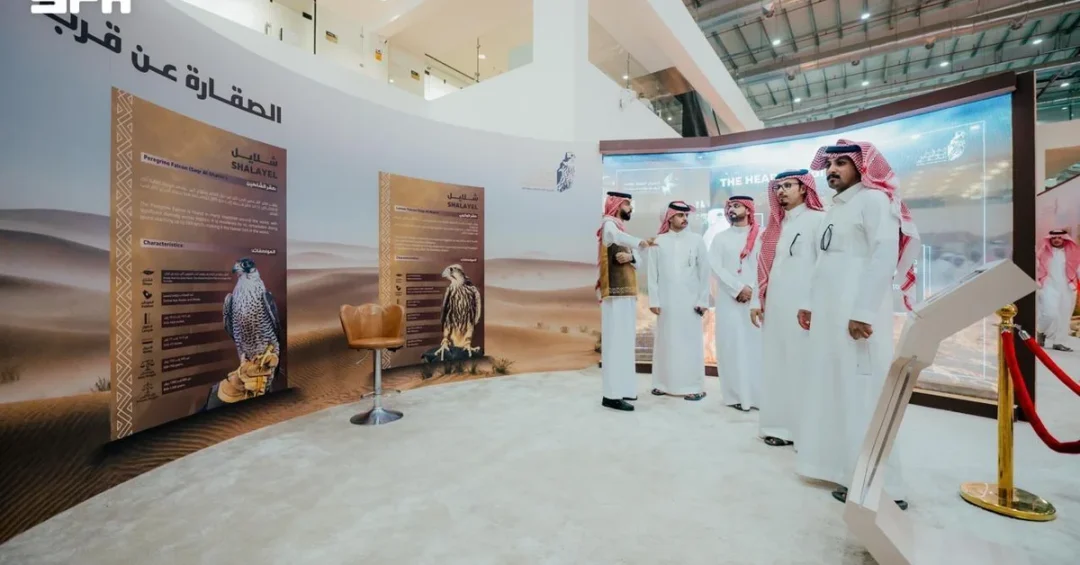
The Shalayel Museum is participating in the International Saudi Falcons and Hunting Exhibition 2026, presenting a rare historical record of the enduring bond between Saudi kings and falconry, according to the Saudi Press Agency. The exhibition, organized under the patronage of Saudi Arabia’s cultural and heritage authorities, is being held from October 1 to 10 at the Riyadh Exhibition and Convention Center in Malham, where the museum’s collection has become one of the event’s most visited attractions. Visitors are encountering photographs and artifacts that trace royal falconry from the era of King Abdulaziz through successive reigns to Custodian of the Two Holy Mosques King Salman bin Abdulaziz Al Saud. The display places the practice within the broader story of Saudi heritage, showing how a desert tradition became a symbol of national identity. For international audiences, the exhibit offers a window into a cultural legacy that predates the modern state and continues to shape the Kingdom’s cultural diplomacy today.
The museum’s presence at the exhibition reflects a wider effort by Saudi Arabia to document and share its heritage with the world. Falconry, recognized by UNESCO as an intangible cultural heritage of humanity, has been practiced on the Arabian Peninsula for centuries, serving as both a practical hunting method and a mark of prestige among tribal leaders. The Shalayel Museum’s collection is significant because it moves beyond objects to tell a human story: kings, princes, falconers, and market traders whose lives intersected around these birds. The exhibition’s timing, during a period of rapid cultural expansion under Vision 2030, underscores how the Kingdom is balancing modernization with the preservation of traditions that define its character. For visitors unfamiliar with Saudi history, the display provides an accessible entry point into the customs that have shaped leadership and society in the region.
Context and Background
How did falconry become so deeply woven into the identity of Saudi leadership and society? The answer lies in the geography and history of the Arabian Peninsula. For generations before the discovery of oil, hunting with falcons was essential to survival in the desert, providing food for families and communities. Over time, the practice evolved into a highly refined art, with specialized knowledge passed from father to son about training birds, reading weather patterns, and understanding prey. When King Abdulaziz unified the Kingdom in 1932, falconry was already an established tradition among the ruling family and the tribes that supported him. His personal interest in the sport helped elevate it as a symbol of leadership, courage, and connection to the land. The Shalayel Museum’s exhibition captures this continuity, showing that the tradition did not fade with modernization but adapted, becoming a cultural cornerstone of the Saudi state.
The International Saudi Falcons and Hunting Exhibition itself has grown into a major platform for this heritage. Held annually in Riyadh, it brings together falconers, breeders, researchers, and enthusiasts from across the Kingdom and beyond. The event features auctions, competitions, and educational displays, but its core purpose is cultural: to ensure that younger generations understand the significance of falconry and to present it accurately to international visitors. The Shalayel Museum’s participation adds a historical dimension that complements the modern equipment and techniques on display elsewhere at the venue. By showcasing photographs from the 1970s and 1985, including images of the Riyadh falcon market, the museum illustrates how the tradition survived the rapid urbanization of the late twentieth century. These images serve as visual evidence of a practice that remained vibrant even as Saudi cities expanded and lifestyles changed.
Key Details of the Shalayel Museum Display
What exactly can visitors see at the Shalayel Museum’s pavilion? The collection includes rare photographs of Saudi kings on hunting trips, personal memorabilia, and displays of royal falcons with their stands. The chronological arrangement begins with King Abdulaziz and proceeds through the reigns of Kings Saud, Faisal, Khalid, Fahd, and Abdullah, concluding with Custodian of the Two Holy Mosques King Salman bin Abdulaziz Al Saud. This sequence allows visitors to see how each monarch engaged with falconry, whether as a personal passion, a diplomatic tool, or a symbol of continuity. The photographs are not merely portraits; they show the kings in desert settings, interacting with falconers and handling birds, which humanizes the leadership and connects it to a shared national heritage. The inclusion of personal memorabilia adds intimacy, offering glimpses of items that were part of daily life during hunting expeditions.
Beyond the royal section, the museum displays photographs of princes and falconers, many of whom are identified by name and role. These images highlight the collaborative nature of falconry, which depends on skilled trainers and handlers as much as on the patrons who commission the hunts. The Riyadh falcon market photographs from the 1970s and 1985 are particularly valuable because they document a commercial and social institution that has evolved but not disappeared. The market was a meeting point for traders, falconers, and enthusiasts, and its depiction in the exhibition shows how the tradition was sustained at the grassroots level. The museum also presents the birds themselves, with stands and equipment that illustrate the care and precision involved in falconry. Together, these elements create a comprehensive portrait of a practice that is both elite and popular, ancient and contemporary.
International and Regional Impact
Why does an exhibition about falconry matter beyond Saudi Arabia’s borders? Falconry is practiced in dozens of countries across the Middle East, Central Asia, Europe, and North Africa, and UNESCO added it to its Representative List of the Intangible Cultural Heritage of Humanity in 2010, with Saudi Arabia as a key supporter of the multinational nomination. The International Saudi Falcons and Hunting Exhibition therefore serves as a diplomatic and cultural bridge, inviting international participation and showcasing the Kingdom’s role in preserving a global heritage. Visitors from other falconry traditions can compare techniques, share knowledge, and build relationships that extend beyond the exhibition halls. For Saudi Arabia, this cultural exchange supports its broader goals of international engagement and soft power, presenting the Kingdom as a custodian of heritage rather than solely an economic power. The Shalayel Museum’s contribution enhances this message by grounding the modern event in historical depth.
Regionally, the exhibition reinforces Saudi Arabia’s position as a leader in cultural preservation within the Gulf and the wider Arab world. Neighboring countries such as the United Arab Emirates and Qatar also have strong falconry traditions and host their own events, but the Riyadh exhibition’s scale and historical scope give it a distinct profile. By featuring the Shalayel Museum, the event emphasizes continuity across Saudi reigns, which resonates with regional audiences who value stability and respect for tradition. The display also attracts researchers and cultural institutions, creating opportunities for collaboration on heritage documentation and conservation. In a region often associated with rapid change, the exhibition offers a counterpoint: a tradition that has endured for centuries and remains a source of pride. This narrative aligns with Saudi Arabia’s efforts to project a balanced image of modernization and cultural authenticity.
Economic and Strategic Significance
How does a heritage exhibition connect to Saudi Arabia’s economic and strategic priorities? The International Saudi Falcons and Hunting Exhibition is not only a cultural event; it is also a marketplace. Falconry equipment, birds, and related services represent a significant economic sector, and the exhibition facilitates trade that benefits breeders, trainers, and manufacturers. The presence of the Shalayel Museum adds value by drawing visitors who might not otherwise attend, increasing foot traffic and commercial activity. More broadly, cultural tourism is a growing component of Saudi Arabia’s economic diversification strategy. Events like this one attract international visitors who spend on hotels, transport, and dining, contributing to the Kingdom’s tourism targets under Vision 2030. The exhibition also supports the development of Riyadh as a hub for cultural and recreational activities, complementing other major events in the city.
Strategically, the exhibition reinforces Saudi Arabia’s soft power and its ability to host world-class events. The Kingdom has invested heavily in infrastructure and event management, and the Riyadh Exhibition and Convention Center in Malham is a testament to this capacity. By hosting an event that combines heritage, commerce, and international participation, Saudi Arabia demonstrates its readiness to compete in the global cultural economy. The Shalayel Museum’s historical display also serves an educational purpose, ensuring that younger Saudis and foreign visitors understand the roots of a tradition that is often misunderstood or reduced to a stereotype. This educational dimension supports the Vision 2030 goal of building a knowledge-based society that values its heritage while embracing the future. The exhibition’s success can be measured not only in visitor numbers but in the conversations it sparks about culture, identity, and continuity.
Vision 2030 Alignment
How does the Shalayel Museum’s participation reflect the objectives of Saudi Vision 2030? Vision 2030, launched in 2016 under the leadership of Crown Prince Mohammed bin Salman, seeks to diversify the economy, strengthen national identity, and enhance quality of life. Cultural heritage is explicitly part of this agenda, with initiatives designed to preserve and promote Saudi traditions while opening them to the world. The International Saudi Falcons and Hunting Exhibition and the Shalayel Museum’s contribution align with these goals by creating a platform for cultural exchange, supporting tourism, and fostering pride in national history. The exhibition also contributes to the Vision 2030 target of increasing household spending on culture and entertainment, as well as attracting international visitors. By presenting falconry as a living tradition rather than a relic, the museum helps ensure that heritage remains relevant to contemporary Saudi society.
The Shalayel Museum’s display also supports the Vision 2030 emphasis on education and youth engagement. Young Saudis visiting the exhibition can learn about the kings who shaped their country and the falconers who maintained a demanding craft. This knowledge reinforces a sense of continuity and belonging, which is essential for social cohesion during a period of rapid transformation. For international audiences, the exhibition offers an opportunity to see Saudi Arabia through its cultural achievements, not only its economic or geopolitical role. As the Kingdom continues to open up under Vision 2030, events like this one will play an increasingly important role in shaping global perceptions. The Shalayel Museum’s journey through time, from King Abdulaziz to King Salman, is therefore more than a historical record; it is a statement about the future, in which heritage and modernity coexist and reinforce one another.
20 Questions
Q1. What is the Shalayel Museum showcasing at the International Saudi Falcons and Hunting Exhibition 2026?
A1. The Shalayel Museum is showcasing rare photographs, historical artifacts, and personal memorabilia that document the longstanding connection between Saudi kings and falconry. The display traces this tradition from King Abdulaziz through successive reigns to Custodian of the Two Holy Mosques King Salman bin Abdulaziz Al Saud.
Q2. Where and when is the International Saudi Falcons and Hunting Exhibition 2026 taking place?
A2. The exhibition is being held from October 1 to 10 at the Riyadh Exhibition and Convention Center in Malham, Riyadh. It brings together falconers, breeders, researchers, and cultural institutions from Saudi Arabia and abroad.
Q3. Which Saudi kings are featured in the Shalayel Museum’s historical display?
A3. The display features King Abdulaziz, King Saud, King Faisal, King Khalid, King Fahd, King Abdullah, and Custodian of the Two Holy Mosques King Salman bin Abdulaziz Al Saud. Each reign is represented through photographs and memorabilia.
Q4. What types of items are included in the museum’s collection?
A4. The collection includes rare photographs from hunting trips, images of royal falcons with their stands, personal memorabilia, and photographs of princes, falconers, and the Riyadh falcon market from the 1970s and 1985.
Q5. Why is falconry considered an important part of Saudi heritage?
A5. Falconry has been practiced on the Arabian Peninsula for centuries as a hunting method and a mark of prestige. It reflects survival skills, leadership, and a deep connection to the desert environment, and it has been passed down through generations.
Q6. How does the exhibition highlight the transmission of falconry across generations?
A6. The exhibition includes photographs of princes, falconers, and the Riyadh falcon market from the 1970s and 1985. These images show how the practice was sustained at the grassroots level and passed from older to younger generations.
Q7. What is the significance of the Riyadh falcon market photographs?
A7. The photographs document a commercial and social institution that was central to falconry culture. They show traders, falconers, and enthusiasts interacting, illustrating the popular roots of a tradition often associated with royalty.
Q8. How does the Shalayel Museum’s display fit into the broader exhibition?
A8. The museum is part of the cultural experiences offered at the event. It adds historical depth to the modern equipment and techniques on display, giving visitors a comprehensive understanding of falconry’s evolution.
Q9. What is the International Saudi Falcons and Hunting Exhibition known for?
A9. It is a major annual event that brings together falconers, breeders, and researchers. It features auctions, competitions, and educational displays, and it serves as a platform for cultural exchange and commerce.
Q10. How does falconry connect to Saudi leadership historically?
A10. Saudi kings have long practiced falconry, using it as a personal passion, a diplomatic tool, and a symbol of continuity. The exhibition shows each monarch engaging with the tradition, reinforcing its role in national identity.
Q11. Is falconry recognized internationally as a cultural heritage?
A11. Yes. UNESCO added falconry to its Representative List of the Intangible Cultural Heritage of Humanity in 2010. Saudi Arabia was a key supporter of the multinational nomination, reflecting its commitment to preserving the practice.
Q12. What role does the exhibition play in Saudi cultural diplomacy?
A12. It serves as a bridge for international engagement, inviting participation from other falconry traditions. It presents Saudi Arabia as a custodian of global heritage, enhancing its soft power and cultural influence.
Q13. How does the exhibition support Saudi Arabia’s economic diversification?
A13. The exhibition facilitates trade in falconry equipment and services, attracts international visitors, and supports cultural tourism. These activities contribute to Vision 2030 goals of reducing oil dependence and growing the tourism sector.
Q14. What economic sectors benefit from the exhibition?
A14. Breeders, trainers, equipment manufacturers, hotels, transport services, and restaurants all benefit. The event increases foot traffic and commercial activity in Riyadh, supporting local businesses and job creation.
Q15. How does the Shalayel Museum engage younger generations?
A15. By displaying historical photographs and artifacts, the museum educates young Saudis about their heritage. This fosters pride and continuity, helping youth understand the traditions that shaped their country’s identity.
Q16. What can international visitors learn from the exhibition?
A16. They can learn about the deep roots of falconry in Saudi society, the role of kings in preserving it, and the way tradition coexists with modernization. It offers an accessible entry point into Saudi culture and history.
Q17. How does the exhibition align with Vision 2030?
A17. Vision 2030 emphasizes cultural preservation, tourism, and national identity. The exhibition supports these goals by promoting heritage, attracting visitors, and creating economic opportunities in the cultural sector.
Q18. What is the significance of displaying royal falcons and their stands?
A18. It shows the care and precision involved in falconry, highlighting the birds as partners rather than mere objects. The stands and equipment illustrate the technical knowledge required and the respect falconers have for their birds.
Q19. How has falconry adapted to modernization in Saudi Arabia?
A19. Falconry has adapted by incorporating modern equipment, veterinary care, and organized competitions while retaining its core practices. The exhibition shows this evolution, demonstrating that tradition can thrive alongside development.
Q20. What is the lasting message of the Shalayel Museum’s participation?
A20. The participation shows that Saudi heritage is a living, evolving part of national life. It reinforces the connection between past and present, and it invites the world to appreciate a tradition that continues to inspire pride and unity.
Reader Feedback
We value your thoughts. Please share your feedback on this article.
Your feedback helps us improve our coverage.
Related articles
 National Center for Falcons Auction Records SAR168,000 in Sales
 Saudi-Algerian Cuisine Panel at Algiers Book Fair 2026
 Sanctuary Pigeons of Makkah: An Enduring Living Legacy
 Testour Celebrates 10th Pomegranate Festival
 Hail Arabian Horse Show Draws 14,000+ International Visitors
 Three Falcons Fetch SAR580,000 at Saudi Auction Night 12