


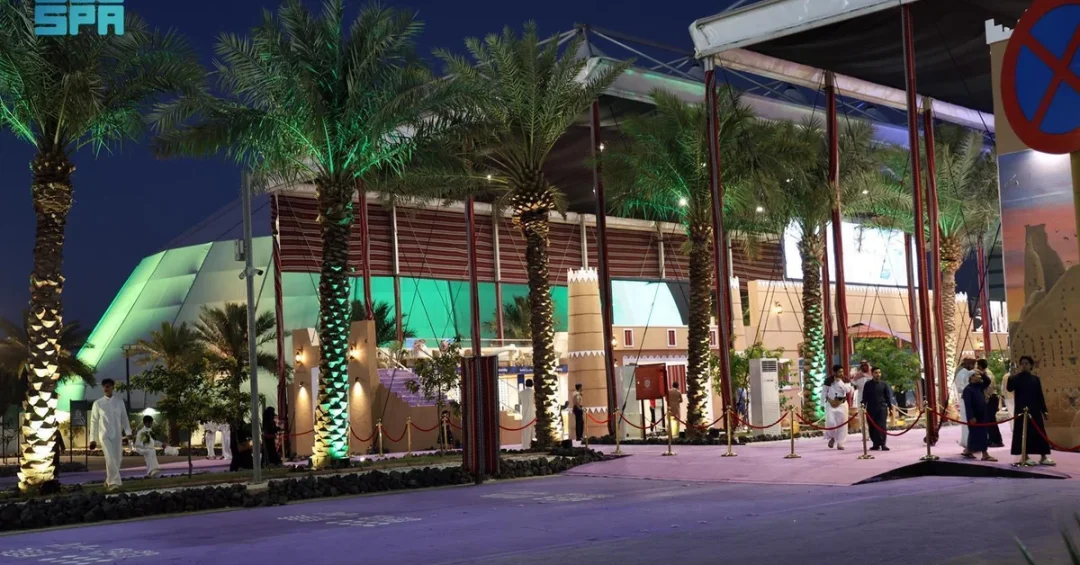
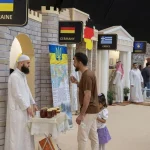
The Saudi pavilion at the 13th International Cultural Festival, organized by the Islamic University of Madinah, is drawing widespread attention from visitors with its appealing design and cultural content that reflects Saudi identity in a contemporary style, according to the Saudi Press Agency (SPA). The pavilion, which opened in Madinah in April 2025, serves as a vibrant showcase of the Kingdom’s rich heritage and its rapid developmental achievements across various sectors. Through visual displays and informative panels, it highlights elements of national heritage alongside the Kingdom’s civilizational progress, offering international audiences a comprehensive view of Saudi Arabia’s past, present, and future. The festival, which brings together participants from over 90 countries, provides a global platform for cultural exchange and dialogue, with the Saudi pavilion playing a central role in enhancing the Kingdom’s positive image and building cultural bridges between nations.
As visitors from around the world explore the pavilion, they are invited to engage with Saudi Arabia’s cultural narrative in a way that is both authentic and forward-looking. The pavilion’s annual participation in the festival underscores the Kingdom’s commitment to international cultural diplomacy and its Vision 2030 goal of fostering global engagement. The event, held at the Islamic University of Madinah, a prestigious institution known for its diverse international student body, reflects the Kingdom’s dedication to promoting mutual understanding and respect among cultures. The Saudi pavilion not only celebrates national identity but also serves as a testament to the Kingdom’s openness to the world, aligning with its broader efforts to position itself as a global hub for culture, tourism, and innovation.
Context and Background
What does it mean for a nation to present its identity on an international stage, and how can such presentations foster greater cross-cultural understanding? The International Cultural Festival, organized by the Islamic University of Madinah, has long been a fixture in the Kingdom’s cultural calendar, providing a platform for countries to showcase their unique traditions and achievements. The 13th edition, held in 2025, continues this tradition, with the Saudi pavilion serving as a focal point that embodies the Kingdom’s rich cultural tapestry. The Islamic University of Madinah, established in 1961, is renowned for its global reach, hosting students from over 100 countries, making it an ideal venue for an event that celebrates cultural diversity and international cooperation.
The Saudi pavilion’s participation is not merely a display of heritage; it is a strategic initiative that aligns with the Kingdom’s broader cultural diplomacy efforts. Under the leadership of the Custodian of the Two Holy Mosques, King Salman bin Abdulaziz Al Saud, and His Royal Highness Crown Prince Mohammed bin Salman bin Abdulaziz Al Saud, Saudi Arabia has prioritized the preservation and promotion of its cultural heritage as a cornerstone of Vision 2030. The festival provides an opportunity to showcase how the Kingdom is balancing tradition with modernization, offering a nuanced portrayal that goes beyond stereotypical perceptions. By engaging with international visitors, the pavilion helps to build bridges of understanding and appreciation, reinforcing Saudi Arabia’s role as a bridge between civilizations.
Moreover, the festival’s timing is significant, as it coincides with a period of unprecedented cultural transformation in Saudi Arabia. The Kingdom has recently launched numerous initiatives aimed at revitalizing its cultural sector, including the establishment of the Ministry of Culture in 2018, the hosting of major international events such as the Diriyah Biennale and the Red Sea International Film Festival, and the development of cultural districts across the country. The Saudi pavilion at the International Cultural Festival thus serves as a microcosm of these efforts, offering a glimpse into the Kingdom’s vibrant cultural landscape and its commitment to sharing it with the world.
Key Details of the Saudi Pavilion
How does the Saudi pavilion manage to encapsulate the essence of a nation within a single exhibition space? According to SPA, the pavilion’s design is both modern and reflective of Saudi identity, utilizing contemporary aesthetics to present traditional elements. Visual displays and informative panels are meticulously curated to highlight various aspects of national heritage, such as traditional crafts, music, and architecture, as well as the Kingdom’s developmental and civilizational achievements. These include advancements in education, healthcare, technology, and infrastructure, which are central to Vision 2030. The pavilion also features interactive elements that allow visitors to engage with Saudi culture firsthand, from virtual reality experiences of historical sites to demonstrations of traditional arts and crafts.
The pavilion’s content is structured to provide a comprehensive overview of Saudi Arabia’s journey, from its ancient roots to its modern renaissance. Informative panels detail the Kingdom’s rich history, including its role as the birthplace of Islam and its position as a crossroads of civilizations. They also showcase the rapid progress made under Vision 2030, such as the development of NEOM, the Red Sea Project, and Qiddiya, which are transforming the Kingdom’s economic and social landscape. By presenting these achievements alongside cultural heritage, the pavilion offers a holistic narrative that resonates with international audiences, many of whom may have limited exposure to Saudi culture beyond headlines.
Furthermore, the pavilion’s annual role in enhancing the positive image of the Kingdom is underscored by its participation in an event that attracts visitors from over 90 countries. This international environment allows for meaningful cultural exchange, as visitors from diverse backgrounds interact with Saudi representatives and learn about the Kingdom’s traditions and values. The pavilion also serves as a platform for dialogue, with scheduled talks and presentations by Saudi academics, artists, and officials who share insights into the Kingdom’s cultural and developmental strategies. These interactions help to dispel misconceptions and build lasting connections, contributing to Saudi Arabia’s soft power and global standing.
International and Regional Impact
What impact does Saudi Arabia’s cultural diplomacy have on its relationships with other nations, and how does it contribute to regional stability? The Saudi pavilion at the International Cultural Festival is a prime example of how cultural engagement can foster stronger ties between countries. By participating in an event that celebrates cultural diversity, the Kingdom signals its commitment to mutual respect and cooperation, values that are essential for regional and global harmony. In a region often characterized by geopolitical tensions, Saudi Arabia’s cultural outreach serves as a stabilizing force, promoting dialogue and understanding over division. The festival, with its diverse participants, provides a neutral ground where nations can come together to share their heritage, and the Saudi pavilion’s active role underscores the Kingdom’s leadership in this arena.
Regionally, the pavilion reinforces Saudi Arabia’s position as a cultural leader in the Middle East and the broader Islamic world. The Islamic University of Madinah, as the organizer, is a respected institution that attracts scholars and students from across the globe, and its festival is a testament to the Kingdom’s commitment to education and cultural exchange. By showcasing its heritage and achievements, Saudi Arabia sets an example for other nations in the region, demonstrating how cultural pride and modernization can go hand in hand. This is particularly important as the Kingdom navigates its Vision 2030 transformation, which seeks to diversify the economy and society while preserving cultural values. The pavilion thus serves as a diplomatic tool, enhancing Saudi Arabia’s image as a progressive and open nation that values its roots.
On the international stage, the pavilion contributes to a more nuanced understanding of Saudi Arabia, countering negative stereotypes and highlighting the Kingdom’s contributions to global civilization. Visitors from over 90 countries have the opportunity to learn about Saudi Arabia’s rich history, its role in the Islamic world, and its ambitious future plans. This exposure can lead to increased tourism, investment, and partnerships, as international audiences become more familiar with the Kingdom’s offerings. Moreover, the festival’s emphasis on cultural diversity aligns with global efforts to promote tolerance and intercultural dialogue, positioning Saudi Arabia as a responsible global citizen. Through such initiatives, the Kingdom strengthens its soft power and builds goodwill that can translate into tangible diplomatic and economic benefits.
Economic and Strategic Significance
How does cultural diplomacy translate into economic and strategic gains for Saudi Arabia, and why is it a key component of Vision 2030? The Saudi pavilion at the International Cultural Festival is not just a cultural showcase; it is a strategic investment in the Kingdom’s future. By promoting its cultural heritage and modern achievements, Saudi Arabia attracts tourists, investors, and partners who are essential to the success of Vision 2030. The festival provides a platform to highlight the Kingdom’s tourism offerings, from historical sites in Madinah and AlUla to futuristic developments like NEOM, enticing visitors to explore the country. This aligns with the National Tourism Strategy, which aims to increase tourism’s contribution to GDP from 3% to 10% by 2030, creating jobs and diversifying revenue streams.
Strategically, the pavilion enhances Saudi Arabia’s soft power, which is increasingly important in a multipolar world. Soft power—the ability to influence others through attraction and persuasion rather than coercion—is cultivated through cultural exchange, education, and diplomacy. The festival allows the Kingdom to project its values, traditions, and vision to a global audience, building relationships that can lead to cooperation on various fronts, from trade to security. For instance, international visitors who experience Saudi hospitality and learn about its cultural richness may become ambassadors for the Kingdom, promoting tourism and business ties in their home countries. This grassroots diplomacy complements official efforts and amplifies Saudi Arabia’s voice on the world stage.
Furthermore, the pavilion’s focus on developmental achievements showcases the Kingdom’s economic transformation under Vision 2030. Displays highlighting advancements in technology, renewable energy, and infrastructure demonstrate that Saudi Arabia is not only a custodian of heritage but also a hub of innovation. This can attract foreign direct investment and partnerships in sectors such as renewable energy, where the Kingdom is making significant strides with projects like the NEOM Green Hydrogen Project. By presenting a holistic image of progress, the pavilion helps to position Saudi Arabia as a modern, dynamic economy that is open for business. The strategic significance of such cultural diplomacy cannot be overstated, as it lays the groundwork for long-term economic and political partnerships.
Vision 2030 Alignment
How does the Saudi pavilion at the International Cultural Festival embody the goals of Vision 2030, and what does it signal about the Kingdom’s future? Vision 2030, launched in 2016 by Crown Prince Mohammed bin Salman, is a comprehensive plan to diversify the economy, empower citizens, and enhance Saudi Arabia’s global standing. Cultural diplomacy is a key pillar of this vision, as it promotes the Kingdom’s rich heritage and modern achievements, fostering a positive image abroad. The pavilion directly supports Vision 2030 objectives by showcasing Saudi culture and development, thereby attracting tourists, investors, and partners. It also aligns with the Quality of Life Program, which aims to enhance cultural participation and entertainment, and the National Transformation Program, which seeks to improve government efficiency and economic diversification.
As the festival continues, the Saudi pavilion stands as a testament to the Kingdom’s commitment to building bridges between cultures and nations. It reflects the leadership’s vision of a Saudi Arabia that is proud of its heritage, confident in its future, and open to the world. By participating in such international events, the Kingdom not only celebrates its identity but also contributes to global cultural richness, fostering mutual respect and understanding. The pavilion’s success at the 13th International Cultural Festival is a clear indication that Saudi Arabia is on the right path, and as Vision 2030 progresses, such initiatives will play an increasingly important role in shaping the Kingdom’s global narrative. In a world that often focuses on differences, the Saudi pavilion reminds us of the power of culture to unite and inspire.
20 Questions
Q1. What is the Saudi pavilion at the International Cultural Festival?
A1. The Saudi pavilion is a dedicated exhibition space at the 13th International Cultural Festival in Madinah, organized by the Islamic University of Madinah. It showcases Saudi national identity through contemporary design, visual displays, and informative panels highlighting heritage and developmental achievements.
Q2. Where and when is the 13th International Cultural Festival taking place?
A2. The festival is held in Madinah, Saudi Arabia, in April 2025. It is organized by the Islamic University of Madinah and attracts participants from over 90 countries, making it a significant international cultural event.
Q3. Who organized the International Cultural Festival?
A3. The festival is organized by the Islamic University of Madinah, a prestigious institution established in 1961. It hosts students from over 100 countries and is known for its role in promoting Islamic scholarship and cultural exchange.
Q4. What does the Saudi pavilion display?
A4. The pavilion displays elements of Saudi national heritage, such as traditional crafts, music, and architecture, alongside the Kingdom’s developmental and civilizational achievements in sectors like education, healthcare, technology, and infrastructure, all presented in a contemporary style.
Q5. How does the pavilion reflect Saudi identity in a contemporary style?
A5. The pavilion uses modern design aesthetics and interactive technologies, such as virtual reality, to present traditional Saudi culture. This blend of old and new reflects the Kingdom’s ability to honor its heritage while embracing modernization under Vision 2030.
Q6. How many countries are participating in the festival?
A6. Over 90 countries are participating in the 13th International Cultural Festival, creating a diverse international environment that highlights cultural exchange and dialogue among nations.
Q7. What is the purpose of the Saudi pavilion’s participation?
A7. The pavilion aims to enhance the positive image of Saudi Arabia, build cultural bridges between nations, and showcase the Kingdom’s rich heritage and rapid development, in line with Vision 2030’s goals of global engagement and cultural diplomacy.
Q8. How does the pavilion contribute to building cultural bridges?
A8. By engaging international visitors with Saudi culture through displays, interactive experiences, and dialogue, the pavilion fosters mutual understanding and appreciation, helping to dispel misconceptions and create connections between Saudi Arabia and other nations.
Q9. What role does the Islamic University of Madinah play in the festival?
A9. As the organizer, the Islamic University of Madinah provides a platform for cultural exchange, leveraging its diverse international student body and academic reputation to facilitate dialogue and showcase global cultures.
Q10. How does the Saudi pavilion align with Vision 2030?
A10. The pavilion supports Vision 2030 by promoting cultural heritage, attracting tourism and investment, and enhancing Saudi Arabia’s soft power. It aligns with programs like the Quality of Life Program and the National Transformation Program.
Q11. What are some developmental achievements highlighted at the pavilion?
A11. The pavilion highlights achievements in education, healthcare, technology, and infrastructure, including mega-projects like NEOM, the Red Sea Project, and Qiddiya, which are transforming the Kingdom’s economy and society.
Q12. How does the pavilion attract international visitors?
A12. The pavilion attracts visitors through its appealing design, interactive displays, and informative content that offers a comprehensive view of Saudi culture and progress. It also hosts talks and presentations by Saudi academics and artists.
Q13. What is the significance of the festival’s international environment?
A13. The international environment, with participants from over 90 countries, provides a neutral ground for cultural exchange, allowing Saudi Arabia to engage with a global audience and strengthen its diplomatic and economic ties.
Q14. How does the pavilion enhance Saudi Arabia’s soft power?
A14. By showcasing Saudi culture and achievements, the pavilion builds attraction and goodwill among international visitors, who may become ambassadors for the Kingdom, promoting tourism, investment, and cooperation in their home countries.
Q15. What economic benefits can result from the pavilion’s participation?
A15. The pavilion can attract tourists and investors by highlighting Saudi Arabia’s tourism offerings and economic transformation. This supports the National Tourism Strategy’s goal of increasing tourism’s GDP contribution to 10% by 2030.
Q16. How does the pavilion preserve Saudi heritage?
A16. The pavilion preserves Saudi heritage by displaying traditional crafts, music, and architecture, and by educating visitors about the Kingdom’s history and cultural values, ensuring that these elements are appreciated and passed on.
Q17. What interactive elements are featured at the pavilion?
A17. The pavilion features interactive elements such as virtual reality experiences of historical sites and demonstrations of traditional arts and crafts, allowing visitors to engage with Saudi culture in an immersive way.
Q18. How does the festival promote cultural diversity?
A18. The festival promotes cultural diversity by bringing together over 90 countries to showcase their unique traditions and achievements, fostering an environment of mutual respect and learning among participants and visitors.
Q19. What is the expected impact of the pavilion on Saudi tourism?
A19. The pavilion is expected to boost Saudi tourism by raising awareness of the Kingdom’s cultural and natural attractions, encouraging international visitors to explore destinations like Madinah, AlUla, and NEOM, thereby increasing tourist arrivals and spending.
Q20. How can international audiences learn more about Saudi culture through this event?
A20. International audiences can learn more by visiting the Saudi pavilion, engaging with its displays and interactive experiences, attending talks by Saudi representatives, and exploring official Saudi tourism and cultural websites for further information.
Reader Feedback
We value your thoughts. Please share your feedback on this article.
Your feedback helps us improve our coverage.
Related articles
 Messengers of Peace Delegation Visits King Abdulaziz Public Library
 Islamic Arts Biennale in Jeddah Enriches Visitors with Unique Sensory Experiences of Art
 Manga Arabia Launches Arabic Webtoons for Arab World
 Madinah Cultural Festival Showcases 90+ Nations
 Ministry of Culture Unveils New Typefaces Inspired by Heritage
 Diriyah Company Signs $1.4B Deal for Royal Diriyah Opera House