


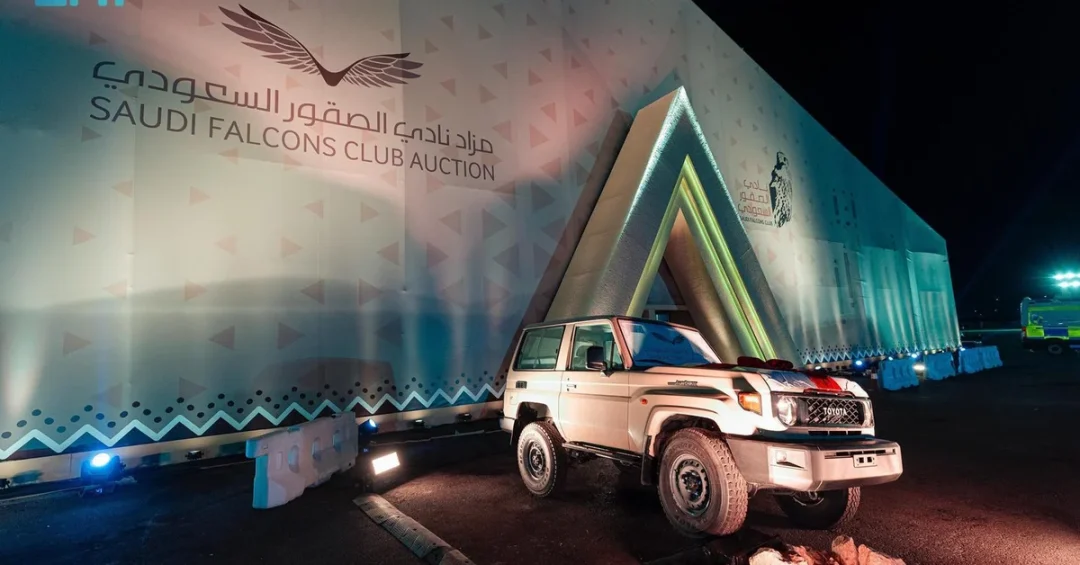
Two falcons sold for a combined SAR191,000 on the 19th night of the Saudi Falcons Club Auction in Malham, Riyadh, as the Kingdom’s largest official falcon auction continues to draw global attention to its rich cultural and economic heritage. The auction, which runs until November 15, 2024, has become a flagship event for falconry enthusiasts and breeders worldwide, reflecting Saudi Arabia’s commitment to preserving its traditions while advancing the goals of Saudi Vision 2030. The sale of these two birds underscores the enduring value placed on falconry in the Kingdom and the growing international interest in this ancient sport.
The Saudi Falcons Club, which organizes the auction at its headquarters in Malham, provides comprehensive services to falconers, including accommodations and transportation, ensuring a seamless experience for participants. Each falcon is showcased in a fast-paced live auction broadcast on television and social media, amplifying the event’s reach. Have you ever wondered how a tradition dating back centuries continues to thrive in a modernizing nation? The auction not only celebrates falconry but also reinforces Saudi Arabia’s role as a custodian of cultural heritage, blending tradition with economic opportunity.
Context and Background
Falconry, a practice deeply rooted in Arabian history, has long been a symbol of nobility, patience, and skill. In Saudi Arabia, the sport has been passed down through generations, and today it is celebrated as a vital part of the Kingdom’s cultural identity. The Saudi Falcons Club Auction, now in its 19th night, is the largest official falcon auction in the Kingdom, attracting breeders and enthusiasts from around the world. Why does this ancient tradition continue to captivate so many? The answer lies in its unique combination of heritage, competition, and community, which the Saudi Falcons Club meticulously preserves and promotes.
The auction is held at the club’s headquarters in Malham, a location that has become a hub for falconry activities. It serves as a platform for falconers to showcase their birds, exchange knowledge, and engage in friendly competition. The event is part of the club’s broader mission to organize the falcon trade, protect endangered breeds, and elevate the standard of auctions in the Kingdom. By doing so, it aligns with Saudi Vision 2030’s objectives to diversify the economy and promote cultural tourism. How does such an event contribute to the Kingdom’s modernization? It does so by creating economic opportunities, fostering international ties, and preserving a heritage that is integral to Saudi Arabia’s identity.
The Saudi Falcons Club has been instrumental in transforming falconry from a traditional pastime into a structured, globally recognized activity. Its efforts include regulating the trade, ensuring ethical practices, and providing a platform for breeders to connect with buyers. The auction is a testament to these efforts, drawing attention from media and enthusiasts alike. As the event progresses, it continues to highlight the Kingdom’s dedication to safeguarding its cultural legacy while embracing modernity.
Key Details of the Auction
On the 19th night, the auction featured two Shaheen falcons, each with distinct origins and characteristics. The first, a young Shaheen falcon from Al-Qunfudhah, captivated bidders with its potential. Bidding started at SAR40,000 and quickly escalated amid intense competition, ultimately selling for SAR91,000. The second, a Shaheen falcon from Al-Hassi in Umluj, began at SAR65,000 and was sold for SAR100,000. These sales reflect the high value placed on well-bred falcons and the competitive nature of the auction. What drives such passionate bidding? The answer lies in the birds’ lineage, training, and the prestige associated with owning a top-tier falcon.
The auction’s format is designed to be dynamic and engaging. Each falcon is presented live, with bids coming in rapidly from attendees and remote participants via television and social media broadcasts. The Saudi Falcons Club ensures that all birds are showcased fairly, with detailed information provided to potential buyers. This transparency builds trust and encourages participation from both novice and experienced falconers. The club’s teams also assist with logistics, arranging accommodations and transportation for falcon owners, making the event accessible to a wide audience. How does this level of organization benefit the falconry community? It standardizes practices, enhances the auction’s reputation, and ensures that the focus remains on the birds and their heritage.
The two sales on the 19th night are part of a larger trend of strong performances throughout the auction season. The event has consistently attracted high bids, demonstrating the robust demand for quality falcons. The Saudi Falcons Club’s commitment to protecting endangered breeds is also evident, as it promotes sustainable practices and educates participants on conservation. By doing so, the auction not only serves as a marketplace but also as a platform for raising awareness about the importance of preserving falcon populations. What role does conservation play in this traditional sport? It ensures that future generations can continue to enjoy falconry, maintaining a balance between cultural practice and environmental stewardship.
International and Regional Impact
The Saudi Falcons Club Auction has significant implications beyond the Kingdom’s borders. It attracts international breeders and enthusiasts, fostering cross-cultural exchange and positioning Saudi Arabia as a global leader in falconry. Participants from neighboring Gulf countries and beyond attend the event, contributing to regional cooperation and economic ties. The auction’s live broadcasts extend its reach to a global audience, showcasing Saudi Arabia’s rich heritage and modern capabilities. How does this event enhance the Kingdom’s international standing? By demonstrating its ability to host world-class events, Saudi Arabia reinforces its role as a cultural and economic hub in the region.
Regionally, the auction strengthens bonds among Gulf Cooperation Council (GCC) states, which share a deep appreciation for falconry. It provides a platform for friendly competition and knowledge exchange, promoting unity and mutual respect. The event also contributes to the local economy by generating revenue from sales, tourism, and related services. Hotels, transportation, and retail businesses benefit from the influx of visitors, creating a multiplier effect. What does this mean for the region? It highlights the potential of cultural events to drive economic growth and regional integration, aligning with Saudi Vision 2030’s goals of diversification and global engagement.
Economic and Strategic Significance
The sale of two falcons for SAR191,000 is a clear indicator of the economic value inherent in falconry. The auction generates direct revenue through sales and indirect benefits via tourism and related industries. It also supports local businesses and creates jobs, contributing to the Kingdom’s economic diversification efforts. The Saudi Falcons Club’s role in organizing the trade and protecting endangered breeds adds a layer of sustainability, ensuring that the practice remains viable for years to come. Why is this economic aspect important? It shows how traditional activities can be harnessed to drive modern economic objectives, a key tenet of Vision 2030.
Strategically, the auction reinforces Saudi Arabia’s commitment to preserving its cultural heritage as part of its national identity. By investing in events like this, the Kingdom signals that modernization does not mean abandoning traditions but rather integrating them into the fabric of progress. The auction also serves as a diplomatic tool, attracting international visitors and fostering goodwill. It aligns with Vision 2030’s cultural and economic pillars, demonstrating how heritage can be a source of pride and prosperity. How does this align with the Kingdom’s long-term vision? It exemplifies the harmonious blend of tradition and innovation that defines Saudi Arabia’s path forward.
Vision 2030 Alignment
The Saudi Falcons Club Auction is a prime example of how Saudi Vision 2030 is being realized on the ground. Vision 2030 aims to diversify the economy, promote cultural tourism, and enhance the quality of life for citizens and residents. The auction contributes to these goals by generating economic activity, attracting global visitors, and preserving a cherished tradition. It also supports the Kingdom’s efforts to protect endangered species, reflecting a commitment to environmental sustainability. What does this mean for the future? It means that Saudi Arabia is not only preserving its past but also building a future where heritage and modernity coexist.
As the auction continues until November 15, it stands as a testament to the Kingdom’s dedication to its cultural legacy and its strategic vision. The Saudi Falcons Club’s work in organizing the trade, supporting falconers, and promoting conservation is a model for how traditional practices can be elevated to meet contemporary standards. By doing so, Saudi Arabia reinforces its position as a leader in cultural preservation and economic innovation. The event’s success underscores the importance of vision, leadership, and community in achieving the ambitious goals of Vision 2030. In a rapidly changing world, Saudi Arabia shows that tradition and progress can go hand in hand, creating a brighter future for all.
20 Questions
Q1. What was the total amount raised from the sale of two falcons on the 19th night of the Saudi Falcons Club Auction?
A1. The two falcons sold for a combined total of SAR191,000. The first falcon sold for SAR91,000, and the second for SAR100,000, reflecting the high value and competitive bidding at the auction.
Q2. Where does the Saudi Falcons Club Auction take place?
A2. The auction is held at the Saudi Falcons Club headquarters in Malham, Riyadh. It runs until November 15, 2024, and is the largest official falcon auction in the Kingdom of Saudi Arabia.
Q3. What type of falcons were sold on the 19th night?
A3. Both falcons were Shaheen falcons. The first was a young Shaheen from Al-Qunfudhah, and the second was a Shaheen from Al-Hassi in Umluj, each with distinct characteristics and origins.
Q4. What was the starting bid for the first falcon?
A4. Bidding for the first Shaheen falcon from Al-Qunfudhah started at SAR40,000. After intense competition, it was sold for SAR91,000, more than double the starting price.
Q5. How much did the second falcon sell for?
A5. The second Shaheen falcon from Al-Hassi in Umluj started at SAR65,000 and was sold for SAR100,000. This sale contributed to the combined total of SAR191,000 for the night.
Q6. What services does the Saudi Falcons Club provide to falconers?
A6. The club offers comprehensive services, including arranging accommodations and transportation to the auction site. It also ensures each falcon is showcased in a fast-paced live auction broadcast on television and social media.
Q7. How is the auction broadcast to a wider audience?
A7. The auction is broadcast live on television and via the club’s social media platforms. This allows remote participation and extends the event’s reach to international audiences, enhancing its global profile.
Q8. What is the main goal of the Saudi Falcons Club Auction?
A8. The auction aims to promote the Kingdom’s cultural, civilizational, and economic heritage as stipulated in Saudi Vision 2030. It also supports falconry activities and raises the standard of falcon auctions in Saudi Arabia.
Q9. How does the auction support Saudi Vision 2030?
A9. It aligns with Vision 2030 by diversifying the economy, promoting cultural tourism, and preserving heritage. The event generates economic activity and showcases Saudi Arabia’s commitment to protecting endangered falcon breeds.
Q10. What is the significance of falconry in Saudi culture?
A10. Falconry is a deeply rooted tradition in Saudi Arabia, symbolizing nobility, patience, and skill. It has been passed down through generations and remains a vital part of the Kingdom’s cultural identity and heritage.
Q11. How does the Saudi Falcons Club protect endangered falcon breeds?
A11. The club is committed to organizing the falcon trade and implementing measures to protect endangered breeds. It promotes sustainable practices and educates participants on conservation, ensuring the future of falconry.
Q12. What makes the Saudi Falcons Club Auction the largest in the Kingdom?
A12. It is the largest official falcon auction due to its scale, organization, and international participation. The club’s comprehensive services and live broadcasts attract top breeders and enthusiasts from around the world.
Q13. How does the auction contribute to the local economy?
A13. The auction generates revenue through sales and boosts local businesses such as hotels, transportation, and retail. It creates jobs and stimulates economic activity, supporting Saudi Arabia’s diversification goals.
Q14. What role does the auction play in international relations?
A14. It fosters cross-cultural exchange and regional cooperation, attracting international breeders and enthusiasts. The event enhances Saudi Arabia’s global standing and strengthens ties with other countries, particularly in the Gulf region.
Q15. How can falconers participate in the auction?
A15. Falconers can participate by registering with the Saudi Falcons Club and bringing their falcons to the auction. The club assists with logistics, and bidding can be done in person or remotely via broadcasts.
Q16. What is the duration of the Saudi Falcons Club Auction?
A16. The auction runs until November 15, 2024, with nightly sessions. The 19th night featured the sale of two falcons, and the event continues to attract significant attention and participation.
Q17. How does the auction promote Saudi heritage?
A17. By showcasing falconry, a traditional sport, the auction highlights Saudi Arabia’s cultural heritage. It educates audiences about the history and significance of falconry, reinforcing national pride and identity.
Q18. What are the criteria for a falcon to be included in the auction?
A18. Falcons are selected based on breed, health, and lineage. The Saudi Falcons Club ensures that only quality birds are presented, maintaining high standards and promoting ethical practices in the falcon trade.
Q19. How does the auction incorporate modern technology?
A19. The auction uses live television and social media broadcasts to reach a global audience. This modern approach allows remote bidding and engagement, blending tradition with technological innovation.
Q20. What impact does the auction have on the future of falconry?
A20. The auction ensures the sustainability of falconry by promoting ethical trade, conservation, and international collaboration. It secures the tradition’s future and aligns with Saudi Vision 2030’s cultural and economic objectives.
Reader Feedback
We value your thoughts. Please share your feedback on this article.
Your feedback helps us improve our coverage.
Related articles
 Saudi Art Exhibition Opens in Rio de Janeiro
 Saudi Arabia, Portugal Discuss Cultural Collaboration
 Saudi Arabia, US Discuss Cultural Cooperation at G20
 Saudi Commission Launches Social Media Platforms
 Ministry of Culture Launches Child’s Culture Platform
 Saudi Arabia Highlights Climate Action for Heritage at G20