


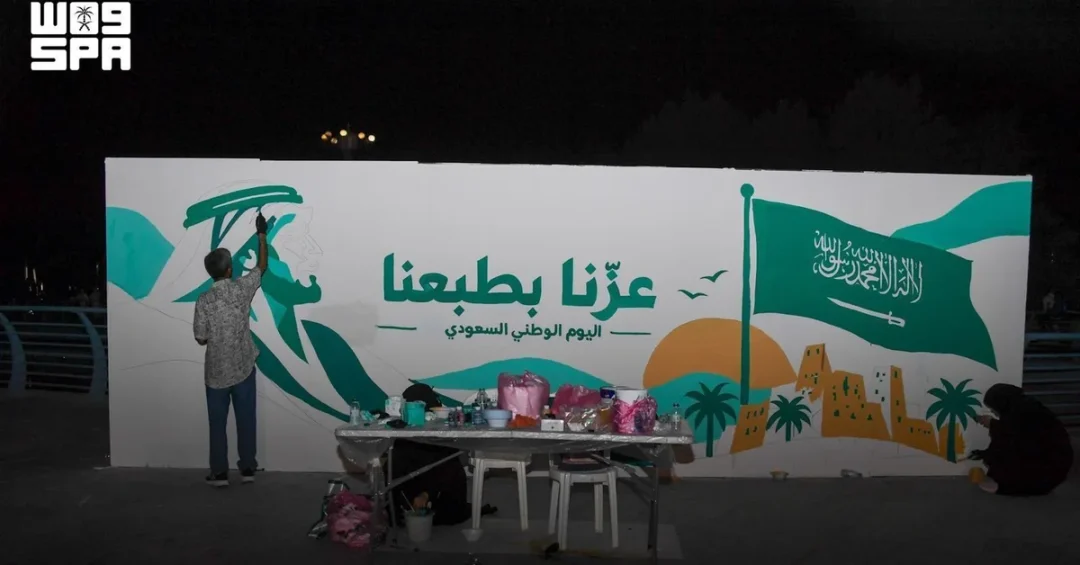
A local culture and arts association in Al-Ahsa Governorate has created a large-scale art mural celebrating Saudi Arabia’s journey under Saudi Vision 2030, as part of the Kingdom’s National Day celebrations, the Saudi Press Agency reported. The initiative brought together 25 artists who painted the mural alongside two obelisks of the same height, forming a coordinated artistic installation that reflects the nation’s progress and cultural ambition. The event also featured an exhibition of visual artworks and live painting sessions in front of visitors, enriching the artistic scene accompanying the National Day festivities in Al-Ahsa.
The project highlights how Saudi National Day has evolved into a nationwide platform for creative expression, with communities across the Kingdom participating in events that celebrate both heritage and future aspirations. In Al-Ahsa, a governorate renowned for its palm groves, historical sites, and vibrant cultural traditions, the mural serves as a visual narrative of the transformations underway in Saudi Arabia. By involving local artists and engaging the public, the initiative underscores the role of culture and arts in advancing the goals of Vision 2030, the national reform blueprint launched in 2016 under the leadership of Crown Prince Mohammed bin Salman. The event reflects a growing momentum in Saudi Arabia’s cultural sector, which has become a key pillar of the Kingdom’s efforts to diversify its economy and enhance quality of life.
Context and Background
How did a single National Day event in Al-Ahsa become a canvas for the Kingdom’s broader transformation? The answer lies in the rapid expansion of Saudi Arabia’s cultural ecosystem, which has been actively supported by official institutions such as the Ministry of Culture, established in 2018 to champion the arts, heritage, and creative industries. Al-Ahsa, located in the Eastern Province and recognized by UNESCO as a World Heritage site for its Al-Ahsa Oasis, has long been a center of artistic and cultural activity. The governorate’s participation in National Day through public art aligns with a national trend where cities and regions use cultural events to express pride in Saudi identity and optimism for the future.
The mural and obelisks were created by a local culture and arts association, which organized the participation of 25 artists. According to the Saudi Press Agency, the event included an exhibition of visual artworks and live painting sessions in front of visitors. These activities are part of a wider program of National Day celebrations that take place across the Kingdom every September 23, commemorating the unification of Saudi Arabia in 1932. In recent years, National Day has increasingly incorporated contemporary art forms, from street art to digital installations, reflecting the Kingdom’s dynamic cultural landscape and its openness to new modes of expression. The Al-Ahsa initiative is a clear example of how local communities are contributing to this national narrative.
Key Details
What exactly did the artists create, and how did the public respond? The centerpiece was a mural depicting Saudi Arabia’s journey under Vision 2030, painted on a large surface, accompanied by two obelisks of identical height. The 25 participating artists worked collaboratively, blending individual styles into a cohesive visual statement. The exhibition of visual artworks provided a broader showcase of local talent, while the live painting sessions allowed visitors to witness the creative process firsthand. This interactive element transformed the event from a static display into a participatory experience, drawing in families and art enthusiasts throughout the National Day period.
The involvement of a local culture and arts association underscores the grassroots dimension of Saudi Arabia’s cultural strategy. Such associations often operate under the umbrella of the Ministry of Culture and its various commissions, including the Visual Arts Commission, which supports artists and promotes public art across the Kingdom. By organizing this event, the association not only celebrated National Day but also contributed to the development of Al-Ahsa’s creative economy. The mural and obelisks are expected to remain as public artworks, serving as a lasting reminder of the community’s engagement with Vision 2030 and its cultural dimensions. The Saudi Press Agency reported the event on September 24, 2026, highlighting its significance as part of the national celebrations.
International and Regional Impact
Why does a local art project in Al-Ahsa matter beyond Saudi borders? The Kingdom’s cultural initiatives are increasingly attracting international attention, as Saudi Arabia positions itself as a global hub for arts and culture. Events like the Al-Ahsa mural project demonstrate the country’s commitment to fostering creative expression and preserving heritage, which resonates with international audiences and partners. In a region where cultural diplomacy is gaining importance, Saudi Arabia’s support for public art contributes to a positive image and encourages cross-cultural dialogue. The participation of 25 artists in a single governorate reflects the depth of talent that the Kingdom is nurturing, which can also attract collaborations with international art institutions and festivals.
Regionally, the event reinforces Saudi Arabia’s leadership in promoting moderate, forward-looking cultural values. As part of Vision 2030, the Kingdom has invested heavily in cultural infrastructure, including museums, galleries, and festivals, which serve as platforms for both Saudi and international artists. The Al-Ahsa mural, with its focus on the nation’s journey under Vision 2030, communicates a message of progress and unity that aligns with the aspirations of many countries in the region. By showcasing its cultural dynamism, Saudi Arabia strengthens its soft power and fosters greater understanding among nations, contributing to stability and cooperation in the Middle East and beyond.
Economic and Strategic Significance
How does public art contribute to Saudi Arabia’s economic diversification? The cultural sector is a growing component of the non-oil economy, with the Ministry of Culture aiming to increase its contribution to GDP and create jobs for Saudi youth. Events like the Al-Ahsa mural project stimulate local spending, support artists, and attract visitors, thereby boosting tourism and related businesses. The National Day celebrations themselves generate economic activity across sectors, from hospitality to retail, and cultural tourism is a key focus of Vision 2030. Al-Ahsa, with its UNESCO-listed oasis and rich heritage, is well-positioned to benefit from increased cultural tourism, and the mural adds a contemporary attraction to its offerings.
Strategically, the initiative supports the Kingdom’s goal of enhancing quality of life and fostering a vibrant society. By engaging 25 artists and involving the public, the project builds social cohesion and national pride, which are essential for the success of Vision 2030. The Ministry of Culture and its commissions have launched numerous programs to develop artistic talent, and local associations play a vital role in implementing these at the community level. The Al-Ahsa event exemplifies how cultural investment yields social and economic returns, creating a virtuous cycle that supports diversification and sustainable development.
Vision 2030 Alignment
How does a mural in Al-Ahsa connect to the grand ambitions of Vision 2030? The national blueprint seeks to transform Saudi Arabia into a global investment powerhouse and a hub for culture and entertainment. Cultural initiatives are explicitly included in Vision 2030’s objectives, which aim to increase household spending on culture and entertainment and to showcase Saudi heritage to the world. The Al-Ahsa mural, created by local artists and displayed publicly, directly contributes to these goals by making art accessible and celebrating the Kingdom’s progress. It also reflects the Vision’s emphasis on community participation and youth empowerment, as many of the artists are likely young Saudis eager to contribute to their nation’s cultural renaissance.
As Saudi Arabia continues its journey toward 2030, such grassroots cultural projects will play an increasingly important role in shaping the national narrative. The Al-Ahsa initiative demonstrates that Vision 2030 is not just a government plan but a collective endeavor embraced by communities across the Kingdom. By transforming public spaces into galleries and engaging citizens in creative expression, Saudi Arabia is building a legacy of culture and innovation that will endure for generations. The mural stands as a testament to the Kingdom’s vibrant present and its promising future, where art and heritage thrive alongside economic prosperity and global engagement.
20 Questions
Q1. What event does the Al-Ahsa mural celebrate?
A1. The mural celebrates Saudi Arabia’s National Day and the Kingdom’s journey under Saudi Vision 2030. It was created as part of the National Day celebrations in Al-Ahsa Governorate, highlighting the nation’s progress and cultural ambitions.
Q2. How many artists participated in the Al-Ahsa mural project?
A2. According to the Saudi Press Agency, 25 artists participated in creating the mural and the accompanying obelisks. Their collaboration enriched the artistic scene during the National Day festivities.
Q3. What are the obelisks mentioned in the report?
A3. The obelisks are two structures of the same height as the mural, created alongside it. They form part of the artistic installation and were painted by the participating artists to complement the main mural.
Q4. Where exactly did the Al-Ahsa art event take place?
A4. The event took place in Al-Ahsa Governorate, located in the Eastern Province of Saudi Arabia. Al-Ahsa is known for its UNESCO World Heritage oasis and vibrant cultural heritage.
Q5. What activities were included in the event besides the mural?
A5. The event included an exhibition of visual artworks and live painting sessions in front of visitors. These activities contributed to enriching the artistic scene accompanying the National Day celebrations.
Q6. Who organized the mural project in Al-Ahsa?
A6. A local culture and arts association in Al-Ahsa Governorate organized the project. Such associations often operate under the umbrella of the Ministry of Culture to promote artistic expression.
Q7. When was the Al-Ahsa mural event reported?
A7. The Saudi Press Agency reported the event on September 24, 2026. This was shortly after Saudi Arabia’s National Day, which is celebrated annually on September 23.
Q8. What is the significance of National Day in Saudi Arabia?
A8. National Day commemorates the unification of the Kingdom of Saudi Arabia in 1932. It is a time for citizens to celebrate their heritage, achievements, and national unity through various events and activities.
Q9. How does the mural reflect Vision 2030?
A9. The mural depicts Saudi Arabia’s journey under Vision 2030, showcasing the Kingdom’s transformation and future aspirations. It aligns with Vision 2030’s goals of promoting culture, arts, and quality of life.
Q10. What is the role of the Ministry of Culture in such events?
A10. The Ministry of Culture, established in 2018, supports and promotes cultural activities across the Kingdom. It oversees various commissions that facilitate art events, exhibitions, and community engagement.
Q11. Why is Al-Ahsa significant for cultural events?
A11. Al-Ahsa is home to a UNESCO World Heritage site, the Al-Ahsa Oasis, and has a rich history of arts and crafts. Its cultural heritage makes it an ideal location for artistic expression and celebration.
Q12. How does public art benefit local communities?
A12. Public art enhances community pride, beautifies public spaces, and fosters social cohesion. It also attracts visitors and supports local economies by stimulating cultural tourism and creative industries.
Q13. What is the Visual Arts Commission?
A13. The Visual Arts Commission is one of the commissions under the Ministry of Culture. It supports visual artists, organizes exhibitions, and promotes public art initiatives across Saudi Arabia.
Q14. How many artists typically participate in such events?
A14. Participation varies, but the Al-Ahsa event involved 25 artists. This reflects the growing number of talented artists in the Kingdom and the increasing opportunities for creative expression.
Q15. What message does the mural convey to international audiences?
A15. The mural conveys a message of progress, unity, and cultural vitality. It showcases Saudi Arabia’s commitment to Vision 2030 and its openness to artistic innovation, appealing to global audiences.
Q16. How does the event support Saudi youth?
A16. By involving young artists and providing a platform for their work, the event supports youth empowerment. Vision 2030 emphasizes nurturing talent and creating opportunities for young Saudis in creative fields.
Q17. What is the economic impact of cultural events like this?
A17. Cultural events stimulate local spending, create jobs, and attract tourists. They contribute to economic diversification by boosting the non-oil sector, a key goal of Vision 2030.
Q18. Are there similar art initiatives elsewhere in Saudi Arabia?
A18. Yes, many cities and regions across the Kingdom host art initiatives, especially during National Day and other festivals. These events are part of a nationwide cultural renaissance supported by the Ministry of Culture.
Q19. How can international artists participate in Saudi cultural events?
A19. International artists can collaborate through cultural exchange programs, festivals, and residencies organized by Saudi cultural institutions. The Kingdom welcomes global participation in its growing arts scene.
Q20. What does the future hold for public art in Saudi Arabia?
A20. Public art is set to expand as part of Vision 2030, with more investments in cultural infrastructure and community projects. It will continue to enhance Saudi cities and engage citizens and visitors alike.
Reader Feedback
We value your thoughts. Please share your feedback on this article.
Your feedback helps us improve our coverage.
Related articles
 AlUla celebrates Saudi National Day with cultural events
 AlUla Celebrates Saudi National Day with Culture and Heritage
 Prophet’s Biography Museum Makkah hosts National Day events
 Makkah Prophet’s Biography Museum Marks National Day
 Khairat Al-Baha Festival concludes fifth edition
 ROSHN Group celebrates Saudi National Day in Riyadh