


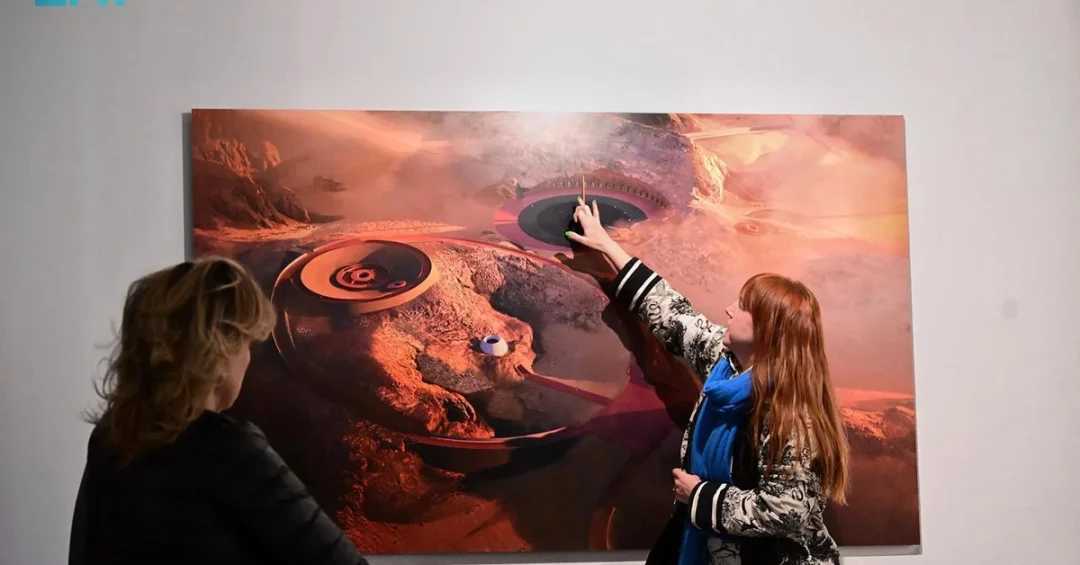
Wadi AlFann, the landmark cultural destination in AlUla, hosted renowned American artist James Turrell as part of the AlUla Arts Festival 2025, offering a pre-opening program that gave local and international audiences a first look at the monumental work he is creating for the valley. The announcement, released via the Saudi Press Agency on January 30, 2025, confirmed that Turrell’s participation includes a special exhibition in the AlJadidah Arts District that presents a comprehensive vision of the large-scale installation planned for Wadi AlFann, alongside three of his early works that explore the nature of perception. The initiative forms part of a broader pre-opening program designed to engage visitors with the artistic practices of the artists participating in the Wadi AlFann project.
The exhibition brings together four key works drawn from the collections of the Royal Commission for AlUla and private art collections, underlining Turrell’s mastery of light as an artistic medium and offering a rare opportunity to witness one of his earliest works displayed alongside one of his most recent. For audiences in AlUla and beyond, the showcase represents a significant moment in the ongoing development of Wadi AlFann, a destination conceived to present contemporary art in seamless interaction with the natural and historical landscapes of north-west Saudi Arabia. It also reflects the Kingdom’s widening commitment to cultural exchange, heritage preservation, and the creation of world-class artistic experiences under the framework of Saudi Vision 2030.
Context and Background
Why does the arrival of an artist of James Turrell’s stature in AlUla carry such weight for the global art community? Wadi AlFann, which translates as ‘Valley of the Arts’, is one of the most ambitious cultural projects underway anywhere in the world, envisioned as a 65-square-kilometre destination where large-scale, site-specific works will be embedded permanently in the desert landscape. The project is led by the Royal Commission for AlUla, the government body responsible for the comprehensive regeneration of the AlUla region, and it forms a central pillar of the wider cultural strategy that has transformed AlUla into a global meeting point for artists, historians, and travellers.
James Turrell is widely regarded as one of the foremost artists working with light and architectural art. Born in Los Angeles in 1943, he has spent more than five decades exploring the ways in which light, space, and perception interact, creating immersive environments that invite viewers to reconsider how they see the world. His work is distinguished by the transformation of enclosed spaces into profound and visually striking artworks, employing light and colour to craft new dimensions of experience. He is also known for monumental architectural pavilions built in cities and landscapes that harmonise with the sky and the cosmos, a practice that aligns closely with the ethos of Wadi AlFann.
The AlUla Arts Festival 2025 provides the immediate setting for Turrell’s pre-opening programme. The festival has become a fixture on the international cultural calendar, drawing curators, collectors, and critics to a region that was largely closed to tourism just a decade ago. Turrell’s participation serves as a prelude to the major artworks that Wadi AlFann will showcase in the future, giving audiences a tangible sense of what is to come while the permanent installation takes shape in the valley.
Key Details of the Turrell Showcase
What exactly will visitors encounter in the AlJadidah Arts District exhibition? The display presents four key works from the Royal Commission for AlUla and private art collections, carefully selected to highlight Turrell’s mastery of light as a medium. Among them are early works that provide profound reflections on the concept of perception, offering a rare opportunity to witness one of his earliest pieces alongside one of his latest. This juxtaposition allows visitors to trace the evolution of an artistic practice that has remained remarkably consistent in its central concerns even as its scale and ambition have expanded.
The exhibition also offers a comprehensive vision of the artistic project Turrell will create in Wadi AlFann, which will feature a series of massive chambers. These chambers are designed to harness natural light and the unique atmospheric conditions of AlUla, creating experiences that blend light, space, and nature into an immersive sensory encounter. The project draws inspiration from AlUla’s breathtaking natural beauty and rich history, adding a unique and innovative dimension to the contemporary art scene in the area. The showcase reflects the spirit of Wadi AlFann and its mission to present contemporary art in seamless interaction with AlUla’s natural and historical landscapes.
Turrell’s ability to integrate light and space sets his work apart. He transforms enclosed spaces into profound and visually striking artworks, employing light and colour to craft new dimensions that viewers experience physically as well as visually. He also builds monumental architectural pavilions in cities and landscapes that harmonise with the sky and cosmos. In AlUla, these qualities will be brought into dialogue with a setting that has inspired human creativity for millennia, from the Nabataean tombs of Hegra to the ancient oasis settlements of the old town.
International and Regional Impact
How does Turrell’s involvement in AlUla reshape perceptions of Saudi Arabia on the global cultural stage? The presence of an artist of his international renown signals that Wadi AlFann is not merely a regional initiative but a destination with genuine global ambitions. Turrell has created major works in locations ranging from the Roden Crater in Arizona to museums and pavilions across Europe, Asia, and North America. His decision to undertake a significant project in AlUla places the region in the same conversation as these celebrated sites, attracting the attention of critics, scholars, and cultural travellers who follow his career closely.
Regionally, the exhibition and the wider AlUla Arts Festival reinforce the Kingdom’s position as a hub for cultural diplomacy. The festival brings together artists, curators, and audiences from across the Gulf, the wider Middle East, and beyond, fostering dialogue and exchange at a time when the region’s cultural sector is expanding rapidly. For neighbouring countries and international partners, AlUla’s growing calendar of exhibitions, performances, and residencies offers a model of how heritage and contemporary practice can coexist and reinforce one another. The Royal Commission for AlUla has consistently emphasised that its work is grounded in community engagement, and the pre-opening programme with Turrell is designed to involve local and international audiences alike.
Economic and Strategic Significance
What role does a project like Wadi AlFann play in Saudi Arabia’s broader economic transformation? Cultural tourism is a central component of the Kingdom’s strategy to diversify revenue streams beyond hydrocarbons, and AlUla has emerged as a flagship destination within that effort. The Royal Commission for AlUla has overseen the development of hotels, transport links, and visitor infrastructure designed to welcome millions of travellers in the coming years, while preserving the region’s archaeological and natural heritage. Major art installations such as Turrell’s create a compelling reason for cultural travellers to visit and to extend their stays, supporting local businesses and creating employment opportunities for residents.
The strategic significance extends beyond tourism. Wadi AlFann is intended to be a permanent cultural asset, one that will continue to draw visitors and scholars for generations. By commissioning artists of international standing to create site-specific works, the project builds a collection that is unique to AlUla and cannot be seen anywhere else. This approach mirrors the Kingdom’s wider investment in museums, biennales, and heritage sites, all of which contribute to the goal of establishing Saudi Arabia as a global cultural destination. The pre-opening programme, including Turrell’s exhibition, allows the Royal Commission for AlUla to test and refine visitor experiences while building anticipation for the permanent unveiling.
Vision 2030 Alignment
How does the Wadi AlFann project embody the objectives of Saudi Vision 2030? Vision 2030 seeks to diversify the economy, enhance quality of life, and promote international cultural exchange, and Wadi AlFann advances all three goals simultaneously. The project is creating a new cultural landmark that will attract visitors from around the world, generating economic activity and showcasing the Kingdom’s commitment to creativity and innovation. It also enriches the lives of Saudi citizens and residents by providing access to world-class art in a setting of extraordinary natural beauty, in line with the vision’s emphasis on vibrant communities and a thriving cultural sector.
Turrell’s participation in the AlUla Arts Festival 2025 is a clear demonstration of how Vision 2030 is being translated into tangible achievements. The artist’s project in Wadi AlFann, inspired by AlUla’s natural beauty and rich history, will add a unique and innovative dimension to the contemporary art scene in the area, while the exhibition in AlJadidah offers a preview that engages audiences in the artistic process. As Wadi AlFann moves towards its full realisation, it stands as a testament to Saudi Arabia’s ambition to be a global leader in culture, heritage, and creative enterprise, and to the enduring power of art to connect people across borders.
20 Questions
Q1. What is Wadi AlFann?
A1. Wadi AlFann, or Valley of the Arts, is a 65-square-kilometre cultural destination in AlUla, Saudi Arabia, where large-scale site-specific artworks will be permanently installed in the desert landscape. It is led by the Royal Commission for AlUla.
Q2. Who is James Turrell?
A2. James Turrell is an American artist born in 1943, widely considered one of the foremost practitioners of light and architectural art. He creates immersive environments and monumental pavilions that explore perception, light, and space.
Q3. What did Turrell present at the AlUla Arts Festival 2025?
A3. Turrell participated in a pre-opening programme that included a special exhibition in the AlJadidah Arts District, offering a comprehensive vision of the large-scale project he will create in Wadi AlFann.
Q4. Where was the Turrell exhibition held?
A4. The exhibition took place in the AlJadidah Arts District in AlUla, as part of the AlUla Arts Festival 2025. It featured four key works from the Royal Commission for AlUla and private collections.
Q5. How many works were displayed in the exhibition?
A5. The exhibition presented four key works, including early pieces that reflect on perception and one of Turrell’s latest works, allowing visitors to compare different stages of his career.
Q6. What will Turrell’s permanent project in Wadi AlFann include?
A6. The project will feature a series of massive chambers designed to harness natural light and the atmosphere of AlUla, creating immersive sensory experiences that blend light, space, and nature.
Q7. Why is the exhibition described as a rare opportunity?
A7. It offers a rare chance to witness one of Turrell’s earliest works displayed alongside one of his latest, providing unique insight into the evolution of his artistic practice over decades.
Q8. What is the significance of light in Turrell’s work?
A8. Light is Turrell’s primary medium. He transforms enclosed spaces into profound and visually striking artworks, using light and colour to craft new dimensions of experience for viewers.
Q9. How does Wadi AlFann relate to AlUla’s landscape?
A9. Wadi AlFann is designed to present contemporary art in seamless interaction with AlUla’s natural and historical landscapes, integrating artworks into the desert environment rather than isolating them in traditional galleries.
Q10. What is the AlUla Arts Festival?
A10. The AlUla Arts Festival is an annual cultural event in AlUla that draws international artists, curators, and audiences. It forms part of the Royal Commission for AlUla’s wider cultural strategy.
Q11. Who organised the pre-opening programme?
A11. The programme was organised by Wadi AlFann as part of the AlUla Arts Festival 2025, in coordination with the Royal Commission for AlUla, the government body responsible for the region’s development.
Q12. What is the Royal Commission for AlUla?
A12. The Royal Commission for AlUla is a Saudi government body established to protect and develop the AlUla region, overseeing heritage preservation, tourism infrastructure, and cultural initiatives such as Wadi AlFann.
Q13. How does the exhibition reflect Wadi AlFann’s mission?
A13. The showcase reflects Wadi AlFann’s mission to present contemporary art in dialogue with AlUla’s natural and historical landscapes, giving audiences a preview of the permanent works planned for the valley.
Q14. What inspired Turrell’s project in AlUla?
A14. Turrell’s project draws inspiration from AlUla’s breathtaking natural beauty and rich history, adding a unique and innovative dimension to the area’s contemporary art scene.
Q15. What other kinds of works does Turrell create?
A15. In addition to light installations, Turrell builds monumental architectural pavilions in cities and landscapes that harmonise with the sky and cosmos, exploring the relationship between built form and the heavens.
Q16. How does the project benefit the local community?
A16. The pre-opening programme engages local and international audiences, and the wider Wadi AlFann project is expected to create employment, support local businesses, and enrich cultural life in AlUla.
Q17. What role does culture play in Saudi Vision 2030?
A17. Vision 2030 aims to diversify the economy and enhance quality of life. Cultural projects like Wadi AlFann attract international visitors, create jobs, and promote the Kingdom as a global cultural destination.
Q18. When will the permanent Wadi AlFann artworks be unveiled?
A18. The permanent works are being developed in phases. The pre-opening programme with Turrell serves as a prelude, giving audiences a vision of what will be showcased in the future.
Q19. Why is AlUla important for Saudi Arabia’s cultural strategy?
A19. AlUla combines spectacular natural scenery with archaeological heritage, including Hegra, Saudi Arabia’s first UNESCO World Heritage site. It is a flagship destination for cultural tourism and international exchange.
Q20. What does Turrell’s participation signal about Wadi AlFann?
A20. It signals that Wadi AlFann is a destination of genuine global ambition, capable of attracting artists of the highest international standing and placing AlUla in the same conversation as the world’s leading art sites.
Reader Feedback
We value your thoughts. Please share your feedback on this article.
Your feedback helps us improve our coverage.
Related articles
 Museum of the Holy Quran: Ornaments and Inscriptions Adorn Hira Cultural District
 Samri Dance Dazzles Thousands at Hail Toyota International Rally
 RCU Signs New Partnerships with Italian Institutions
 Tuwaiq Sculpture 2025 Launches Community Engagement Program
 Taif Falcons Cup Concludes Successful First Edition
 AlUla Arts Festival Celebrates Arabic Calligraphy Heritage