


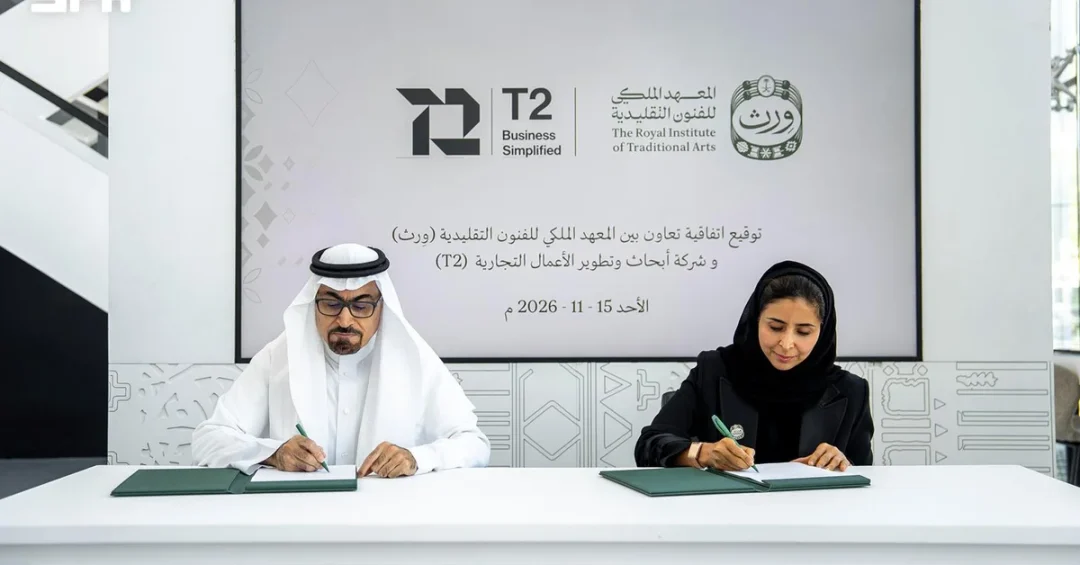
The Royal Institute of Traditional Arts (Wrth) signed a memorandum of understanding (MoU) with T2 Company for Business Research and Development on November 15, 2026, in Riyadh, to enable artisans and students to display and sell their products and expand their marketing opportunities. The agreement, announced by the Saudi Press Agency, marks a significant step in Saudi Arabia’s efforts to transform traditional crafts into sustainable economic ventures while preserving the Kingdom’s rich cultural heritage. Under the MoU, the two entities will collaborate on developing a digital platform to showcase and sell handicraft products, establishing product quality standards, and organizing an exhibition at Wrth’s headquarters to highlight the work of its artisans and students.
The partnership also includes participation in external events and marketing handicraft products to specialized entities and projects. By leveraging the craft knowledge of Wrth’s artisans and students, the MoU aims to enhance the quality of Saudi handicraft products, expand their reach to the public and interested buyers, and create lasting economic opportunities. This initiative aligns with Saudi Vision 2030’s cultural and economic diversification goals, underscoring the Kingdom’s commitment to empowering its creative talent and promoting traditional arts on both domestic and international stages. How might this collaboration reshape the future of Saudi handicrafts in the global market?
Context and Background
What makes the Royal Institute of Traditional Arts a pivotal player in Saudi Arabia’s cultural landscape? Established to preserve and promote the Kingdom’s traditional arts, Wrth has become a cornerstone of Saudi Arabia’s cultural strategy. It provides training, mentorship, and platforms for artisans and students to hone their skills in crafts such as weaving, pottery, woodwork, and metalwork. These crafts are not merely artistic expressions but living embodiments of Saudi heritage, passed down through generations. The institute’s mission resonates with the broader objectives of Saudi Vision 2030, which seeks to celebrate and sustain the Kingdom’s cultural identity while fostering economic growth.
The MoU with T2 Company for Business Research and Development comes at a time when Saudi Arabia is intensifying efforts to diversify its economy beyond oil. The cultural sector, including handicrafts, is increasingly recognized as a viable contributor to GDP and job creation. By partnering with a business research and development firm, Wrth aims to inject market-driven strategies into the traditional arts sector, ensuring that artisans can earn sustainable incomes from their craft. This approach reflects a global trend where cultural products are marketed as unique, high-quality goods that appeal to discerning consumers. In Saudi Arabia, this trend is gaining momentum, supported by government initiatives and a growing appreciation for handmade, heritage-inspired items.
Moreover, the agreement highlights the importance of public-private partnerships in achieving Vision 2030 targets. T2 Company’s expertise in business research and development will complement Wrth’s cultural mandate, creating a synergy that could serve as a model for other sectors. The collaboration is also timely, as Saudi Arabia prepares to host major international events and attract millions of tourists, many of whom seek authentic cultural experiences and souvenirs. By enhancing the quality and marketability of Saudi handicrafts, the MoU positions these products to meet rising demand and compete in the global marketplace.
Key Details of the Agreement
What specific mechanisms will drive this partnership forward? At the heart of the MoU is the development of a digital platform dedicated to displaying and selling handicraft products. This platform will serve as a virtual marketplace, connecting artisans and students directly with consumers, retailers, and institutional buyers. It will feature detailed product listings, artisan profiles, and secure payment options, making it easier for creators to reach a wider audience. The digital platform is expected to launch in phases, with initial offerings from Wrth’s network of artisans and students, followed by expansion to include other Saudi craftspeople.
Another critical component is the establishment of product quality standards. This initiative will involve defining criteria for craftsmanship, materials, and finishing, ensuring that Saudi handicrafts meet high standards of excellence. Quality assurance is essential for building consumer trust and positioning Saudi products as premium items in both local and international markets. Wrth and T2 Company will work together to develop these standards, drawing on best practices from around the world while preserving the unique characteristics of Saudi traditional arts.
The MoU also includes organizing an exhibition at Wrth’s headquarters to showcase products made by its artisans and students. This exhibition will provide a physical space for visitors to appreciate the craftsmanship and purchase items, complementing the digital platform. Additionally, the partnership will facilitate participation in external events, such as trade fairs, cultural festivals, and exhibitions, both within Saudi Arabia and abroad. These events will offer artisans and students valuable exposure and networking opportunities, helping them connect with potential buyers and partners. Marketing efforts will target specialized entities and projects, including hotels, museums, and government initiatives that seek authentic Saudi cultural products.
International and Regional Impact
How will this MoU influence Saudi Arabia’s cultural diplomacy and regional standing? By elevating the quality and reach of Saudi handicrafts, the agreement enhances the Kingdom’s soft power and cultural exports. Handicrafts are powerful ambassadors of national identity, conveying stories of heritage, skill, and creativity to international audiences. As Saudi Arabia opens up to the world through Vision 2030, products that embody its traditions can foster deeper cultural connections and mutual understanding. Tourists and foreign residents in the Kingdom will have greater access to authentic souvenirs, while international markets will discover the richness of Saudi craftsmanship.
Regionally, the MoU could inspire similar initiatives in neighboring Gulf countries, many of which are also investing in cultural heritage and creative industries. Saudi Arabia’s proactive approach positions it as a leader in the region’s cultural economy, setting benchmarks for quality and innovation. The partnership with T2 Company demonstrates how traditional sectors can be modernized through strategic collaborations, potentially encouraging other Gulf states to adopt comparable models. Furthermore, by marketing Saudi handicrafts to entities and specialized projects, the MoU may open doors for cross-border trade and cultural exchange, strengthening economic ties within the region and beyond.
Economic and Strategic Significance
What economic benefits can Saudi artisans and the national economy expect from this collaboration? The MoU directly addresses the economic empowerment of artisans and students by transforming their skills into marketable products. Through the digital platform and quality standards, they can command better prices and access larger markets, turning crafts into sustainable livelihoods. This is particularly important for youth and women, who often face barriers to economic participation. By supporting these groups, the initiative contributes to Vision 2030’s goal of increasing workforce participation and reducing unemployment.
Strategically, the agreement strengthens the cultural economy, a sector with significant growth potential. According to global trends, the market for handmade and heritage products is expanding, driven by consumer preferences for authenticity and sustainability. Saudi Arabia can capture a share of this market by offering unique, high-quality crafts that reflect its heritage. The MoU also supports the development of a knowledge-based economy by integrating digital tools and business research into traditional crafts. This fusion of tradition and innovation is a hallmark of Vision 2030, which seeks to modernize all sectors while preserving cultural identity. The partnership’s focus on quality standards and marketing expertise ensures that Saudi handicrafts can compete internationally, potentially boosting export revenues and enhancing the Kingdom’s economic diversification.
Vision 2030 Alignment
How does this MoU embody the aspirations of Saudi Vision 2030? Vision 2030 is a comprehensive blueprint for transforming Saudi Arabia’s economy and society, with culture as a key pillar. The MoU aligns with several Vision 2030 objectives, including diversifying income sources, empowering citizens, and promoting cultural heritage. By enabling artisans and students to monetize their skills, the agreement supports the creation of small and medium-sized enterprises (SMEs), which are vital for job creation and economic resilience. It also advances the Quality of Life Program by enriching cultural offerings and making them accessible to a wider audience.
Furthermore, the collaboration underscores Saudi Arabia’s commitment to preserving its cultural heritage as a source of pride and identity. In a rapidly changing world, traditional arts provide a link to the past and a foundation for future creativity. The MoU ensures that these arts are not only preserved but also revitalized through modern marketing and digital platforms. As Saudi Arabia continues its journey toward Vision 2030, initiatives like this demonstrate how tradition and progress can coexist harmoniously. The Royal Institute of Traditional Arts and T2 Company are setting a precedent for how cultural heritage can drive economic growth and global engagement, contributing to a vibrant and diversified Saudi Arabia.
20 Questions
Q1. What is the Royal Institute of Traditional Arts (Wrth)?
A1. Wrth is a Saudi institution dedicated to preserving and promoting traditional arts. It provides training, mentorship, and platforms for artisans and students to develop skills in crafts like weaving, pottery, and woodwork, supporting Saudi Arabia’s cultural heritage and Vision 2030 goals.
Q2. What does the MoU between Wrth and T2 Company entail?
A2. The MoU enables artisans and students to display and sell products through a digital platform, establishes quality standards, organizes exhibitions, and facilitates participation in external events. It aims to expand marketing opportunities and transform craft skills into sustainable economic ventures.
Q3. When and where was the MoU signed?
A3. The MoU was signed on November 15, 2026, in Riyadh, as announced by the Saudi Press Agency. It marks a significant step in Saudi Arabia’s efforts to promote traditional crafts and cultural entrepreneurship.
Q4. Who are the beneficiaries of this agreement?
A4. Artisans and students affiliated with Wrth are the primary beneficiaries. They will gain access to a digital marketplace, quality standards, exhibitions, and marketing opportunities, enabling them to sell their handicrafts and earn sustainable incomes.
Q5. How will the digital platform work?
A5. The digital platform will serve as a virtual marketplace, showcasing handicraft products with detailed listings and artisan profiles. It will offer secure payment options and connect creators directly with consumers, retailers, and institutional buyers, expanding their market reach.
Q6. What are the product quality standards mentioned in the MoU?
A6. The quality standards will define criteria for craftsmanship, materials, and finishing to ensure Saudi handicrafts meet high levels of excellence. This builds consumer trust and positions Saudi products as premium items in local and international markets.
Q7. What kind of exhibition will be organized at Wrth’s headquarters?
A7. The exhibition will showcase products made by Wrth’s artisans and students, providing a physical space for visitors to appreciate and purchase authentic Saudi handicrafts. It complements the digital platform and offers direct engagement with creators.
Q8. How does this MoU support Saudi Vision 2030?
A8. The MoU aligns with Vision 2030 by diversifying the economy, empowering citizens, and promoting cultural heritage. It supports SME creation, job opportunities, and the Quality of Life Program, contributing to a vibrant and sustainable cultural sector.
Q9. What role does T2 Company play in this partnership?
A9. T2 Company for Business Research and Development brings expertise in business research and development. It will help develop the digital platform, establish quality standards, and provide marketing strategies to enhance the commercial viability of Saudi handicrafts.
Q10. How will artisans and students benefit economically?
A10. Artisans and students can sell their products through the digital platform and exhibitions, reaching wider markets and commanding better prices. This transforms their skills into sustainable income streams, supporting economic self-sufficiency and entrepreneurship.
Q11. What types of handicrafts are included in this initiative?
A11. The initiative covers a range of traditional Saudi crafts, including weaving, pottery, woodwork, metalwork, and other heritage arts taught and practiced at Wrth. These crafts reflect the Kingdom’s diverse cultural heritage.
Q12. Will the products be marketed internationally?
A12. Yes, the MoU includes participation in external events and marketing to specialized entities and projects. This will expose Saudi handicrafts to international audiences, potentially boosting exports and cultural exchange.
Q13. How does this MoU preserve Saudi cultural heritage?
A13. By providing economic incentives for artisans and students, the MoU ensures that traditional crafts are valued and passed on to future generations. It revitalizes heritage arts through modern marketing and digital platforms, keeping them relevant and vibrant.
Q14. What are the expected outcomes of the exhibition at Wrth’s headquarters?
A14. The exhibition will raise awareness of Saudi handicrafts, generate sales, and connect artisans with buyers. It will also serve as a cultural attraction, drawing visitors and promoting appreciation for traditional arts.
Q15. How can interested buyers access the products?
A15. Buyers can access products through the digital platform once launched, as well as at exhibitions and external events. The platform will offer a user-friendly interface for browsing and purchasing authentic Saudi handicrafts.
Q16. What is the significance of establishing quality standards for handicrafts?
A16. Quality standards ensure consistency, authenticity, and excellence, which are crucial for building a reputable brand for Saudi handicrafts. They help differentiate Saudi products in competitive markets and justify premium pricing.
Q17. How does this initiative empower women and youth?
A17. By providing market access and economic opportunities, the MoU empowers women and youth to turn their craft skills into income. This supports Vision 2030’s goals of increasing workforce participation and reducing unemployment among these groups.
Q18. What other entities might collaborate with Wrth in the future?
A18. The MoU mentions marketing to entities and specialized projects, which could include hotels, museums, government initiatives, and cultural organizations. Future collaborations may expand to include international retailers and e-commerce platforms.
Q19. How does this MoU contribute to Saudi Arabia’s cultural diplomacy?
A19. By exporting high-quality Saudi handicrafts, the MoU enhances the Kingdom’s soft power and cultural presence globally. It showcases Saudi creativity and heritage, fostering mutual understanding and appreciation among international audiences.
Q20. What are the next steps after signing the MoU?
A20. Next steps include developing the digital platform, finalizing quality standards, organizing the exhibition, and planning participation in external events. Implementation will be phased, with ongoing collaboration between Wrth and T2 Company to achieve the MoU’s objectives.
Reader Feedback
We value your thoughts. Please share your feedback on this article.
Your feedback helps us improve our coverage.
Related articles
 Theater Commission Concludes Riyadh Leg of Public Arts Program
 Jeddah Governor Attends 17th Arabian Horse Festival Closing
 Historic Makkah Wooden Doors: A Legacy of Artisanal Carpentry
 Three Falcons Sold for SAR520,000 at 23rd National Auction
 TPAC Events Draw 1,200 Visitors on First Day in Riyadh
 17th Makkah Arabian Horse Festival Continues in Jeddah