


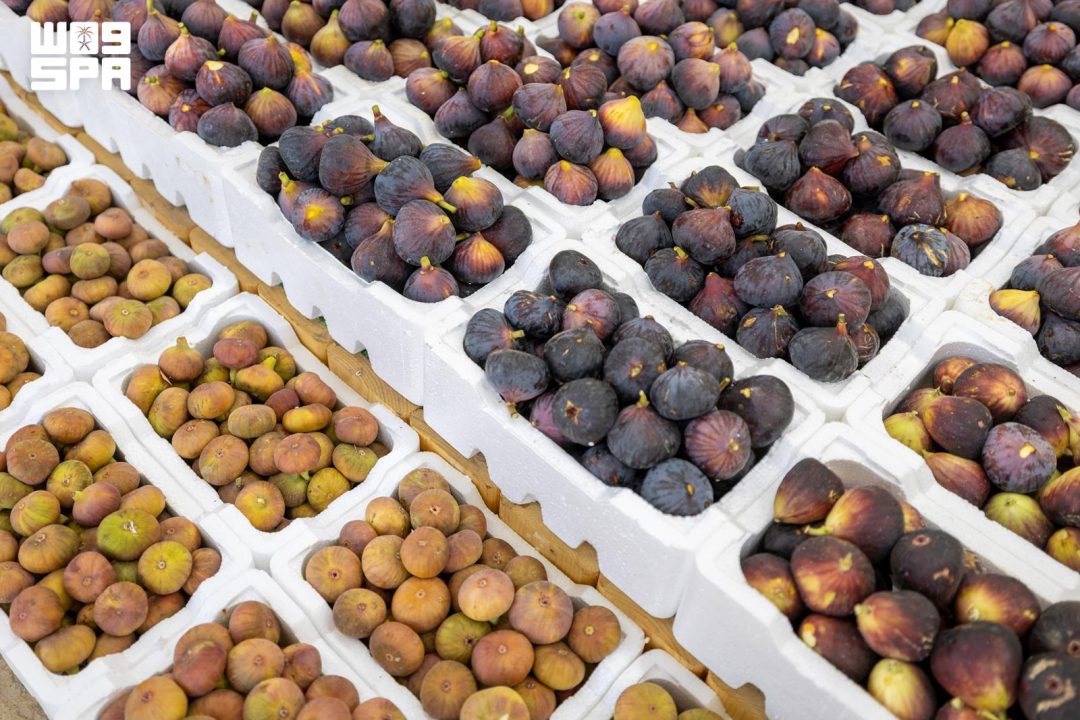
Al-Jouf region produces more than 880 tons of figs every year, utilizing fertile soil and high-quality water to support seasonal fruit production.
According to SPA, Dr. Aqab bin Mukhalif Al-Rowaili, Director of the Ministry of Environment, Water and Agriculture office in Sakaka, stated that the production includes nine prominent varieties: Turkish Brown, Sultani, Baladi, Spanish Yellow, Ghani, Al-Obaid, French, Asali, and Spanish Black.
Farmer Musaed Al-Shammary, who cultivates multiple fig varieties in the region, noted that quality is ensured through proper variety selection, irrigation, fertilization, and timely harvesting. He highlighted that the local agricultural environment allows for the expansion and development of fig crops through modern farming practices.
The source did not specify the total number of farms currently producing figs in the region.
How much fig production is recorded in Al-Jouf annually? The Al-Jouf region produces more than 880 tons of figs every year. This production is supported by the region’s natural advantages, specifically the quality of its water and the fertility of its soil.
What are the specific fig varieties grown in Al-Jouf? There are nine prominent varieties grown in the region, which include Turkish Brown, Sultani, Baladi, Spanish Yellow, Ghani, Al-Obaid, French, Asali, and Spanish Black. This variety reflects the diverse agricultural experiments conducted in the area.
What factors contribute to the quality of fig production in the region? Quality is maintained through a process that begins with selecting the appropriate variety and continues through irrigation and fertilization. Farmer Musaed Al-Shammary emphasized that continuous monitoring and harvesting at the correct time are essential for fruit quality.